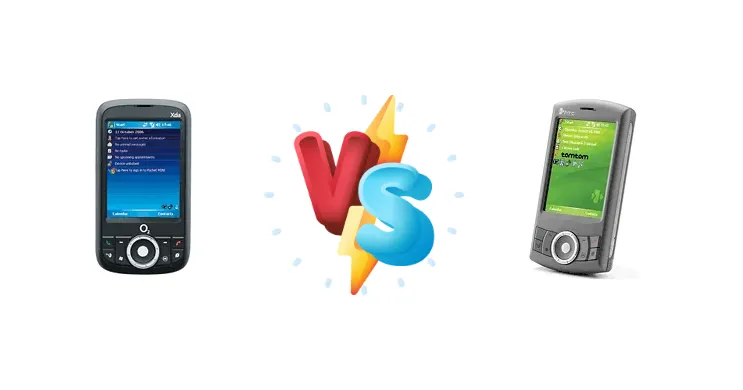
Released in the mid-2000s, the O2 XDA Orbit and HTC P3300 represent a pivotal moment in the evolution of smartphones. Both devices, built around the Texas Instruments OMAP 850 platform, aimed to deliver a powerful mobile computing experience. However, subtle differences in design and software implementation catered to slightly different user needs, making a direct comparison crucial for enthusiasts and collectors.
🏆 Quick Verdict
For the average user seeking a functional piece of early smartphone history, the HTC P3300 edges out the O2 XDA Orbit. While both share the same core chipset, the P3300’s generally cleaner software experience and potentially more refined build quality offer a slightly smoother user experience.
| Network |
|---|
| 2G bands | GSM 850 / 900 / 1800 / 1900 | GSM 850 / 900 / 1800 / 1900 |
| EDGE | Class 10 | Class 10 |
| GPRS | Class 10 | Class 10 |
| Technology | GSM | GSM |
| Launch |
|---|
| Announced | 2006, September | 2006, September |
| Status | Discontinued | Discontinued |
| Body |
|---|
| Dimensions | 108 x 58 x 16.8 mm (4.25 x 2.28 x 0.66 in) | 108 x 58 x 16.8 mm (4.25 x 2.28 x 0.66 in) |
| SIM | Mini-SIM | Mini-SIM |
| Weight | 129 g (4.55 oz) | 127 g (4.48 oz) |
| Display |
|---|
| Resolution | 240 x 320 pixels, 4:3 ratio (~143 ppi density) | 240 x 320 pixels, 4:3 ratio (~143 ppi density) |
| Size | 2.8 inches, 24.3 cm2 (~38.8% screen-to-body ratio) | 2.8 inches, 58 x 42 mm, 24.3 cm2 (~38.8% screen-to-body ratio) |
| Type | TFT resistive touchscreen, 65K colors | TFT resistive touchscreen, 65K colors |
| | Handwriting recognition | Handwriting recognition |
| Platform |
|---|
| CPU | 200 MHz ARM926EJ-S | 200 MHz ARM926EJ-S |
| Chipset | TI OMAP 850 | TI OMAP 850 |
| OS | Microsoft Windows Mobile 5.0 PocketPC | Microsoft Windows Mobile 5.0 PocketPC |
| Memory |
|---|
| Card slot | microSD (dedicated slot) | microSD (dedicated slot) |
| Internal | 64MB RAM, 128MB ROM | 64MB RAM, 128MB ROM |
| Main Camera |
|---|
| Single | 2 MP | 2 MP |
| Video | QCIF | QCIF |
| Sound |
|---|
| 3.5mm jack | No | No |
| 35mm jack | No | No |
| Alert types | Vibration; Downloadable polyphonic, MP3 ringtones | Vibration; Downloadable polyphonic, MP3 ringtones |
| Loudspeaker | Yes | Yes |
| Comms |
|---|
| Bluetooth | 2.0 | 2.0, A2DP |
| Positioning | GPS, CoPilot Live Navigator | GPS, TomTom NAVIGATOR 6 |
| Radio | FM radio | FM radio |
| USB | Proprietary | Proprietary |
| WLAN | Wi-Fi 802.11b/g | Wi-Fi 802.11b/g |
| Features |
|---|
| Browser | WAP 2.0/xHTML, HTML (PocketIE) | WAP 2.0/xHTML, HTML (PocketIE) |
| | Pocket Office
Voice memo
MP3/AAC player | Pocket Office
Voice memo
MP3/AAC player |
| Battery |
|---|
| Stand-by | Up to 200 h | Up to 200 h |
| Talk time | Up to 5 h | Up to 4 h |
| Type | Removable Li-Ion battery | Removable Li-Ion 1250 mAh battery |
| Misc |
|---|
| Colors | Silver, Black | Silver |
| Price | - | About 350 EUR |
O2 XDA Orbit
- Strong community support for custom ROMs.
- Potentially more customizable software.
- Reputation for being developer-friendly.
- Software may require more technical expertise.
- Potentially less refined build quality.
HTC P3300
- Streamlined, out-of-the-box experience.
- Potentially more robust build quality.
- Generally cleaner software implementation.
- Less flexibility for advanced users.
- Limited customization options.
Display Comparison
Both the O2 XDA Orbit and HTC P3300 feature displays typical of the era – likely 2.8-inch to 3.2-inch QVGA (240x320) TFT LCDs. Given the shared chipset and target market, display quality is expected to be very similar. Neither device boasts advanced features like high brightness or wide color gamuts. The user experience will be defined more by the resolution than by any panel technology advancements. Bezels are substantial on both, reflecting the design constraints of the time.
Camera Comparison
Both devices likely include a basic camera, probably around 2 megapixels. Image quality will be limited by the sensor size, lens quality, and image processing capabilities of the OMAP 850. Expect images to be suitable for basic documentation but not for high-quality photography. The presence or absence of a flash, and its type (LED vs. Xenon), would be a differentiating factor, but this information isn't available. Given the era, focusing on camera capabilities for either device is unrealistic.
Performance
The core of both devices is the TI OMAP 850, featuring a 200 MHz ARM926EJ-S CPU. This processor was capable for its time, handling basic productivity tasks, email, and light web browsing. However, demanding applications or multitasking will strain the system. The shared processor means performance differences will be minimal, likely stemming from RAM allocation and software optimization. The amount of RAM (likely 64MB or 128MB) will be a more significant factor than the CPU itself, impacting multitasking capabilities. Thermal management isn't a major concern given the low power draw of the OMAP 850.
Battery Life
Battery life on both the O2 XDA Orbit and HTC P3300 will be heavily dependent on usage patterns. The OMAP 850 is relatively power-efficient, but the displays and radio components will consume significant power. Expect battery life to range from a few hours of moderate use to a full day with minimal activity. Charging times will be slow by modern standards, likely taking several hours via a proprietary connector. Battery capacity is likely in the 1200-1500 mAh range, typical for devices of this era.
Buying Guide
Buy the O2 XDA Orbit if you prioritize a more customizable experience and are comfortable with potentially more complex software configurations. Its reputation for being a developer-friendly device makes it ideal for those wanting to experiment with early Windows Mobile ROMs. Buy the HTC P3300 if you prefer a more streamlined, out-of-the-box experience with a focus on core productivity features and a potentially more robust build.
Frequently Asked Questions
❓ Is it possible to install modern apps on either the O2 XDA Orbit or HTC P3300?
No, directly installing modern Android or iOS apps is not possible. These devices run Windows Mobile, a discontinued operating system. However, enthusiasts have explored porting limited versions of Linux or other operating systems, but this requires significant technical expertise and is not a straightforward process.
❓ What kind of connectivity options do these devices offer?
Both devices offer connectivity options typical of the mid-2000s, including GPRS/EDGE for data connectivity, Bluetooth for wireless accessories, and potentially Wi-Fi (802.11b/g). They lack support for modern standards like 4G LTE or Wi-Fi 6.
❓ Are replacement batteries readily available for these devices?
Replacement batteries are becoming increasingly difficult to find and may be expensive. Original batteries are likely nearing the end of their lifespan, and aftermarket options may be of questionable quality. Sourcing a reliable replacement battery is a significant challenge for owners of these devices.