YouTube will expand Premium Lite availability, increase requirements for revenue sharing
YouTube will expand Premium Lite availability, increase requirements for revenue sharing
Posted on Aug. 11, 2026, 7 p.m.
The YouTube Partner Program (YPP) launched two decades ago and now boasts over 3 million creators. However, if you want to join their ranks, you will now have to meet higher requirements than before. That said, if you are already in YPP, you will stay in YPP.
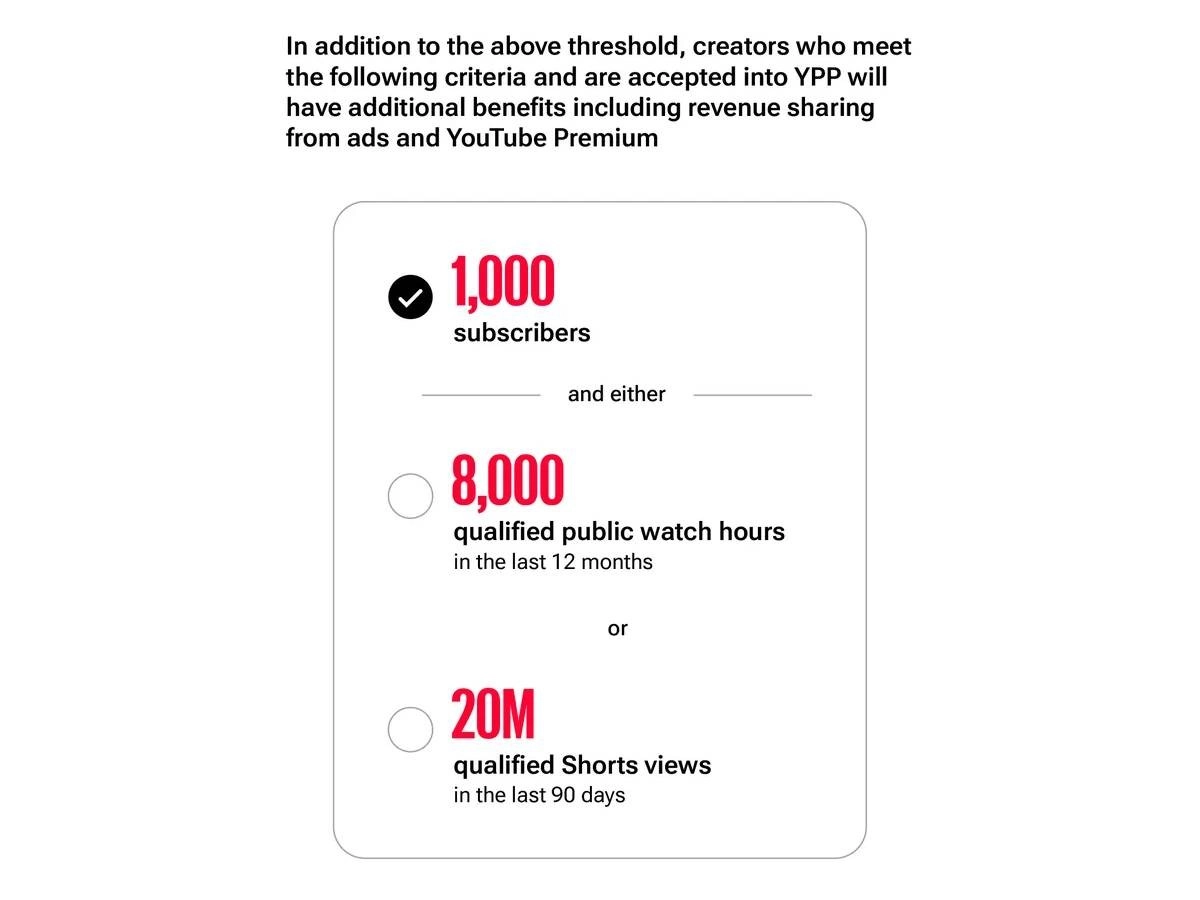
For those looking to join, you will need to hit double the metrics of the previous thresholds. For long-form videos, this means 8,000 view hours, up from 4,000 hours. If you want to make shorts instead, you will need 20 million views in 20 days to join, up from 10 million views.
Additionally, YPP will impose a minimum of 10 million views from shorts over a 90-day period for channels that want to run ads and participate in revenue sharing. If your channel drops below that minimum, then revenue sharing will be paused temporarily (but the channel can still earn from long-form videos). Ads and revenue sharing will automatically resume once the channel goes over 10 million views over 90 days again.
Tech article image
There are some additional requirements – watch the video below for a more detailed breakdown. But even with these changes, YouTube says that it expects to pay out more to creators next year than it will this year.
Tech article image
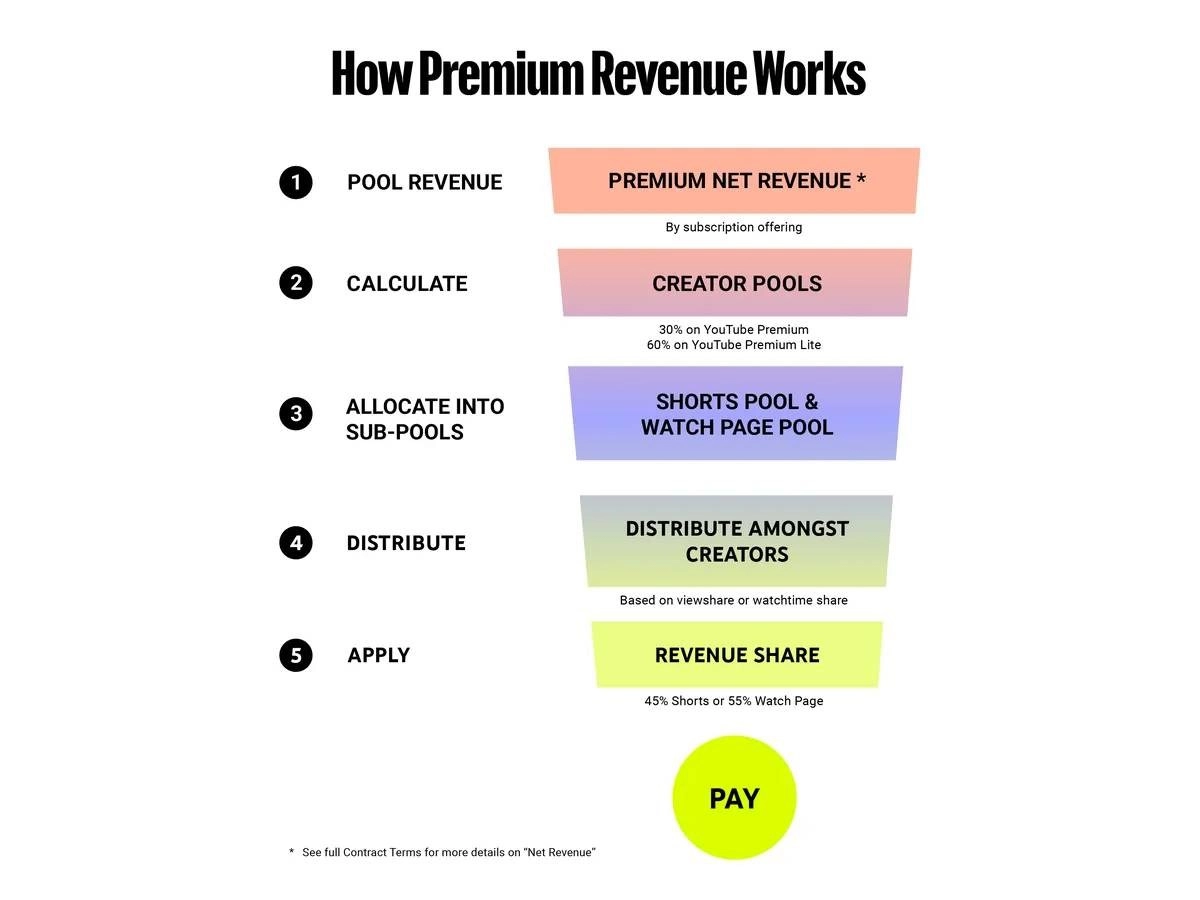
The money from the premium subscriptions is pooled together – 30% of Premium revenue and 60% of Premium Lite revenue go into the pool. If you are wondering where the rest of the money goes, it’s to pay for running YouTube as well as to pay YouTube’s music partners. The money from the pool is then distributed to creators based on Premium member watch time and views with a split of 55% for long-form and 45% for short videos. Apparently, subscriber views are better than ad views. YouTube says:“when a user signs up for Premium, partners, on average, earn more than when the user was watching ads.”
If you are a creator, you should read thefull blog postfor a closer look at what’s changing. Additionally, you will have to review and sign the new terms on February 1 next year.
Source

0 Responses Write a Response