
Samsung Health users asked to allow use of their health data for AI training or it will be deleted
- Posted on July 12, 2026, 7 a.m.
Samsung Health's AI Data Drive: Consent or Lose Your Health History
Samsung Health users are encountering a new, potentially controversial directive: grant permission for your health data to fuel AI training, or face its deletion. This change, presented as a mandatory consent request upon app opening, is prompting a significant decision for individuals relying on Samsung Health to track their well-being.
The core of the issue lies in Samsung's expanded use of user health information. If you opt-in, your collected data—spanning fitness metrics, medication logs, health records, and cycle tracking—will be utilized for AI training and modeling. Samsung states this process, which may include human review, aims to enhance Samsung Health's analytical capabilities and AI-driven features for a more insightful user experience.
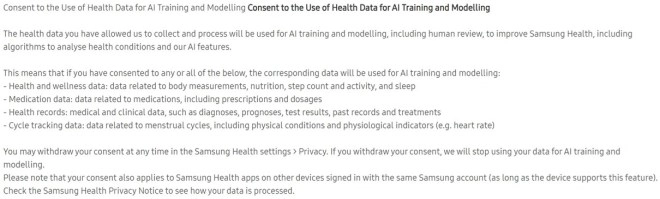
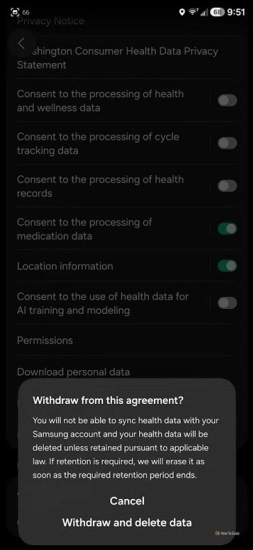
The implications of refusing consent are stark. Users who decline will find themselves unable to synchronize their health data with their Samsung account. More critically, this data will be permanently deleted, with the sole exception being if legal obligations necessitate its retention by Samsung.
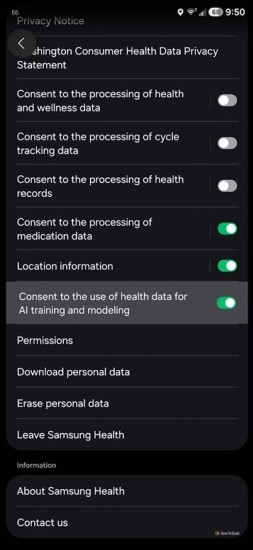
The process for managing this consent is outlined within the app's settings. Users can revisit their choices by navigating to Samsung Health settings > Privacy and toggling off the option for "Consent to the use of health data for AI training and modeling."
However, revoking consent triggers an immediate and unambiguous warning: your valuable health data will be purged unless Samsung is legally bound to preserve it. This ultimatum raises questions about user autonomy and the perceived mandatory nature of data sharing for AI advancement.
While Samsung likely intends to anonymize the collected data, thereby preventing direct individual identification, the aggressive approach to securing consent for AI training is likely to be met with apprehension by many Samsung Health users concerned about the privacy of their sensitive health information.
Source
0 Responses Write a Response