
Samsung is now shipping samples of HBM4E memory, which is faster and has higher capacity
- Posted on May 31, 2026, 3 p.m.
Samsung Unleashes HBM4E: Next-Gen AI Memory with Unprecedented Speed and Capacity
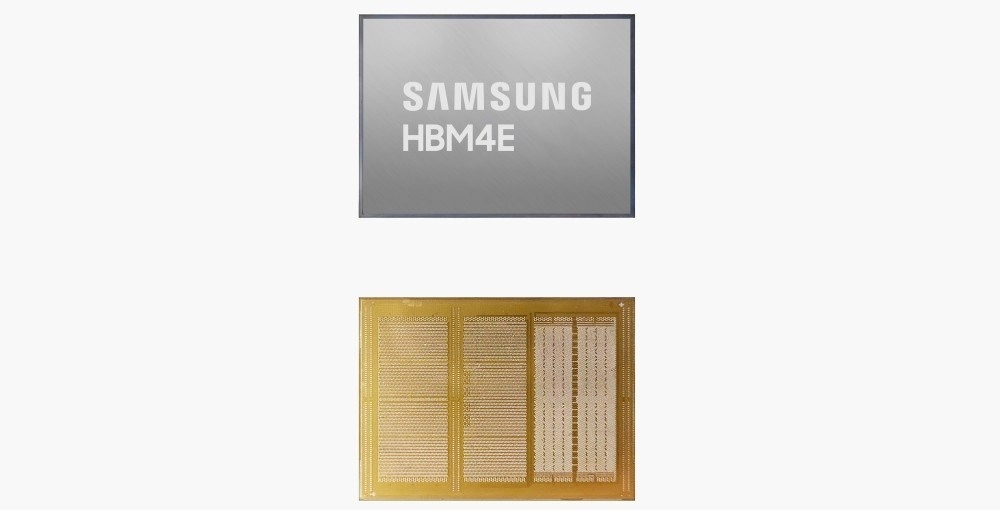
Samsung is once again pushing the boundaries of memory technology, announcing the sampling of its revolutionary HBM4E High Bandwidth Memory. Designed to power the most demanding Artificial Intelligence (AI) systems, this cutting-edge memory solution promises significant leaps in performance, density, and energy efficiency compared to its predecessors.
Unlocking Greater Capacity and Blistering Speeds
The new HBM4E memory showcases substantial advancements across the board. Initially shipping with a robust 12-layer configuration, it delivers an impressive 48GB capacity per stack, a notable increase from the 36GB offered by HBM4. To meet diverse design requirements, Samsung is also developing flexible 8-layer (32GB) and 16-layer (64GB) variants, giving developers unparalleled options for their high-performance computing designs.
Beyond sheer volume, HBM4E sets a new benchmark for speed:
- Per-pin speed reaches an astonishing 14Gbps, marking a 20% improvement over HBM4's 11.7Gbps.
- This translates to an incredible 3.6 terabytes per second (TB/s) of total bandwidth per stack, ensuring data-intensive applications like AI models have the necessary throughput.
Revolutionary Efficiency and Enhanced Thermal Management
At the heart of HBM4E's innovation lies a sophisticated design that marries 6th generation "1c" (10nm class) memory dies with an advanced 4nm logic base die. This architectural synergy allows for groundbreaking improvements in operational efficiency and thermal performance:
- Energy Efficiency: Samsung has engineered HBM4E to be approximately 16% more energy efficient. This crucial improvement means less power consumption and significantly reduced heat generation, critical factors for dense, high-performance computing environments like AI data centers.
- Thermal Resistance: Further enhancing its operational stability and longevity, the new design achieves a minimum 14% reduction in thermal resistance. This makes HBM4E notably easier to cool, ensuring optimal performance even under sustained, intense workloads.
Accelerating the AI Revolution and Future Potential
Samsung's commitment to advancing high-bandwidth memory is evident, with increasing production capabilities for HBM4 and the rapid progression of HBM4E. This next-generation memory is poised to significantly accelerate the development and deployment of advanced AI systems, providing the raw power and efficiency necessary for complex machine learning models, large language models, and intricate data processing tasks.
Looking ahead, Samsung hints at even greater performance, noting that the HBM4E design's 14Gbps bandwidth has the potential to be further boosted to 16Gbps in future iterations, promising even more formidable processing capabilities for the next wave of technological innovation.
Highlighting the company's continuous innovation, Sang Joon Hwang, Executive Vice President and Head of Memory Development at Samsung Electronics, stated, “Following the successful mass production of HBM4, Samsung has once again demonstrated its distinct technological edge with HBM4E. Through our advanced manufacturing capabilities and preemptive infrastructure investments, we will continue to drive the growth of the global AI memory market.”
Source
0 Responses Write a Response