
Apple iPhone Duo vs Galaxy Z Fold8 by the numbers
- Posted on Sept. 10, 2026, noon
Apple iPhone Duo vs. Samsung Galaxy Z Fold8: A Comprehensive Foldable Flagship Showdown
After years of fervent rumors, leaks, and immense anticipation, Apple has finally entered the innovative world of foldable smartphones with its much-awaited iPhone Duo. Sporting a familiar, short and wide form factor, a design aesthetic successfully explored by several Android manufacturers, including Samsung with its popular Galaxy Z Fold8, the stage is set for an epic showdown.
The rivalry between Apple and Samsung in the smartphone arena is legendary, and their entry into the foldable segment only intensifies the competition. We've compiled a detailed specifications comparison to help you navigate the features and capabilities of these two cutting-edge devices.
Table of Contents:
- Design and Dimensions
- Dynamic Displays
- Raw Performance
- Camera Capabilities
- Battery Life and Charging
- Connectivity & Conclusion
Design and Dimensions: A Closer Look

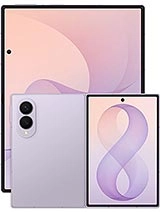
Examining the physical attributes, Samsung's foldable is a notable 53 grams lighter and also presents a slimmer profile, both when folded and unfolded. This weight difference is particularly significant for a device designed for portability. While the iPhone Duo features a premium titanium frame, the Galaxy Z Fold8 opts for a robust aluminum construction. Apple pulls ahead in terms of durability with an IP68 ingress protection rating, offering superior resistance to dust and water, whereas the Fold8 is rated at IP48. Both devices showcase prominent camera arrays, though the iPhone's camera island appears to protrude more noticeably compared to the Galaxy's.
Cover Display Comparison: First Impressions

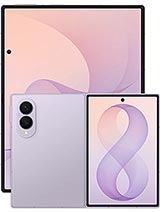
The external cover screens of both foldable flagships are remarkably similar, sharing nearly identical specifications across dimensions, resolution, refresh rate, and peak brightness. However, design nuances differentiate them. The Galaxy Z Fold8 presents a more uniform aesthetic, while the iPhone Duo incorporates distinct rounded corners. Furthermore, the iPhone Duo features a larger selfie camera cutout, positioned in the corner, contrasting with the Fold8's more compact and centrally located front-facing camera.
Main Display Comparison: Immersive Visuals

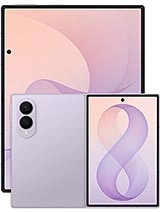
The internal, large folding displays are central to the foldable phone experience, offering expansive canvases for productivity and entertainment. Both Apple and Samsung aim to deliver stunning visual fidelity and smooth interactions on these primary screens, designed to unfold a world of possibilities for users.
Performance: Powering the Foldable Future

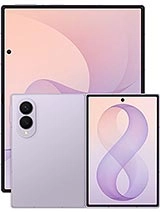
Under the hood, the iPhone Duo is equipped with Apple's latest 2nm A20 Pro chipset. Apple touts this as the "fastest in any smartphone," promising significant gains, including an extra GPU core and up to 40% faster graphics performance compared to the A19 Pro. Real-world benchmarks will soon validate these claims. In the Android camp, the Galaxy Z Fold8 relies on last year’s cutting-edge 3nm Snapdragon 8 Elite Gen 5, representing the pinnacle of current Android smartphone processing power.
Both devices offer a generous 12GB of RAM as standard, paired with a 256GB base storage configuration. For users requiring more, the Galaxy Z Fold8 can be configured with up to 16GB of RAM alongside 512GB or 1TB storage options, while the iPhone Duo pushes boundaries with up to a massive 2TB storage capacity.
Camera Capabilities: Capturing Every Moment

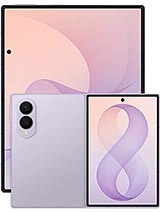
In the photography department, both foldable phones feature comparable dual-camera setups on the rear, typically consisting of a main wide-angle sensor and an ultrawide module. Apple's main camera on the iPhone Duo reportedly utilizes a slightly larger 1/1.28-inch sensor, potentially offering better light gathering compared to Samsung’s 1/1.56-inch imager on the Fold8. Notably, neither device includes a dedicated telephoto lens, which might be a consideration for zoom enthusiasts. The Galaxy Z Fold8 does hold a slight edge in video recording, capable of capturing stunning 8K resolution footage at 30 frames per second.
Battery Life and Charging: Endurance for Your Day

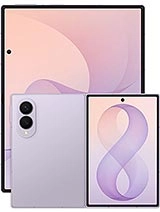
In characteristic Apple fashion, specific battery capacity details for the iPhone Duo were not disclosed. However, Apple provides estimated usage figures: up to 31 hours of video playback using the inner display, 44 hours with the outer display, or 24 hours of mixed usage with both screens. The Samsung Galaxy Z Fold8 features a 4800 mAh Si/C battery, which demonstrated a respectable 13 hours and 59 minutes of Active Use in independent battery tests. It also achieved over 20 hours of video playback in testing, though these results are not directly comparable to Apple’s proprietary testing procedures.
Connectivity & Conclusion
Rounding out the feature comparison, both the Apple iPhone Duo and Samsung Galaxy Z Fold8 support advanced connectivity standards, including Wi-Fi 7, Bluetooth 6.0, and Ultra-Wideband (UWB) technology. The iPhone Duo, however, integrates the newer second-generation UWB specification, potentially offering enhanced spatial awareness and device interaction. A key distinction in user experience lies in SIM card support: the Galaxy Fold8 maintains a physical SIM slot, while the iPhone Duo adopts an eSIM-only approach.
This comparison highlights the strengths and unique propositions of both the Apple iPhone Duo and the Samsung Galaxy Z Fold8. From design and display innovation to raw performance and camera prowess, each device carves out its own niche in the burgeoning foldable market, offering cutting-edge technology for discerning users.

0 Responses Write a Response