Indian smartphone market shipments fell 13% in Q2 according to Omdia
Indian smartphone market shipments fell 13% in Q2 according to Omdia
Posted on July 22, 2026, 2:02 a.m.
A few days agoCounterpoint Research released its reporton the Indian smartphone market for the second quarter of this year (April to June), and now Omdia has done the same.
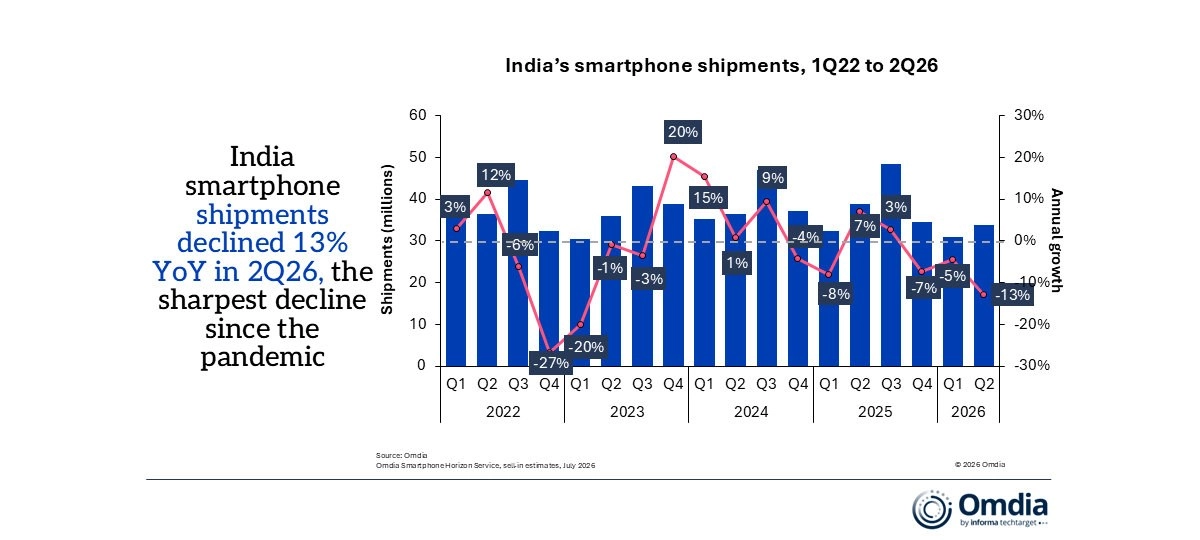
According to Omdia's data, the overall smartphone shipments in India fell by 13% in Q2 compared to the same period last year, to 33.9 million units. Of course, rising memory prices are primarily to blame, as they have resulted in "reduced affordability for mass-market consumers".
India smartphone shipments declined 13% in 2Q26 Omdia.
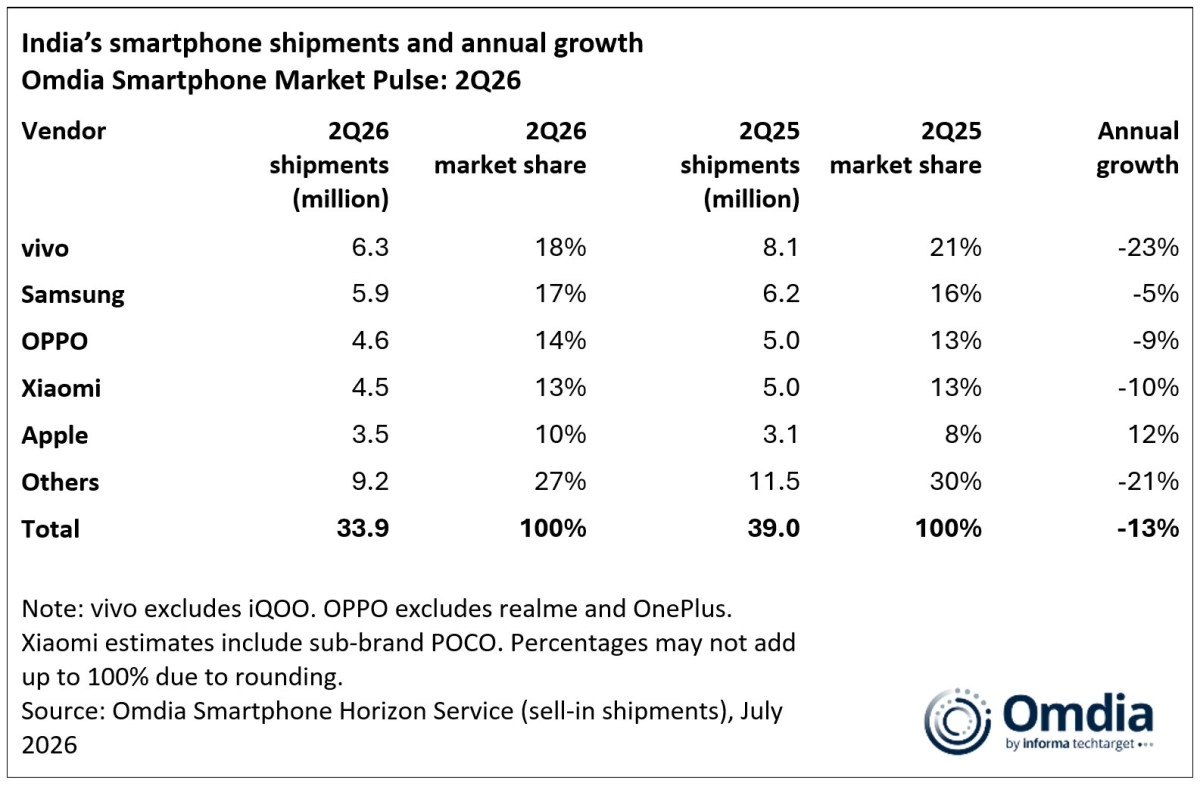
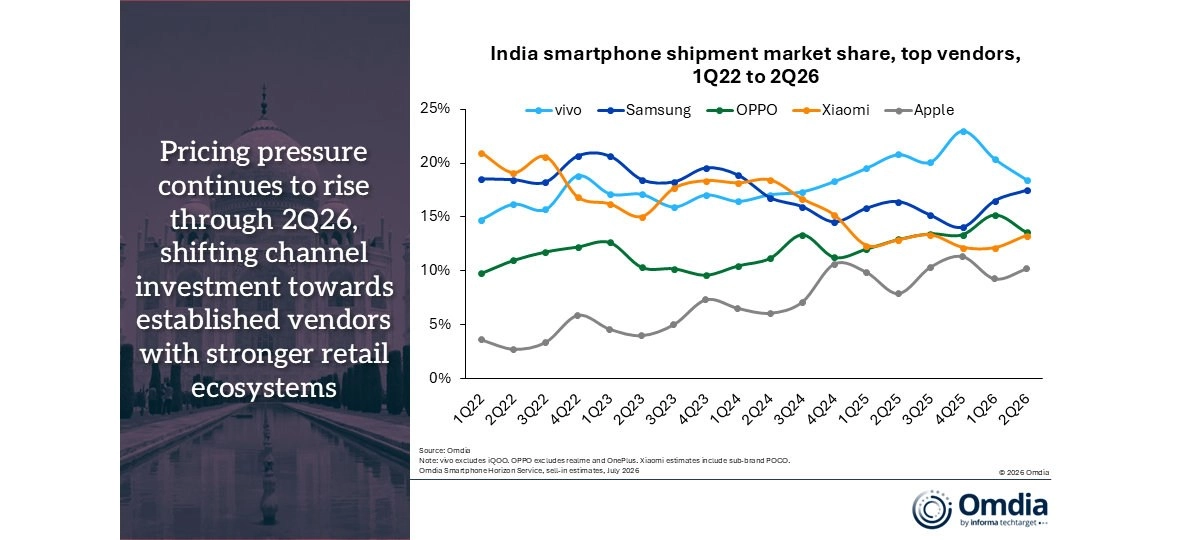
Omdia says vivo shipped 6.3 million smartphones for a leading 18% market share, down 23% year-on-year from 8.1 million and 21%, respectively. Samsung almost caught up with its 5.9 million shipments and 17% market share. Its shipments were down 5% but its market share actually grew from 16%.
India smartphone shipments fell 13%.
Oppo also grew its market share from 13% to 14% while shipping 400,000 less units (now 4.6 million), while Xiaomi's market share stayed the same 13% despite its shipments falling from 5 million to 4.5 million. Apple is the last in the top five and the only one in the chart to actually grow its shipments YoY, from 3.1 million in Q2 2025 to 3.5 million this year. It now has 10% of India's pie.
Omdia says theY11 5G,Y21 5G, andV70 FEdrove sales for vivo, while theGalaxy A07andGalaxy A17drove volumes for Samsung. Oppo's best performers were theF33 series, theReno15 family, and theFind X9 line. Xiaomi's sales were driven by theRedmi 15aand15C, as well as theRedmi A7 4Gand theRedmi A7 Pro 4G. Apple has apparently benefited from inventory build-up of theiPhone 17ahead of anticipated price increases for its successor.
Indian smartphone market share, top vendors, 1Q22 to 2Q26
For the full year, Omdia expects the Indian smartphone market's shipments to experience a double-digit decline compared to last year, because consumer demand will remain "constrained by macroeconomic pressures and elevated device prices".
Source

0 Responses Write a Response