Counterpoint: global DRAM revenue grows by 369% in Q3
Counterpoint: global DRAM revenue grows by 369% in Q3
Posted on Nov. 5, 2026, 8 p.m.
Global DRAM revenue has increased by an insane 369% year-over-year thanks to strong demand for the stuff, which goes towards building new AI accelerators and data centers. The Average Selling Price (ASP) has reached $1.9 per gigabit (i.e. 1/8th of a gigabyte).
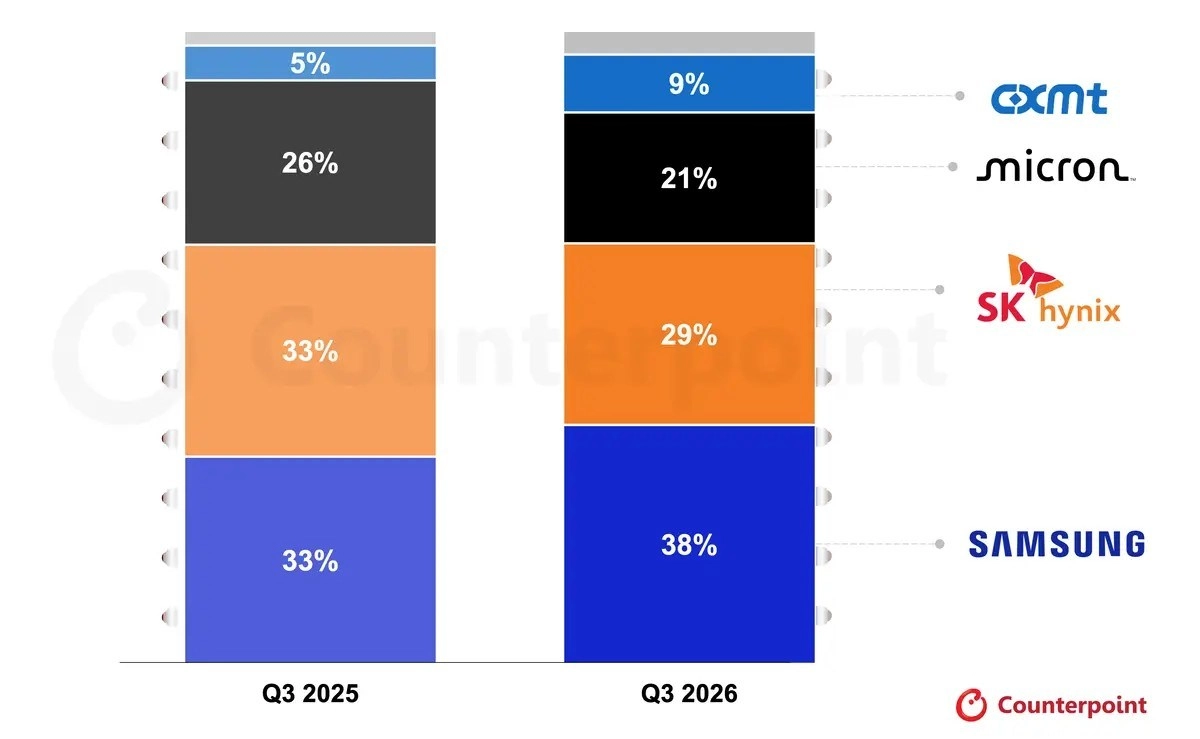
The big winner here is South Korea – Samsung is the biggest player with 38% market share, while SK hynix had a 29% share. SK’s revenue grew over 40% quarter-on-quarter, but things are going better for Samsung right now.
US-based Micron holds the third spot with 21% share while China’s CXMT was fourth with 9% share. CXMT grew compared to Q3 last year, but it lost one percentage point compared to Q2 this year.
DRAM market share Q3 2025 vs Q3 2026
There’s trouble ahead forSK hynix– the company dominated HBM3E sales, according toCounterpoint Research, but now things are switching over to HBM4 whereSamsunghas the lead.
This is an issue for CXMT too – the company plans to start mass production of HBM3E next year, so it’s behind the curve. It’s not all bad, though.
There are different flavors of AI with different needs. The rise of agentic AI is driving demand for DDR and LPDDR, which are used as system RAM (unlike HBM, which is typically used for AI accelerator cards). Demand is up by 500% and by 400%, respectively, year-over-year.
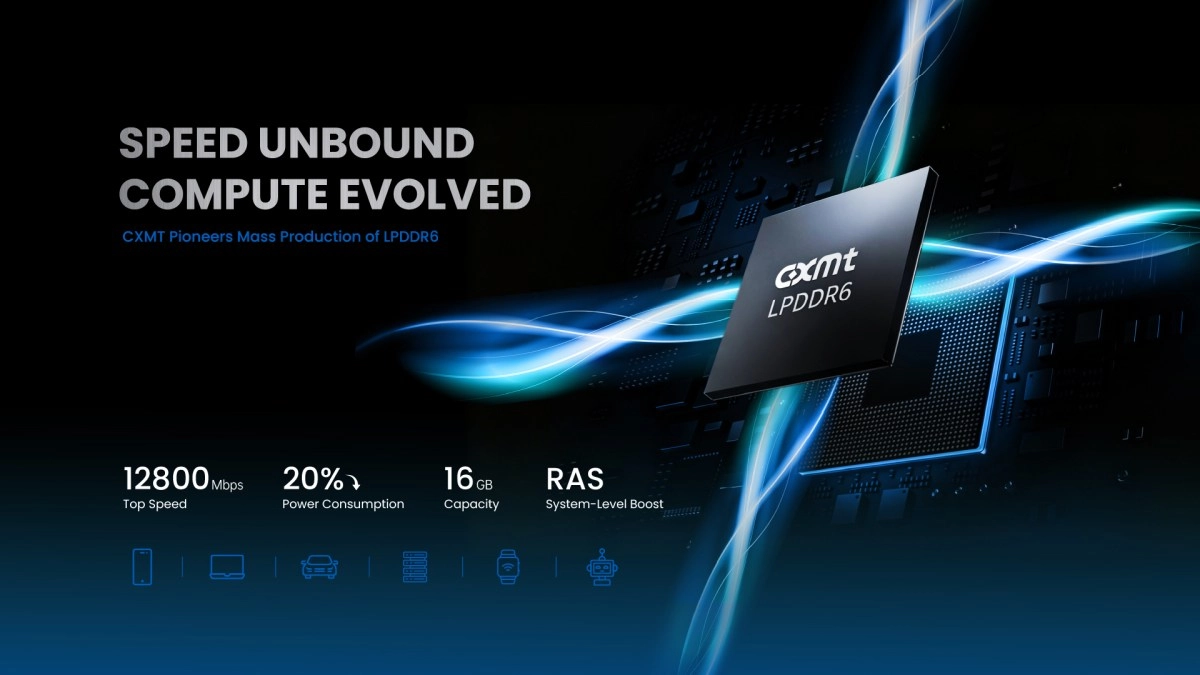
CXMT was the first to start mass producing the newest LPDDR6 – interestingly, theXiaomi 18 Folduses LPDDR6 for units with16GB of RAM(and LPDDR5X for 12GB units).
Tech article image
HBM is still the more profitable kind of DRAM – revenue from HBM sales nearly doubled compared to the year-ago quarter. That said, DDR/LPDDR revenues are growing faster.
The pace of price increases started to slow in Q3 compared to the first half of 2026 and they will remain high in the near term. If you are planning on upgrading your PC soon, MS Hwang, Research Director at Counterpoint Research, has some bad news:“Memory prices should stay strong next year. HBM prices, which lagged commodity DRAM this year, are now catching up. Long-term agreements (LTAs) are supporting prices and supply will stay tight because major new fabs will not start production until 2028.”
Source

0 Responses Write a Response