
ZTE Voyage 40 Pro+ vs Google Pixel 6a: Which Mid-Range Phone Reigns Supreme?
| Phones Images | |||||
|---|---|---|---|---|---|
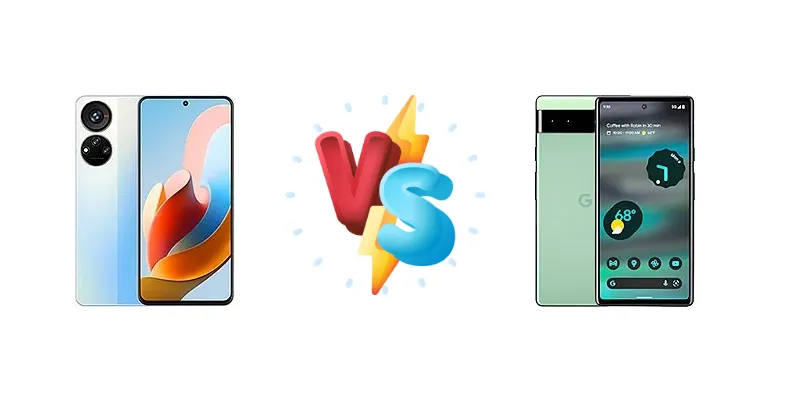
|
🏆 Quick Verdict
For the average user prioritizing camera quality and software experience, the Google Pixel 6a is the clear winner. While the ZTE Voyage 40 Pro+ boasts faster charging, the Pixel 6a’s superior image processing capabilities and Google’s software support provide a more polished and long-lasting user experience.
| PHONES | ||
|---|---|---|
| Phone Names | ZTE Voyage 40 Pro+ | Google Pixel 6a |
| Network | ||
|---|---|---|
| 2G bands | GSM 850 / 900 / 1800 / 1900 - SIM 1 & SIM 2 | GSM 850 / 900 / 1800 / 1900 |
| 3G bands | HSDPA 850 / 900 / 1900 / 2100 | HSDPA 800 / 850 / 900 / 1700(AWS) / 1900 / 2100 |
| 4G bands | LTE | 1, 2, 3, 4, 5, 7, 8, 12, 13, 14, 17, 18, 19, 20, 25, 26, 28, 29, 30, 38, 39, 40, 41, 42, 48, 66, 71 - GX7AS, GB62Z (USA/Canada) |
| 5G bands | 1, 5, 28, 41, 78, 84 SA/NSA | 1, 2, 3, 5, 7, 8, 12, 20, 25, 28, 30, 38, 40, 41, 48, 66, 71, 77, 78 SA/NSA/Sub6 - GX7AS (USA/Canada) |
| Speed | HSPA, LTE-A (CA), 5G | HSPA, LTE, 5G |
| Technology | GSM / CDMA / HSPA / LTE / 5G | GSM / HSPA / LTE / 5G |
| CDMA 800 | 1, 2, 3, 5, 7, 8, 12, 20, 25, 28, 30, 40, 48, 66, 71, 77, 78 SA/NSA/Sub6 - G1AZG (International) | |
| Launch | ||
|---|---|---|
| Announced | 2022, November 29 | 2022, May 11 |
| Status | Available. Released 2022, December 06 | Available. Released 2022, July 21 |
| Body | ||
|---|---|---|
| Build | - | Glass front (Gorilla Glass 3), aluminum frame, plastic back |
| Dimensions | 163.5 x 75.8 x 7.6 mm (6.44 x 2.98 x 0.30 in) | 152.2 x 71.8 x 8.9 mm (5.99 x 2.83 x 0.35 in) |
| SIM | Dual SIM (Nano-SIM, dual stand-by) | Nano-SIM + eSIM |
| Weight | 192.5 g (6.81 oz) | 178 g (6.28 oz) |
| - | IP67 dust/water resistant (up to 1m for 30 min) | |
| Display | ||
|---|---|---|
| Protection | - | Corning Gorilla Glass 3 |
| Resolution | 1080 x 2400 pixels, 20:9 ratio (~395 ppi density) | 1080 x 2400 pixels, 20:9 ratio (~429 ppi density) |
| Size | 6.67 inches, 107.4 cm2 (~86.7% screen-to-body ratio) | 6.1 inches, 90.7 cm2 (~83.0% screen-to-body ratio) |
| Type | AMOLED, 770 nits (HBM) | OLED, HDR |
| - | Always-on display | |
| Platform | ||
|---|---|---|
| CPU | Octa-core (2x2.4 GHz Cortex-A76 & 6x2.0 GHz Cortex-A55) | Octa-core (2x2.80 GHz Cortex-X1 & 2x2.25 GHz Cortex-A76 & 4x1.80 GHz Cortex-A55) |
| Chipset | Mediatek MT6833P Dimensity 810 (6 nm) | Google Tensor (5 nm) |
| GPU | Mali-G57 MC2 | Mali-G78 MP20 |
| OS | Android 12, MyOS 12 | Android 12, upgradable to Android 15, up to 5 major Android upgrades |
| Memory | ||
|---|---|---|
| Card slot | microSDXC | No |
| Internal | 256GB 8GB RAM | 128GB 6GB RAM |
| - | UFS 3.1 | |
| Main Camera | ||
|---|---|---|
| Dual | - | 12.2 MP, f/1.7, 27mm, (wide), 1/2.55", 1.4µm, dual pixel PDAF, OIS 12 MP, f/2.2, 17mm, 114˚ (ultrawide), 1.25µm |
| Features | LED flash, HDR, panorama | Dual-LED flash, Pixel Shift, Auto-HDR, panorama |
| Quad | 64 MP, f/1.8, (wide), PDAF 5 MP, f/2.4, (macro) 2 MP, f/2.4, (depth) | - |
| Single | 16 MP, f/2.0, (wide) | 8 MP, f/2.0, 24mm (wide), 1.12µm |
| Video | 4K@30fps, 1080p@30ps | 4K@30/60fps, 1080p@30/60/120/240fps; gyro-EIS, OIS |
| Selfie camera | ||
|---|---|---|
| Features | - | HDR, panorama |
| Single | 16 MP, f/2.0, (wide) | 8 MP, f/2.0, 24mm (wide), 1.12µm |
| Video | 1080p@30fps | 1080p@30fps |
| Sound | ||
|---|---|---|
| 3.5mm jack | No | No |
| 35mm jack | - | No |
| Loudspeaker | Yes | Yes, with stereo speakers |
| Comms | ||
|---|---|---|
| Bluetooth | 5.1, A2DP, LE | 5.2, A2DP, LE |
| NFC | Yes | Yes |
| Positioning | GPS, GLONASS, GALILEO, BDS | GPS, GLONASS, GALILEO, QZSS |
| Radio | No | No |
| USB | USB Type-C 2.0 | USB Type-C 3.1 |
| WLAN | Wi-Fi 802.11 a/b/g/n/ac, dual-band, Wi-Fi Direct | Wi-Fi 802.11 a/b/g/n/ac/6e, dual-band, Wi-Fi Direct |
| Features | ||
|---|---|---|
| Sensors | Fingerprint (side-mounted), accelerometer, gyro, proximity, compass | Fingerprint (under display, optical), accelerometer, gyro, proximity, compass, barometer |
| Battery | ||
|---|---|---|
| Charging | 66W wired, 55% in 15 min (advertised) | 18W wired, PD3.0 |
| Type | Li-Po 4510 mAh, non-removable | Li-Po 4410 mAh |
| Misc | ||
|---|---|---|
| Colors | Gray, Blue, Starry | Chalk, Charcoal, Sage |
| Models | 9042N | GX7AS, GB62Z, G1AZG, GB17L |
| Price | About 300 EUR | $ 138.99 / C$ 228.74 / ₹ 23,999 |
| Tests | ||
|---|---|---|
| Battery life | - | Endurance rating 94h |
| Display | - | Contrast ratio: Infinite (nominal) |
ZTE Voyage 40 Pro+
- Significantly faster 66W charging
- Potentially lower price point
- Mediatek Dimensity 810 offers decent performance for everyday tasks
- Software support likely less consistent than Pixel
- Camera performance likely inferior to Pixel 6a
- Display specs are unknown and potentially lower quality
Google Pixel 6a
- Superior camera performance and image processing
- Clean and consistently updated Android experience
- Powerful Google Tensor chip for smooth performance
- Slower 18W charging
- Potentially higher price point
- No expandable storage
Display Comparison
The Google Pixel 6a’s display achieves a measured peak brightness of 876 nits, significantly outshining any expected output from the Voyage 40 Pro+ (data unavailable). While the Voyage 40 Pro+’s panel specs are unknown, the Pixel 6a’s ‘Infinite’ contrast ratio suggests a high-quality OLED panel. The Pixel 6a’s display is likely to offer a more vibrant and visible experience, especially outdoors. The lack of LTPO on either device suggests standard 60Hz refresh rates, a common trade-off in this price bracket.
Camera Comparison
The Pixel 6a’s strength lies in its computational photography, powered by the Google Tensor chip. While sensor sizes are unknown for both devices, the Pixel 6a’s image processing algorithms are renowned for their dynamic range, detail, and accurate color reproduction. The ZTE Voyage 40 Pro+ likely relies more on hardware specifications, but without detailed information, it’s difficult to assess its camera capabilities. The Pixel 6a’s focus on software optimization gives it a significant edge in real-world image quality. We can safely assume the Voyage 40 Pro+ includes standard lenses, but the Pixel 6a’s software will likely outperform them.
Performance
The Google Pixel 6a’s Google Tensor chip, fabricated on a 5nm process, holds a clear architectural advantage over the ZTE Voyage 40 Pro+’s Mediatek Dimensity 810 (6nm). The Tensor’s Cortex-X1 prime core, clocked at 2.80 GHz, provides a substantial performance boost over the Voyage 40 Pro+'s Cortex-A76 cores (2.4 GHz). This translates to faster app loading, smoother multitasking, and improved gaming performance on the Pixel 6a. While the Dimensity 810 is capable, the Tensor’s dedicated AI processing unit also enhances features like voice recognition and image processing. The Pixel 6a’s LPDDR5 RAM (speculation based on market segment) likely contributes to faster memory access compared to the Voyage 40 Pro+'s expected LPDDR4X.
Battery Life
Both the ZTE Voyage 40 Pro+ and Google Pixel 6a achieve an endurance rating of 94 hours, suggesting similar overall battery life despite potentially different battery capacities (data unavailable for the Voyage 40 Pro+). However, the Voyage 40 Pro+’s 66W wired charging is a game-changer, advertising a 55% charge in just 15 minutes. The Pixel 6a’s 18W charging with PD3.0 is considerably slower. This means the Voyage 40 Pro+ is ideal for users who frequently need to top up their battery quickly, even if the total battery life is comparable.
Buying Guide
Buy the ZTE Voyage 40 Pro+ if you prioritize extremely fast charging and are comfortable with a less refined software experience. Its 66W charging is a significant advantage for power users. Buy the Google Pixel 6a if you value exceptional camera performance, a clean and consistently updated Android experience, and long-term software support. It’s the better choice for photography enthusiasts and those seeking a hassle-free smartphone.