
ZTE Voyage 3D vs Sony Xperia 1 IV: A Deep Dive into Two Very Different Approaches
| Phones Images | |||||
|---|---|---|---|---|---|
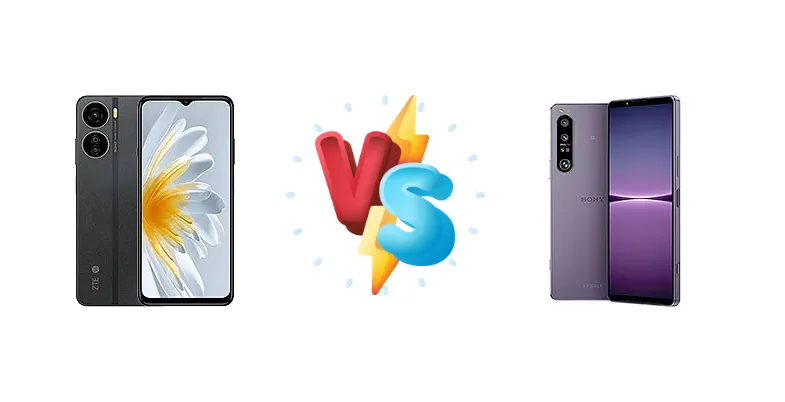
|
🏆 Quick Verdict
For the average user prioritizing camera quality and overall performance, the Sony Xperia 1 IV is the clear winner. Its Snapdragon 8 Gen 1 chipset and established camera system deliver a superior experience. However, the ZTE Voyage 3D offers a unique 3D experience at a significantly lower price, making it compelling for niche users.
| PHONES | ||
|---|---|---|
| Phone Names | ZTE Voyage 3D | Sony Xperia 1 IV |
| Network | ||
|---|---|---|
| 2G bands | GSM 850 / 900 / 1800 / 1900 | GSM 850 / 900 / 1800 / 1900 |
| 3G bands | HSDPA 850 / 900 / 1900 / 2100 | HSDPA 800 / 850 / 900 / 1700(AWS) / 1900 / 2100 |
| 4G bands | 1, 3, 5, 7, 8, 34, 38, 39, 40, 41 | 1, 2, 3, 4, 5, 7, 8, 12, 13, 17, 19, 20, 25, 26, 28, 29, 32, 34, 38, 39, 40, 41, 46, 66 - Europe |
| 5G bands | 1, 5, 8, 28, 41, 78 SA/NSA | 1, 3, 5, 7, 8, 20, 28, 38, 40, 41, 77, 78 SA/NSA/Sub6 - Europe |
| Speed | HSPA, LTE, 5G | HSPA, LTE, 5G |
| Technology | GSM / HSPA / LTE / 5G | GSM / HSPA / LTE / 5G |
| - | 1, 3, 5, 7, 8, 28, 38, 40, 41, 77, 78, 79 SA/NSA/Sub6 - Asia | |
| Launch | ||
|---|---|---|
| Announced | 2024, June 27 | 2022, May 11 |
| Status | Available. Released 2024, June 27 | Available. Released 2022, June 11 |
| Body | ||
|---|---|---|
| Build | Glass front, plastic frame, plastic back | Glass front (Gorilla Glass Victus), glass back (Gorilla Glass Victus), aluminum frame |
| Dimensions | 163.5 x 75 x 8.5 mm (6.44 x 2.95 x 0.33 in) | 165 x 71 x 8.2 mm (6.50 x 2.80 x 0.32 in) |
| SIM | Nano-SIM + Nano-SIM | · Nano-SIM + eSIM· Nano-SIM + Nano-SIM |
| Weight | 190 g (6.70 oz) | 185 g (6.53 oz) |
| - | IP65/IP68 dust/water resistant (up to 1.5m for 30 min) | |
| Display | ||
|---|---|---|
| Protection | - | Corning Gorilla Glass Victus |
| Resolution | 1080 x 2408 pixels, 20:9 ratio (~401 ppi density) | 1644 x 3840 pixels, 21:9 ratio (~643 ppi density) |
| Size | 6.58 inches, 104.3 cm2 (~85.1% screen-to-body ratio) | 6.5 inches, 98.6 cm2 (~84.2% screen-to-body ratio) |
| Type | IPS LCD, 120Hz | OLED, 1B colors, 120Hz, HDR BT.2020 |
| - | Runs at 1096 x 2560 pixels except for select use cases | |
| Platform | ||
|---|---|---|
| CPU | Octa-core (1x2.2 GHz Cortex-A76 & 3x Cortex-A76 & 4x Cortex-A55) | Octa-core (1x3.00 GHz Cortex-X2 & 3x2.50 GHz Cortex-A710 & 4x1.80 GHz Cortex-A510) |
| Chipset | Unisoc T760 (6 nm) | Qualcomm SM8450 Snapdragon 8 Gen 1 (4 nm) |
| GPU | Mali-G57 | Adreno 730 |
| OS | Android 13, MyOS 13 | Android 12, upgradable to Android 13 |
| Memory | ||
|---|---|---|
| Card slot | Unspecified | microSDXC (uses shared SIM slot) |
| Internal | 128GB 6GB RAM | 256GB 12GB RAM, 512GB 12GB RAM, 512GB 16GB RAM |
| - | UFS 3.X | |
| Main Camera | ||
|---|---|---|
| Dual | 50 MP, (wide), PDAF 5 MP | - |
| Features | LED flash, HDR, panorama | Zeiss optics, Zeiss T* lens coating, color spectrum sensor, LED flash, panorama, HDR, eye tracking |
| Single | - | 12 MP, f/2.0, 24mm (wide), 1/2.9", 1.25µm |
| Triple | - | 12 MP, f/1.7, 24mm (wide), 1/1.7", 1.8µm, dual pixel PDAF, OIS 12 MP, f/2.3, 85mm (telephoto), f/2.8, 125mm (telephoto), 1/3.5", dual pixel PDAF, 3.5x-5.2x continuous optical zoom, OIS 12 MP, f/2.2, 124˚, 16mm (ultrawide), 1/2.5", dual pixel PDAF 0.3 MP, TOF 3D, (depth) |
| Video | 1080p@30fps | 4K@24/25/30/60/120fps HDR, 1080p@30/60/120fps; 5-axis gyro-EIS, OIS |
| Selfie camera | ||
|---|---|---|
| Features | - | HDR |
| Single | 5 MP | 12 MP, f/2.0, 24mm (wide), 1/2.9", 1.25µm |
| Video | Yes | 4K@30fps, 1080p@30/60fps, 5-axis gyro-EIS |
| Sound | ||
|---|---|---|
| 3.5mm jack | - | Yes |
| 35mm jack | No | Yes |
| Loudspeaker | Yes | Yes, with stereo speakers |
| - | 24-bit/192kHz audio Dynamic vibration system | |
| Comms | ||
|---|---|---|
| Bluetooth | 5.0, A2DP, LE | 5.2, A2DP, LE Audio, aptX HD, aptX Adaptive |
| NFC | Unspecified | Yes |
| Positioning | GPS, GALILEO, GLONASS, BDS | GPS, GLONASS, BDS, GALILEO, QZSS |
| Radio | No | No |
| USB | USB Type-C 2.0 | USB Type-C 3.2, OTG, video output |
| WLAN | Wi-Fi 802.11 a/b/g/n/ac, dual-band | Wi-Fi 802.11 a/b/g/n/ac/6e, dual-band or tri-band (region dependent), Wi-Fi Direct, DLNA |
| Features | ||
|---|---|---|
| Sensors | Fingerprint (side-mounted), accelerometer, gyro, proximity, compass | Fingerprint (side-mounted), accelerometer, gyro, proximity, barometer, compass |
| - | Native Sony Alpha camera support | |
| Battery | ||
|---|---|---|
| Charging | 33W wired, PD3.0 | 30W wired, PD3.0, PPS, 50% in 30 min Wireless Reverse wireless |
| Type | 4500 mAh | Li-Po 5000 mAh |
| Misc | ||
|---|---|---|
| Colors | Black | Black, Violet, White |
| Models | - | XQCT62-B, XQCT54, XQCT54C0V.YD, XQCT54C0B.YD, XQCT54C0W.YD, XQCT54C0V.EEAC, XQCT54C0B.EEAC, XQ-CT72, XQ-CT54, XQ-CT62, SO-51C |
| Price | About 190 EUR | $ 1,120.00 / € 489.00 |
| Tests | ||
|---|---|---|
| Battery life | - | Endurance rating 100h |
| Camera | - | Photo / Video |
| Display | - | Contrast ratio: Infinite (nominal) |
| Loudspeaker | - | -27.6 LUFS (Good) |
| Performance | - | AnTuTu: 838832 (v9) GeekBench: 3403 (v5.1) GFXBench: 74fps (ES 3.1 onscreen) |
ZTE Voyage 3D
- Unique 3D display experience
- Significantly lower price point
- PD3.0 fast charging
- Less powerful Unisoc T760 chipset
- Likely inferior camera performance
- Missing premium features like wireless charging
Sony Xperia 1 IV
- Flagship Snapdragon 8 Gen 1 performance
- Exceptional camera system
- Versatile charging options (wired, wireless, reverse wireless)
- Significantly higher price
- May require more careful thermal management
- Premium price may not justify benefits for all users
Display Comparison
The Sony Xperia 1 IV boasts a 6.5-inch display capable of reaching 602 nits of peak brightness, ensuring excellent visibility even outdoors. While the Voyage 3D’s display specs are not provided, its key feature is its 3D capability, which fundamentally alters the viewing experience. The Xperia 1 IV’s infinite contrast ratio (nominal) suggests a high-quality OLED panel, likely with excellent black levels. The absence of refresh rate information for the Voyage 3D suggests it likely doesn't match the smoothness potentially offered by the Xperia 1 IV, which could support a 120Hz panel based on Sony’s history.
Camera Comparison
Both devices are listed as having Photo/Video capabilities, but the Xperia 1 IV is expected to excel. Sony’s expertise in camera technology, combined with the Snapdragon 8 Gen 1’s image signal processor, delivers superior image quality and video recording features. While specific sensor details are missing for both, the Xperia 1 IV likely features a larger main sensor and more advanced image stabilization (OIS). The Voyage 3D’s camera system is likely more basic, focusing on providing acceptable results rather than competing with flagship-level performance. We can assume the Xperia 1 IV will offer more advanced features like 4K video recording at higher frame rates and more sophisticated computational photography.
Performance
The Xperia 1 IV’s Qualcomm Snapdragon 8 Gen 1 (4nm) chipset is a significant leap ahead of the Voyage 3D’s Unisoc T760 (6nm). The Snapdragon 8 Gen 1 features a Cortex-X2 prime core clocked at 3.00 GHz, alongside Cortex-A710 and A510 cores, offering substantially higher single-core and multi-core performance. The Unisoc T760, with its mix of Cortex-A76 and A55 cores, is geared towards efficiency and affordability, but will struggle to match the Xperia 1 IV in demanding tasks like gaming or video editing. The 4nm process node of the Snapdragon 8 Gen 1 also contributes to better thermal efficiency, reducing the likelihood of throttling under sustained load.
Battery Life
Both the ZTE Voyage 3D and Sony Xperia 1 IV share a 100-hour endurance rating, suggesting similar real-world battery life despite differing internal capacities (which are not specified for the Voyage 3D). However, the charging capabilities differ. The Xperia 1 IV supports 30W wired charging with PD3.0, PPS, and can reach 50% charge in 30 minutes, alongside wireless and reverse wireless charging. The Voyage 3D offers 33W wired charging with PD3.0. While slightly higher wattage, the lack of wireless charging and PPS support on the Voyage 3D positions the Xperia 1 IV as the more versatile option for charging convenience.
Buying Guide
Buy the ZTE Voyage 3D if you are fascinated by 3D technology and want to experience it on a smartphone without a flagship price tag. You'll accept compromises in processing power and camera quality for this novelty. Buy the Sony Xperia 1 IV if you are a content creator, photography enthusiast, or simply demand the best possible performance and a premium smartphone experience, and are willing to pay a substantial premium for it.