
ZTE Voyage 3D vs Samsung Galaxy S22 Ultra: A Deep Dive into Two Very Different Approaches
| Phones Images | |||||
|---|---|---|---|---|---|
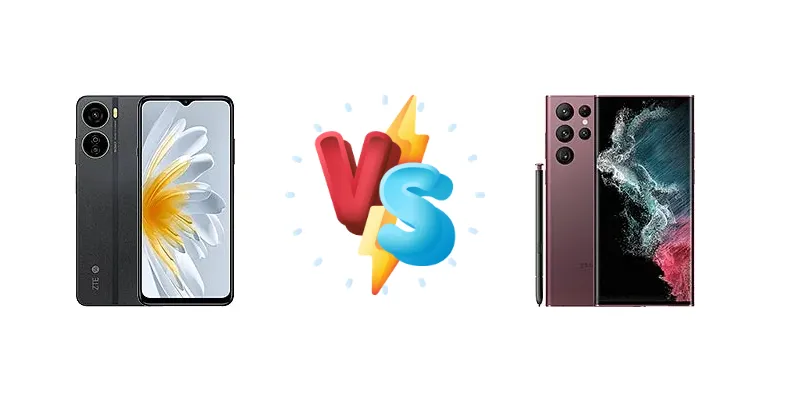
|
🏆 Quick Verdict
For the average user prioritizing performance, camera quality, and a premium experience, the Samsung Galaxy S22 Ultra is the clear winner. However, the ZTE Voyage 3D offers a compelling, and currently rare, 3D experience at a significantly lower price point, making it ideal for niche users.
| PHONES | ||
|---|---|---|
| Phone Names | ZTE Voyage 3D | Samsung Galaxy S22 Ultra 5G |
| Network | ||
|---|---|---|
| 2G bands | GSM 850 / 900 / 1800 / 1900 | GSM 850 / 900 / 1800 / 1900 |
| 3G bands | HSDPA 850 / 900 / 1900 / 2100 | HSDPA 850 / 900 / 1700(AWS) / 1900 / 2100 |
| 4G bands | 1, 3, 5, 7, 8, 34, 38, 39, 40, 41 | 1, 2, 3, 4, 5, 7, 8, 12, 13, 17, 18, 19, 20, 25, 26, 28, 32, 38, 39, 40, 41, 66 - International |
| 5G bands | 1, 5, 8, 28, 41, 78 SA/NSA | 1, 2, 3, 5, 7, 8, 12, 20, 25, 28, 38, 40, 41, 66, 75, 77, 78 SA/NSA/Sub6 - International |
| Speed | HSPA, LTE, 5G | HSPA 42.2/5.76 Mbps, LTE (7CA) Cat20 2000/200 Mbps, 5G (5+ Gbps DL) |
| Technology | GSM / HSPA / LTE / 5G | GSM / CDMA / HSPA / EVDO / LTE / 5G |
| - | 1, 3, 5, 7, 8, 20, 28, 38, 41, 66, 71, 260, 261 SA/NSA/Sub6/mmWave - USA | |
| Launch | ||
|---|---|---|
| Announced | 2024, June 27 | 2022, February 09 |
| Status | Available. Released 2024, June 27 | Available. Released 2022, February 25 |
| Body | ||
|---|---|---|
| Build | Glass front, plastic frame, plastic back | Glass front (Gorilla Glass Victus+), glass back (Gorilla Glass Victus+), aluminum frame |
| Dimensions | 163.5 x 75 x 8.5 mm (6.44 x 2.95 x 0.33 in) | 163.3 x 77.9 x 8.9 mm (6.43 x 3.07 x 0.35 in) |
| SIM | Nano-SIM + Nano-SIM | · Nano-SIM + eSIM· Nano-SIM + Nano-SIM + eSIM (max 2 at a time) |
| Weight | 190 g (6.70 oz) | 228 g / 229 g (mmWave) (8.04 oz) |
| - | IP68 dust/water resistant (up to 1.5m for 30 min) Armor aluminum frame with tougher drop and scratch resistance (advertised) Stylus, 2.8ms latency (Bluetooth integration, accelerometer, gyro) | |
| Display | ||
|---|---|---|
| Protection | - | Corning Gorilla Glass Victus+ |
| Resolution | 1080 x 2408 pixels, 20:9 ratio (~401 ppi density) | 1440 x 3088 pixels, 19.3:9 ratio (~500 ppi density) |
| Size | 6.58 inches, 104.3 cm2 (~85.1% screen-to-body ratio) | 6.8 inches, 114.7 cm2 (~90.2% screen-to-body ratio) |
| Type | IPS LCD, 120Hz | Dynamic AMOLED 2X, 120Hz, HDR10+, 1750 nits (peak) |
| - | Always-on display | |
| Platform | ||
|---|---|---|
| CPU | Octa-core (1x2.2 GHz Cortex-A76 & 3x Cortex-A76 & 4x Cortex-A55) | Octa-core (1x2.8 GHz Cortex-X2 & 3x2.50 GHz Cortex-A710 & 4x1.8 GHz Cortex-A510) - EuropeOcta-core (1x3.00 GHz Cortex-X2 & 3x2.50 GHz Cortex-A710 & 4x1.80 GHz Cortex-A510) - ROW |
| Chipset | Unisoc T760 (6 nm) | Exynos 2200 (4 nm) - EuropeQualcomm SM8450 Snapdragon 8 Gen 1 (4 nm) - ROW |
| GPU | Mali-G57 | Xclipse 920 - EuropeAdreno 730 - ROW |
| OS | Android 13, MyOS 13 | Android 12, up to 4 major Android upgrades, One UI 8 |
| Memory | ||
|---|---|---|
| Card slot | Unspecified | No |
| Internal | 128GB 6GB RAM | 128GB 8GB RAM, 256GB 12GB RAM, 512GB 12GB RAM, 1TB 12GB RAM |
| - | UFS 3.1 | |
| Main Camera | ||
|---|---|---|
| Dual | 50 MP, (wide), PDAF 5 MP | - |
| Features | LED flash, HDR, panorama | Laser AF, LED flash, auto-HDR, panorama |
| Quad | - | 108 MP, f/1.8, 23mm (wide), 1/1.33", 0.8µm, PDAF, OIS 10 MP, f/2.4, 70mm (telephoto), 1/3.52", 1.12µm, PDAF, OIS, 3x optical zoom 10 MP, f/4.9, 230mm (periscope telephoto), 1/3.52", 1.12µm, PDAF, OIS, 10x optical zoom 12 MP, f/2.2, 13mm, 120˚ (ultrawide), 1/2.55", 1.4µm, dual pixel PDAF, Super Steady video |
| Video | 1080p@30fps | 8K@24fps, 4K@30/60fps, 1080p@30/60/120/240fps, HDR10+, stereo sound rec., gyro-EIS |
| Selfie camera | ||
|---|---|---|
| Features | - | HDR |
| Single | 5 MP | 40 MP, f/2.2, 26mm (wide), 1/2.82", 0.7µm, PDAF |
| Video | Yes | 4K@30/60fps, 1080p@30fps |
| Sound | ||
|---|---|---|
| 3.5mm jack | - | No |
| 35mm jack | No | No |
| Loudspeaker | Yes | Yes, with stereo speakers |
| - | 32-bit/384kHz audio Tuned by AKG | |
| Comms | ||
|---|---|---|
| Bluetooth | 5.0, A2DP, LE | 5.2, A2DP, LE |
| NFC | Unspecified | Yes |
| Positioning | GPS, GALILEO, GLONASS, BDS | GPS, GLONASS, BDS, GALILEO |
| Radio | No | No |
| USB | USB Type-C 2.0 | USB Type-C 3.2, OTG |
| WLAN | Wi-Fi 802.11 a/b/g/n/ac, dual-band | Wi-Fi 802.11 a/b/g/n/ac/6e, dual-band, Wi-Fi Direct |
| Features | ||
|---|---|---|
| Sensors | Fingerprint (side-mounted), accelerometer, gyro, proximity, compass | Fingerprint (under display, ultrasonic), accelerometer, gyro, proximity, compass, barometer |
| - | Samsung DeX, Samsung Wireless DeX (desktop experience support) Bixby natural language commands and dictation Samsung Pay (Visa, MasterCard certified) Ultra Wideband (UWB) support | |
| Battery | ||
|---|---|---|
| Charging | 33W wired, PD3.0 | 45W wired, PD3.0 15W wireless (Qi) 4.5W reverse wireless |
| Type | 4500 mAh | Li-Ion 5000 mAh |
| Misc | ||
|---|---|---|
| Colors | Black | Phantom Black, White, Burgundy, Green, Graphite, Red, Sky Blue, Bora Purple |
| Models | - | SM-S908B, SM-S908B/DS, SM-S908U, SM-S908U1, SM-S908W, SM-S908N, SM-S9080, SM-S908E, SM-S908E/DS |
| Price | About 190 EUR | € 397.07 / $ 269.98 / £ 304.99 / ₹ 63,899 |
| SAR | - | 1.18 W/kg (head) 0.98 W/kg (body) |
| SAR EU | - | 1.05 W/kg (head) 1.58 W/kg (body) |
| Tests | ||
|---|---|---|
| Battery life | - | Endurance rating 108h |
| Camera | - | Photo / Video |
| Display | - | Contrast ratio: Infinite (nominal) |
| Loudspeaker | - | -27.3 LUFS (Good) |
| Performance | - | AnTuTu: 968359 (v9) GeekBench: 3657 (v5.1) GFXBench: 37fps (ES 3.1 onscreen) |
ZTE Voyage 3D
- Unique 3D display technology
- Significantly lower price point
- PD3.0 fast charging support
- Less powerful processor
- Inferior camera system
- Limited software support
Samsung Galaxy S22 Ultra 5G
- Exceptional performance with Exynos 2200/Snapdragon 8 Gen 1
- Versatile and high-quality camera system
- Bright and vibrant display with LTPO technology
- High price tag
- Potential for Exynos overheating (depending on region)
- Larger and heavier form factor
Display Comparison
The Samsung Galaxy S22 Ultra boasts a significantly brighter display, peaking at 1266 nits, ensuring excellent visibility even in direct sunlight. While the Voyage 3D’s display specs are not provided, its key feature is its 3D capability, which alters the viewing experience. The S22 Ultra’s infinite contrast ratio (nominal) suggests a superior viewing experience for HDR content. The S22 Ultra likely utilizes LTPO technology for adaptive refresh rates, conserving battery life, a feature absent in the Voyage 3D’s specifications.
Camera Comparison
Both devices feature photo and video capabilities, but the S22 Ultra is expected to offer a far more sophisticated camera system. While specific sensor details are missing for both, Samsung’s flagship typically includes large sensors, advanced image stabilization (OIS), and a wider range of shooting modes. The Voyage 3D’s camera is likely focused on providing basic functionality, while the S22 Ultra aims for professional-grade results. The absence of details regarding the Voyage 3D’s lens apertures suggests a less capable low-light performance compared to the S22 Ultra.
Performance
The Galaxy S22 Ultra, equipped with either the Exynos 2200 (Europe) or Snapdragon 8 Gen 1 (ROW) fabricated on a 4nm process, delivers substantially higher processing power than the Voyage 3D’s Unisoc T760 (6nm). The S22 Ultra’s CPU configuration – Cortex-X2, A710, and A510 cores – is architecturally superior to the Voyage 3D’s mix of A76 and A55 cores, resulting in faster application loading and smoother multitasking. The 4nm process node of the S22 Ultra’s chipset also contributes to improved thermal efficiency, mitigating throttling during sustained workloads. The Unisoc T760 is adequate for everyday tasks, but will struggle with demanding games and applications compared to the S22 Ultra.
Battery Life
Both phones share an endurance rating of 108 hours, suggesting comparable battery life under similar usage scenarios. However, the S22 Ultra’s 45W wired charging, along with 15W wireless and 4.5W reverse wireless charging, provides significantly faster and more versatile charging options than the Voyage 3D’s 33W wired charging with PD3.0. While the battery capacity isn’t specified for either device, the S22 Ultra’s faster charging speeds can offset any potential capacity differences, allowing for quicker top-ups throughout the day.
Buying Guide
Buy the ZTE Voyage 3D if you are fascinated by 3D display technology and want to experience it without a flagship price tag, and are willing to compromise on raw processing power and camera capabilities. Buy the Samsung Galaxy S22 Ultra 5G if you demand top-tier performance, a versatile camera system, a vibrant display, and a polished software experience, and are prepared to invest in a premium device.