
ZTE Voyage 3D vs. Google Pixel 6 Pro: A Deep Dive into 3D and Tensor
| Phones Images | |||||
|---|---|---|---|---|---|
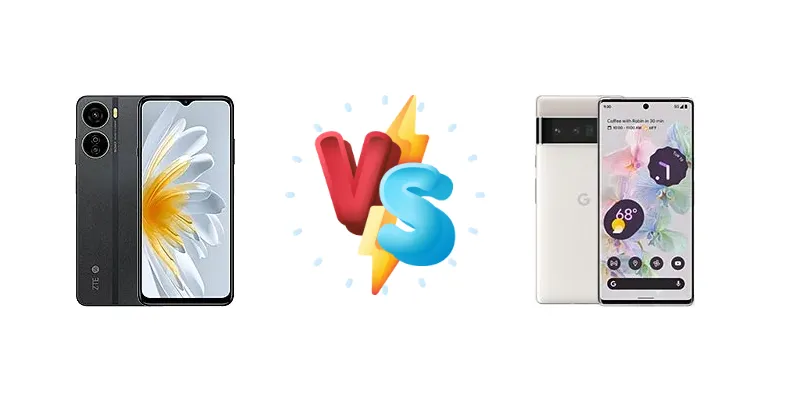
|
🏆 Quick Verdict
For the average user prioritizing camera quality, software experience, and long-term support, the Google Pixel 6 Pro is the superior choice. However, the ZTE Voyage 3D offers a unique 3D viewing experience at a significantly lower price point, appealing to niche users seeking novelty.
| PHONES | ||
|---|---|---|
| Phone Names | ZTE Voyage 3D | Google Pixel 6 Pro |
| Network | ||
|---|---|---|
| 2G bands | GSM 850 / 900 / 1800 / 1900 | GSM 850 / 900 / 1800 / 1900 |
| 3G bands | HSDPA 850 / 900 / 1900 / 2100 | HSDPA 800 / 850 / 900 / 1700(AWS) / 1900 / 2100 |
| 4G bands | 1, 3, 5, 7, 8, 34, 38, 39, 40, 41 | 1, 2, 3, 4, 5, 7, 8, 12, 13, 14, 17, 18, 19, 20, 25, 26, 28, 29, 30, 32, 38, 39, 40, 41, 42, 46, 48, 66, 71 - GLUOG, G8VOU |
| 5G bands | 1, 5, 8, 28, 41, 78 SA/NSA | 1, 2, 3, 5, 7, 8, 12, 14, 20, 25, 28, 30, 38, 40, 41, 48, 66, 71, 77, 78, 257, 258, 260, 261 SA/NSA/Sub6/mmWave - G8VOU |
| Speed | HSPA, LTE, 5G | HSPA, LTE, 5G |
| Technology | GSM / HSPA / LTE / 5G | GSM / CDMA / HSPA / EVDO / LTE / 5G |
| - | 1, 2, 3, 5, 7, 8, 12, 14, 20, 25, 28, 30, 38, 40, 41, 48, 66, 71, 77, 78 SA/NSA/Sub6 - GLUOG | |
| Launch | ||
|---|---|---|
| Announced | 2024, June 27 | 2021, October 19 |
| Status | Available. Released 2024, June 27 | Available. Released 2021, October 28 |
| Body | ||
|---|---|---|
| Build | Glass front, plastic frame, plastic back | Glass front (Gorilla Glass Victus), glass back (Gorilla Glass Victus), aluminum frame |
| Dimensions | 163.5 x 75 x 8.5 mm (6.44 x 2.95 x 0.33 in) | 163.9 x 75.9 x 8.9 mm (6.45 x 2.99 x 0.35 in) |
| SIM | Nano-SIM + Nano-SIM | Nano-SIM + eSIM |
| Weight | 190 g (6.70 oz) | 210 g (7.41 oz) |
| - | IP68 dust/water resistant (up to 1.5m for 30 min) | |
| Display | ||
|---|---|---|
| Protection | - | Corning Gorilla Glass Victus |
| Resolution | 1080 x 2408 pixels, 20:9 ratio (~401 ppi density) | 1440 x 3120 pixels, 19.5:9 ratio (~512 ppi density) |
| Size | 6.58 inches, 104.3 cm2 (~85.1% screen-to-body ratio) | 6.7 inches, 110.6 cm2 (~88.9% screen-to-body ratio) |
| Type | IPS LCD, 120Hz | LTPO AMOLED, 120Hz, HDR10+ |
| - | Always-on display | |
| Platform | ||
|---|---|---|
| CPU | Octa-core (1x2.2 GHz Cortex-A76 & 3x Cortex-A76 & 4x Cortex-A55) | Octa-core (2x2.80 GHz Cortex-X1 & 2x2.25 GHz Cortex-A76 & 4x1.80 GHz Cortex-A55) |
| Chipset | Unisoc T760 (6 nm) | Google Tensor (5 nm) |
| GPU | Mali-G57 | Mali-G78 MP20 |
| OS | Android 13, MyOS 13 | Android 12, upgradable to Android 15, up to 5 major Android upgrades |
| Memory | ||
|---|---|---|
| Card slot | Unspecified | No |
| Internal | 128GB 6GB RAM | 128GB 12GB RAM, 256GB 12GB RAM, 512GB 12GB RAM |
| - | UFS 3.1 | |
| Main Camera | ||
|---|---|---|
| Dual | 50 MP, (wide), PDAF 5 MP | - |
| Features | LED flash, HDR, panorama | Laser AF, Dual-LED flash, Pixel Shift, Auto-HDR, panorama |
| Single | - | 11.1 MP, f/2.2, 20mm (ultrawide), 1.22µm |
| Triple | - | 50 MP, f/1.9, 25mm (wide), 1/1.31", 1.2µm, dual pixel PDAF, OIS 48 MP, f/3.5, 104mm (periscope telephoto), 1/2.0", 0.8µm, PDAF, OIS, 4x optical zoom 12 MP, f/2.2, 17mm, 114˚ (ultrawide), 1.25µm |
| Video | 1080p@30fps | 4K@30/60fps, 1080p@30/60/120/240fps; gyro-EIS, OIS |
| Selfie camera | ||
|---|---|---|
| Features | - | HDR, panorama |
| Single | 5 MP | 11.1 MP, f/2.2, 20mm (ultrawide), 1.22µm |
| Video | Yes | 4K@30fps, 1080p@30/60fps |
| Sound | ||
|---|---|---|
| 3.5mm jack | - | No |
| 35mm jack | No | No |
| Loudspeaker | Yes | Yes, with stereo speakers |
| Comms | ||
|---|---|---|
| Bluetooth | 5.0, A2DP, LE | 5.2, A2DP, LE, aptX HD |
| NFC | Unspecified | Yes |
| Positioning | GPS, GALILEO, GLONASS, BDS | GPS (L1+L5), GLONASS (G1), BDS (B1I+B1c+B2a), GALILEO (E1+E5a), QZSS (L1+L5) |
| Radio | No | No |
| USB | USB Type-C 2.0 | USB Type-C 3.1 |
| WLAN | Wi-Fi 802.11 a/b/g/n/ac, dual-band | Wi-Fi 802.11 a/b/g/n/ac/6e, dual-band, Wi-Fi Direct |
| Features | ||
|---|---|---|
| Sensors | Fingerprint (side-mounted), accelerometer, gyro, proximity, compass | Fingerprint (under display, optical), accelerometer, gyro, proximity, compass, barometer |
| - | Ultra Wideband (UWB) support | |
| Battery | ||
|---|---|---|
| Charging | 33W wired, PD3.0 | 23W wired, PD3.0, 50% in 30 min 23W wireless Reverse wireless |
| Type | 4500 mAh | Li-Ion 5003 mAh |
| Misc | ||
|---|---|---|
| Colors | Black | Cloudy White, Sorta Sunny, Stormy Black |
| Models | - | GLUOG, G8VOU, GF5KQ |
| Price | About 190 EUR | € 199.99 / $ 204.99 / £ 275.00 / ₹ 29,699 |
| Tests | ||
|---|---|---|
| Battery life | - | Endurance rating 84h |
| Display | - | Contrast ratio: Infinite (nominal) |
| Performance | - | AnTuTu: 585485 (v8), 719815 (v9) GeekBench: 2831 (v5.1) GFXBench: 39 fps (ES 3.1 onscreen) |
ZTE Voyage 3D
- Unique glasses-free 3D display
- Faster 33W wired charging
- Potentially lower price point
- Less powerful Unisoc T760 chipset
- Likely inferior camera performance
- Uncertain software update support
Google Pixel 6 Pro
- Powerful Google Tensor chip
- Exceptional camera system with AI features
- Polished software experience and long-term support
- Slower 23W wired charging
- No 3D display capability
- Higher price point
Display Comparison
The Pixel 6 Pro boasts a brighter display, peaking at 846 nits, offering excellent visibility in direct sunlight. While the Voyage 3D’s brightness isn’t specified, its key feature is its glasses-free 3D capability. This is a fundamentally different approach; the Pixel 6 Pro focuses on color accuracy and brightness, while the Voyage 3D prioritizes a novel visual experience. The Pixel 6 Pro’s infinite contrast ratio (nominal) suggests a superior OLED panel, likely with excellent black levels, compared to the Voyage 3D’s panel type which is not specified. The 3D effect on the Voyage 3D will likely impact viewing angles and potentially battery life.
Camera Comparison
The Pixel 6 Pro is renowned for its computational photography prowess, leveraging the Tensor chip’s AI capabilities. While specific sensor details for the Voyage 3D are missing, the Pixel 6 Pro’s camera system is expected to deliver superior image quality, particularly in low-light conditions. The Pixel 6 Pro’s image processing algorithms are a key differentiator, offering features like Magic Eraser and Motion Mode. The Voyage 3D’s camera performance is likely to be adequate for casual use, but it won’t match the Pixel 6 Pro’s sophistication.
Performance
The Google Pixel 6 Pro’s Google Tensor chip (5nm) significantly outperforms the ZTE Voyage 3D’s Unisoc T760 (6nm) in raw processing power. The Tensor’s octa-core configuration, featuring 2x2.80 GHz Cortex-X1 cores, provides a substantial advantage in CPU-intensive tasks. The Voyage 3D’s CPU, while octa-core, relies on older Cortex-A76 cores. The 5nm fabrication process of the Tensor also contributes to better thermal efficiency, reducing the likelihood of throttling during sustained workloads. While both support PD3.0 charging, the Pixel 6 Pro’s 23W wired and 23W wireless charging options offer more flexibility than the Voyage 3D’s 33W wired charging.
Battery Life
Both devices share an endurance rating of 84 hours, suggesting comparable battery life under similar usage scenarios. However, the Pixel 6 Pro’s 23W wireless charging and reverse wireless charging capabilities provide added convenience. The Voyage 3D’s 33W wired charging is faster than the Pixel 6 Pro’s 23W wired charging, potentially offering quicker top-ups. The Pixel 6 Pro’s 50% charge in 30 minutes claim is a practical benefit for users needing a quick boost.
Buying Guide
Buy the ZTE Voyage 3D if you are fascinated by 3D technology and want to experience it without glasses, and are willing to compromise on raw processing power and camera capabilities. Buy the Google Pixel 6 Pro if you prioritize a polished software experience, exceptional camera performance, and a more powerful processor for demanding tasks like gaming and video editing.