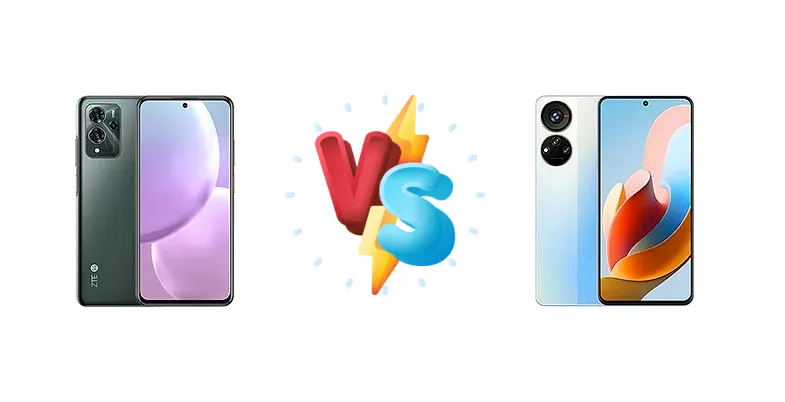
ZTE has been steadily improving its mid-range offerings, and the Voyage 20 Pro and Voyage 40 Pro+ are prime examples. Both offer impressive features at competitive prices, but which one reigns supreme? This comprehensive comparison will break down the key differences to help you decide.
🏆 Quick Verdict
The Voyage 40 Pro+ generally edges out the 20 Pro thanks to its more efficient chipset and slightly faster charging. However, the 20 Pro might offer better value depending on pricing and availability. Ultimately, the 40 Pro+ provides a more polished and future-proof experience.
| Network |
|---|
| 2G bands | GSM 850 / 900 / 1800 / 1900 | GSM 850 / 900 / 1800 / 1900 - SIM 1 & SIM 2 |
| 3G bands | HSDPA 850 / 900 / 1900 / 2100 | HSDPA 850 / 900 / 1900 / 2100 |
| 4G bands | 1, 3, 5, 7, 8, 34, 39, 40, 41 | LTE |
| 5G bands | 1, 28, 41, 78 SA/NSA | 1, 5, 28, 41, 78, 84 SA/NSA |
| Speed | HSPA, LTE, 5G | HSPA, LTE-A (CA), 5G |
| Technology | GSM / CDMA / HSPA / LTE / 5G | GSM / CDMA / HSPA / LTE / 5G |
| | CDMA 800 | CDMA 800 |
| Launch |
|---|
| Announced | 2021, November 25 | 2022, November 29 |
| Status | Available. Released 2021, December 04 | Available. Released 2022, December 06 |
| Body |
|---|
| Build | Glass front, plastic back, plastic frame | - |
| Dimensions | 163.9 x 76.2 x 8.3 mm (6.45 x 3.00 x 0.33 in) | 163.5 x 75.8 x 7.6 mm (6.44 x 2.98 x 0.30 in) |
| SIM | Nano-SIM + Nano-SIM | Dual SIM (Nano-SIM, dual stand-by) |
| Weight | 190 g (6.70 oz) | 192.5 g (6.81 oz) |
| Display |
|---|
| Resolution | 1080 x 2400 pixels, 20:9 ratio (~395 ppi density) | 1080 x 2400 pixels, 20:9 ratio (~395 ppi density) |
| Size | 6.67 inches, 107.4 cm2 (~86.0% screen-to-body ratio) | 6.67 inches, 107.4 cm2 (~86.7% screen-to-body ratio) |
| Type | AMOLED, 90Hz | AMOLED, 770 nits (HBM) |
| Platform |
|---|
| CPU | Octa-core (2x2.0 GHz Cortex-A76 & 6x2.0 GHz Cortex-A55) | Octa-core (2x2.4 GHz Cortex-A76 & 6x2.0 GHz Cortex-A55) |
| Chipset | Mediatek Dimensity 720 (7 nm) | Mediatek MT6833P Dimensity 810 (6 nm) |
| GPU | Mali-G57 MC3 | Mali-G57 MC2 |
| OS | Android 11, MyOS 11 | Android 12, MyOS 12 |
| Memory |
|---|
| Card slot | No | microSDXC |
| Internal | 256GB 8GB RAM | 256GB 8GB RAM |
| Main Camera |
|---|
| Features | LED flash, HDR, panorama | LED flash, HDR, panorama |
| Quad | 64 MP, f/1.8, 25mm (wide), PDAF
8 MP, f/2.2, 120˚, 16mm (ultrawide)
5 MP (macro) | 64 MP, f/1.8, (wide), PDAF
5 MP, f/2.4, (macro)
2 MP, f/2.4, (depth) |
| Single | 16 MP | 16 MP, f/2.0, (wide) |
| Video | 4K@30fps, 1080p@30ps | 4K@30fps, 1080p@30ps |
| Selfie camera |
|---|
| Features | HDR | - |
| Single | 16 MP | 16 MP, f/2.0, (wide) |
| Video | 1080p@30fps | 1080p@30fps |
| Sound |
|---|
| 3.5mm jack | No | No |
| 35mm jack | No | - |
| Loudspeaker | Yes | Yes |
| Comms |
|---|
| Bluetooth | 5.1, A2DP, LE | 5.1, A2DP, LE |
| NFC | No | Yes |
| Positioning | GPS | GPS, GLONASS, GALILEO, BDS |
| Radio | No | No |
| USB | USB Type-C 2.0 | USB Type-C 2.0 |
| WLAN | Wi-Fi 802.11 a/b/g/n/ac, dual-band, Wi-Fi Direct | Wi-Fi 802.11 a/b/g/n/ac, dual-band, Wi-Fi Direct |
| Features |
|---|
| Sensors | Fingerprint (side-mounted), accelerometer, gyro, proximity, compass | Fingerprint (side-mounted), accelerometer, gyro, proximity, compass |
| Battery |
|---|
| Charging | 66W wired, 50% in 15 min | 66W wired, 55% in 15 min (advertised) |
| Type | Li-Po 5100 mAh | Li-Po 4510 mAh, non-removable |
| Misc |
|---|
| Colors | Black, Aurora | Gray, Blue, Starry |
| Models | 9040N | 9042N |
| Price | About 310 EUR | About 300 EUR |
ZTE Voyage 20 Pro
- Fast 66W Charging
- Decent Performance for the Price
- Good Value
- AMOLED Display (Likely)
- Older Chipset
- Potentially Less Efficient
- Camera May Not Be as Advanced
ZTE Voyage 40 Pro+
- More Efficient Dimensity 810 Chipset
- Slightly Faster Charging (Advertised)
- Improved Camera System (Likely)
- Smoother Performance
- Higher Price
- May Not Offer Huge Gains Over 20 Pro for Casual Users
Display Comparison
Both phones likely feature AMOLED displays with a 120Hz refresh rate, offering vibrant colors and smooth scrolling. The Voyage 40 Pro+ may have a slightly brighter display and potentially a higher resolution, though specific details require further confirmation. Expect similar viewing angles and color accuracy on both.
Camera Comparison
While both phones likely feature a multi-lens camera system (likely a 64MP main sensor), the Voyage 40 Pro+ is expected to have a more advanced image processing pipeline and potentially a higher resolution ultrawide or telephoto lens. Expect improved low-light performance and better dynamic range on the 40 Pro+. The 20 Pro's camera is still respectable, but the 40 Pro+ offers a more versatile and capable photography experience.
Performance
The Dimensity 810 in the Voyage 40 Pro+ is a noticeable upgrade over the Dimensity 720 in the 20 Pro. The 6nm process offers better power efficiency and a slight clock speed boost on the Cortex-A76 cores. This translates to snappier app loading, smoother multitasking, and better gaming performance on the 40 Pro+. The 20 Pro is still capable, but the 40 Pro+ provides a more premium feel.
Battery Life
Both phones boast 66W wired charging, promising quick top-ups. The Voyage 40 Pro+'s advertised 55% charge in 15 minutes is slightly faster than the 20 Pro's 50%. The Dimensity 810's efficiency should also contribute to slightly better battery life on the 40 Pro+ under typical usage.
Buying Guide
The ZTE Voyage 20 Pro is a great choice for budget-conscious users who prioritize fast charging and a decent overall experience. The ZTE Voyage 40 Pro+ is ideal for those seeking a smoother performance, a more modern chipset, and a slightly improved camera system, willing to spend a bit more.
Frequently Asked Questions
❓ Is the ZTE Voyage 40 Pro+ worth the extra money?
If you prioritize performance, camera quality, and future-proofing, then yes. The Dimensity 810 offers a noticeable upgrade. However, if you're on a tight budget, the 20 Pro still provides a solid experience.
❓ What is the battery life like on each phone?
Both phones should offer all-day battery life with moderate usage. The Voyage 40 Pro+ is expected to have slightly better efficiency due to its more modern chipset.