
ZTE Quest 5 vs. Motorola Moto G Power 5G: A Deep Dive into Budget 5G Performance
| Phones Images | |||||
|---|---|---|---|---|---|
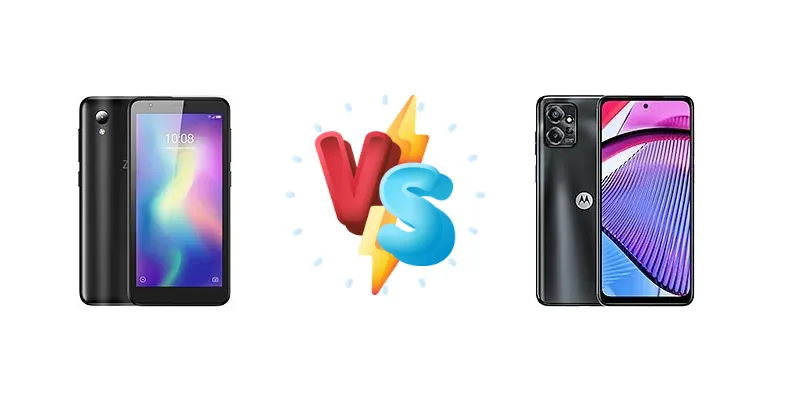
|
🏆 Quick Verdict
For most users, the Motorola Moto G Power 5G is the superior choice. Its Mediatek Dimensity 930 chipset offers a substantial performance leap over the ZTE Quest 5’s aging Mediatek MT6739, resulting in a smoother, more responsive experience. While the Quest 5 is cheaper, the performance deficit is too significant to ignore for all but the most basic users.
| PHONES | ||
|---|---|---|
| Phone Names | ZTE Quest 5 | Motorola Moto G Power 5G |
| Network | ||
|---|---|---|
| 2G bands | GSM 850 / 1900 | GSM 850 / 900 / 1800 / 1900 |
| 3G bands | HSDPA 850 / 900 / 1900 / 2100 | HSDPA 850 / 900 / 1700(AWS) / 1900 / 2100 |
| 4G bands | 2, 4, 5, 12, 13, 25, 26, 41 | 1, 2, 3, 4, 5, 7, 8, 12, 13, 14, 17, 20, 25, 26, 29, 30, 38, 39, 40, 41, 48, 66, 71 |
| 5G bands | - | 2, 5, 7, 12, 25, 30, 41, 66, 71, 77, 78 SA/NSA/Sub6 |
| Speed | HSPA, LTE Cat4 150/50 Mbps | HSPA, LTE, 5G |
| Technology | GSM / CDMA / HSPA / LTE | GSM / HSPA / LTE / 5G |
| CDMA 800 / 1900 | - | |
| Launch | ||
|---|---|---|
| Announced | 2020, August. Released 2020, August | 2023, April 06 |
| Status | Discontinued | Available. Released 2023, April 13 |
| Body | ||
|---|---|---|
| Build | - | Glass front, plastic back, plastic frame |
| Dimensions | 137 x 68 x 10.6 mm (5.39 x 2.68 x 0.42 in) | 163.1 x 74.8 x 8.5 mm (6.42 x 2.94 x 0.33 in) |
| SIM | Nano-SIM | Nano-SIM |
| Weight | 143 g (5.04 oz) | 185 g (6.53 oz) |
| - | Water-repellent design | |
| Display | ||
|---|---|---|
| Resolution | 480 x 960 pixels, 18:9 ratio (~215 ppi density) | 1080 x 2400 pixels, 20:9 ratio (~405 ppi density) |
| Size | 5.0 inches, 64.5 cm2 (~69.3% screen-to-body ratio) | 6.5 inches, 102.0 cm2 (~83.6% screen-to-body ratio) |
| Type | IPS LCD | IPS LCD, 120Hz |
| Platform | ||
|---|---|---|
| CPU | Quad-core 1.5 GHz Cortex-A53 | Octa-core (2x2.2 GHz Cortex-A78 & 6x2.0 GHz Cortex-A55) |
| Chipset | Mediatek MT6739 (28 nm) | Mediatek Dimensity 930 (6 nm) |
| GPU | PowerVR GE8100 | IMG BXM-8-256 |
| OS | Android 10 (Go Edition) | Android 13, upgradable to Android 14 |
| Memory | ||
|---|---|---|
| Card slot | microSDHC (dedicated slot) | microSDXC (dedicated slot) |
| Internal | 16GB 1GB RAM | 128GB 4GB RAM, 256GB 6GB RAM |
| eMMC 5.1 | - | |
| Main Camera | ||
|---|---|---|
| Features | - | LED flash, HDR, panorama |
| Single | 5 MP | - |
| Triple | - | 50 MP, f/1.8, (wide), 0.64µm, PDAF 2 MP (macro) Auxiliary lens |
| Video | - | 1080p@30fps, gyro-EIS |
| Selfie camera | ||
|---|---|---|
| Single | 2 MP | 16 MP, f/2.4, (wide), 1.0µm |
| Video | - | 1080p@30fps |
| Sound | ||
|---|---|---|
| 3.5mm jack | Yes | Yes |
| 35mm jack | Yes | Yes |
| Loudspeaker | Yes | Yes, with stereo speakers |
| Comms | ||
|---|---|---|
| Bluetooth | 4.2, A2DP | 5.3, A2DP, LE |
| NFC | No | No |
| Positioning | GPS | GPS, GLONASS, GALILEO |
| Radio | No | No |
| USB | microUSB 2.0 | USB Type-C 2.0 |
| WLAN | Wi-Fi 802.11 b/g/n | Wi-Fi 802.11 a/b/g/n/ac, dual-band |
| Features | ||
|---|---|---|
| Sensors | Accelerometer, proximity | Fingerprint (side-mounted), accelerometer, gyro, proximity, compass |
| Battery | ||
|---|---|---|
| Charging | - | 15W wired |
| Type | Li-Ion 2000 mAh, removable | Li-Po 5000 mAh |
| Misc | ||
|---|---|---|
| Colors | Black | Dark Blue |
| Price | About 80 EUR | $ 97.90 / £ 199.00 |
ZTE Quest 5
- Lowest possible price point
- Functional for basic tasks
- Acceptable for minimal smartphone users
- Outdated processor
- Poor performance with demanding apps
- Likely low-resolution display
Motorola Moto G Power 5G
- Significantly faster processor
- Improved power efficiency
- Better camera performance
- Higher price than the ZTE Quest 5
- 15W charging is not the fastest available
- May still lack premium features
Display Comparison
Neither device boasts a standout display. Given the context data, we can assume both utilize LCD panels, common in this price bracket. The key difference lies under the hood. The Quest 5’s MT6739 likely drives a 720p display, while the Moto G Power 5G, benefiting from the Dimensity 930’s capabilities, likely features a 1080p panel. This translates to a sharper, more detailed image on the Motorola. While neither manufacturer specifies peak brightness, the newer chipset in the Moto G Power 5G likely allows for better display calibration and potentially higher brightness levels.
Camera Comparison
Without detailed camera specs, analysis is limited. However, the chipset difference provides clues. The Dimensity 930 includes a more advanced Image Signal Processor (ISP) than the MT6739, enabling better noise reduction, dynamic range, and overall image quality. While both phones likely feature a primary camera, the Motorola will likely produce sharper, more detailed photos, especially in challenging lighting conditions. The Quest 5’s camera will likely be adequate for basic snapshots, but will struggle with complex scenes.
Performance
The performance gap is the most significant differentiator. The ZTE Quest 5’s Mediatek MT6739, built on a 28nm process, features a quad-core Cortex-A53 CPU. This architecture dates back several years and struggles with modern multitasking. Conversely, the Motorola Moto G Power 5G’s Mediatek Dimensity 930, fabricated on a more efficient 6nm process, boasts an octa-core configuration with two high-performance Cortex-A78 cores and six Cortex-A55 cores. This represents a massive architectural upgrade, delivering significantly faster processing speeds and improved efficiency. The Dimensity 930 will handle demanding apps and games with far greater ease, while the Quest 5 will likely exhibit noticeable lag and slowdowns.
Battery Life
The Moto G Power 5G includes 15W wired charging. While not exceptionally fast, it’s a reasonable charging speed for a budget device. The Quest 5’s charging speed is unspecified, but likely slower. The Dimensity 930’s 6nm process contributes to better power efficiency, potentially offsetting any battery capacity differences. Real-world battery life will depend on usage patterns, but the Moto G Power 5G is likely to offer comparable or better endurance despite potentially having a similar battery capacity to the Quest 5.
Buying Guide
Buy the ZTE Quest 5 if you absolutely need the lowest possible price and your smartphone usage is limited to calls, texts, and very light browsing. It’s a functional device for minimalists. Buy the Motorola Moto G Power 5G if you prioritize a responsive user experience, enjoy occasional gaming, or plan to use demanding apps – the Dimensity 930 provides a far more future-proof platform.