
Nubia Z50S Pro vs Xiaomi 13 Ultra: A Deep Dive into Flagship Performance
| Phones Images | |||||
|---|---|---|---|---|---|
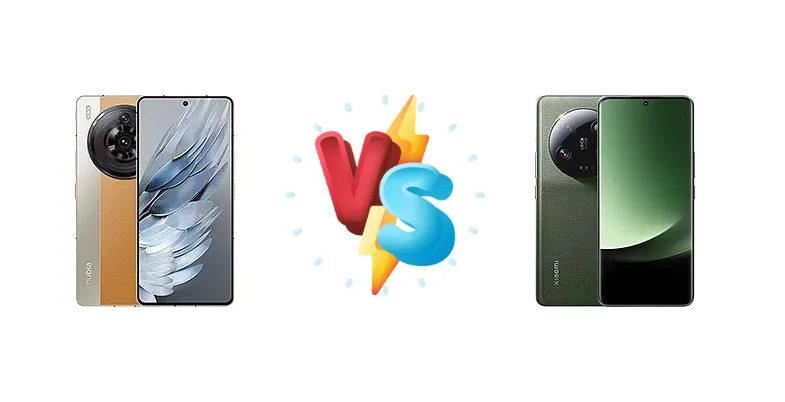
|
🏆 Quick Verdict
For the average user prioritizing all-around excellence, the Xiaomi 13 Ultra emerges as the winner. Its brighter display, faster charging, and comprehensive camera system offer a more polished experience. However, gamers and those seeking maximum sustained performance on a budget will find the nubia Z50S Pro a compelling alternative.
| PHONES | ||
|---|---|---|
| Phone Names | ZTE nubia Z50S Pro | Xiaomi 13 Ultra |
| Network | ||
|---|---|---|
| 2G bands | GSM 850 / 900 / 1800 / 1900 | GSM 850 / 900 / 1800 / 1900 |
| 3G bands | HSDPA 800 / 850 / 900 / 1700(AWS) / 1900 / 2100 | HSDPA 800 / 850 / 900 / 1700(AWS) / 1900 / 2100 |
| 4G bands | 1, 2, 3, 4, 5, 7, 8, 12, 17, 18, 19, 20, 26, 28, 34, 38, 39, 40, 41, 66 | 1, 2, 3, 4, 5, 7, 8, 18, 19, 20, 26, 28, 38, 40, 41, 66 - International |
| 5G bands | 1, 3, 5, 7, 8, 20, 28, 38, 41, 77, 78 SA/NSA | 1, 3, 5, 7, 8, 20, 28, 38, 40, 41, 77, 78, 79 SA/NSA - International |
| Speed | HSPA, LTE, 5G | HSPA, LTE, 5G |
| Technology | GSM / CDMA / HSPA / EVDO / LTE / 5G | GSM / CDMA / HSPA / EVDO / LTE / 5G |
| - | CDMA2000 1xEV-DO | |
| Launch | ||
|---|---|---|
| Announced | 2023, July 20 | 2023, April 18 |
| Status | Available. Released 2023, July 27 | Available. Released 2023, April 21 |
| Body | ||
|---|---|---|
| Build | Glass front, silicone polymer back (eco leather), aluminum frame | Glass front (Gorilla Glass Victus), eco leather back, aluminum frame |
| Dimensions | 163.9 x 76.3 x 8.3 mm (6.45 x 3.00 x 0.33 in) | 163.2 x 74.6 x 9.1 mm (6.43 x 2.94 x 0.36 in) |
| SIM | Nano-SIM + Nano-SIM | Nano-SIM + Nano-SIM |
| Weight | 228 g (8.04 oz) | 227 g (8.01 oz) |
| - | IP68 dust/water resistant (up to 1.5m for 30 min) | |
| Display | ||
|---|---|---|
| Protection | - | Corning Gorilla Glass Victus |
| Resolution | 1260 x 2800 pixels, 20:9 ratio (~452 ppi density) | 1440 x 3200 pixels, 20:9 ratio (~522 ppi density) |
| Size | 6.8 inches, 111.6 cm2 (~89.3% screen-to-body ratio) | 6.73 inches, 108.9 cm2 (~89.5% screen-to-body ratio) |
| Type | AMOLED, 1B colors, 120Hz, 1200 nits (peak) | LTPO AMOLED, 68B colors, 120Hz, Dolby Vision, HDR10+, 1300 nits (HBM), 2600 nits (peak) |
| Platform | ||
|---|---|---|
| CPU | Octa-core (1x3.36 GHz Cortex-X3 & 2x2.8 GHz Cortex-A715 & 2x2.8 GHz Cortex-A710 & 3x2.0 GHz Cortex-A510) | Octa-core (1x3.2 GHz Cortex-X3 & 2x2.8 GHz Cortex-A715 & 2x2.8 GHz Cortex-A710 & 3x2.0 GHz Cortex-A510) |
| Chipset | Qualcomm SM8550-AC Snapdragon 8+ Gen 2 (4 nm) | Qualcomm SM8550-AB Snapdragon 8 Gen 2 (4 nm) |
| GPU | Adreno 740 (719 MHz) | Adreno 740 |
| OS | Android 13, MyOS 13, no planned android upgrades | Android 13, upgradable to Android 14, HyperOS |
| Memory | ||
|---|---|---|
| Card slot | No | No |
| Internal | 256GB 12GB RAM, 1TB 12GB RAM, 1TB 16GB RAM | 256GB 12GB RAM, 512GB 12GB RAM, 512GB 16GB RAM, 1TB 16GB RAM |
| - | UFS 4.0 | |
| Main Camera | ||
|---|---|---|
| Dual | 50 MP, f/1.6, 35mm (standard), 1/1.49", 1.0µm, PDAF, OIS 8 MP, f/2.4, 80mm (telephoto), 1/4.4", PDAF, OIS, optical zoom 50 MP, f/2.0, 13mm, 125˚ (ultrawide), 1/2.88", 0.61µm, AF | - |
| Features | Dual-LED dual-tone flash, HDR, panorama | Laser AF, color spectrum sensor, Leica lenses, Dual-LED flash, HDR, panorama, 67mm filter ring holder (optional) |
| Quad | - | 50 MP, f/1.9 or f/4.0, 23mm (wide), 1.0"-type, 1.6µm, dual pixel PDAF, OIS 50 MP, f/1.8, 75mm (telephoto), 1/2.51", 0.7µm, dual pixel PDAF, OIS, 3.2x optical zoom 50 MP, f/3.0, 120mm (periscope telephoto), 1/2.51", 0.7µm, dual pixel PDAF, OIS, 5x optical zoom 50 MP, f/1.8, 12mm, 122˚ (ultrawide), 1/2.51", 0.7µm, dual pixel PDAF TOF 3D, (depth) |
| Video | 8K@30fps, 4K@30/60/120fps, 1080p, gyro-EIS, 10-bit | 8K@24fps, 4K@24/30/60fps, 1080p@30/60/120/240/480/960/1920fps, gyro-EIS, Dolby Vision HDR 10-bit rec. (4K@60fps, 1080p) |
| Selfie camera | ||
|---|---|---|
| Features | - | HDR, panorama |
| Single | 16 MP, f/2.5, 26mm (wide), 1/3.06", 1.0µm | 32 MP, f/2.0, 22mm (wide), 1/3.14", 0.7µm |
| Video | 1080p@30fps | 1080p@30/60fps, gyro-EIS |
| Sound | ||
|---|---|---|
| 3.5mm jack | - | No |
| 35mm jack | No | No |
| Loudspeaker | Yes, with stereo speakers | Yes, with stereo speakers |
| - | 24-bit/192kHz audio | |
| Comms | ||
|---|---|---|
| Bluetooth | 5.3, A2DP, LE, aptX HD, aptX Adaptive, aptX Lossless | 5.3, A2DP, LE, aptX HD, aptX Adaptive |
| Infrared port | Yes | Yes |
| NFC | Yes | Yes |
| Positioning | GPS (L1+L5), GLONASS, BDS, GALILEO, QZSS | GPS (L1+L5), GLONASS (L1), BDS (B1I+B1c+B2a), GALILEO (E1+E5a), QZSS (L1+L5), NavIC (L5) |
| Radio | No | No |
| USB | USB Type-C 3.1 | USB Type-C 3.2, DisplayPort, OTG |
| WLAN | Wi-Fi 802.11 a/b/g/n/ac/6e, dual-band or tri-band (market/region dependent), Wi-Fi Direct | Wi-Fi 802.11 a/b/g/n/ac/6e/7, tri-band, Wi-Fi Direct |
| Features | ||
|---|---|---|
| Sensors | Fingerprint (under display, optical), accelerometer, gyro, proximity, compass | Fingerprint (under display, optical), accelerometer, proximity, gyro, compass, barometer |
| - | Virtual proximity sensing | |
| Battery | ||
|---|---|---|
| Charging | 80W wired | 90W wired, PD3.0, QC4, 100% in 35 min 50W wireless, 100% in 49 min 10W reverse wireless |
| Type | Li-Po 5100 mAh | Li-Po 5000 mAh |
| Misc | ||
|---|---|---|
| Colors | Black, Khaki, Silver/White | Black, Olive Green, White, Orange, Yellow, Blue |
| Models | NX713J | 2304FPN6DC, 2304FPN6DG |
| Price | About 800 EUR | € 797.98 / $ 389.69 |
| SAR EU | - | 0.99 W/kg (head) 1.00 W/kg (body) |
ZTE nubia Z50S Pro
- Longer battery life in active use
- More thermally efficient chipset (Snapdragon 8+ Gen 2)
- Potentially better value for money
- Less bright display
- Slower charging speeds
- Camera system likely less versatile
Xiaomi 13 Ultra
- Brighter and more vibrant display
- Faster wired and wireless charging
- More versatile and advanced camera system
- Shorter battery life in active use
- Potentially more thermal throttling under sustained load
- Higher price point
Display Comparison
The Xiaomi 13 Ultra boasts a significantly brighter display, reaching 1207 nits compared to the nubia Z50S Pro’s 1029 nits. This translates to better outdoor visibility in direct sunlight. While both likely utilize LTPO technology for adaptive refresh rates (though not explicitly stated), the Xiaomi’s higher peak brightness is a clear advantage. The nubia’s display is still excellent, but the Xiaomi offers a more visually impactful experience, particularly for HDR content. Bezels appear comparable based on available imagery, and color accuracy is expected to be high on both devices given their flagship status.
Camera Comparison
Both devices are equipped with advanced camera systems, but the Xiaomi 13 Ultra is expected to have a more versatile setup. While both are capable of excellent photo and video capture, Xiaomi’s focus on camera innovation, particularly with its variable aperture lens, gives it an edge. The nubia Z50S Pro’s camera specs are not detailed enough to make a direct comparison, but the Xiaomi 13 Ultra’s larger sensors and advanced image processing algorithms are likely to deliver superior image quality in challenging conditions. The Xiaomi’s inclusion of multiple telephoto lenses also provides greater zoom flexibility.
Performance
Both phones are powered by Qualcomm’s flagship silicon, but with a key difference: the nubia Z50S Pro uses the Snapdragon 8+ Gen 2, while the Xiaomi 13 Ultra features the Snapdragon 8 Gen 2. While the 8 Gen 2 offers incremental improvements in CPU and GPU performance, the 8+ Gen 2 is known for its superior thermal efficiency due to its refined 4nm process. The nubia’s CPU configuration (3.36 GHz Cortex-X3) is slightly higher clocked than the Xiaomi’s (3.2 GHz Cortex-X3), potentially offering a small edge in single-core tasks. Both utilize LPDDR5x RAM, ensuring fast memory access. The nubia’s thermal advantage should translate to less throttling during prolonged gaming or demanding tasks.
Battery Life
The nubia Z50S Pro demonstrates superior battery endurance with an active use score of 12:29h, compared to the Xiaomi 13 Ultra’s 10:09h. This suggests the more efficient Snapdragon 8+ Gen 2 and potentially software optimizations contribute to longer runtimes. However, the Xiaomi 13 Ultra compensates with significantly faster charging: 90W wired (0-100% in 35 minutes), 50W wireless (0-100% in 49 minutes), and 10W reverse wireless. The nubia Z50S Pro is limited to 80W wired charging. While the nubia offers longer overall battery life, the Xiaomi’s charging speed provides greater convenience.
Buying Guide
Buy the ZTE nubia Z50S Pro if you need extended gaming sessions without throttling and value raw performance over camera versatility. Its Snapdragon 8+ Gen 2 offers excellent efficiency. Buy the Xiaomi 13 Ultra if you prefer a top-tier camera system, faster charging speeds (including wireless), and a brighter, more vibrant display, even if it means slightly less sustained peak performance.