
ZTE nubia Z50S Pro vs Samsung Galaxy S23 Ultra: A Deep Dive Comparison
| Phones Images | |||||
|---|---|---|---|---|---|
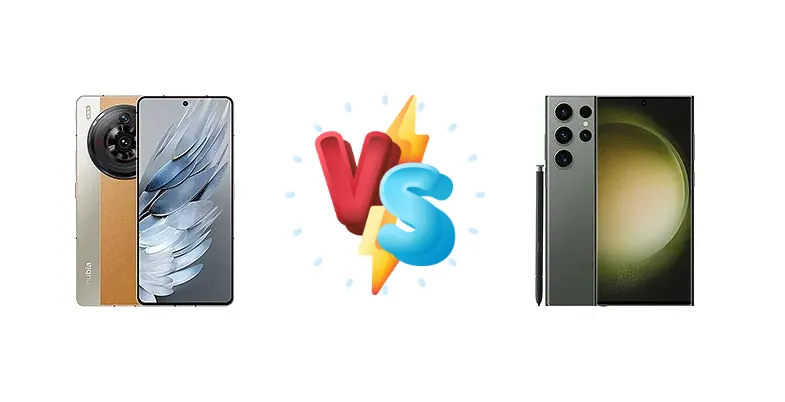
|
🏆 Quick Verdict
For the average user prioritizing all-around excellence and a polished ecosystem, the Samsung Galaxy S23 Ultra remains the superior choice. Its slightly longer battery life, refined software, and broader feature set justify the price premium. However, the nubia Z50S Pro offers exceptional value for performance-focused users.
| PHONES | ||
|---|---|---|
| Phone Names | ZTE nubia Z50S Pro | Samsung Galaxy S23 Ultra |
| Network | ||
|---|---|---|
| 2G bands | GSM 850 / 900 / 1800 / 1900 | GSM 850 / 900 / 1800 / 1900 |
| 3G bands | HSDPA 800 / 850 / 900 / 1700(AWS) / 1900 / 2100 | HSDPA 850 / 900 / 1700(AWS) / 1900 / 2100 |
| 4G bands | 1, 2, 3, 4, 5, 7, 8, 12, 17, 18, 19, 20, 26, 28, 34, 38, 39, 40, 41, 66 | 1, 2, 3, 4, 5, 7, 8, 12, 13, 17, 18, 19, 20, 25, 26, 28, 32, 38, 39, 40, 41, 66 - International |
| 5G bands | 1, 3, 5, 7, 8, 20, 28, 38, 41, 77, 78 SA/NSA | 1, 2, 3, 5, 7, 8, 12, 20, 25, 28, 38, 40, 41, 66, 75, 77, 78 SA/NSA/Sub6 - International |
| Speed | HSPA, LTE, 5G | HSPA, LTE (up to 7CA), 5G |
| Technology | GSM / CDMA / HSPA / EVDO / LTE / 5G | GSM / CDMA / HSPA / EVDO / LTE / 5G |
| - | 1, 7, 28, 41, 66, 71, 78, 258, 260, 261 SA/NSA/Sub6/mmWave - USA | |
| Launch | ||
|---|---|---|
| Announced | 2023, July 20 | 2023, February 01 |
| Status | Available. Released 2023, July 27 | Available. Released 2023, February 17 |
| Body | ||
|---|---|---|
| Build | Glass front, silicone polymer back (eco leather), aluminum frame | Glass front (Gorilla Glass Victus 2), glass back (Gorilla Glass Victus 2), aluminum frame |
| Dimensions | 163.9 x 76.3 x 8.3 mm (6.45 x 3.00 x 0.33 in) | 163.4 x 78.1 x 8.9 mm (6.43 x 3.07 x 0.35 in) |
| SIM | Nano-SIM + Nano-SIM | · Nano-SIM + eSIM· Nano-SIM + Nano-SIM + eSIM (max 2 at a time) |
| Weight | 228 g (8.04 oz) | 234 g (8.25 oz) |
| - | IP68 dust/water resistant (up to 1.5m for 30 min) Armor aluminum frame with tougher drop and scratch resistance (advertised) Stylus (Bluetooth integration, accelerometer, gyro) | |
| Display | ||
|---|---|---|
| Protection | - | Corning Gorilla Glass Victus 2 |
| Resolution | 1260 x 2800 pixels, 20:9 ratio (~452 ppi density) | 1440 x 3088 pixels, 19.3:9 ratio (~500 ppi density) |
| Size | 6.8 inches, 111.6 cm2 (~89.3% screen-to-body ratio) | 6.8 inches, 114.7 cm2 (~89.9% screen-to-body ratio) |
| Type | AMOLED, 1B colors, 120Hz, 1200 nits (peak) | Dynamic AMOLED 2X, 120Hz, HDR10+, 1200 nits (HBM), 1750 nits (peak) |
| - | Always-on display | |
| Platform | ||
|---|---|---|
| CPU | Octa-core (1x3.36 GHz Cortex-X3 & 2x2.8 GHz Cortex-A715 & 2x2.8 GHz Cortex-A710 & 3x2.0 GHz Cortex-A510) | Octa-core (1x3.36 GHz Cortex-X3 & 2x2.8 GHz Cortex-A715 & 2x2.8 GHz Cortex-A710 & 3x2.0 GHz Cortex-A510) |
| Chipset | Qualcomm SM8550-AC Snapdragon 8+ Gen 2 (4 nm) | Qualcomm SM8550-AC Snapdragon 8 Gen 2 (4 nm) |
| GPU | Adreno 740 (719 MHz) | Adreno 740 |
| OS | Android 13, MyOS 13, no planned android upgrades | Android 13, up to 4 major Android upgrades, One UI 8 |
| Memory | ||
|---|---|---|
| Card slot | No | No |
| Internal | 256GB 12GB RAM, 1TB 12GB RAM, 1TB 16GB RAM | 256GB 8GB RAM, 256GB 12GB RAM, 512GB 12GB RAM, 1TB 12GB RAM |
| - | UFS 4.0 | |
| Main Camera | ||
|---|---|---|
| Dual | 50 MP, f/1.6, 35mm (standard), 1/1.49", 1.0µm, PDAF, OIS 8 MP, f/2.4, 80mm (telephoto), 1/4.4", PDAF, OIS, optical zoom 50 MP, f/2.0, 13mm, 125˚ (ultrawide), 1/2.88", 0.61µm, AF | - |
| Features | Dual-LED dual-tone flash, HDR, panorama | Laser AF, LED flash, auto-HDR, panorama |
| Quad | - | 200 MP, f/1.7, 24mm (wide), 1/1.3", 0.6µm, multi-directional PDAF, OIS 10 MP, f/2.4, 70mm (telephoto), 1/3.52", 1.12µm, PDAF, OIS, 3x optical zoom 10 MP, f/4.9, 230mm (periscope telephoto), 1/3.52", 1.12µm, PDAF, OIS, 10x optical zoom 12 MP, f/2.2, 13mm, 120˚ (ultrawide), 1/2.55", 1.4µm, dual pixel PDAF, Super Steady video |
| Single | - | 12 MP, f/2.2, 26mm (wide), Dual Pixel PDAF |
| Video | 8K@30fps, 4K@30/60/120fps, 1080p, gyro-EIS, 10-bit | 8K@24/30fps, 4K@30/60fps, 1080p@30/60/120/240fps, HDR10+, stereo sound rec., gyro-EIS |
| Selfie camera | ||
|---|---|---|
| Features | - | HDR, HDR10+ |
| Single | 16 MP, f/2.5, 26mm (wide), 1/3.06", 1.0µm | 12 MP, f/2.2, 26mm (wide), 1/3.2", 1.12µm, dual pixel PDAF |
| Video | 1080p@30fps | 4K@30/60fps, 1080p@30fps |
| Sound | ||
|---|---|---|
| 3.5mm jack | - | No |
| 35mm jack | No | No |
| Loudspeaker | Yes, with stereo speakers | Yes, with stereo speakers |
| - | 32-bit/384kHz audio Tuned by AKG | |
| Comms | ||
|---|---|---|
| Bluetooth | 5.3, A2DP, LE, aptX HD, aptX Adaptive, aptX Lossless | 5.3, A2DP, LE |
| Infrared port | Yes | - |
| NFC | Yes | Yes |
| Positioning | GPS (L1+L5), GLONASS, BDS, GALILEO, QZSS | GPS, GALILEO, GLONASS, BDS, QZSS |
| Radio | No | No |
| USB | USB Type-C 3.1 | USB Type-C 3.2, OTG |
| WLAN | Wi-Fi 802.11 a/b/g/n/ac/6e, dual-band or tri-band (market/region dependent), Wi-Fi Direct | Wi-Fi 802.11 a/b/g/n/ac/6e, tri-band, Wi-Fi Direct |
| Features | ||
|---|---|---|
| Sensors | Fingerprint (under display, optical), accelerometer, gyro, proximity, compass | Fingerprint (under display, ultrasonic), accelerometer, gyro, proximity, compass, barometer |
| - | Samsung DeX, Samsung Wireless DeX (desktop experience support) Bixby natural language commands and dictation Samsung Pay (Visa, MasterCard certified) Ultra Wideband (UWB) support | |
| Battery | ||
|---|---|---|
| Charging | 80W wired | 45W wired, PD3.0, 65% in 30 min 15W wireless (Qi) 4.5W reverse wireless |
| Type | Li-Po 5100 mAh | Li-Ion 5000 mAh |
| Misc | ||
|---|---|---|
| Colors | Black, Khaki, Silver/White | Phantom Black, Green, Cream, Lavender, Graphite, Sky Blue, Lime, Red, BMW M Edition |
| Models | NX713J | SM-S918B, SM-S918B/DS, SM-S918U, SM-S918U1, SM-S918W, SM-S918N, SM-S9180, SM-S918E, SM-S918E/DS |
| Price | About 800 EUR | € 549.90 / $ 454.99 / £ 433.00 |
| SAR | - | 1.12 W/kg (head) 0.92 W/kg (body) |
| SAR EU | - | 0.96 W/kg (head) 1.40 W/kg (body) |
| Tests | ||
|---|---|---|
| Battery life | - | Endurance rating 126h |
| Camera | - | Photo / Video |
| Display | - | Contrast ratio: Infinite (nominal) |
| Loudspeaker | - | -25.6 LUFS (Very good) |
| Performance | - | AnTuTu: 1241531 (v9) GeekBench: 4927 (v5.1) GFXBench: 67fps (ES 3.1 onscreen) |
ZTE nubia Z50S Pro
- Faster 80W wired charging
- Potentially better sustained performance due to cooling
- More aggressive pricing for similar performance
- Shorter battery life in active use
- Less refined software experience
- Missing wireless charging features
Samsung Galaxy S23 Ultra
- Longer battery life
- Superior camera system with advanced features
- Mature and polished software experience
- Slower 45W wired charging
- Higher price point
- Potential for throttling under sustained load
Display Comparison
Both devices feature excellent displays, utilizing the same 4nm Snapdragon chipsets, but differ in peak brightness and overall implementation. The Galaxy S23 Ultra boasts a slightly brighter panel at 1274 nits measured, compared to the nubia Z50S Pro’s 1029 nits. While both are easily viewable outdoors, the S23 Ultra offers a marginal advantage in direct sunlight. Samsung’s ‘Infinite’ contrast ratio, while a marketing term, reflects its superior black levels and dynamic range. The S23 Ultra’s LTPO panel likely contributes to its slightly better power efficiency, dynamically adjusting refresh rates to conserve battery.
Camera Comparison
Both devices offer capable photo and video recording, but approach it differently. While detailed sensor specs are missing for the nubia Z50S Pro, its camera system is marketed as a key feature. The S23 Ultra’s renowned camera system, with its larger main sensor and advanced image processing, provides greater consistency and versatility across various lighting conditions. Samsung’s software features, like Space Zoom and astrophotography mode, offer unique capabilities. The nubia Z50S Pro likely focuses on delivering vibrant, punchy images, while the S23 Ultra aims for a more natural, balanced look.
Performance
Both phones are powered by the Qualcomm SM8550-AC Snapdragon 8+ Gen 2 (nubia) and Snapdragon 8 Gen 2 (Samsung) – both 4nm chips. While the S23 Ultra has the newer generation, the performance difference in real-world usage is minimal. Both CPUs share the same core configuration (1x3.36 GHz Cortex-X3, 2x2.8 GHz Cortex-A715, 2x2.8 GHz Cortex-A710, 3x2.0 GHz Cortex-A510). The nubia Z50S Pro’s cooling system, however, may allow it to sustain peak performance for longer periods, potentially benefiting demanding gamers. Both utilize LPDDR5x RAM, ensuring fast data access.
Battery Life
The Samsung Galaxy S23 Ultra edges out the nubia Z50S Pro in battery endurance, achieving 13:24h of active use compared to the nubia’s 12:29h. While the S23 Ultra has a larger battery capacity (not specified in the data), the difference is likely due to a combination of software optimization and the more efficient LTPO display. The nubia Z50S Pro compensates with significantly faster 80W wired charging, offering a substantial advantage over the S23 Ultra’s 45W charging (65% in 30 minutes). The S23 Ultra also supports 15W wireless and 4.5W reverse wireless charging, features absent on the nubia.
Buying Guide
Buy the ZTE nubia Z50S Pro if you need maximum performance for your dollar, prioritize fast 80W charging, and appreciate a more raw, customizable Android experience. Buy the Samsung Galaxy S23 Ultra if you prefer a mature software experience, a versatile camera system with extensive features, and the convenience of wireless charging and reverse wireless power share.