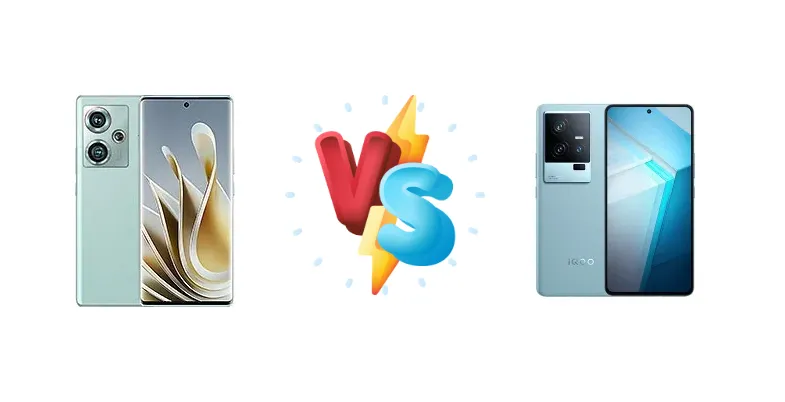
Both the ZTE nubia Z50 and the vivo iQOO 11S represent the pinnacle of Android performance, powered by Qualcomm’s Snapdragon 8 Gen 2. However, they cater to slightly different priorities. The nubia Z50 aims for a balanced flagship experience, while the iQOO 11S aggressively prioritizes charging speed and gaming prowess. This comparison dissects their strengths and weaknesses to determine which device best suits your needs.
🏆 Quick Verdict
For most users, the vivo iQOO 11S emerges as the stronger choice. Its groundbreaking 200W charging dramatically reduces downtime, a significant advantage for power users. While the nubia Z50 offers a solid experience, the iQOO 11S’s charging speed and gaming optimizations provide a more compelling overall package.
| Network |
|---|
| 2G bands | GSM 850 / 900 / 1800 / 1900 | GSM 850 / 900 / 1800 / 1900 |
| 3G bands | HSDPA 850 / 900 / 1700(AWS) / 1900 / 2100 | HSDPA 800 / 850 / 900 / 1700(AWS) / 1900 / 2100 |
| 4G bands | LTE | 1, 2, 3, 4, 5, 7, 8, 12, 17, 18, 19, 20, 26, 28, 34, 38, 39, 40, 41 |
| 5G bands | SA/NSA | 1, 3, 5, 8, 28, 40, 41, 77, 78 SA/NSA |
| Speed | HSPA, LTE, 5G | HSPA, LTE, 5G |
| Technology | GSM / CDMA / HSPA / LTE / 5G | GSM / CDMA / HSPA / CDMA2000 / LTE / 5G |
| | CDMA 800 | - |
| Launch |
|---|
| Announced | 2022, December 19 | 2023, July 04 |
| Status | Available. Released 2022, December 26 | Available. Released 2023, July 10 |
| Body |
|---|
| Build | Glass front, aluminum frame, glass back or eco leather back | - |
| Dimensions | 162.9 x 72.9 x 8.5 mm or 8.7 mm | 164.9 x 77.1 x 8.4 mm or 8.7 mm |
| SIM | Nano-SIM + Nano-SIM | Nano-SIM + Nano-SIM |
| Weight | 197 g or 199 g (6.95 oz) | 207 g or 210 g (7.30 oz) |
| Display |
|---|
| Protection | - | Corning Gorilla Glass Victus |
| Resolution | 1080 x 2400 pixels, 20:9 ratio (~395 ppi density) | 1440 x 3200 pixels, 20:9 ratio (~518 ppi density) |
| Size | 6.67 inches, 107.4 cm2 (~90.4% screen-to-body ratio) | 6.78 inches, 111.0 cm2 (~87.3% screen-to-body ratio) |
| Type | AMOLED, 1B colors, 144Hz, HDR10+, 1000 nits | LTPO4 AMOLED, 1B colors, 144Hz, HDR10+, 1800 nits (peak) |
| Platform |
|---|
| CPU | Octa-core (1x3.2 GHz Cortex-X3 & 2x2.8 GHz Cortex-A715 & 2x2.8 GHz Cortex-A710 & 3x2.0 GHz Cortex-A510) | Octa-core (1x3.2 GHz Cortex-X3 & 2x2.8 GHz Cortex-A715 & 2x2.8 GHz Cortex-A710 & 3x2.0 GHz Cortex-A510) |
| Chipset | Qualcomm SM8550-AB Snapdragon 8 Gen 2 (4 nm) | Qualcomm SM8550-AB Snapdragon 8 Gen 2 (4 nm) |
| GPU | Adreno 740 | Adreno 740 |
| OS | Android 13, MyOS 13 | Android 13, OriginOS 3 (China) |
| Memory |
|---|
| Card slot | No | No |
| Internal | 128GB 8GB RAM, 256GB 8GB RAM, 256GB 12GB RAM, 512GB 12GB RAM, 1TB 16GB RAM | 256GB 12GB RAM, 256GB 16GB RAM, 512GB 16GB RAM, 1TB 16GB RAM |
| | UFS 4.0
UFS 3.1 (128GB only) | - |
| Main Camera |
|---|
| Dual | 64 MP, f/1.6, 35mm (standard), 1/1.7", PDAF, OIS
50 MP, f/2.2, 14mm, 116˚ (ultrawide), AF | - |
| Features | Ring-LED flash (4 LEDs), panorama, HDR | Dual-LED flash, HDR, panorama |
| Single | 16 MP, (wide) | - |
| Triple | - | 50 MP, f/1.9, 23mm (wide), 1/1.49", 1.0µm, PDAF, OIS
13 MP, f/2.5, 47mm (telephoto), PDAF, 2x optical zoom
8 MP, f/2.2, 16mm (ultrawide) |
| Video | 8K, 4K | 8K@30fps, 4K@30/60fps, 1080p@30/60/120/240fps, gyro-EIS |
| Selfie camera |
|---|
| Features | HDR | HDR |
| Single | 16 MP, (wide) | 16 MP, f/2.5, (wide) |
| Video | 1080p@30fps | 1080p@30fps, gyro-EIS |
| Sound |
|---|
| 3.5mm jack | No | - |
| 35mm jack | No | No |
| Loudspeaker | Yes, with stereo speakers | Yes, with stereo speakers |
| | 24-bit/192kHz audio | - |
| Comms |
|---|
| Bluetooth | 5.3, A2DP, LE | 5.3, A2DP, LE, aptX HD, aptX Adaptive, aptX Lossless |
| Infrared port | - | Yes |
| NFC | Yes | Yes |
| Positioning | GPS (L1+L5), GLONASS, BDS, GALILEO, QZSS | GPS, GLONASS, GALILEO, BDS, NavIC |
| Radio | No | No |
| USB | USB Type-C 3.1, OTG | USB Type-C 2.0, OTG |
| WLAN | Wi-Fi 802.11 a/b/g/n/ac/6e, dual-band, Wi-Fi Direct | Wi-Fi 802.11 a/b/g/n/ac/6, dual-band, Wi-Fi Direct |
| Features |
|---|
| Sensors | Fingerprint (under display, optical), accelerometer, gyro, proximity, compass | Fingerprint (under display, optical), accelerometer, gyro, proximity, compass |
| Battery |
|---|
| Charging | 80W wired | 200W wired, PD3.0, UFCS |
| Type | Li-Po 5000 mAh | 4700 mAh |
| Misc |
|---|
| Colors | Black, Silver, Mint, Rabit red | Black, Sky Blue, Legendary White (BMW M branding) |
| Models | NX711J | V2304A |
| Price | About 400 EUR | About 500 EUR |
ZTE nubia Z50
- Balanced flagship experience
- Potentially cleaner software experience
- Solid Snapdragon 8 Gen 2 performance
- Significantly slower charging (80W)
- Missing details on display and camera specs
vivo iQOO 11S
- Revolutionary 200W charging
- Optimized for gaming performance
- Likely strong computational photography
- Software may be more heavily customized
- Potential for aggressive power management
Display Comparison
Both devices utilize the Snapdragon 8 Gen 2, meaning display performance will be largely similar in terms of GPU rendering. However, details beyond the chipset are missing. Given nubia’s history, the Z50 likely features a high refresh rate AMOLED panel, potentially with a high PWM dimming rate for reduced flicker. The iQOO 11S, typical of vivo, will also have a high-quality AMOLED, but specifics like peak brightness and color accuracy are unknown. The absence of LTPO information means we can’t assess dynamic refresh rate efficiency.
Camera Comparison
Camera details are absent, making a direct comparison difficult. However, given the market positioning, the iQOO 11S is likely to emphasize computational photography and vibrant image processing, leveraging vivo’s expertise in this area. The nubia Z50 might lean towards a more natural color profile. Without sensor size or aperture information, it’s impossible to assess low-light performance or dynamic range capabilities. The presence of a 2MP macro lens on either device is unlikely to significantly impact image quality.
Performance
The core performance is identical: both phones are equipped with the Qualcomm SM8550-AB Snapdragon 8 Gen 2 (4 nm) chipset, featuring an Octa-core CPU configuration (1x3.2 GHz Cortex-X3, 2x2.8 GHz Cortex-A715, 2x2.8 GHz Cortex-A710, and 3x2.0 GHz Cortex-A510). The 4nm process node ensures excellent thermal efficiency, minimizing throttling during sustained workloads. However, the iQOO 11S’s cooling system, often more robust in gaming-focused devices, may allow it to maintain peak performance for longer durations. RAM specifications are missing, but both are expected to utilize LPDDR5x for fast memory access.
Battery Life
This is where the iQOO 11S truly shines. Its 200W wired charging, supported by PD3.0 and UFCS, is a game-changer, promising incredibly fast top-ups. While the nubia Z50’s 80W charging is respectable, it pales in comparison. The iQOO 11S can likely achieve a full charge in under 20 minutes, while the Z50 will take considerably longer. Battery capacity is unknown for both, but the iQOO 11S’s charging speed mitigates the impact of a potentially smaller battery.
Buying Guide
Buy the ZTE nubia Z50 if you prioritize a more balanced flagship experience and prefer a slightly less aggressive charging profile. It’s ideal for users who value a clean software experience and don’t necessarily need the absolute fastest charging available. Buy the vivo iQOO 11S if you demand the quickest possible charging speeds and are a dedicated mobile gamer. The 200W charging and potential for gaming-focused software tweaks make it the superior choice for those who push their phones to the limit.
Frequently Asked Questions
❓ How much faster is the iQOO 11S's 200W charging compared to the nubia Z50's 80W charging in real-world use?
The iQOO 11S's 200W charging can potentially charge a phone from 0% to 100% in under 20 minutes, while the nubia Z50's 80W charging will likely take over 45 minutes to an hour. This difference is particularly noticeable for users who frequently need to top up their battery quickly.
❓ Will the Snapdragon 8 Gen 2 in either phone overheat during extended gaming sessions?
The Snapdragon 8 Gen 2 is a thermally efficient chip, but sustained high performance can still generate heat. The iQOO 11S, being marketed towards gamers, likely incorporates a more advanced cooling system (vapor chamber, etc.) which may allow it to maintain peak performance for longer periods without significant throttling compared to the nubia Z50.
❓ Are there any known software differences between the nubia Z50 and the iQOO 11S that might affect the user experience?
vivo's iQOO typically features Funtouch OS, which is known for its customization options and gaming-focused features. nubia's software is generally closer to stock Android, offering a cleaner and more minimalist experience. This difference in software approach caters to different user preferences.