
ZTE nubia Z50 vs vivo iQOO 11: A Flagship Showdown
| Phones Images | |||||
|---|---|---|---|---|---|
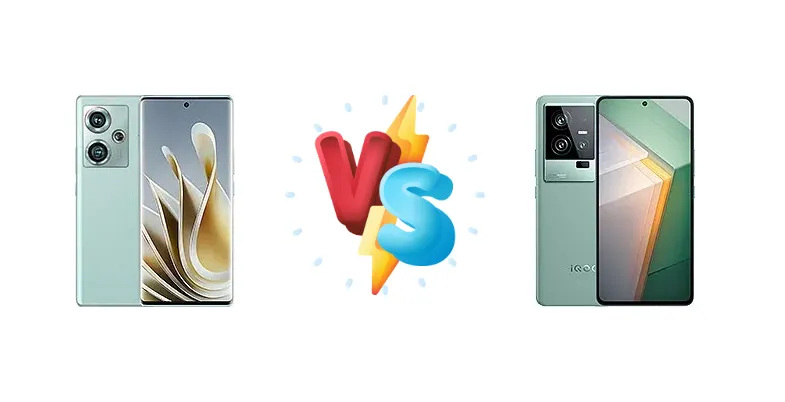
|
🏆 Quick Verdict
The iQOO 11 takes the lead with its blazing-fast 120W charging, brighter display, and potentially superior camera system. However, the nubia Z50 might offer a more refined design and potentially a better software experience, depending on regional variations. Ultimately, the iQOO 11 prioritizes speed and display, while the nubia Z50 aims for a more balanced approach.
| PHONES | ||
|---|---|---|
| Phone Names | ZTE nubia Z50 | vivo iQOO 11 |
| Network | ||
|---|---|---|
| 2G bands | GSM 850 / 900 / 1800 / 1900 | GSM 850 / 900 / 1800 / 1900 |
| 3G bands | HSDPA 850 / 900 / 1700(AWS) / 1900 / 2100 | HSDPA 800 / 850 / 900 / 1700(AWS) / 1900 / 2100 |
| 4G bands | LTE | 1, 2, 3, 4, 5, 7, 8, 12, 17, 18, 19, 20, 26, 28, 34, 38, 39, 40, 41 - International |
| 5G bands | SA/NSA | 1, 3, 5, 8, 28, 40, 41, 77, 78 SA/NSA |
| Speed | HSPA, LTE, 5G | HSPA, LTE, 5G |
| Technology | GSM / CDMA / HSPA / LTE / 5G | GSM / CDMA / HSPA / CDMA2000 / LTE / 5G |
| CDMA 800 | 1, 2, 3, 4, 5, 7, 8, 12, 17, 18, 19, 20, 25, 26, 28, 34, 38, 39, 40, 41, 66 - China | |
| Launch | ||
|---|---|---|
| Announced | 2022, December 19 | 2022, December 08 |
| Status | Available. Released 2022, December 26 | Available. Released 2022, December 08 |
| Body | ||
|---|---|---|
| Build | Glass front, aluminum frame, glass back or eco leather back | - |
| Dimensions | 162.9 x 72.9 x 8.5 mm or 8.7 mm | 164.9 x 77.1 x 8.4 mm or 8.7 mm |
| SIM | Nano-SIM + Nano-SIM | Nano-SIM + Nano-SIM |
| Weight | 197 g or 199 g (6.95 oz) | 205 g or 208 g (7.23 oz) |
| Display | ||
|---|---|---|
| Protection | - | Corning Gorilla Glass Victus |
| Resolution | 1080 x 2400 pixels, 20:9 ratio (~395 ppi density) | 1440 x 3200 pixels, 20:9 ratio (~518 ppi density) |
| Size | 6.67 inches, 107.4 cm2 (~90.4% screen-to-body ratio) | 6.78 inches, 111.0 cm2 (~87.3% screen-to-body ratio) |
| Type | AMOLED, 1B colors, 144Hz, HDR10+, 1000 nits | LTPO4 AMOLED, 1B colors, 144Hz, HDR10+, 1800 nits (peak) |
| Platform | ||
|---|---|---|
| CPU | Octa-core (1x3.2 GHz Cortex-X3 & 2x2.8 GHz Cortex-A715 & 2x2.8 GHz Cortex-A710 & 3x2.0 GHz Cortex-A510) | Octa-core (1x3.2 GHz Cortex-X3 & 2x2.8 GHz Cortex-A715 & 2x2.8 GHz Cortex-A710 & 3x2.0 GHz Cortex-A510) |
| Chipset | Qualcomm SM8550-AB Snapdragon 8 Gen 2 (4 nm) | Qualcomm SM8550-AB Snapdragon 8 Gen 2 (4 nm) |
| GPU | Adreno 740 | Adreno 740 |
| OS | Android 13, MyOS 13 | Android 13, upgradable to Android 14, Funtouch 14 (International), OriginOS 3 (China) |
| Memory | ||
|---|---|---|
| Card slot | No | No |
| Internal | 128GB 8GB RAM, 256GB 8GB RAM, 256GB 12GB RAM, 512GB 12GB RAM, 1TB 16GB RAM | 128GB 8GB RAM, 256GB 8GB RAM, 256GB 12GB RAM, 256GB 16GB RAM, 512GB 16GB RAM |
| UFS 4.0 UFS 3.1 (128GB only) | UFS 3.1 - 128GB UFS 4.0 - 256/512GB | |
| Main Camera | ||
|---|---|---|
| Dual | 64 MP, f/1.6, 35mm (standard), 1/1.7", PDAF, OIS 50 MP, f/2.2, 14mm, 116˚ (ultrawide), AF | - |
| Features | Ring-LED flash (4 LEDs), panorama, HDR | Dual-LED flash, HDR, panorama |
| Single | 16 MP, (wide) | 16 MP, f/2.5, (wide) |
| Triple | - | 50 MP, f/1.9, 23mm (wide), 1/1.57", 1.0µm, PDAF, OIS 13 MP, f/2.5, 47mm (telephoto), PDAF, 2x optical zoom 8 MP, f/2.2, 16mm (ultrawide) |
| Video | 8K, 4K | 8K@30fps, 4K@30/60fps, 1080p@30/60/120/240fps, gyro-EIS |
| Selfie camera | ||
|---|---|---|
| Features | HDR | HDR |
| Single | 16 MP, (wide) | 16 MP, f/2.5, (wide) |
| Video | 1080p@30fps | 1080p@30fps, gyro-EIS |
| Sound | ||
|---|---|---|
| 3.5mm jack | No | No |
| 35mm jack | No | No |
| Loudspeaker | Yes, with stereo speakers | Yes, with stereo speakers |
| 24-bit/192kHz audio | 24-bit/192kHz audio | |
| Comms | ||
|---|---|---|
| Bluetooth | 5.3, A2DP, LE | 5.3, A2DP, LE, aptX HD, aptX Adaptive, aptX Lossless |
| Infrared port | - | Yes |
| NFC | Yes | Yes |
| Positioning | GPS (L1+L5), GLONASS, BDS, GALILEO, QZSS | GPS, GLONASS, GALILEO, BDS, NavIC |
| Radio | No | No |
| USB | USB Type-C 3.1, OTG | USB Type-C 2.0, OTG |
| WLAN | Wi-Fi 802.11 a/b/g/n/ac/6e, dual-band, Wi-Fi Direct | Wi-Fi 802.11 a/b/g/n/ac/6, dual-band, Wi-Fi Direct |
| Features | ||
|---|---|---|
| Sensors | Fingerprint (under display, optical), accelerometer, gyro, proximity, compass | Fingerprint (under display, optical), accelerometer, gyro, proximity, compass |
| Battery | ||
|---|---|---|
| Charging | 80W wired | 120W wired, PD3.0, 100% in 25 min |
| Type | Li-Po 5000 mAh | 5000 mAh |
| Misc | ||
|---|---|---|
| Colors | Black, Silver, Mint, Rabit red | Black, Green, White (BMW M branding) |
| Models | NX711J | V2243A |
| Price | About 400 EUR | About 650 EUR |
| Tests | ||
|---|---|---|
| Battery life | - | Endurance rating 127h |
| Camera | - | Photo / Video |
| Display | - | Contrast ratio: Infinite (nominal) |
| Loudspeaker | - | -26.3 LUFS (Good) |
| Performance | - | AnTuTu: 1281665 (v9) GeekBench: 4803 (v5.1) GFXBench: 67fps (ES 3.1 onscreen) |
ZTE nubia Z50
- Potentially cleaner software experience
- Sleek design
- Competitive performance with Snapdragon 8 Gen 2
- 80W fast charging
- Less information available on camera
- Lower peak brightness display compared to iQOO 11
- Slower charging than iQOO 11
vivo iQOO 11
- Blazing-fast 120W charging
- Brighter and higher contrast display
- Excellent performance with Snapdragon 8 Gen 2
- Strong camera capabilities (generally)
- Software experience can be polarizing (vivo's Funtouch OS)
- Design may not appeal to everyone
Display Comparison
The iQOO 11 boasts a significantly brighter display, measured at 1147 nits peak brightness, compared to the nubia Z50's unspecified brightness. The iQOO 11 also advertises an 'infinite' contrast ratio, suggesting excellent image quality. While the nubia Z50 likely has a good display, the iQOO 11 clearly has an edge in visual performance.
Camera Comparison
Camera details are limited for both phones in the provided specs. However, the iQOO 11 is generally known for its strong camera capabilities, often featuring a high-resolution main sensor and advanced image processing. The nubia Z50's camera is likely competent, but may not match the iQOO 11's overall photographic prowess.
Performance
Both phones utilize the Snapdragon 8 Gen 2, ensuring flagship-level performance. Real-world performance will depend on software optimization and thermal management. The iQOO 11's cooling system is often praised for maintaining peak performance during extended gaming sessions, potentially giving it a slight advantage.
Battery Life
The iQOO 11's endurance rating of 127h is impressive, suggesting excellent battery life. Coupled with its 120W charging, it can be fully charged in just 25 minutes. The nubia Z50's 80W charging is still fast, but not as rapid as the iQOO 11. Battery life is likely comparable in typical usage, but the iQOO 11 offers significantly faster replenishment.
Buying Guide
The ZTE nubia Z50 is ideal for users who prioritize a sleek design, potentially a cleaner software experience (depending on region), and a well-rounded flagship experience. The vivo iQOO 11 is perfect for gamers and power users who demand the fastest charging speeds, a vibrant display, and a focus on performance above all else.