
nubia Z50 Ultra vs. Motorola Moto X40: A Flagship Showdown
| Phones Images | |||||
|---|---|---|---|---|---|
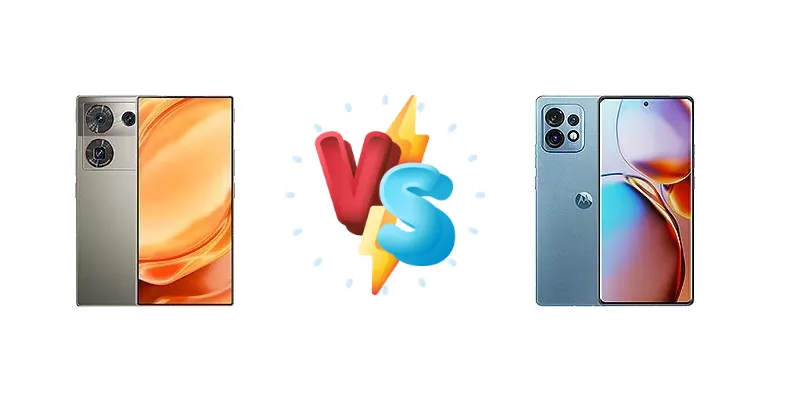
|
🏆 Quick Verdict
The Motorola Moto X40 takes the lead thanks to its significantly faster 125W charging and added wireless/reverse wireless capabilities. While the nubia Z50 Ultra boasts a potentially superior camera system (based on initial reviews), the X40's charging speed and broader feature set make it the more compelling package for many users.
| PHONES | ||
|---|---|---|
| Phone Names | ZTE nubia Z50 Ultra | Motorola Moto X40 |
| Network | ||
|---|---|---|
| 2G bands | GSM 850 / 900 / 1800 / 1900 | GSM 850 / 900 / 1800 / 1900 |
| 3G bands | HSDPA 850 / 900 / 1700(AWS) / 1900 / 2100 | HSDPA 850 / 900 / 1700(AWS) / 1900 / 2100 |
| 4G bands | LTE | 1, 2, 3, 4, 5, 7, 8, 12, 13, 17, 18, 19, 20, 25, 26, 28, 32, 38, 39, 40, 41, 42, 43, 48, 66 |
| 5G bands | SA/NSA | 1, 2, 3, 5, 7, 8, 20, 28, 38, 40, 41, 66, 77, 78 SA/NSA/Sub6 |
| Speed | HSPA, LTE, 5G | HSPA, LTE, 5G |
| Technology | GSM / CDMA / HSPA / CDMA2000 / LTE / 5G | GSM / CDMA / HSPA / LTE / 5G |
| CDMA2000 1x | CDMA 800 | |
| Launch | ||
|---|---|---|
| Announced | 2023, March 07 | 2022, December 15 |
| Status | Available. Released 2023, March 14 | Available. Released 2022, December 22 |
| Body | ||
|---|---|---|
| Build | - | Glass front, glass back (Gorilla Glass Victus), aluminum frame |
| Dimensions | 163.9 x 76.3 x 8.3 mm (6.45 x 3.00 x 0.33 in) | 161.2 x 74 x 8.6 mm (6.35 x 2.91 x 0.34 in) |
| SIM | Nano-SIM + Nano-SIM | Nano-SIM + Nano-SIM |
| Weight | 228 g (8.04 oz) | 199 g (7.02 oz) |
| - | IP68 dust/water resistant (up to 1.5m for 30 min) | |
| Display | ||
|---|---|---|
| Resolution | 1116 x 2480 pixels, 20:9 ratio (~400 ppi density) | 1080 x 2400 pixels, 20:9 ratio (~393 ppi density) |
| Size | 6.8 inches, 111.6 cm2 (~89.3% screen-to-body ratio) | 6.7 inches, 108.4 cm2 (~90.9% screen-to-body ratio) |
| Type | AMOLED, 1B colors, 120Hz, HDR10+, 1500 nits (peak) | OLED, 1B colors, 165Hz, HDR10+ |
| Platform | ||
|---|---|---|
| CPU | Octa-core (1x3.2 GHz Cortex-X3 & 2x2.8 GHz Cortex-A715 & 2x2.8 GHz Cortex-A710 & 3x2.0 GHz Cortex-A510) | Octa-core (1x3.2 GHz Cortex-X3 & 2x2.8 GHz Cortex-A715 & 2x2.8 GHz Cortex-A710 & 3x2.0 GHz Cortex-A510) |
| Chipset | Qualcomm SM8550-AB Snapdragon 8 Gen 2 (4 nm) | Qualcomm SM8550-AB Snapdragon 8 Gen 2 (4 nm) |
| GPU | Adreno 740 | Adreno 740 |
| OS | Android 13, MyOS 13 | Android 13, upgradable to Android 14, MYUI 6.0 |
| Memory | ||
|---|---|---|
| Card slot | No | No |
| Internal | 256GB 8GB RAM, 256GB 12GB RAM, 512GB 12GB RAM, 1TB 16GB RAM | 128GB 8GB RAM, 256GB 12GB RAM, 512GB 12GB RAM |
| UFS 4.0 | UFS 3.1 - 128GB UFS 4.0 - 256GB/512GB | |
| Main Camera | ||
|---|---|---|
| Features | Laser AF, Ring-LED, dual-tone flash, panorama, HDR | Dual-LED flash, panorama, HDR |
| Single | 16 MP, f/2.0, 26mm (wide), 1/2.8", 1.22µm, under display | - |
| Triple | 64 MP, f/1.6, 35mm (standard), 1/1.73", 0.8µm, PDAF, OIS 64 MP, f/3.3, 85mm (periscope telephoto), 1/2.0", PDAF, OIS, 3.3x optical zoom (vs. 26mm cam) 50 MP, f/2.X, 14mm, 116˚ (ultrawide), PDAF | 50 MP, f/1.9, (wide), 1/1.55", 1.0µm, dual pixel PDAF, OIS 12 MP, f/1.6, (telephoto), 1/2.93", 1.22µm, PDAF, 2x optical zoom 50 MP, f/2.2, 117˚ (ultrawide), 1/2.76", 0.64µm, AF |
| Video | 8K@30fps, 4K@30/60/120fps, 1080p@30/60fps, gyro-EIS, HDR10, 10‑bit video | 8K@30fps, 4K@30/60fps, 1080p@30/60/120/240/960fps, 10-bit HDR10+, gyro-EIS |
| Selfie camera | ||
|---|---|---|
| Features | HDR | HDR |
| Single | 16 MP, f/2.0, 26mm (wide), 1/2.8", 1.22µm, under display | 60 MP, f/2.2, (wide), 1/2.8", 0.61µm |
| Video | 1080p@30fps | 4K@30fps, 1080p@30/60fps |
| Sound | ||
|---|---|---|
| 3.5mm jack | No | No |
| 35mm jack | No | No |
| Loudspeaker | Yes, with stereo speakers | Yes, with stereo speakers |
| 24-bit/192kHz audio | - | |
| Comms | ||
|---|---|---|
| Bluetooth | 5.3, A2DP, LE Audio, aptX HD, aptX Adaptive, aptX Lossless | 5.3, A2DP, LE, aptX HD, aptX Adaptive |
| Infrared port | Yes | - |
| NFC | Yes | Yes |
| Positioning | GPS (L1+L5), GLONASS (L1+L2+L5), GALILEO, BDS | GPS (L1+L5), GLONASS (L1), BDS (B1I+B1c+B2a), GALILEO (E1+E5a), QZSS (L1+L5) |
| Radio | No | No |
| USB | USB Type-C 3.1, OTG | USB Type-C, OTG |
| WLAN | Wi-Fi 802.11 a/b/g/n/ac/6e, dual-band, Wi-Fi Direct | Wi-Fi 802.11 a/b/g/n/ac/6e, dual-band, Wi-Fi Direct |
| Features | ||
|---|---|---|
| Sensors | Fingerprint (under display, optical), accelerometer, gyro, proximity, compass | Fingerprint (under display, optical), accelerometer, gyro, proximity, compass |
| - | Ready For 3.5 support | |
| Battery | ||
|---|---|---|
| Charging | 80W wired, PD3.0, QC4 | 125W wired, PD3.0, QC5, 50% in 7 min 15W wireless 5W reverse wired |
| Type | Li-Po 5000 mAh | Li-Po 4600 mAh |
| Misc | ||
|---|---|---|
| Colors | Black, Silver, Starry Sky | Black, Blue |
| Models | NX712J | XT2301-5 |
| Price | About 540 EUR | About 540 EUR |
ZTE nubia Z50 Ultra
- Potentially superior camera system
- Vibrant AMOLED display
- Premium design
- Snapdragon 8 Gen 2 performance
- Slower charging speed (80W)
- Less well-known brand
- Software support concerns (ZTE's track record)
Motorola Moto X40
- Blazing-fast 125W wired charging
- Wireless and reverse wireless charging
- More mainstream brand
- Excellent outdoor display visibility
- Camera may not match nubia's potential
- Design might be less distinctive
- Software updates can be inconsistent
Display Comparison
Both phones feature stunning AMOLED displays with 144Hz refresh rates, offering smooth scrolling and vibrant visuals. The nubia Z50 Ultra is rumored to have slightly better color accuracy and brightness, but real-world differences are likely minimal. The Moto X40's display is known for its excellent outdoor visibility.
Camera Comparison
The nubia Z50 Ultra is expected to have a more advanced camera system, potentially featuring a larger primary sensor and improved image processing. Early reviews suggest excellent low-light performance and detailed photos. The Moto X40 offers a capable camera setup, but it may not match the nubia's potential in certain scenarios.
Performance
Powered by the Snapdragon 8 Gen 2, both devices deliver exceptional performance for gaming, multitasking, and demanding applications. Expect seamless performance across the board. Software optimization might differ slightly, impacting the overall user experience.
Battery Life
The Moto X40's 125W wired charging is a game-changer, allowing for incredibly fast top-ups. The nubia Z50 Ultra's 80W charging is still fast, but significantly slower. Both phones likely have similar battery capacities (around 4500-5000mAh), but the Moto X40's charging advantage gives it a clear edge.
Buying Guide
The ZTE nubia Z50 Ultra is ideal for photography enthusiasts who prioritize camera quality and a vibrant display. The Motorola Moto X40 is a better choice for users who value blazing-fast charging, wireless charging convenience, and a more mainstream brand reputation.