
ZTE nubia Z40S Pro vs nubia Z40 Pro: The Ultimate Showdown
| Phones Images | |||||
|---|---|---|---|---|---|
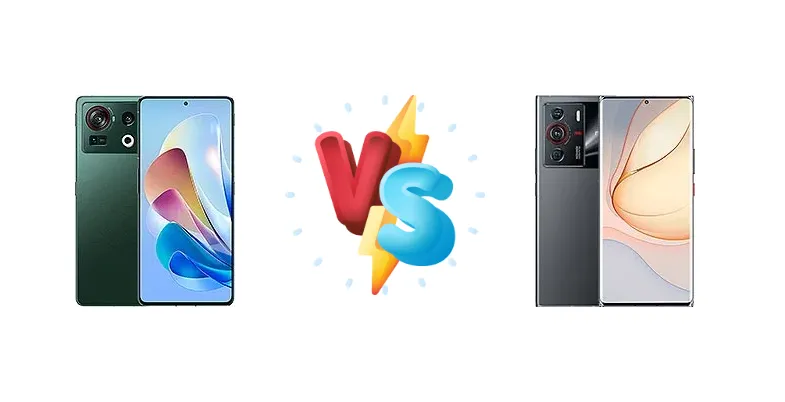
|
🏆 Quick Verdict
The nubia Z40S Pro takes the lead thanks to its Snapdragon 8+ Gen 1 chipset, offering noticeably better performance and efficiency. While the Z40 Pro is still a strong contender, the Z40S Pro's faster processor and potentially improved thermal management make it the superior choice for power users.
| PHONES | ||
|---|---|---|
| Phone Names | ZTE nubia Z40S Pro | ZTE nubia Z40 Pro |
| Network | ||
|---|---|---|
| 2G bands | GSM 850 / 900 / 1800 / 1900 | GSM 850 / 900 / 1800 / 1900 |
| 3G bands | HSDPA 850 / 900 / 1700(AWS) / 1900 / 2100 | HSDPA 850 / 900 / 1700(AWS) / 1900 / 2100 |
| 4G bands | 1, 3, 4, 5, 7, 8, 12, 17, 20, 34, 38, 39, 40, 41 | 1, 3, 5, 7, 8, 4, 12, 17, 20, 34, 38, 39, 40, 41 |
| 5G bands | 1, 3, 5, 8, 28, 41, 78 SA/NSA | 1, 3, 5, 8, 28, 41, 78 SA/NSA |
| Speed | HSPA, LTE, 5G | HSPA, LTE, 5G |
| Technology | GSM / CDMA / HSPA / LTE / 5G | GSM / CDMA / HSPA / LTE / 5G |
| - | CDMA 800 | |
| Launch | ||
|---|---|---|
| Announced | 2022, July 20 | 2022, February 25 |
| Status | Available. Released 2022, July 26 | Available. Released 2022, March 02 |
| Body | ||
|---|---|---|
| Build | Glass front, aluminum frame, glass back | Glass front, aluminum frame, glass back |
| Dimensions | 161.3 x 74 x 8.1 mm (6.35 x 2.91 x 0.32 in) | 161.9 x 72.9 x 8.4 mm (6.37 x 2.87 x 0.33 in) |
| SIM | Nano-SIM + Nano-SIM | Nano-SIM + Nano-SIM |
| Weight | 205 g (7.23 oz) | 199 g (7.02 oz) |
| Display | ||
|---|---|---|
| Resolution | 1080 x 2400 pixels, 20:9 ratio (~395 ppi density) | 1080 x 2400 pixels, 20:9 ratio (~395 ppi density) |
| Size | 6.67 inches, 107.4 cm2 (~90.0% screen-to-body ratio) | 6.67 inches, 107.4 cm2 (~91.0% screen-to-body ratio) |
| Type | AMOLED, 1B colors, 144Hz, HDR10+, 1000 nits | AMOLED, 1B colors, 144Hz, HDR10+, 1000 nits |
| Platform | ||
|---|---|---|
| CPU | Octa-core (1x3.19 GHz Cortex-X2 & 3x2.75 GHz Cortex-A710 & 4x1.80 GHz Cortex-A510) | Octa-core (1x3.00 GHz Cortex-X2 & 3x2.50 GHz Cortex-A710 & 4x1.80 GHz Cortex-A510) |
| Chipset | Qualcomm SM8475 Snapdragon 8+ Gen 1 (4 nm) | Qualcomm SM8450 Snapdragon 8 Gen 1 (4 nm) |
| GPU | Adreno 730 | Adreno 730 |
| OS | Android 12, upgradable to Android 13, MyOS 13 | Android 12, MyOS 12 |
| Memory | ||
|---|---|---|
| Card slot | No | No |
| Internal | 128GB 8GB RAM, 256GB 8GB RAM, 256GB 12GB RAM, 512GB 12GB RAM, 1TB 18GB RAM | 128GB 8GB RAM, 256GB 8GB RAM, 256GB 12GB RAM, 512GB 12GB RAM, 1TB 16GB RAM |
| - | UFS 3.1 | |
| Main Camera | ||
|---|---|---|
| Features | Dual-LED flash, panorama, HDR | Dual-LED flash, panorama, HDR |
| Single | - | 16 MP, f/2.5, (wide) |
| Triple | 64 MP, f/1.6, 35mm (standard), 1/1.7", PDAF, OIS 8 MP, f/3.4, 125mm (periscope telephoto), 1/4.0", PDAF, OIS, 5x optical zoom 50 MP, f/2.2, 14mm, 116˚ (ultrawide), AF | 64 MP, f/1.7, 35mm (standard), 1/1.7", PDAF, OIS 8 MP, f/3.4, 125mm (periscope telephoto), 1/4.0", PDAF, OIS, 5x optical zoom 50 MP, f/2.2, 14mm, 116˚ (ultrawide) |
| Video | 8K, 4K@30/60/120fps, 1080p@30/60/120fps, gyro-EIS | Yes |
| Selfie camera | ||
|---|---|---|
| Features | HDR | HDR |
| Single | 16 MP, f/2.5, (wide) | 16 MP, f/2.5, (wide) |
| Video | Yes | Yes |
| Sound | ||
|---|---|---|
| 3.5mm jack | No | No |
| 35mm jack | No | No |
| Loudspeaker | Yes, with stereo speakers | Yes, with stereo speakers |
| - | 24-bit/192kHz audio | |
| Comms | ||
|---|---|---|
| Bluetooth | 5.2, A2DP, LE, aptX HD, aptX Adaptive | 5.2, A2DP, LE, aptX HD, aptX Adaptive |
| NFC | Yes | Yes |
| Positioning | GPS, GLONASS, GALILEO, BDS | GPS, GLONASS, GALILEO, BDS |
| Radio | No | No |
| USB | USB Type-C 3.1, OTG | USB Type-C 3.1, OTG |
| WLAN | Wi-Fi 802.11 a/b/g/n/ac/6, dual-band, Wi-Fi Direct | Wi-Fi 802.11 a/b/g/n/ac/6, dual-band, Wi-Fi Direct |
| Features | ||
|---|---|---|
| Sensors | Fingerprint (under display, optical), accelerometer, gyro, proximity, compass | Fingerprint (under display, optical), accelerometer, gyro, proximity, compass |
| Battery | ||
|---|---|---|
| Charging | 80W wired (regular version) 120W wired; 15W magnetic wireless (120W version) | 66W wired; 15W magnetic wireless (gravity version) 80W wired (regular version) |
| Type | Market-dependent versions:· Li-Po 5000 mAh (regular version)· Li-Po 4600 mAh (120W version) | Market-dependent versions:· Li-Po 5000 mAh (regular version)· Li-Po 4600 mAh (gravity version) |
| Misc | ||
|---|---|---|
| Colors | Interstellar Black, Star Black, Silver | Interstellar Black, Star Black, Silver |
| Models | NX702J | NX701J |
| Price | About 490 EUR | About 500 EUR |
ZTE nubia Z40S Pro
- Significantly faster Snapdragon 8+ Gen 1 chipset
- 120W wired charging (on some versions)
- Potentially improved thermal management
- Vibrant AMOLED display with 144Hz refresh rate
- Potentially higher price
- Design may be similar to Z40 Pro, lacking significant visual differentiation
ZTE nubia Z40 Pro
- More affordable than the Z40S Pro
- Excellent AMOLED display with 144Hz refresh rate
- Capable Snapdragon 8 Gen 1 chipset
- Good camera system
- Slower charging speeds
- Less powerful chipset compared to Z40S Pro
- May experience more thermal throttling under heavy load
Display Comparison
Both phones feature a 6.67-inch AMOLED display with a 144Hz refresh rate, offering vibrant colors and smooth scrolling. Expect similar viewing experiences, though the Z40S Pro might have slightly better brightness due to its newer chipset allowing for more efficient power usage. Resolution is likely to be FHD+ on both.
Camera Comparison
Both phones are expected to feature a 108MP main camera, likely with similar image processing capabilities. The Z40S Pro *may* have slightly improved image processing due to the newer chipset, potentially resulting in better low-light performance and dynamic range. Both likely include ultrawide and macro lenses.
Performance
This is where the Z40S Pro shines. The Snapdragon 8+ Gen 1 is a significant upgrade over the Snapdragon 8 Gen 1. Expect faster app loading times, smoother multitasking, and improved gaming performance on the Z40S Pro. The Z40 Pro is still capable, but the difference in raw power is noticeable.
Battery Life
The Z40S Pro boasts significantly faster charging speeds (up to 120W wired) compared to the Z40 Pro's 66W or 80W. This translates to much quicker top-ups. Battery capacity is likely similar (around 4600-4800 mAh) on both devices, so the Z40S Pro's efficiency gains from the chipset could also contribute to slightly better overall battery life.
Buying Guide
The nubia Z40S Pro is ideal for gamers, content creators, and anyone demanding top-tier performance. The nubia Z40 Pro remains a great option for those seeking a flagship experience at a slightly more accessible price point, prioritizing a balance of features and value.