
ZTE nubia Z40S Pro vs Xiaomi 12S Ultra: A Deep Dive into Flagship Performance
| Phones Images | |||||
|---|---|---|---|---|---|
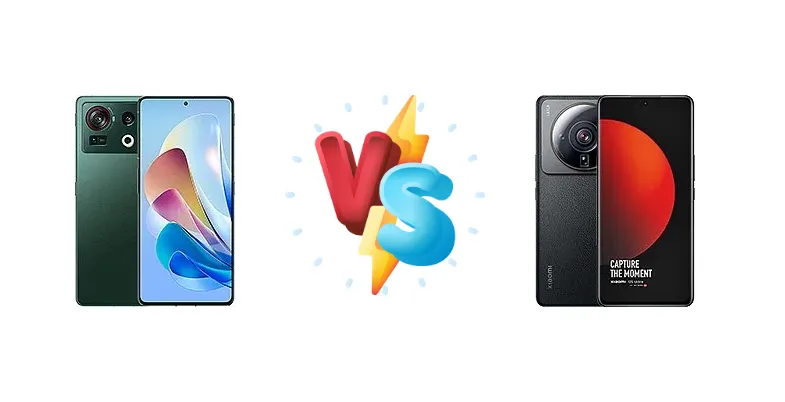
|
🏆 Quick Verdict
For the average user prioritizing camera quality and a refined software experience, the Xiaomi 12S Ultra is the stronger pick. Its endurance rating of 93 hours and measured 1065 nits brightness provide a solid foundation. However, power users who demand the fastest charging and potentially more aggressive performance profiles will find the nubia Z40S Pro appealing.
| PHONES | ||
|---|---|---|
| Phone Names | ZTE nubia Z40S Pro | Xiaomi 12S Ultra |
| Network | ||
|---|---|---|
| 2G bands | GSM 850 / 900 / 1800 / 1900 | GSM 850 / 900 / 1800 / 1900 |
| 3G bands | HSDPA 850 / 900 / 1700(AWS) / 1900 / 2100 | HSDPA 800 / 850 / 900 / 1700(AWS) / 1900 / 2100 |
| 4G bands | 1, 3, 4, 5, 7, 8, 12, 17, 20, 34, 38, 39, 40, 41 | 1, 2, 3, 4, 5, 7, 8, 12, 17, 18, 19, 26, 34, 38, 39, 40, 41, 42 |
| 5G bands | 1, 3, 5, 8, 28, 41, 78 SA/NSA | 1, 3, 5, 8, 28, 38, 40, 41, 77, 78, 79 SA/NSA |
| Speed | HSPA, LTE, 5G | HSPA, LTE, 5G |
| Technology | GSM / CDMA / HSPA / LTE / 5G | GSM / CDMA / HSPA / EVDO / LTE / 5G |
| - | CDMA2000 1xEV-DO | |
| Launch | ||
|---|---|---|
| Announced | 2022, July 20 | 2022, July 04 |
| Status | Available. Released 2022, July 26 | Available. Released 2022, July 09 |
| Body | ||
|---|---|---|
| Build | Glass front, aluminum frame, glass back | Glass front (Gorilla Glass Victus), eco leather back, aluminum frame |
| Dimensions | 161.3 x 74 x 8.1 mm (6.35 x 2.91 x 0.32 in) | 163.2 x 75 x 9.1 mm (6.43 x 2.95 x 0.36 in) |
| SIM | Nano-SIM + Nano-SIM | Nano-SIM + Nano-SIM |
| Weight | 205 g (7.23 oz) | 225 g (7.94 oz) |
| - | IP68 dust/water resistant (up to 1.5m for 30 min) | |
| Display | ||
|---|---|---|
| Protection | - | Corning Gorilla Glass Victus |
| Resolution | 1080 x 2400 pixels, 20:9 ratio (~395 ppi density) | 1440 x 3200 pixels, 20:9 ratio (~522 ppi density) |
| Size | 6.67 inches, 107.4 cm2 (~90.0% screen-to-body ratio) | 6.73 inches, 108.9 cm2 (~89.0% screen-to-body ratio) |
| Type | AMOLED, 1B colors, 144Hz, HDR10+, 1000 nits | LTPO2 AMOLED, 1B colors, 120Hz, Dolby Vision, HDR10+, 1000 nits (HBM), 1500 nits (peak) |
| Platform | ||
|---|---|---|
| CPU | Octa-core (1x3.19 GHz Cortex-X2 & 3x2.75 GHz Cortex-A710 & 4x1.80 GHz Cortex-A510) | Octa-core (1x3.19 GHz Cortex-X2 & 3x2.75 GHz Cortex-A710 & 4x1.80 GHz Cortex-A510) |
| Chipset | Qualcomm SM8475 Snapdragon 8+ Gen 1 (4 nm) | Qualcomm SM8475 Snapdragon 8+ Gen 1 (4 nm) |
| GPU | Adreno 730 | Adreno 730 |
| OS | Android 12, upgradable to Android 13, MyOS 13 | Android 12, MIUI 13 |
| Memory | ||
|---|---|---|
| Card slot | No | No |
| Internal | 128GB 8GB RAM, 256GB 8GB RAM, 256GB 12GB RAM, 512GB 12GB RAM, 1TB 18GB RAM | 256GB 8GB RAM, 256GB 12GB RAM, 512GB 12GB RAM |
| - | UFS 3.1 | |
| Main Camera | ||
|---|---|---|
| Features | Dual-LED flash, panorama, HDR | Laser AF, color spectrum sensor, Leica lenses, Dual-LED flash, HDR, panorama |
| Single | - | 32 MP, f/2.4, 25mm (wide), 0.7µm |
| Triple | 64 MP, f/1.6, 35mm (standard), 1/1.7", PDAF, OIS 8 MP, f/3.4, 125mm (periscope telephoto), 1/4.0", PDAF, OIS, 5x optical zoom 50 MP, f/2.2, 14mm, 116˚ (ultrawide), AF | 50 MP, f/1.9, 23mm (wide), 1.0"-type, 1.6µm, dual pixel PDAF, OIS 48 MP, f/4.1, 120mm (periscope telephoto), 1/2.0", 0.8µm, PDAF, OIS, 5x optical zoom 48 MP, f/2.2, 13mm, 128˚ (ultrawide), 1/2.0", 0.8µm, dual pixel PDAF TOF 3D, (depth) |
| Video | 8K, 4K@30/60/120fps, 1080p@30/60/120fps, gyro-EIS | 8K@24fps, 4K@30/60fps, 1080p@30/60/120/240fps, 720p@3840fps, gyro-EIS, Dolby Vision HDR 10-bit rec. (4K, 1080p) |
| Selfie camera | ||
|---|---|---|
| Features | HDR | HDR, panorama |
| Single | 16 MP, f/2.5, (wide) | 32 MP, f/2.4, 25mm (wide), 0.7µm |
| Video | Yes | 1080p@30fps |
| Sound | ||
|---|---|---|
| 3.5mm jack | No | No |
| 35mm jack | No | No |
| Loudspeaker | Yes, with stereo speakers | Yes, with stereo speakers |
| - | 24-bit/192kHz audio Tuned by Harman Kardon | |
| Comms | ||
|---|---|---|
| Bluetooth | 5.2, A2DP, LE, aptX HD, aptX Adaptive | 5.2, A2DP, LE, aptX HD, aptX Adaptive |
| Infrared port | - | Yes |
| NFC | Yes | Yes |
| Positioning | GPS, GLONASS, GALILEO, BDS | GPS (L1+L5), GLONASS (L1), BDS (B1I+B1c+B2a), GALILEO (E1+E5a), QZSS (L1+L5), NavIC (L5) |
| Radio | No | No |
| USB | USB Type-C 3.1, OTG | USB Type-C 2.0, OTG |
| WLAN | Wi-Fi 802.11 a/b/g/n/ac/6, dual-band, Wi-Fi Direct | Wi-Fi 802.11 a/b/g/n/ac/6e, dual-band, Wi-Fi Direct, DLNA |
| Features | ||
|---|---|---|
| Sensors | Fingerprint (under display, optical), accelerometer, gyro, proximity, compass | Fingerprint (under display, optical), accelerometer, gyro, compass, barometer |
| - | Virtual proximity sensing | |
| Battery | ||
|---|---|---|
| Charging | 80W wired (regular version) 120W wired; 15W magnetic wireless (120W version) | 67W wired, PD3.0, QC4, 100% in 41 min 50W wireless, 100% in 52 min 10W reverse wireless |
| Type | Market-dependent versions:· Li-Po 5000 mAh (regular version)· Li-Po 4600 mAh (120W version) | Li-Po 4860 mAh |
| Misc | ||
|---|---|---|
| Colors | Interstellar Black, Star Black, Silver | Black, Dark Green |
| Models | NX702J | 2203121C |
| Price | About 490 EUR | $ 288.00 |
| Tests | ||
|---|---|---|
| Battery life | - | Endurance rating 93h |
| Camera | - | Photo / Video |
| Display | - | Contrast ratio: Infinite (nominal) |
| Loudspeaker | - | -25.6 LUFS (Very good) |
| Performance | - | AnTuTu: 1039412 (v9) GeekBench: 4300 (v5.1) GFXBench: 51fps (ES 3.1 onscreen) |
ZTE nubia Z40S Pro
- Significantly faster charging (up to 120W)
- Potential for more aggressive performance tuning
- Magnetic wireless charging option
- Battery life potentially lower than Xiaomi 12S Ultra
- Camera system details are unknown
- Software experience may be less refined
Xiaomi 12S Ultra
- Excellent battery endurance (93h rating)
- Brighter display (1065 nits)
- Strong camera focus and likely superior image quality
- Slower wired charging (67W)
- Wireless charging is slower (50W)
- May prioritize thermal management over peak performance
Display Comparison
Both devices utilize high-end displays, but the Xiaomi 12S Ultra boasts a measured peak brightness of 1065 nits, suggesting superior visibility in direct sunlight. While the nubia Z40S Pro’s display specifications are not provided, Xiaomi’s brightness advantage is significant. The 12S Ultra’s ‘Infinite’ contrast ratio (nominal) indicates a likely OLED panel, common in this segment, offering deep blacks. Without further details on the nubia’s panel type and refresh rate, the Xiaomi 12S Ultra holds a clear edge in display quality based on available data.
Camera Comparison
The Xiaomi 12S Ultra is explicitly positioned as a camera-focused device, though specific sensor details are absent in the provided data. The 'Photo / Video' designation suggests a comprehensive camera system. The nubia Z40S Pro’s camera capabilities are less defined. Given Xiaomi’s history, it’s reasonable to assume the 12S Ultra features a larger main sensor and more sophisticated image processing algorithms. Without detailed sensor specifications for the nubia, the Xiaomi 12S Ultra is the presumed leader in camera performance, particularly in low-light conditions and video recording.
Performance
Both the ZTE nubia Z40S Pro and Xiaomi 12S Ultra are equipped with the Qualcomm SM8475 Snapdragon 8+ Gen 1 (4 nm) chipset, featuring the same Octa-core CPU configuration (1x3.19 GHz Cortex-X2, 3x2.75 GHz Cortex-A710, and 4x1.80 GHz Cortex-A510). This means raw processing power will be nearly identical. The key differentiator will likely be thermal management and sustained performance. Nubia phones often prioritize aggressive performance profiles, potentially leading to higher peak performance but also increased heat. Xiaomi typically aims for a more balanced approach. RAM specifications are missing for the nubia, but both will likely utilize LPDDR5x for fast memory access.
Battery Life
The Xiaomi 12S Ultra achieves an impressive endurance rating of 93 hours, indicating excellent battery life. While the nubia Z40S Pro’s battery capacity is unknown, its charging capabilities are a major highlight. The regular version offers 80W wired charging, while a 120W version is also available, significantly faster than the Xiaomi’s 67W wired charging. The nubia also includes 15W magnetic wireless charging, compared to the Xiaomi’s 50W wireless. The Xiaomi 12S Ultra’s 67W charging takes 41 minutes to 100%, while the nubia’s 120W version will be considerably faster. This trade-off means the nubia prioritizes quick top-ups, while the Xiaomi focuses on maximizing overall runtime.
Buying Guide
Buy the ZTE nubia Z40S Pro if you need blazing-fast charging – up to 120W – and value a potentially more customizable software experience. It’s ideal for users who frequently top up their phones and want to minimize downtime. Buy the Xiaomi 12S Ultra if you prefer a more polished, camera-centric experience with excellent battery endurance and a brighter display, even if it means slightly slower charging.