
ZTE nubia Z40S Pro vs Xiaomi 12 Pro (Dimensity): Which Flagship Reigns Supreme?
| Phones Images | |||||
|---|---|---|---|---|---|
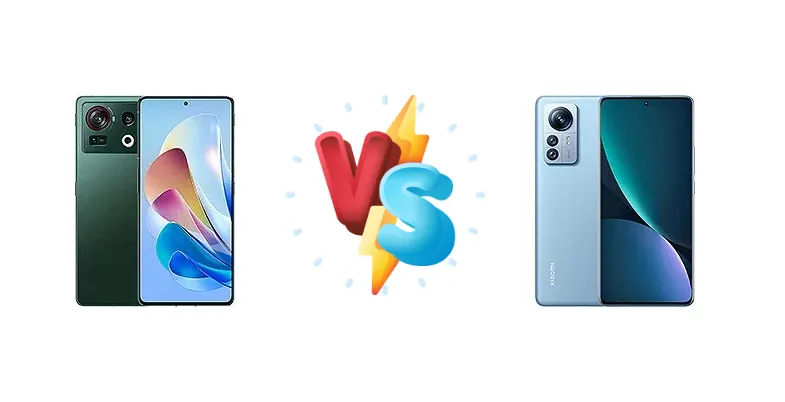
|
🏆 Quick Verdict
For most users, the ZTE nubia Z40S Pro emerges as the stronger contender. Its Snapdragon 8+ Gen 1, coupled with potentially faster 120W charging (depending on the version), provides a performance and convenience edge. However, the Xiaomi 12 Pro remains a solid choice for those prioritizing a refined software experience and potentially better thermal management.
| PHONES | ||
|---|---|---|
| Phone Names | ZTE nubia Z40S Pro | Xiaomi 12 Pro (Dimensity) |
| Network | ||
|---|---|---|
| 2G bands | GSM 850 / 900 / 1800 / 1900 | GSM 850 / 900 / 1800 / 1900 |
| 3G bands | HSDPA 850 / 900 / 1700(AWS) / 1900 / 2100 | HSDPA 800 / 850 / 900 / 1700(AWS) / 1900 / 2100 |
| 4G bands | 1, 3, 4, 5, 7, 8, 12, 17, 20, 34, 38, 39, 40, 41 | 1, 2, 3, 4, 5, 7, 8, 18, 19, 26, 34, 38, 39, 40, 41, 42 |
| 5G bands | 1, 3, 5, 8, 28, 41, 78 SA/NSA | 1, 3, 5, 8, 28, 38, 40, 41, 77, 78 SA/NSA |
| Speed | HSPA, LTE, 5G | HSPA, LTE, 5G |
| Technology | GSM / CDMA / HSPA / LTE / 5G | GSM / CDMA / HSPA / EVDO / LTE / 5G |
| - | CDMA2000 1xEV-DO | |
| Launch | ||
|---|---|---|
| Announced | 2022, July 20 | 2022, July 04 |
| Status | Available. Released 2022, July 26 | Available. Released 2022, July 13 |
| Body | ||
|---|---|---|
| Build | Glass front, aluminum frame, glass back | - |
| Dimensions | 161.3 x 74 x 8.1 mm (6.35 x 2.91 x 0.32 in) | 163.6 x 74.6 x 8.2 mm (6.44 x 2.94 x 0.32 in) |
| SIM | Nano-SIM + Nano-SIM | Nano-SIM + Nano-SIM |
| Weight | 205 g (7.23 oz) | 201 g (7.09 oz) |
| Display | ||
|---|---|---|
| Protection | - | Corning Gorilla Glass Victus |
| Resolution | 1080 x 2400 pixels, 20:9 ratio (~395 ppi density) | 1440 x 3200 pixels, 20:9 ratio (~521 ppi density) |
| Size | 6.67 inches, 107.4 cm2 (~90.0% screen-to-body ratio) | 6.73 inches, 109.4 cm2 (~89.6% screen-to-body ratio) |
| Type | AMOLED, 1B colors, 144Hz, HDR10+, 1000 nits | LTPO2 AMOLED, 1B colors, 120Hz, Dolby Vision, HDR10+, 1000 nits (HBM), 1500 nits (peak) |
| Platform | ||
|---|---|---|
| CPU | Octa-core (1x3.19 GHz Cortex-X2 & 3x2.75 GHz Cortex-A710 & 4x1.80 GHz Cortex-A510) | Octa-core (1x3.20 GHz Cortex-X2 & 3x2.85 GHz Cortex-A710 & 4x1.80 GHz Cortex-A510) |
| Chipset | Qualcomm SM8475 Snapdragon 8+ Gen 1 (4 nm) | Mediatek Dimensity 9000+ (4 nm) |
| GPU | Adreno 730 | Mali-G710 MC10 |
| OS | Android 12, upgradable to Android 13, MyOS 13 | Android 12, MIUI 13 |
| Memory | ||
|---|---|---|
| Card slot | No | No |
| Internal | 128GB 8GB RAM, 256GB 8GB RAM, 256GB 12GB RAM, 512GB 12GB RAM, 1TB 18GB RAM | 128GB 8GB RAM, 256GB 12GB RAM |
| - | UFS 3.1 | |
| Main Camera | ||
|---|---|---|
| Features | Dual-LED flash, panorama, HDR | Color spectrum sensor, Dual-LED dual-tone flash, HDR, panorama |
| Single | - | 32 MP, f/2.5, 26mm (wide), 0.7µm |
| Triple | 64 MP, f/1.6, 35mm (standard), 1/1.7", PDAF, OIS 8 MP, f/3.4, 125mm (periscope telephoto), 1/4.0", PDAF, OIS, 5x optical zoom 50 MP, f/2.2, 14mm, 116˚ (ultrawide), AF | 50 MP, f/1.9, 24mm (wide), 1/1.28", 1.22µm, dual pixel PDAF, OIS 13 MP, f/2.4, 15mm, 123˚ (ultrawide), 1/3.06", 1.12µm 5 MP, f/2.4, 50mm (telephoto macro), AF |
| Video | 8K, 4K@30/60/120fps, 1080p@30/60/120fps, gyro-EIS | 4K@30/60fps, 1080p@30/60/120fps, gyro-EIS |
| Selfie camera | ||
|---|---|---|
| Features | HDR | HDR, panorama |
| Single | 16 MP, f/2.5, (wide) | 32 MP, f/2.5, 26mm (wide), 0.7µm |
| Video | Yes | 1080p@30/60fps, 720p@120fps |
| Sound | ||
|---|---|---|
| 3.5mm jack | No | No |
| 35mm jack | No | No |
| Loudspeaker | Yes, with stereo speakers | Yes, with stereo speakers |
| - | 24-bit/192kHz audio Tuned by Harman Kardon | |
| Comms | ||
|---|---|---|
| Bluetooth | 5.2, A2DP, LE, aptX HD, aptX Adaptive | 5.3, A2DP, LE |
| Infrared port | - | Yes |
| NFC | Yes | Yes |
| Positioning | GPS, GLONASS, GALILEO, BDS | GPS (L1+L5), GLONASS (L1), BDS (B1I+B1c+B2a), GALILEO (E1+E5a), QZSS (L1+L5), NavIC (L5) |
| Radio | No | No |
| USB | USB Type-C 3.1, OTG | USB Type-C 2.0, OTG |
| WLAN | Wi-Fi 802.11 a/b/g/n/ac/6, dual-band, Wi-Fi Direct | Wi-Fi 802.11 a/b/g/n/ac/6, dual-band, Wi-Fi Direct |
| Features | ||
|---|---|---|
| Sensors | Fingerprint (under display, optical), accelerometer, gyro, proximity, compass | Fingerprint (under display, optical), accelerometer, gyro, proximity, compass |
| Battery | ||
|---|---|---|
| Charging | 80W wired (regular version) 120W wired; 15W magnetic wireless (120W version) | 67W wired, PD3.0, QC4 |
| Type | Market-dependent versions:· Li-Po 5000 mAh (regular version)· Li-Po 4600 mAh (120W version) | Li-Po 5160 mAh |
| Misc | ||
|---|---|---|
| Colors | Interstellar Black, Star Black, Silver | Gray, Blue |
| Models | NX702J | 2207122MC |
| Price | About 490 EUR | About 570 EUR |
ZTE nubia Z40S Pro
- Potentially faster 120W charging (depending on version)
- Stronger GPU performance with Snapdragon 8+ Gen 1
- Magnetic wireless charging option
- Snapdragon 8+ Gen 1 may be more prone to thermal throttling
- Software experience may not be as refined as MIUI
Xiaomi 12 Pro (Dimensity)
- Potentially better thermal management with Dimensity 9000+
- Polished MIUI software experience
- Excellent image processing
- Slower 67W charging
- Slightly less powerful GPU compared to Snapdragon 8+ Gen 1
Display Comparison
While both devices likely feature high-quality AMOLED panels, specific details like peak brightness and refresh rate aren't provided. However, the focus should be on the panel technology. Both are 4nm chipsets, suggesting similar power efficiency for the display. The Xiaomi 12 Pro's display is known for its color accuracy, while the nubia Z40S Pro may prioritize a higher refresh rate for smoother gaming. Bezels are likely comparable, given both phones aim for a premium aesthetic.
Camera Comparison
Without detailed camera specs, a direct comparison is difficult. However, the nubia Z40S Pro's brand history suggests a focus on camera innovation, potentially featuring a larger main sensor. The Xiaomi 12 Pro is known for its excellent image processing, delivering vibrant and detailed photos. Lens apertures and OIS implementation will be crucial factors. Ignoring the likely inclusion of 2MP macro lenses on both devices, the quality of the primary and ultrawide sensors will dictate the overall camera experience.
Performance
The core difference lies in the chipsets. The Xiaomi 12 Pro’s Dimensity 9000+ boasts a slightly higher peak CPU clock speed (3.20 GHz vs 3.19 GHz on the Snapdragon 8+ Gen 1), but the architectural similarities – both utilizing an octa-core configuration with a Cortex-X2 prime core, three A710 performance cores, and four A510 efficiency cores – mean real-world differences will be nuanced. The Snapdragon 8+ Gen 1 is known for its strong GPU performance, potentially giving the nubia Z40S Pro an edge in graphically intensive games. Both utilize LPDDR5X RAM, ensuring fast memory access. Thermal management is a key consideration; the Dimensity 9000+ is often praised for its efficiency, potentially leading to less throttling under sustained load compared to the Snapdragon 8+ Gen 1.
Battery Life
The Xiaomi 12 Pro supports 67W wired charging with PD3.0 and QC4, offering a respectable charging speed. The nubia Z40S Pro, however, offers a significant advantage with 80W (regular version) or 120W (special version) wired charging. This translates to substantially faster 0-100% charge times. While battery capacity isn't specified, the faster charging of the nubia Z40S Pro mitigates any potential disadvantage from a slightly smaller battery size. The inclusion of 15W magnetic wireless charging on the 120W version of the nubia Z40S Pro adds further convenience.
Buying Guide
Buy the ZTE nubia Z40S Pro if you need maximum performance for gaming and demanding tasks, and value the fastest possible charging speeds. Its Snapdragon 8+ Gen 1 offers a slight edge in raw power. Buy the Xiaomi 12 Pro (Dimensity) if you prefer a more polished software experience with Xiaomi’s MIUI, and prioritize consistent performance over peak bursts, potentially benefiting from the Dimensity 9000+'s thermal efficiency.