
ZTE nubia Z40S Pro vs Realme GT2 Pro: A Deep Dive into Flagship Performance
| Phones Images | |||||
|---|---|---|---|---|---|
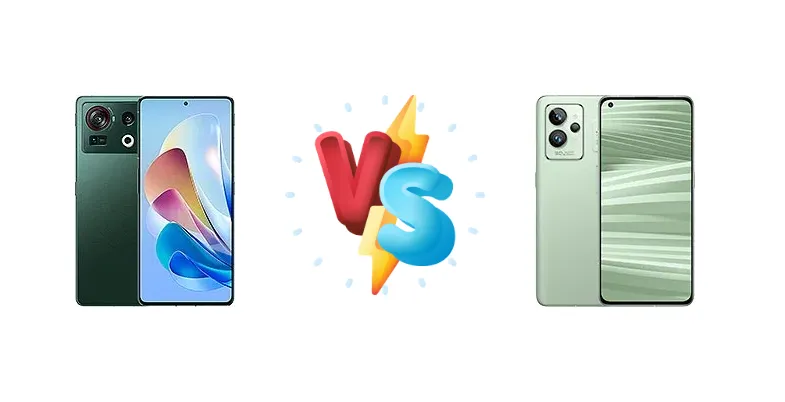
|
🏆 Quick Verdict
For most users, the ZTE nubia Z40S Pro emerges as the stronger contender. Its Snapdragon 8+ Gen 1 offers superior thermal efficiency and sustained performance compared to the GT2 Pro’s Snapdragon 8 Gen 1, coupled with significantly faster charging options. While the GT2 Pro holds its own, the Z40S Pro provides a more refined and powerful experience.
| PHONES | ||
|---|---|---|
| Phone Names | ZTE nubia Z40S Pro | Realme GT2 Pro |
| Network | ||
|---|---|---|
| 2G bands | GSM 850 / 900 / 1800 / 1900 | GSM 850 / 900 / 1800 / 1900 |
| 3G bands | HSDPA 850 / 900 / 1700(AWS) / 1900 / 2100 | HSDPA 800 / 850 / 900 / 1700(AWS) / 1900 / 2100 |
| 4G bands | 1, 3, 4, 5, 7, 8, 12, 17, 20, 34, 38, 39, 40, 41 | 1, 2, 3, 4, 5, 7, 8, 12, 13, 17, 18, 19, 20, 25, 26, 28, 66 - International |
| 5G bands | 1, 3, 5, 8, 28, 41, 78 SA/NSA | 1, 3, 5, 7, 8, 20, 28, 38, 40, 41, 66, 77, 78 SA/NSA |
| Speed | HSPA, LTE, 5G | HSPA, LTE, 5G |
| Technology | GSM / CDMA / HSPA / LTE / 5G | GSM / CDMA / HSPA / EVDO / LTE / 5G |
| - | 1, 2, 3, 4, 5, 7, 8, 12, 13, 17, 18, 19, 20, 25, 26, 28, 34, 38, 39, 40, 41, 42, 66 - China, India | |
| Launch | ||
|---|---|---|
| Announced | 2022, July 20 | 2022, January 04 |
| Status | Available. Released 2022, July 26 | Available. Released 2022, January 08 |
| Body | ||
|---|---|---|
| Build | Glass front, aluminum frame, glass back | - |
| Dimensions | 161.3 x 74 x 8.1 mm (6.35 x 2.91 x 0.32 in) | 163.2 x 74.7 x 8.2 mm (6.43 x 2.94 x 0.32 in) |
| SIM | Nano-SIM + Nano-SIM | Nano-SIM + Nano-SIM |
| Weight | 205 g (7.23 oz) | 189 / 199 g (6.67 oz) |
| - | Splash resistant | |
| Display | ||
|---|---|---|
| Protection | - | Corning Gorilla Glass Victus |
| Resolution | 1080 x 2400 pixels, 20:9 ratio (~395 ppi density) | 1440 x 3216 pixels, 20:9 ratio (~526 ppi density) |
| Size | 6.67 inches, 107.4 cm2 (~90.0% screen-to-body ratio) | 6.7 inches, 108.0 cm2 (~88.6% screen-to-body ratio) |
| Type | AMOLED, 1B colors, 144Hz, HDR10+, 1000 nits | LTPO2 AMOLED, 1B colors, 120Hz, HDR10+, 500 nits (typ), 800 nits (HBM), 1400 nits (peak) |
| Platform | ||
|---|---|---|
| CPU | Octa-core (1x3.19 GHz Cortex-X2 & 3x2.75 GHz Cortex-A710 & 4x1.80 GHz Cortex-A510) | Octa-core (1x3.00 GHz Cortex-X2 & 3x2.50 GHz Cortex-A710 & 4x1.80 GHz Cortex-A510) |
| Chipset | Qualcomm SM8475 Snapdragon 8+ Gen 1 (4 nm) | Qualcomm SM8450 Snapdragon 8 Gen 1 (4 nm) |
| GPU | Adreno 730 | Adreno 730 |
| OS | Android 12, upgradable to Android 13, MyOS 13 | Android 12, upgradable to Android 13, Realme UI 4.0 |
| Memory | ||
|---|---|---|
| Card slot | No | No |
| Internal | 128GB 8GB RAM, 256GB 8GB RAM, 256GB 12GB RAM, 512GB 12GB RAM, 1TB 18GB RAM | 128GB 8GB RAM, 256GB 8GB RAM, 256GB 12GB RAM, 512GB 12GB RAM |
| - | UFS 3.1 | |
| Main Camera | ||
|---|---|---|
| Features | Dual-LED flash, panorama, HDR | Color spectrum sensor, Dual-LED dual-tone flash, HDR, panorama |
| Single | - | 32 MP, f/2.4, 26mm (wide), 1/2.74", 0.8µm |
| Triple | 64 MP, f/1.6, 35mm (standard), 1/1.7", PDAF, OIS 8 MP, f/3.4, 125mm (periscope telephoto), 1/4.0", PDAF, OIS, 5x optical zoom 50 MP, f/2.2, 14mm, 116˚ (ultrawide), AF | 50 MP, f/1.8, 24mm (wide), 1/1.56", 1.0µm, multi-directional PDAF, OIS 50 MP, f/2.2, 15mm, 150˚ (ultrawide), 1/2.76", 0.64µm 3 MP, f/3.3, 20mm (microscope), AF, 40x magnification |
| Video | 8K, 4K@30/60/120fps, 1080p@30/60/120fps, gyro-EIS | 8K@24fps, 4K@30/60fps, 1080p@30/60/240fps, gyro-EIS |
| Selfie camera | ||
|---|---|---|
| Features | HDR | HDR, panorama |
| Single | 16 MP, f/2.5, (wide) | 32 MP, f/2.4, 26mm (wide), 1/2.74", 0.8µm |
| Video | Yes | 1080p@30fps |
| Sound | ||
|---|---|---|
| 3.5mm jack | No | No |
| 35mm jack | No | No |
| Loudspeaker | Yes, with stereo speakers | Yes, with stereo speakers |
| - | 24-bit/192kHz audio | |
| Comms | ||
|---|---|---|
| Bluetooth | 5.2, A2DP, LE, aptX HD, aptX Adaptive | 5.2, A2DP, LE, aptX HD |
| NFC | Yes | Yes (dual side) |
| Positioning | GPS, GLONASS, GALILEO, BDS | GPS (L1+L5), GLONASS, BDS, GALILEO, QZSS, NavIC |
| Radio | No | No |
| USB | USB Type-C 3.1, OTG | USB Type-C 2.0, OTG |
| WLAN | Wi-Fi 802.11 a/b/g/n/ac/6, dual-band, Wi-Fi Direct | Wi-Fi 802.11 a/b/g/n/ac/6, dual-band, Wi-Fi Direct |
| Features | ||
|---|---|---|
| Sensors | Fingerprint (under display, optical), accelerometer, gyro, proximity, compass | Fingerprint (under display, optical), accelerometer, gyro, proximity, compass |
| Battery | ||
|---|---|---|
| Charging | 80W wired (regular version) 120W wired; 15W magnetic wireless (120W version) | 65W wired, 100% in 33 min |
| Type | Market-dependent versions:· Li-Po 5000 mAh (regular version)· Li-Po 4600 mAh (120W version) | 5000 mAh |
| Misc | ||
|---|---|---|
| Colors | Interstellar Black, Star Black, Silver | Paper White, Paper Green, Steel Black, Titanium Blue |
| Models | NX702J | RMX3301, RMX3300 |
| Price | About 490 EUR | € 221.41 |
| SAR | - | 1.16 W/kg (head) 0.53 W/kg (body) |
| Tests | ||
|---|---|---|
| Battery life | - | Endurance rating 117h |
| Camera | - | Photo / Video |
| Display | - | Contrast ratio: Infinite (nominal) |
| Loudspeaker | - | -26.3 LUFS (Good) |
| Performance | - | AnTuTu: 966251 (v9) GeekBench: 3501 (v5.1) GFXBench: 48fps (ES 3.1 onscreen) |
ZTE nubia Z40S Pro
- Superior chipset (Snapdragon 8+ Gen 1) for sustained performance
- Significantly faster charging options (up to 120W)
- Potential for better thermal management
- Camera specifications currently unknown
- Display details lacking for direct comparison
Realme GT2 Pro
- Well-documented camera performance
- Respectable peak display brightness (778 nits)
- Solid overall performance with Snapdragon 8 Gen 1
- Snapdragon 8 Gen 1 prone to thermal throttling
- Slower charging speed (65W)
Display Comparison
The Realme GT2 Pro boasts a measured peak brightness of 778 nits, a respectable figure, but the nubia Z40S Pro’s display specifications are currently unavailable for direct comparison. However, nubia often prioritizes high refresh rates and color accuracy. The GT2 Pro’s ‘Infinite’ contrast ratio is a marketing term; both phones likely utilize OLED panels with excellent contrast. Without detailed nubia Z40S Pro display specs, it’s difficult to definitively declare a winner, but the GT2 Pro’s brightness is a known quantity.
Camera Comparison
Both devices feature capable camera systems, but detailed sensor information beyond 'Photo / Video' is lacking for the nubia Z40S Pro. The Realme GT2 Pro’s camera performance is well-documented, offering strong image quality in various conditions. Without knowing the main sensor size, aperture, and OIS implementation on the Z40S Pro, it’s impossible to make a definitive camera comparison. We can assume both phones will offer a range of shooting modes, but the GT2 Pro’s established performance gives it a temporary lead until the Z40S Pro’s camera specs are revealed. Ignoring the ubiquitous 2MP macro lenses found on both devices, the primary sensor capabilities will be the deciding factor.
Performance
The nubia Z40S Pro’s Snapdragon 8+ Gen 1 (4nm) represents a significant architectural improvement over the Realme GT2 Pro’s Snapdragon 8 Gen 1 (4nm). The ‘+’ variant features a higher clocked Cortex-X2 prime core (3.19 GHz vs 3.00 GHz) and optimized efficiency. This translates to better sustained performance under load, meaning less throttling during prolonged gaming sessions. While both utilize the same LPDDR5 RAM architecture, the 8+ Gen 1’s improved thermal profile gives the nubia Z40S Pro a clear advantage for power users and gamers. The GT2 Pro’s chipset, while still powerful, is more prone to thermal throttling.
Battery Life
Both phones achieve an endurance rating of 117 hours, suggesting similar overall battery life despite potentially different battery capacities. However, the charging speeds are drastically different. The nubia Z40S Pro offers 80W wired charging (standard version) or a blistering 120W wired charging (special version), alongside 15W magnetic wireless charging. The Realme GT2 Pro is limited to 65W wired charging, taking 33 minutes to reach 100%. This difference in charging speed is substantial; the Z40S Pro can top up significantly faster, minimizing downtime. The faster charging of the Z40S Pro effectively mitigates any potential battery capacity disadvantage.
Buying Guide
Buy the ZTE nubia Z40S Pro if you prioritize sustained gaming performance, ultra-fast charging, and a phone that can handle demanding tasks without significant throttling. Buy the Realme GT2 Pro if you value a slightly more balanced approach, potentially prefer its design aesthetic, and are less concerned with pushing the absolute limits of performance for extended periods.