
ZTE nubia Z30 Pro vs. RedMagic 7 Pro: Which Flagship Reigns Supreme?
| Phones Images | |||||
|---|---|---|---|---|---|
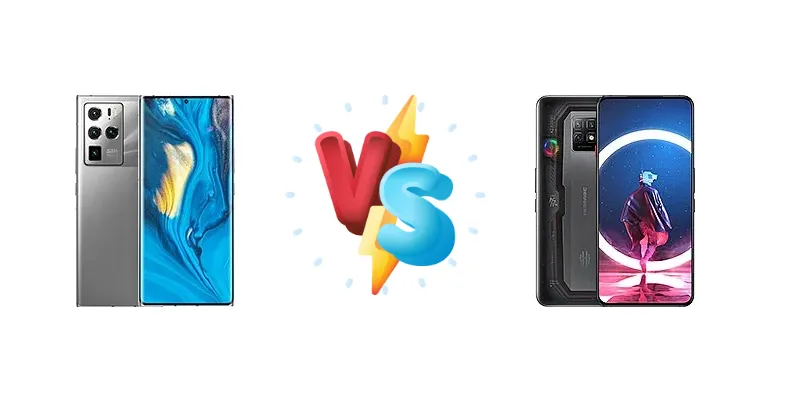
|
🏆 Quick Verdict
For the average user prioritizing a balanced experience, the ZTE nubia RedMagic 7 Pro emerges as the winner. Its Snapdragon 8 Gen 1 chipset provides a substantial performance uplift over the Z30 Pro’s Snapdragon 888, and the gaming-centric features justify the price premium for enthusiasts. However, the Z30 Pro remains a strong contender for those seeking a more versatile camera system.
| PHONES | ||
|---|---|---|
| Phone Names | ZTE nubia Z30 Pro | ZTE nubia RedMagic 7 Pro |
| Network | ||
|---|---|---|
| 2G bands | GSM 850 / 900 / 1800 / 1900 | GSM 850 / 900 / 1800 / 1900 |
| 3G bands | HSDPA 850 / 900 / 1700(AWS) / 1900 / 2100 | HSDPA 850 / 900 / 1700(AWS) / 1900 / 2100 |
| 4G bands | 1, 2, 3, 4, 5, 7, 8, 12, 17, 18, 19, 20, 26, 28, 34, 38, 39, 40, 41 | 1, 2, 3, 4, 5, 7, 8, 12, 17, 18, 19, 20, 26, 28, 34, 38, 40, 41, 66 - International |
| 5G bands | 1, 3, 28, 41, 77, 78, 79 SA/NSA | 1, 3, 5, 7, 8, 20, 28, 38, 41, 77, 78 SA/NSA - International, China |
| Speed | HSPA, LTE, 5G | HSPA, LTE, 5G |
| Technology | GSM / CDMA / HSPA / LTE / 5G | GSM / CDMA / HSPA / EVDO / LTE / 5G |
| CDMA 800 | - | |
| Launch | ||
|---|---|---|
| Announced | 2021, May 20 | 2022, February 17 |
| Status | Available. Released 2021, May 25 | Available. Released 2022, February 28 |
| Body | ||
|---|---|---|
| Build | - | Glass front (Gorilla Glass 5), glass back, aluminum frame |
| Dimensions | 161.8 x 73 x 8.5 mm (6.37 x 2.87 x 0.33 in) | 166.3 x 77.1 x 10 mm (6.55 x 3.04 x 0.39 in) |
| SIM | Nano-SIM + Nano-SIM | Nano-SIM + Nano-SIM |
| Weight | 198 g (6.98 oz) | 235 g (8.29 oz) |
| Display | ||
|---|---|---|
| Protection | - | Corning Gorilla Glass 5 |
| Resolution | 1080 x 2400 pixels, 20:9 ratio (~395 ppi density) | 1080 x 2400 pixels, 20:9 ratio (~387 ppi density) |
| Size | 6.67 inches, 107.4 cm2 (~90.9% screen-to-body ratio) | 6.8 inches, 111.6 cm2 (~87.1% screen-to-body ratio) |
| Type | AMOLED, 1B colors, 144Hz, HDR10+ | AMOLED, 1B colors (China only), 120Hz, 600 nits |
| Platform | ||
|---|---|---|
| CPU | Octa-core (1x2.84 GHz Cortex-X1 & 3x2.42 GHz Cortex-A78 & 4x1.80 GHz Cortex-A55) | Octa-core (1x3.00 GHz Cortex-X2 & 3x2.50 GHz Cortex-A710 & 4x1.80 GHz Cortex-A510) |
| Chipset | Qualcomm SM8350 Snapdragon 888 5G (5 nm) | Qualcomm SM8450 Snapdragon 8 Gen 1 (4 nm) |
| GPU | Adreno 660 | Adreno 730 |
| OS | Android 11, nubia UI 9 | Android 12, Redmagic 5.0 |
| Memory | ||
|---|---|---|
| Card slot | No | No |
| Internal | 256GB 8GB RAM, 256GB 12GB RAM, 512GB 16GB RAM | 128GB 8GB RAM, 128GB 12GB RAM, 256GB 12GB RAM, 256GB 16GB RAM, 512GB 16GB RAM, 512GB 18GB RAM, 1TB 16GB RAM |
| UFS 3.1 | - | |
| Main Camera | ||
|---|---|---|
| Features | Laser AF, Dual-LED flash, panorama, HDR | LED flash, HDR, panorama |
| Quad | 64 MP, f/1.6, 26mm (wide), 1/1.72", 0.8µm, PDAF, OIS 64 MP, f/1.9, 35mm (standard), 1/1.97", 0.7µm, PDAF 8 MP, f/3.4, 123mm (periscope telephoto), 1/4.0", PDAF, OIS, 5x optical zoom 64 MP, f/2.2, 13mm, 120˚ (ultrawide), 1/1.97", 0.7µm | - |
| Single | 16 MP | - |
| Triple | - | 64 MP, f/1.8, 26mm (wide), 1/1.97", 0.7µm, PDAF 8 MP, f/2.2, 120˚, 13mm (ultrawide), 1/4.0", 1.12µm 2 MP (macro) |
| Video | 8K@30fps, 4K@30/60fps, 1080p@30fps, gyro-EIS, HDR10, 10‑bit video | 8K@30fps, 4K@30/60fps, 1080p@30/60/120/240fps |
| Selfie camera | ||
|---|---|---|
| Features | HDR | HDR |
| Single | 16 MP | 16 MP, f/2.0, 26mm (wide), 1/2.8", 1.22µm, under display |
| Video | 4K@30fps, 1080p@30fps | 1080p@30/60fps |
| Sound | ||
|---|---|---|
| 3.5mm jack | No | - |
| 35mm jack | No | Yes |
| Loudspeaker | Yes, with stereo speakers | Yes, with stereo speakers |
| 24-bit/192kHz audio | - | |
| Comms | ||
|---|---|---|
| Bluetooth | 5.1, A2DP, LE, aptX | 5.2, A2DP, aptX, LE |
| NFC | Yes | Yes |
| Positioning | GPS, GLONASS, GALILEO, BDS | GPS (L1+L5), GLONASS, BDS, GALILEO |
| Radio | No | No |
| USB | USB Type-C 3.1 | USB Type-C 3.0, OTG, accessory connector |
| WLAN | Wi-Fi 802.11 a/b/g/n/ac/6, dual-band, Wi-Fi Direct | Wi-Fi 802.11 a/b/g/n/ac/6e, dual-band, Wi-Fi Direct |
| Features | ||
|---|---|---|
| Sensors | Fingerprint (under display, optical), accelerometer, gyro, proximity, compass | Fingerprint (under display, optical), accelerometer, gyro, proximity, compass |
| Battery | ||
|---|---|---|
| Charging | 120W wired, 100% in 15 min | 135W wired, PD3.0, 100% in 15 min (China) 65W wired, PD3.0 (Global) |
| Type | Li-Po 4200 mAh | Li-Po 5000 mAh |
| Misc | ||
|---|---|---|
| Colors | Silver, Black, Black/Gold | Obsidian, Pulsar, Supernova |
| Models | NX667J | NX709J |
| Price | About 640 EUR | About 800 EUR |
ZTE nubia Z30 Pro
- Potentially superior camera system for photography.
- More balanced feature set for everyday use.
- Slightly lower price point (likely).
- Older Snapdragon 888 chipset offers less raw performance.
- Less aggressive cooling solution.
- Limited battery information.
ZTE nubia RedMagic 7 Pro
- Snapdragon 8 Gen 1 delivers significantly faster performance.
- 135W charging (China) for rapid power-ups.
- Gaming-focused features like active cooling and triggers.
- May prioritize gaming features over camera quality.
- Potentially higher price.
- 65W charging in global markets is slower.
Display Comparison
The nubia RedMagic 7 Pro boasts a measured peak brightness of 447 nits, a respectable figure, but the Z30 Pro’s display specifications are currently unavailable for direct comparison. However, given the RedMagic 7 Pro’s gaming focus, it likely prioritizes refresh rate and response time over absolute brightness. Both devices likely employ AMOLED panels, but the Z30 Pro may offer more accurate color calibration for content consumption. The RedMagic 7 Pro’s flat display is geared towards minimizing distortion during gaming, while the Z30 Pro’s display characteristics remain unknown.
Camera Comparison
The context data for both devices is limited regarding camera specifics. However, the RedMagic 7 Pro’s ‘Photo/Video’ designation suggests a more general-purpose camera system, while the Z30 Pro, positioned as a flagship, likely prioritizes image quality. Without sensor size or aperture information, it’s difficult to make a definitive judgment. The Z30 Pro is likely to offer more sophisticated image processing algorithms and potentially a wider range of shooting modes. The inclusion of a 2MP macro camera on either device is unlikely to significantly impact overall camera performance.
Performance
The core difference lies in the chipsets: the RedMagic 7 Pro utilizes the Qualcomm SM8450 Snapdragon 8 Gen 1 (4nm), while the Z30 Pro features the older SM8350 Snapdragon 888 (5nm). The 4nm process of the Gen 1 offers improved power efficiency and thermal performance, translating to sustained higher clock speeds. The Gen 1’s CPU configuration – 1x3.00 GHz Cortex-X2, 3x2.50 GHz Cortex-A710, and 4x1.80 GHz Cortex-A510 – represents a generational leap over the Z30 Pro’s 1x2.84 GHz Cortex-X1, 3x2.42 GHz Cortex-A78, and 4x1.80 GHz Cortex-A55. This means faster app loading, smoother multitasking, and significantly improved gaming performance on the RedMagic 7 Pro. Both devices likely utilize LPDDR5 RAM, but the RedMagic 7 Pro’s superior cooling system allows it to maintain higher RAM speeds for longer durations.
Battery Life
The RedMagic 7 Pro boasts a 135W wired charging capability (in China, 65W globally), while the Z30 Pro supports 120W wired charging. Both claim a 0-100% charge in 15 minutes, but the RedMagic 7 Pro’s higher wattage suggests potentially faster charging speeds in compatible regions. The RedMagic 7 Pro’s endurance rating of 64 hours indicates a larger battery capacity, likely optimized for extended gaming sessions. While the Z30 Pro’s battery capacity is unknown, the RedMagic 7 Pro’s combination of larger battery and faster charging provides a clear advantage for power users.
Buying Guide
Buy the ZTE nubia Z30 Pro if you need a flagship with a strong emphasis on photography and a more refined, everyday user experience. It’s ideal for content creators and users who value a balanced feature set. Buy the ZTE nubia RedMagic 7 Pro if you prioritize raw gaming performance, aggressive cooling, and a feature set tailored to mobile esports. This is the phone for dedicated gamers who demand the highest frame rates and minimal throttling.