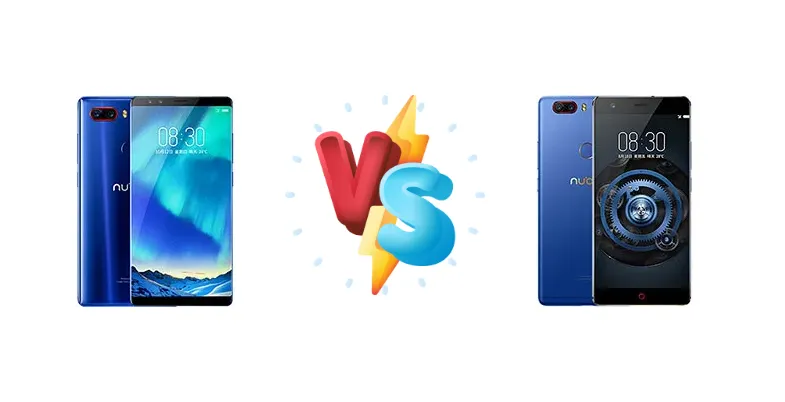
The ZTE nubia Z17s and Z17 Lite were compelling mid-range options when released, offering unique features and designs. But with time, the differences in their capabilities become more apparent. This comprehensive comparison will break down the key distinctions to help you decide which phone best suits your needs.
🏆 Quick Verdict
The nubia Z17s is the clear winner, boasting a significantly more powerful Snapdragon 835 chipset, faster charging, and likely a better camera. The Z17 Lite offers a more budget-friendly entry point, but sacrifices performance and features. If performance matters, choose the Z17s.
| Network |
|---|
| 2G bands | GSM 850 / 900 / 1800 / 1900 - SIM 1 & SIM 2 | GSM 850 / 900 / 1800 / 1900 - SIM 1 & SIM 2 |
| 3G bands | HSDPA 850 / 900 / 1900 / 2100 - Europe, China | HSDPA 850 / 900 / 1900 / 2100 |
| 4G bands | 1, 3, 4, 5, 7, 8, 12, 20, 34, 38, 39, 40, 41 - China | 1, 3, 5, 7, 8, 34, 38, 39, 40, 41 |
| Speed | HSPA 42.2/5.76 Mbps, LTE (3CA) Cat9 450/50 Mbps | HSPA, LTE |
| Technology | GSM / CDMA / HSPA / EVDO / LTE | GSM / CDMA / HSPA / LTE |
| | 1, 3, 4, 5, 7, 8, 12, 20 - Europe | CDMA 800 & TD-SCDMA |
| Launch |
|---|
| Announced | 2017, October. Released 2017, October | 2017, August. Released 2017, September |
| Status | Discontinued | Discontinued |
| Body |
|---|
| Build | Glass front (Gorilla Glass), glass back, aluminum frame | - |
| Dimensions | 147.5 x 72.7 x 8.5 mm (5.81 x 2.86 x 0.33 in) | 153 x 72.6 x 7.6 mm (6.02 x 2.86 x 0.30 in) |
| SIM | Nano-SIM + Nano-SIM | Nano-SIM + Nano-SIM |
| Weight | 170 g (6.00 oz) | 168 g (5.93 oz) |
| Display |
|---|
| Protection | Corning Gorilla Glass (unspecified version) | - |
| Resolution | 1080 x 2040 pixels, 17:9 ratio (~403 ppi density) | 1080 x 1920 pixels, 16:9 ratio (~401 ppi density) |
| Size | 5.73 inches, 87.6 cm2 (~81.7% screen-to-body ratio) | 5.5 inches, 83.4 cm2 (~75.1% screen-to-body ratio) |
| Type | IPS LCD | IPS LCD |
| Platform |
|---|
| CPU | Octa-core (4x2.45 GHz Kryo & 4x1.9 GHz Kryo) | Octa-core (4x1.95 GHz Cortex-A72 & 4x1.4 GHz Cortex-A53) |
| Chipset | Qualcomm MSM8998 Snapdragon 835 (10 nm) | Qualcomm MSM8976 Pro Snapdragon 653 (28 nm) |
| GPU | Adreno 540 | Adreno 510 |
| OS | Android 7.1.1 (Nougat), nubia UI 5.1 | Android 7.1 (Nougat), nubia UI 5 |
| Memory |
|---|
| Card slot | No | No |
| Internal | 64GB 6GB RAM, 128GB 8GB RAM | 64GB 6GB RAM |
| | - | eMMC 5.1 |
| Main Camera |
|---|
| Dual | 12 MP, f/1.8, 1/2.55", 1.4µm, PDAF
23 MP, f/2.0, AF, 2x lossless zoom | - |
| Features | Dual-LED dual-tone flash, HDR, panorama | Dual-LED dual-tone flash, HDR |
| Single | - | 13 MP, f/2.2, PDAF
Auxiliary lens |
| Video | 4K@30fps, 1080p@30fps | 4K@30fps, 1080p@30fps |
| Selfie camera |
|---|
| Single | 5 MP, f/2.2
5 MP | 16 MP, f/2.0, 26mm (wide), 1/3.06", 1.0µm |
| Video | 1080p@30fps | 1080p@30fps |
| Sound |
|---|
| 3.5mm jack | No | Yes |
| 35mm jack | No | Yes |
| Loudspeaker | Yes | Yes |
| | 32-bit/384kHz audio | - |
| Comms |
|---|
| Bluetooth | 4.1, A2DP, LE | 4.2, A2DP, LE |
| NFC | Yes | Yes |
| Positioning | GPS, GLONASS, BDS | GPS |
| Radio | No | No |
| USB | USB Type-C, OTG | USB Type-C, OTG |
| WLAN | Wi-Fi 802.11 a/b/g/n/ac, dual-band, Wi-Fi Direct, DLNA | Wi-Fi 802.11 b/g/n/ac, Wi-Fi Direct |
| Features |
|---|
| Sensors | Fingerprint (rear-mounted), accelerometer, gyro, proximity, compass | Fingerprint (rear-mounted), accelerometer, gyro, proximity, compass |
| Battery |
|---|
| Charging | 26W wired, QC4, 50% in 25 min | 18W wired, QC3 |
| Type | Li-Po 3100 mAh, non-removable | Li-Ion 3200 mAh, non-removable |
| Misc |
|---|
| Colors | Aurora Blue, Black Gold | Black, Black/Gold, Blue |
| Models | NX595J | NX591J |
| Price | About 360 EUR | About 250 EUR |
ZTE nubia Z17s
- Significantly faster performance
- Faster charging (QC4)
- Likely better camera quality
- Premium build quality
- Larger display
- Higher price (when new)
- Older model - software support may be limited
- Potentially larger size
ZTE nubia Z17 lite
- More affordable
- Compact size
- Decent battery life for basic use
- Slower performance
- Slower charging (QC3)
- Less impressive camera
- Older model - limited software support
Display Comparison
The nubia Z17s typically featured a 5.73-inch FHD+ display with a vibrant color profile. The Z17 Lite generally had a 5.5-inch FHD display. While both offered decent viewing experiences, the Z17s' slightly larger size and potentially better color accuracy give it a slight edge. Both likely used IPS LCD panels.
Camera Comparison
While specific camera specs vary depending on the exact variant, the Z17s generally had a more advanced camera system, likely with better image processing and low-light performance. The Z17s likely featured a dual-camera setup, while the Z17 Lite had a single lens. Expect sharper images and more detail from the Z17s.
Performance
This is where the Z17s shines. The Snapdragon 835 is a flagship-level chipset, offering significantly faster processing speeds and smoother performance compared to the Z17 Lite's Snapdragon 653. Expect noticeable differences in app loading times, multitasking, and gaming performance. The Z17s handled demanding games much better.
Battery Life
The Z17s likely had a slightly larger battery capacity (around 3800mAh) compared to the Z17 Lite (around 3200mAh). However, the Z17s' faster 26W charging significantly offsets any potential battery capacity difference, allowing for much quicker top-ups.
Buying Guide
The nubia Z17s is ideal for users who prioritize performance, smooth multitasking, and a premium experience. It's suitable for gamers and those who demand snappy responsiveness. The nubia Z17 Lite is a good choice for budget-conscious users who primarily need a phone for basic tasks like calling, texting, and light social media browsing.
Frequently Asked Questions
❓ Is the nubia Z17s still worth buying in [current year]?
It depends. If you can find one at a good price and don't need the absolute latest software, the Z17s' performance is still respectable. However, be aware of limited software updates.
❓ What's the difference between the Snapdragon 835 and 653?
The Snapdragon 835 is a significantly more powerful chipset, offering faster processing speeds, better graphics performance, and improved efficiency compared to the Snapdragon 653.