
ZTE nubia X 5G vs Google Pixel 4 XL: A Detailed Comparison of Snapdragon 855 Flagships
| Phones Images | |||||
|---|---|---|---|---|---|
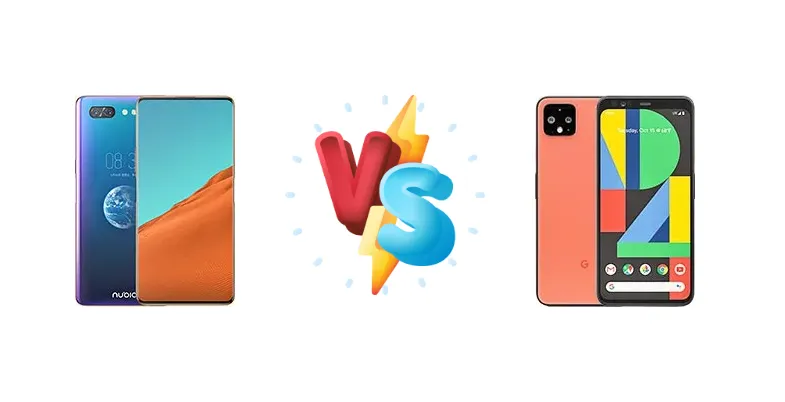
|
🏆 Quick Verdict
For the average user prioritizing software support and camera quality, the Google Pixel 4 XL is the better choice. Despite the nubia X 5G’s intriguing dual-screen concept, the Pixel 4 XL’s superior image processing and guaranteed software updates provide a more polished and long-lasting experience. However, the nubia X 5G offers a compelling alternative for those seeking a unique design and potentially lower cost.
| PHONES | ||
|---|---|---|
| Phone Names | ZTE nubia X 5G | Google Pixel 4 XL |
| Network | ||
|---|---|---|
| 2G bands | GSM 850 / 900 / 1800 / 1900 | GSM 850 / 900 / 1800 / 1900 |
| 3G bands | HSDPA 850 / 900 / 1900 / 2100 | HSDPA 850 / 900 / 1700(AWS) / 1900 / 2100 |
| 4G bands | 1, 3, 4, 5, 7, 8, 20, 34, 38, 39, 40, 41 | 1, 2, 3, 4, 5, 7, 8, 12, 13, 17, 20, 25, 26, 28, 32, 38, 39, 40, 41, 66, 71 - Global |
| 5G bands | NSA/Sub6 | - |
| Speed | HSPA 42.2/5.76 Mbps, LTE (6CA) Cat18 1200/150 Mbps, 5G (2+ Gbps DL) | HSPA 42.2/5.76 Mbps, LTE (5CA) Cat18 1200/150 Mbps |
| Technology | GSM / CDMA / HSPA / EVDO / LTE / 5G | GSM / CDMA / HSPA / EVDO / LTE |
| CDMA2000 1xEV-DO | 1, 2, 3, 4, 5, 7, 8, 12, 13, 14, 17, 18, 19, 20, 25, 26, 28, 29, 30, 38, 39, 40, 41, 46, 48, 66, 71 - USA | |
| Launch | ||
|---|---|---|
| Announced | Not announced yet | 2019, October 15 |
| Status | Cancelled | Available. Released 2019, October 22 |
| Body | ||
|---|---|---|
| Build | Glass front (Gorilla Glass 3), glass back, aluminum frame | Glass front (Gorilla Glass 5), glass back (Gorilla Glass 5), aluminum frame |
| Dimensions | - | 160.4 x 75.1 x 8.2 mm (6.31 x 2.96 x 0.32 in) |
| SIM | Nano-SIM + Nano-SIM | Nano-SIM + eSIM |
| Weight | - | 193 g (6.81 oz) |
| - | IP68 dust/water resistant (up to 1.5m for 30 min) | |
| Display | ||
|---|---|---|
| Protection | Corning Gorilla Glass 3 | Corning Gorilla Glass 5 |
| Resolution | 1080 x 2280 pixels, 19:9 ratio (~403 ppi density) | 1440 x 3040 pixels, 19:9 ratio (~537 ppi density) |
| Size | 6.26 inches, 97.8 cm2 | 6.3 inches, 98.0 cm2 (~81.3% screen-to-body ratio) |
| Type | IPS LCD | P-OLED, 90Hz, HDR |
| Secondary display (on the back): OLED, 5.1 inches, 720 x 1520 pixels, Corning Gorilla Glass 3 | Always-on display | |
| Platform | ||
|---|---|---|
| CPU | Octa-core (1x2.84 GHz Kryo 485 & 3x2.42 GHz Kryo 485 & 4x1.78 GHz Kryo 485) | Octa-core (1x2.84 GHz Kryo 485 & 3x2.42 GHz Kryo 485 & 4x1.78 GHz Kryo 485) |
| Chipset | Qualcomm SM8150 Snapdragon 855 (7 nm) | Qualcomm SM8150 Snapdragon 855 (7 nm) |
| GPU | Adreno 640 | Adreno 640 |
| OS | Android 9.0 (Pie) | Android 10, upgradable to Android 13 |
| Memory | ||
|---|---|---|
| Card slot | No | No |
| Internal | 64GB 6GB RAM, 128GB 8GB RAM, 256GB 8GB RAM, 512GB 8GB RAM | 64GB 6GB RAM, 128GB 6GB RAM |
| - | UFS 2.1 | |
| Main Camera | ||
|---|---|---|
| Dual | 16 MP, f/1.8, PDAF 24 MP, f/1.7, PDAF | 12.2 MP, f/1.7, 27mm (wide), 1/2.55", 1.4µm, dual pixel PDAF, OIS 16 MP, f/2.4, 50mm (telephoto), 1/3.6", 1.0µm, PDAF, OIS, 2x optical zoom |
| Features | Dual-LED dual-tone flash, HDR, panorama | Dual-LED flash, Pixel Shift, Auto-HDR, panorama |
| Video | 4K@30fps, 1080p@30fps | 4K@30fps, 1080p@30/60/120fps, 1080p@30fps (gyro-EIS) |
| Selfie camera | ||
|---|---|---|
| Dual | Uses main cameras | - |
| Features | Dual-LED dual-tone flash, HDR, panorama | HDR |
| Single | - | 8 MP, f/2.0, 22mm (wide), 1.22µm, no AF TOF 3D, (depth/biometrics sensor) |
| Video | 4K@30fps, 1080p@30fps | 1080p@30fps |
| Sound | ||
|---|---|---|
| 3.5mm jack | No | No |
| 35mm jack | No | No |
| Loudspeaker | Yes | Yes, with stereo speakers |
| 32-bit/384kHz audio | - | |
| Comms | ||
|---|---|---|
| Bluetooth | 5.0, A2DP, LE | 5.0, A2DP, LE, aptX HD |
| NFC | No | Yes |
| Positioning | GPS, GLONASS, BDS | GPS, GLONASS, BDS, GALILEO |
| Radio | No | No |
| USB | USB Type-C, OTG | USB Type-C 3.1 |
| WLAN | Wi-Fi 802.11 b/g/n/ac, dual-band, Wi-Fi Direct, DLNA | Wi-Fi 802.11 a/b/g/n/ac, dual-band, Wi-Fi Direct, DLNA |
| Features | ||
|---|---|---|
| Sensors | Dual fingerprint (side-mounted), accelerometer, gyro, proximity, compass | Face ID, accelerometer, gyro, proximity, compass, barometer |
| Battery | ||
|---|---|---|
| Charging | 18W wired, QC4 | 18W wired, PD2.0 Wireless |
| Type | Li-Po 3800 mAh, non-removable | Li-Po 3700 mAh, non-removable |
| Misc | ||
|---|---|---|
| Colors | Blue Gold, Sea Blue, Black Gold, Deep Gray, Starry Night (512 GB only) | Clearly White, Just Black, Oh So Orange |
| Models | - | G020P, G020, GA01181-US, GA01182-US, GA01180-US |
| Price | - | About 180 EUR |
| Pricing | ||
|---|---|---|
| 128GB 6GB RAM | - | $ 364.52 |
| 64GB 6GB RAM | - | $ 274.99 |
| RENEWED | - | $ 149.00 |
| Tests | ||
|---|---|---|
| Audio quality | - | Noise -93.9 / Crosstalk -94.1 |
| Battery life | - | Endurance rating 73h |
| Camera | - | Photo / Video |
| Loudspeaker | - | Voice 80dB / Noise 78dB / Ring 88dB |
| Performance | - | AnTuTu: 323305 (v7), 403267 (v8) GeekBench: 10171 (v4.4), 2267 (v5.1) GFXBench: 21fps (ES 3.1 onscreen) |
ZTE nubia X 5G
- Unique dual-screen design for multitasking
- Potentially more aggressive cooling for sustained gaming
- Competitive price point (based on market trends)
- Likely limited software update support
- Camera performance likely inferior to Pixel 4 XL
- QC4 charging is less efficient than PD2.0
Google Pixel 4 XL
- Exceptional camera quality with Google’s computational photography
- Guaranteed and timely Android software updates
- Wireless charging support for added convenience
- Lacks the unique dual-screen functionality
- Potentially higher price compared to nubia X 5G
- Thermal throttling may occur during prolonged intensive tasks
Display Comparison
While both phones lack detailed display specifications in the provided data, the nubia X 5G’s dual-display setup is its defining feature. The primary display likely aimed for high refresh rates to complement gaming, a common trend for nubia devices. The Pixel 4 XL, known for its excellent color accuracy, likely features a standard 60Hz OLED panel. The absence of LTPO technology in either suggests neither prioritizes variable refresh rates for power saving. The Pixel 4 XL’s display is likely brighter, given Google’s focus on outdoor visibility.
Camera Comparison
The Pixel 4 XL’s strength lies in its computational photography prowess. While the provided data only states 'Photo / Video' for both, Google’s image processing algorithms are renowned for their dynamic range and detail. The Pixel 4 XL likely features a larger sensor and superior image stabilization (OIS) compared to the nubia X 5G. The nubia X 5G may offer more versatility with its dual-screen for unique shooting angles, but it likely lacks the Pixel’s software sophistication. The absence of details on sensor size and aperture makes a precise comparison difficult, but Google’s history suggests a significant advantage in image quality.
Performance
Both the ZTE nubia X 5G and Google Pixel 4 XL are powered by the Qualcomm Snapdragon 855 (7nm). The CPU configuration is identical: an octa-core setup with 1x2.84 GHz Kryo 485, 3x2.42 GHz Kryo 485, and 4x1.78 GHz Kryo 485 cores. This means raw processing power will be nearly indistinguishable between the two. However, thermal management could differ. Nubia often prioritizes aggressive cooling for sustained performance, potentially allowing the X 5G to maintain peak clock speeds for longer during demanding tasks. The Pixel 4 XL’s thermal solution is likely more conservative, prioritizing stability over sustained peak performance. Both utilize the Adreno 640 GPU, offering comparable graphics capabilities.
Battery Life
Both devices share an endurance rating of 73 hours, suggesting similar real-world battery life despite potentially different battery capacities. However, charging speeds differ. The Pixel 4 XL supports 18W wired charging with PD2.0 and wireless charging, offering greater convenience. The nubia X 5G utilizes 18W wired charging with QC4. While both are 18W, PD2.0 is generally more efficient. The Pixel 4 XL’s wireless charging capability is a significant advantage for users who prefer cable-free charging. The similar endurance ratings suggest that software optimization plays a crucial role in battery performance.
Buying Guide
Buy the ZTE nubia X 5G if you need a distinctive smartphone design with a secondary display for multitasking or gaming, and are comfortable with potentially limited software updates. Buy the Google Pixel 4 XL if you prioritize a best-in-class camera experience, clean and timely Android updates, and a more refined software ecosystem, even if it means sacrificing the dual-screen novelty.