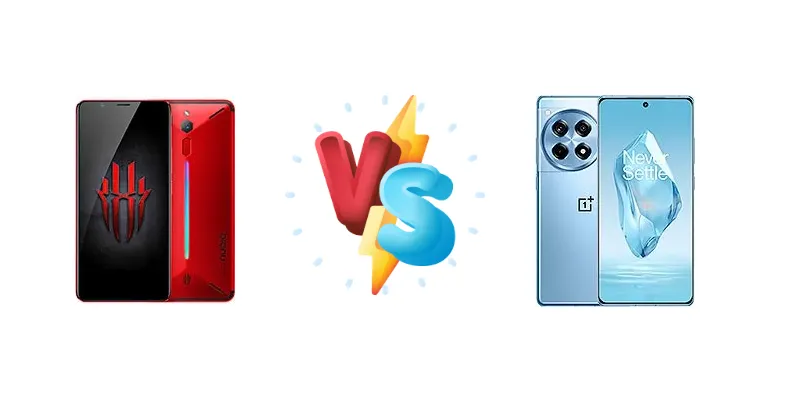
The ZTE nubia RedMagic, while once a contender, now represents an older generation of gaming-focused smartphones. The OnePlus 12R, positioned as a value-focused flagship, brings a modern chipset and a host of improvements. This comparison dissects the key differences to determine which phone best suits your needs in 2024.
🏆 Quick Verdict
For the vast majority of users, the OnePlus 12R is the superior choice. Its Snapdragon 8 Gen 2 chipset offers dramatically faster performance and improved efficiency compared to the RedMagic’s Snapdragon 835. The 100W charging and significantly brighter display further solidify its position as the better all-around device.
| Network |
|---|
| 2G bands | GSM 850 / 900 / 1800 / 1900 | GSM 850 / 900 / 1800 / 1900 |
| 3G bands | HSDPA 850 / 900 / 1900 / 2100 | HSDPA 850 / 900 / 1700(AWS) / 1900 / 2100 |
| 4G bands | 1, 3, 5, 7, 8, 20, 34, 38, 39, 40, 41 | 1, 2, 3, 4, 5, 7, 8, 12, 17, 18, 19, 20, 26, 28, 32, 38, 39, 40, 41, 66 |
| 5G bands | - | 1, 2, 3, 5, 7, 8, 12, 20, 28, 38, 40, 41, 66, 77, 78 SA/NSA |
| Speed | HSPA 42.2/5.76 Mbps, LTE (5CA) Cat16 1024/150 Mbps | HSPA, LTE, 5G |
| Technology | GSM / CDMA / HSPA / EVDO / LTE | GSM / CDMA / HSPA / LTE / 5G |
| Launch |
|---|
| Announced | 2018, April. Released 2018, April | 2024, January 23 |
| Status | Discontinued | Available. Released 2024, February 06 |
| Body |
|---|
| Build | Glass front (Dinorex T2X-1), aluminum back, aluminum frame | Glass front (Gorilla Glass Victus 2), aluminum frame, glass back |
| Dimensions | 158.1 x 74.9 x 9.5 mm (6.22 x 2.95 x 0.37 in) | 163.3 x 75.3 x 8.8 mm (6.43 x 2.96 x 0.35 in) |
| SIM | Nano-SIM + Nano-SIM | · Nano-SIM + Nano-SIM + eSIM (max 2 at a time)· Nano-SIM + Nano-SIM |
| Weight | 185 g (6.53 oz) | 207 g (7.30 oz) |
| Display |
|---|
| Protection | Dinorex T2X-1 scratch/shock resistant glass | Corning Gorilla Glass Victus 2 |
| Resolution | 1080 x 2160 pixels, 18:9 ratio (~402 ppi density) | 1264 x 2780 pixels (~450 ppi density) |
| Size | 6.0 inches, 92.9 cm2 (~78.5% screen-to-body ratio) | 6.78 inches, 111.7 cm2 (~90.9% screen-to-body ratio) |
| Type | IPS LCD | LTPO4 AMOLED, 1B colors, 120Hz, HDR10+, Dolby Vision, 1600 nits (HBM), 4500 nits (peak) |
| Platform |
|---|
| CPU | Octa-core (4x2.35 GHz Kryo & 4x1.9 GHz Kryo) | Octa-core (1x3.2 GHz Cortex-X3 & 2x2.8 GHz Cortex-A715 & 2x2.8 GHz Cortex-A710 & 3x2.0 GHz Cortex-A510) |
| Chipset | Qualcomm MSM8998 Snapdragon 835 (10 nm) | Qualcomm SM8550-AB Snapdragon 8 Gen 2 (4 nm) |
| GPU | Adreno 540 | Adreno 740 |
| OS | Android 8.1 (Oreo), Redmagic 1.0 | Android 14, up to 3 major Android upgrades, OxygenOS 15 |
| Memory |
|---|
| Card slot | No | No |
| Internal | 64GB 6GB RAM, 128GB 8GB RAM | 128GB 8GB RAM, 256GB 8GB RAM, 256GB 12GB RAM, 256GB 16GB RAM |
| Main Camera |
|---|
| Features | LED flash, HDR, panorama | Laser AF, color spectrum sensor, LED flash, HDR, panorama |
| Single | 24 MP, f/1.7, PDAF | - |
| Triple | - | 50 MP, f/1.8, 24mm (wide), 1/1.56", 1.0µm, multi-directional PDAF, OIS
8 MP, f/2.2, 16mm, 112˚ (ultrawide), 1/4.0", 1.12µm
2 MP (macro) |
| Video | 4K@30fps, 1080p@30fps | 4K@30/60fps, 1080p@30/60/120/240fps, gyro-EIS, OIS |
| Selfie camera |
|---|
| Features | - | HDR, panorama |
| Single | 8 MP, f/2.0 | 16 MP, f/2.4, 26mm (wide), 1/3", 1.0µm |
| Video | 1080p@30fps | 1080p@30fps, gyro-EIS |
| Sound |
|---|
| 35mm jack | Yes | No |
| Loudspeaker | Yes | Yes, with stereo speakers |
| Comms |
|---|
| Bluetooth | 5.0, A2DP, aptX, LE | 5.3, A2DP, LE, aptX HD |
| Infrared port | - | Yes |
| NFC | No | Yes |
| Positioning | GPS, GLONASS, BDS | GPS, GALILEO, GLONASS, BDS, QZSS |
| Radio | No | No |
| USB | USB Type-C, OTG | USB Type-C 2.0 |
| WLAN | Wi-Fi 802.11 a/b/g/n/ac, dual-band, Wi-Fi Direct | Wi-Fi 802.11 a/b/g/n/ac/6/7, dual-band |
| Features |
|---|
| Sensors | Fingerprint (rear-mounted), accelerometer, gyro, proximity, compass | Fingerprint (under display, optical), accelerometer, gyro, proximity, compass |
| Battery |
|---|
| Charging | 18W wired | 100W wired, 100% in 26 min |
| Type | Li-Po 3800 mAh, non-removable | Li-Ion 5500 mAh |
| Misc |
|---|
| Colors | Black, Red, Flame Red | Iron Gray, Cool Blue, Electric Violet, Sunset Dune |
| Models | NX609J | CPH2609, CPH2585, CPH2611 |
| Price | About 400 EUR | € 410.84 / $ 399.95 / £ 649.00 |
| SAR | - | 1.19 W/kg (head) 0.82 W/kg (body) |
ZTE nubia RedMagic
- Potentially lower price (due to age)
- May be compatible with older, specific game optimizations
- Compact form factor (likely, based on RedMagic's history)
- Outdated Snapdragon 835 chipset
- Slow 18W charging
- Inferior display brightness
- Likely poor camera performance
OnePlus 12R
- Powerful Snapdragon 8 Gen 2 chipset
- Ultra-fast 100W charging (26 min full charge)
- Bright and vibrant display (1181 nits)
- Excellent battery life (14:32h active use)
- May be slightly more expensive
- Larger form factor compared to older RedMagic models
Display Comparison
The OnePlus 12R boasts a significantly brighter display, peaking at 1181 nits, compared to the RedMagic’s unspecified brightness. This translates to far better visibility outdoors. While the RedMagic may have a higher refresh rate (a common feature in older gaming phones), the 12R’s superior brightness and likely more accurate color calibration make it the more pleasant display for everyday use. The absence of LTPO technology in either phone means both will consume more power at lower refresh rates than newer flagships.
Camera Comparison
Given the context data, a detailed camera comparison is limited. However, it’s safe to assume the OnePlus 12R benefits from a more modern image signal processor (ISP) within the Snapdragon 8 Gen 2, leading to better image quality, especially in low-light conditions. The RedMagic, relying on older technology, will likely struggle to compete in dynamic range and detail. The absence of any camera specifications for the RedMagic suggests it wasn’t a primary focus, while the 12R likely prioritizes a more versatile camera system.
Performance
The performance gap between these two devices is substantial. The OnePlus 12R’s Snapdragon 8 Gen 2 (4nm) is a massive upgrade over the RedMagic’s Snapdragon 835 (10nm). The 8 Gen 2 features a more modern CPU architecture – a 1x3.2 GHz Cortex-X3 prime core, alongside Cortex-A715 and A710 performance cores, and efficient A510 cores – compared to the 835’s older Kryo cores. This results in significantly faster application loading, smoother multitasking, and a much better gaming experience. The 4nm process node of the 8 Gen 2 also provides superior thermal efficiency, reducing throttling during sustained workloads.
Battery Life
The OnePlus 12R’s 100W wired charging is a game-changer, achieving a full charge in just 26 minutes. The RedMagic’s 18W charging is comparatively slow. While the RedMagic’s battery capacity isn’t specified, the 12R’s active use score of 14:32h demonstrates excellent battery life, likely offsetting any potential capacity difference. The faster charging of the 12R significantly reduces downtime and provides a more convenient user experience.
Buying Guide
Buy the ZTE nubia RedMagic if your sole priority is maintaining compatibility with older games specifically optimized for the Snapdragon 835, and you are on a very tight budget. Buy the OnePlus 12R if you prioritize modern performance, fast charging, a brighter and more usable display, and a phone that will remain relevant for years to come. The 12R offers a far more balanced experience.
Frequently Asked Questions
❓ Will the OnePlus 12R get hot during extended gaming sessions?
The Snapdragon 8 Gen 2’s 4nm process is significantly more efficient than the 835’s 10nm process. This translates to lower heat generation during demanding tasks like gaming. While some throttling is inevitable, the 12R is designed to maintain performance for longer periods than the RedMagic.
❓ Is the OnePlus 12R a true 'flagship killer'?
The OnePlus 12R doesn’t have *every* flagship feature (like a telephoto lens or wireless charging), but it delivers flagship-level performance with the Snapdragon 8 Gen 2 and a stunning display at a more accessible price point. It prioritizes core performance and battery life, making it a compelling alternative to more expensive devices.
❓ Can the RedMagic still play modern mobile games?
While the RedMagic can technically run many modern games, the Snapdragon 835 will struggle with demanding titles at higher settings. Expect lower frame rates, increased loading times, and potential stuttering compared to the OnePlus 12R. It's best suited for older or less graphically intensive games.