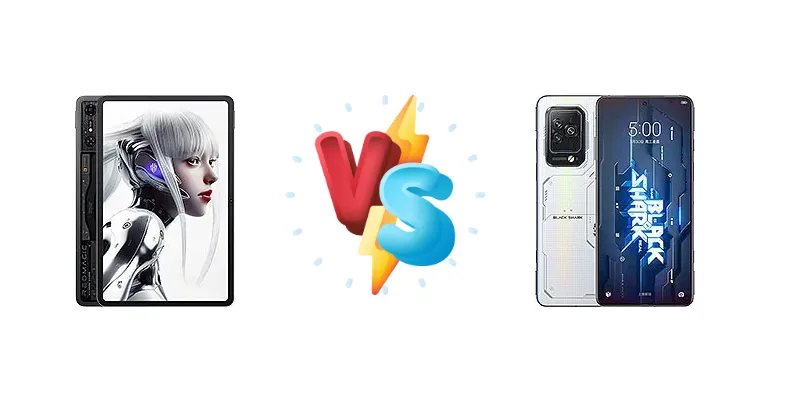
The gaming phone market is heating up, with both ZTE and Xiaomi offering compelling options. The Xiaomi Black Shark 5 Pro, while still a capable device, represents an earlier generation of gaming hardware. The nubia RedMagic Nova arrives with the latest Snapdragon 8 Gen 3, promising a significant leap in performance. This comparison dissects the key differences to determine which phone reigns supreme for mobile gamers.
🏆 Quick Verdict
For most gamers, the ZTE nubia RedMagic Nova is the superior choice. Its Snapdragon 8 Gen 3 chipset delivers demonstrably better performance and efficiency than the Black Shark 5 Pro’s Snapdragon 8 Gen 1. While the Black Shark 5 Pro boasts faster 120W charging, the Nova’s longer battery life and newer architecture make it the more well-rounded option.
| Network |
|---|
| 2G bands | N/A | GSM 850 / 900 / 1800 / 1900 |
| 3G bands | N/A | HSDPA 800 / 850 / 900 / 1700(AWS) / 1900 / 2100 |
| 4G bands | N/A | 1, 2, 3, 4, 5, 7, 8, 12, 17, 18, 19, 26, 28, 34, 38, 39, 40, 41 |
| 5G bands | - | 1, 3, 8, 28, 41, 77, 78, 79 SA/NSA |
| EDGE | No | - |
| GPRS | No | - |
| Speed | - | HSPA, LTE, 5G |
| Technology | No cellular connectivity | GSM / CDMA / HSPA / EVDO / LTE / 5G |
| Launch |
|---|
| Announced | 2024, September 05 | 2022, March 30 |
| Status | Available. Released 2024, September 05 | Available. Released 2022, April 04 |
| Body |
|---|
| Build | Glass front, aluminum frame, aluminum back | - |
| Dimensions | 253.3 x 164.6 x 7.3 mm (9.97 x 6.48 x 0.29 in) | 163.9 x 76.5 x 9.5 mm (6.45 x 3.01 x 0.37 in) |
| SIM | No | Nano-SIM + Nano-SIM |
| Weight | 530 g (1.17 lb) | 220 g (7.76 oz) |
| Display |
|---|
| Resolution | 1800 x 2880 pixels, 16:10 ratio (~312 ppi density) | 1080 x 2400 pixels, 20:9 ratio (~395 ppi density) |
| Size | 10.9 inches, 344.5 cm2 (~82.6% screen-to-body ratio) | 6.67 inches, 107.4 cm2 (~85.7% screen-to-body ratio) |
| Type | IPS LCD, 144Hz, 550 nits | OLED, 1B colors, 144Hz, HDR10+ |
| Platform |
|---|
| CPU | 8-core (1x3.4GHz Cortex-X4 & 3x3.1GHz Cortex-A720 & 2x2.9GHz Cortex-A720 & 2x2.2GHz Cortex-A520) | Octa-core (1x3.00 GHz Cortex-X2 & 3x2.50 GHz Cortex-A710 & 4x1.80 GHz Cortex-A510) |
| Chipset | Qualcomm SM8650-AC Snapdragon 8 Gen 3 (4 nm) | Qualcomm SM8450 Snapdragon 8 Gen 1 (4 nm) |
| GPU | Adreno 750 (1 GHz) | Adreno 730 |
| OS | Android 14, Redmagic OS 9.5 | Android 12, Joy UI 13 |
| Memory |
|---|
| Card slot | No | No |
| Internal | 256GB 12GB RAM, 512GB 16GB RAM, 1TB 24GB RAM | 128GB 8GB RAM, 256GB 8GB RAM, 256GB 12GB RAM, 512GB 16GB RAM |
| Main Camera |
|---|
| Features | LED flash, HDR, panorama | LED flash, HDR, panorama |
| Single | 50 MP, f/1.8, 26mm (wide) | 16 MP, (wide), 1/3.06", 1.0µm |
| Triple | - | 108 MP, f/1.8, (wide), 1/1.52", 0.7µm, PDAF
13 MP, f/2.4, 120˚ (ultrawide), 1/3.06", 1.12µm
5 MP, f/2.4, (telephoto macro), AF |
| Video | 4K@30fps, 1080p@30fps | 4K@30/60fps, 1080p@30/60/240fps, 1080p@960fps; HDR10+ |
| Selfie camera |
|---|
| Features | - | HDR |
| Single | 20 MP, f/2.0, 26mm (wide) | 16 MP, (wide), 1/3.06", 1.0µm |
| Video | 1080p@30fps | 1080p@30fps |
| Sound |
|---|
| 3.5mm jack | - | No |
| 35mm jack | No | No |
| Loudspeaker | Yes, with stereo speakers (4 speakers) | Yes, with stereo speakers |
| Comms |
|---|
| Bluetooth | 5.4, A2DP, LE | 5.2, A2DP, LE, aptX HD, aptX Adaptive |
| NFC | Yes (no payments support) | Yes |
| Positioning | No | GPS, GLONASS, GALILEO, QZSS, BDS |
| Radio | No | No |
| USB | USB Type-C 3.1 Gen2, video output, magnetic connector pins | USB Type-C 2.0, video output |
| WLAN | Wi-Fi 802.11 a/b/g/n/ac/6, dual-band | Wi-Fi 802.11 a/b/g/n/ac/6, dual-band, Wi-Fi Direct |
| Features |
|---|
| Sensors | Fingerprint (side-mounted), accelerometer, gyro, proximity, compass | Fingerprint (side-mounted), accelerometer, gyro, proximity, compass, barometer (China only) |
| Battery |
|---|
| Charging | 80W wired, 100% in 55 min - International model
120W wired, 50% in 15 min, 100% in 45 min - China model | 120W wired, 100% in 15 min |
| Type | 10100 mAh | Li-Po 4650 mAh |
| Misc |
|---|
| Colors | Cyclone, Snowfall, Midnight | Black, White |
| Models | - | SHARK KTUS-H0 |
| Price | About 500 EUR | About 720 EUR |
| Tests |
|---|
| Battery life | - |
Endurance rating 83h
|
| Camera | - |
Photo / Video |
| Display | - |
Contrast ratio: Infinite (nominal) |
| Performance | - |
AnTuTu: 876704 (v8), 1007133 (v9)
GeekBench: 3665 (v5.1)
GFXBench: 82fps (ES 3.1 onscreen) |
ZTE nubia RedMagic Nova
- Latest Snapdragon 8 Gen 3 chipset for superior performance
- Excellent battery life (10:51h active use)
- Competitive fast charging (80W/120W)
- Lower peak display brightness than Black Shark 5 Pro
- Camera specs currently unknown
Xiaomi Black Shark 5 Pro
- Very fast 120W charging (100% in 15 minutes)
- Higher peak display brightness
- Potentially more refined camera system
- Older Snapdragon 8 Gen 1 chipset
- Shorter battery life compared to RedMagic Nova
Display Comparison
The Xiaomi Black Shark 5 Pro leads in peak brightness with 682 nits measured, compared to the RedMagic Nova’s 517 nits. However, brightness isn’t everything. Both displays offer a smooth experience, but the Nova’s panel technology isn’t specified, leaving questions about potential features like LTPO for variable refresh rate efficiency. The Black Shark 5 Pro’s ‘infinite’ contrast ratio is a marketing term, but the display quality is generally good. Bezels appear comparable, and without color accuracy data, it’s difficult to definitively declare a winner beyond peak brightness favoring the Black Shark.
Camera Comparison
Both phones feature photo/video capabilities, but neither is a camera-focused flagship. The Black Shark 5 Pro likely has a more refined camera system due to Xiaomi’s broader camera expertise, but without specific sensor details, it’s difficult to assess. The RedMagic Nova’s camera specs are currently unknown, making a direct comparison impossible. We can assume the Black Shark 5 Pro will offer a more versatile camera experience, but gamers are unlikely to prioritize camera quality over performance.
Performance
This is where the RedMagic Nova truly shines. The Qualcomm SM8650-AC Snapdragon 8 Gen 3 (4nm) is a generation ahead of the Black Shark 5 Pro’s Snapdragon 8 Gen 1 (4nm). The Nova’s CPU configuration – 1x3.4GHz Cortex-X4, 3x3.1GHz Cortex-A720, 2x2.9GHz Cortex-A720, and 2x2.2GHz Cortex-A520 – offers a significant performance uplift over the Black Shark’s 1x3.00 GHz Cortex-X2, 3x2.50 GHz Cortex-A710, and 4x1.80 GHz Cortex-A510. The newer CPU architecture and 4nm process node translate to better thermal management and sustained performance during extended gaming sessions. While both utilize LPDDR5x RAM, the Nova’s superior chipset will likely yield higher frame rates and smoother gameplay.
Battery Life
The nubia RedMagic Nova boasts an impressive 10:51h active use battery life, significantly exceeding the Black Shark 5 Pro’s endurance rating of 83 hours (converted from an older testing methodology). While the Black Shark 5 Pro offers incredibly fast 120W wired charging (100% in 15 minutes), the Nova’s 80W (International) or 120W (China) charging is still competitive, reaching 100% in 55 minutes (International) or 45 minutes (China). The Nova’s longer battery life, combined with efficient charging, provides a more practical experience for gamers on the go.
Buying Guide
Buy the ZTE nubia RedMagic Nova if you prioritize raw performance, future-proofing, and sustained gaming sessions without thermal throttling. It’s ideal for users who demand the latest technology and want a phone that will remain competitive for years to come. Buy the Xiaomi Black Shark 5 Pro if you are looking for a more affordable gaming experience and prioritize extremely fast charging above all else, and are willing to accept a slightly older chipset.
Frequently Asked Questions
❓ Does the Snapdragon 8 Gen 3 in the RedMagic Nova get noticeably hotter than the Snapdragon 8 Gen 1 in the Black Shark 5 Pro during prolonged gaming?
Despite the increased performance, the Snapdragon 8 Gen 3’s 4nm process is more thermally efficient. This means the RedMagic Nova is likely to maintain higher sustained clock speeds for longer periods without significant throttling, resulting in a cooler overall experience compared to the Black Shark 5 Pro under heavy load.
❓ Is the 120W charging on the Black Shark 5 Pro significantly more useful than the 80W/120W charging on the RedMagic Nova, considering the Nova’s longer battery life?
While the Black Shark 5 Pro charges faster from 0-100%, the RedMagic Nova’s longer battery life means you’ll need to charge less frequently. The convenience of a slightly faster charge is offset by the Nova’s ability to last significantly longer on a single charge, making it more practical for extended gaming sessions away from a power source.
❓ Will the RedMagic Nova support high frame rates (90fps/120fps) in popular games like PUBG Mobile and Genshin Impact?
The Snapdragon 8 Gen 3 is more than capable of handling high frame rates in demanding games. The RedMagic Nova should comfortably achieve 90fps or even 120fps in PUBG Mobile and Genshin Impact with optimized settings, providing a smoother and more responsive gaming experience than the Black Shark 5 Pro.