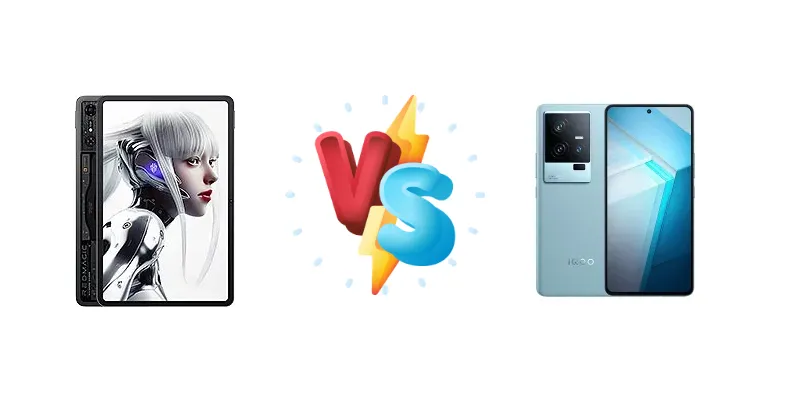
The ZTE nubia RedMagic Nova and the vivo iQOO 11S represent distinct approaches to the high-end Android smartphone market. The RedMagic Nova prioritizes a compact form factor and gaming-centric features, powered by the latest Snapdragon 8 Gen 3. Conversely, the iQOO 11S focuses on raw speed and incredibly fast charging with the Snapdragon 8 Gen 2, aiming for a broader appeal. This comparison dissects their key differences to determine which device best suits your needs.
🏆 Quick Verdict
For the average user prioritizing all-around performance and incredibly fast charging, the vivo iQOO 11S emerges as the winner. Its 200W charging significantly reduces downtime, and the Snapdragon 8 Gen 2 remains a powerhouse. However, gamers seeking a more compact device with the latest Snapdragon chipset will find the RedMagic Nova compelling.
| Network |
|---|
| 2G bands | N/A | GSM 850 / 900 / 1800 / 1900 |
| 3G bands | N/A | HSDPA 800 / 850 / 900 / 1700(AWS) / 1900 / 2100 |
| 4G bands | N/A | 1, 2, 3, 4, 5, 7, 8, 12, 17, 18, 19, 20, 26, 28, 34, 38, 39, 40, 41 |
| 5G bands | - | 1, 3, 5, 8, 28, 40, 41, 77, 78 SA/NSA |
| EDGE | No | - |
| GPRS | No | - |
| Speed | - | HSPA, LTE, 5G |
| Technology | No cellular connectivity | GSM / CDMA / HSPA / CDMA2000 / LTE / 5G |
| Launch |
|---|
| Announced | 2024, September 05 | 2023, July 04 |
| Status | Available. Released 2024, September 05 | Available. Released 2023, July 10 |
| Body |
|---|
| Build | Glass front, aluminum frame, aluminum back | - |
| Dimensions | 253.3 x 164.6 x 7.3 mm (9.97 x 6.48 x 0.29 in) | 164.9 x 77.1 x 8.4 mm or 8.7 mm |
| SIM | No | Nano-SIM + Nano-SIM |
| Weight | 530 g (1.17 lb) | 207 g or 210 g (7.30 oz) |
| Display |
|---|
| Protection | - | Corning Gorilla Glass Victus |
| Resolution | 1800 x 2880 pixels, 16:10 ratio (~312 ppi density) | 1440 x 3200 pixels, 20:9 ratio (~518 ppi density) |
| Size | 10.9 inches, 344.5 cm2 (~82.6% screen-to-body ratio) | 6.78 inches, 111.0 cm2 (~87.3% screen-to-body ratio) |
| Type | IPS LCD, 144Hz, 550 nits | LTPO4 AMOLED, 1B colors, 144Hz, HDR10+, 1800 nits (peak) |
| Platform |
|---|
| CPU | 8-core (1x3.4GHz Cortex-X4 & 3x3.1GHz Cortex-A720 & 2x2.9GHz Cortex-A720 & 2x2.2GHz Cortex-A520) | Octa-core (1x3.2 GHz Cortex-X3 & 2x2.8 GHz Cortex-A715 & 2x2.8 GHz Cortex-A710 & 3x2.0 GHz Cortex-A510) |
| Chipset | Qualcomm SM8650-AC Snapdragon 8 Gen 3 (4 nm) | Qualcomm SM8550-AB Snapdragon 8 Gen 2 (4 nm) |
| GPU | Adreno 750 (1 GHz) | Adreno 740 |
| OS | Android 14, Redmagic OS 9.5 | Android 13, OriginOS 3 (China) |
| Memory |
|---|
| Card slot | No | No |
| Internal | 256GB 12GB RAM, 512GB 16GB RAM, 1TB 24GB RAM | 256GB 12GB RAM, 256GB 16GB RAM, 512GB 16GB RAM, 1TB 16GB RAM |
| Main Camera |
|---|
| Features | LED flash, HDR, panorama | Dual-LED flash, HDR, panorama |
| Single | 50 MP, f/1.8, 26mm (wide) | - |
| Triple | - | 50 MP, f/1.9, 23mm (wide), 1/1.49", 1.0µm, PDAF, OIS
13 MP, f/2.5, 47mm (telephoto), PDAF, 2x optical zoom
8 MP, f/2.2, 16mm (ultrawide) |
| Video | 4K@30fps, 1080p@30fps | 8K@30fps, 4K@30/60fps, 1080p@30/60/120/240fps, gyro-EIS |
| Selfie camera |
|---|
| Features | - | HDR |
| Single | 20 MP, f/2.0, 26mm (wide) | 16 MP, f/2.5, (wide) |
| Video | 1080p@30fps | 1080p@30fps, gyro-EIS |
| Sound |
|---|
| 35mm jack | No | No |
| Loudspeaker | Yes, with stereo speakers (4 speakers) | Yes, with stereo speakers |
| Comms |
|---|
| Bluetooth | 5.4, A2DP, LE | 5.3, A2DP, LE, aptX HD, aptX Adaptive, aptX Lossless |
| Infrared port | - | Yes |
| NFC | Yes (no payments support) | Yes |
| Positioning | No | GPS, GLONASS, GALILEO, BDS, NavIC |
| Radio | No | No |
| USB | USB Type-C 3.1 Gen2, video output, magnetic connector pins | USB Type-C 2.0, OTG |
| WLAN | Wi-Fi 802.11 a/b/g/n/ac/6, dual-band | Wi-Fi 802.11 a/b/g/n/ac/6, dual-band, Wi-Fi Direct |
| Features |
|---|
| Sensors | Fingerprint (side-mounted), accelerometer, gyro, proximity, compass | Fingerprint (under display, optical), accelerometer, gyro, proximity, compass |
| Battery |
|---|
| Charging | 80W wired, 100% in 55 min - International model
120W wired, 50% in 15 min, 100% in 45 min - China model | 200W wired, PD3.0, UFCS |
| Type | 10100 mAh | 4700 mAh |
| Misc |
|---|
| Colors | Cyclone, Snowfall, Midnight | Black, Sky Blue, Legendary White (BMW M branding) |
| Models | - | V2304A |
| Price | About 500 EUR | About 500 EUR |
ZTE nubia RedMagic Nova
- Latest Snapdragon 8 Gen 3 processor
- Compact and ergonomic design
- Respectable battery life (10:51h)
- Lower peak display brightness (517 nits)
- Charging speed slower than iQOO 11S
vivo iQOO 11S
- Blazing-fast 200W wired charging
- Powerful Snapdragon 8 Gen 2 processor
- Likely superior camera system (based on brand history)
- Older generation processor compared to RedMagic Nova
- Battery life potentially compromised by fast charging
Display Comparison
The RedMagic Nova features a display capable of 517 nits of peak brightness, which is respectable but falls short of some competitors. The iQOO 11S’s display specifications are not provided, but given vivo’s history, it likely offers comparable or superior brightness. Both devices are expected to utilize high refresh rate panels, but the RedMagic Nova’s smaller size may offer a slightly higher pixel density. The absence of LTPO information for either device means we can’t assess adaptive refresh rate capabilities, impacting battery efficiency. The RedMagic Nova’s compact size will appeal to users who find larger phones unwieldy.
Camera Comparison
Camera details are sparse for both devices. Without sensor size or aperture information, a direct comparison is difficult. However, given the iQOO series’ history, it’s likely to feature a more robust camera system with a larger main sensor and optical image stabilization (OIS). The RedMagic Nova, being gaming-focused, may prioritize computational photography for optimized gaming screenshots over raw image quality. The absence of details suggests neither phone is aiming to compete with dedicated camera flagships.
Performance
The core difference lies in the chipsets: the RedMagic Nova boasts the Qualcomm SM8650-AC Snapdragon 8 Gen 3 (4nm), while the iQOO 11S utilizes the SM8550-AB Snapdragon 8 Gen 2 (4nm). The Snapdragon 8 Gen 3’s CPU configuration – 1x3.4GHz Cortex-X4, 3x3.1GHz Cortex-A720, 2x2.9GHz Cortex-A720, and 2x2.2GHz Cortex-A520 – represents a significant architectural upgrade over the iQOO 11S’s 1x3.2 GHz Cortex-X3, 2x2.8 GHz Cortex-A715, 2x2.8 GHz Cortex-A710, and 3x2.0 GHz Cortex-A510. This translates to faster processing speeds and improved efficiency. While both use a 4nm process, the newer architecture of the Gen 3 should result in better sustained performance under heavy load. RAM specifications are not provided, but both are expected to utilize LPDDR5x for fast memory access.
Battery Life
The RedMagic Nova delivers a solid active use battery life of 10:51h. The iQOO 11S’s battery capacity is unknown, but its standout feature is its 200W wired charging, utilizing PD3.0 and UFCS standards. This allows for incredibly fast charging times – a full charge in a matter of minutes. The RedMagic Nova offers 80W wired charging (International) or 120W (China), taking 55-45 minutes for a full charge respectively. While the RedMagic Nova offers respectable battery life, the iQOO 11S’s charging speed is a game-changer for users who frequently need to top up their battery.
Buying Guide
Buy the ZTE nubia RedMagic Nova if you need a compact flagship phone with the absolute latest processor (Snapdragon 8 Gen 3) and prioritize gaming in a smaller form factor. Buy the vivo iQOO 11S if you prefer a larger screen, lightning-fast 200W charging, and a more balanced feature set for everyday use and demanding tasks.
Frequently Asked Questions
❓ Does the RedMagic Nova's Snapdragon 8 Gen 3 offer a noticeable gaming advantage over the iQOO 11S's Snapdragon 8 Gen 2?
Yes, the Snapdragon 8 Gen 3 features a newer CPU architecture and improved GPU performance, resulting in higher frame rates and smoother gameplay, especially in demanding titles. The RedMagic Nova is the better choice for users prioritizing the absolute best gaming experience.
❓ How does the iQOO 11S's 200W charging affect battery health over the long term?
vivo employs intelligent charging algorithms and temperature control mechanisms to mitigate the potential impact of 200W charging on battery health. While fast charging can generate heat, the iQOO 11S is designed to optimize the charging process and minimize degradation over time. However, some minor degradation is inevitable with any battery over extended use.
❓ Is the RedMagic Nova's smaller size a disadvantage for media consumption?
The RedMagic Nova's compact size may not be ideal for users who frequently watch videos or browse the web for extended periods. The smaller screen size could lead to a less immersive experience compared to the iQOO 11S, which is expected to have a larger display.