
ZTE nubia RedMagic 7 vs. Sony Xperia 1 IV: A Deep Dive into Gaming and Cinematic Flagships
| Phones Images | |||||
|---|---|---|---|---|---|
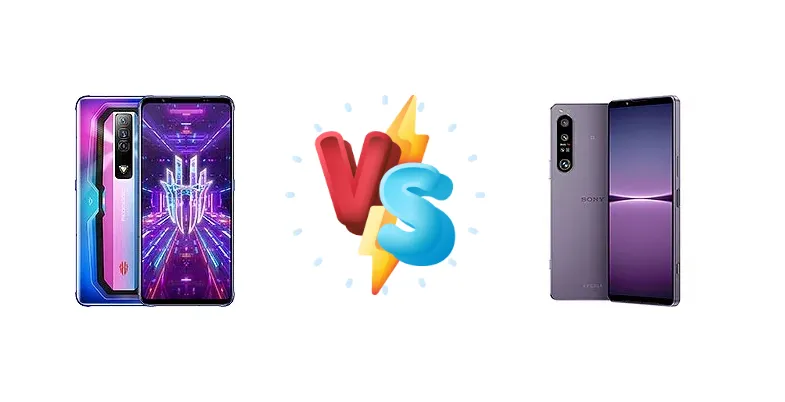
|
🏆 Quick Verdict
For the average user prioritizing all-around performance and a balanced experience, the Sony Xperia 1 IV emerges as the stronger contender. Its superior battery endurance, brighter display, and more versatile camera system offer a more polished and complete package, despite the RedMagic 7’s impressive charging speed.
| PHONES | ||
|---|---|---|
| Phone Names | ZTE nubia RedMagic 7 | Sony Xperia 1 IV |
| Network | ||
|---|---|---|
| 2G bands | GSM 850 / 900 / 1800 / 1900 | GSM 850 / 900 / 1800 / 1900 |
| 3G bands | HSDPA 800 / 850 / 900 / 1700(AWS) / 1900 / 2100 | HSDPA 800 / 850 / 900 / 1700(AWS) / 1900 / 2100 |
| 4G bands | 1, 2, 3, 4, 5, 7, 8, 12, 17, 18, 19, 20, 26, 28, 34, 38, 39, 40, 41, 66 | 1, 2, 3, 4, 5, 7, 8, 12, 13, 17, 19, 20, 25, 26, 28, 29, 32, 34, 38, 39, 40, 41, 46, 66 - Europe |
| 5G bands | 1, 3, 5, 7, 8, 20, 28, 38, 41, 77, 78 SA/NSA | 1, 3, 5, 7, 8, 20, 28, 38, 40, 41, 77, 78 SA/NSA/Sub6 - Europe |
| Speed | HSPA, LTE, 5G | HSPA, LTE, 5G |
| Technology | GSM / CDMA / HSPA / EVDO / LTE / 5G | GSM / HSPA / LTE / 5G |
| - | 1, 3, 5, 7, 8, 28, 38, 40, 41, 77, 78, 79 SA/NSA/Sub6 - Asia | |
| Launch | ||
|---|---|---|
| Announced | 2022, February 17 | 2022, May 11 |
| Status | Available. Released 2022, February 21 | Available. Released 2022, June 11 |
| Body | ||
|---|---|---|
| Build | Glass front, glass back, aluminum frame | Glass front (Gorilla Glass Victus), glass back (Gorilla Glass Victus), aluminum frame |
| Dimensions | 170.6 x 78.3 x 9.5 mm (6.72 x 3.08 x 0.37 in) | 165 x 71 x 8.2 mm (6.50 x 2.80 x 0.32 in) |
| SIM | Nano-SIM + Nano-SIM | · Nano-SIM + eSIM· Nano-SIM + Nano-SIM |
| Weight | 215 g (7.58 oz) | 185 g (6.53 oz) |
| - | IP65/IP68 dust/water resistant (up to 1.5m for 30 min) | |
| Display | ||
|---|---|---|
| Protection | Corning Gorilla Glass 5 | Corning Gorilla Glass Victus |
| Resolution | 1080 x 2400 pixels, 20:9 ratio (~387 ppi density) | 1644 x 3840 pixels, 21:9 ratio (~643 ppi density) |
| Size | 6.8 inches, 111.6 cm2 (~83.6% screen-to-body ratio) | 6.5 inches, 98.6 cm2 (~84.2% screen-to-body ratio) |
| Type | AMOLED, 1B colors (China only), 165Hz, 700 nits (typ) | OLED, 1B colors, 120Hz, HDR BT.2020 |
| - | Runs at 1096 x 2560 pixels except for select use cases | |
| Platform | ||
|---|---|---|
| CPU | Octa-core (1x3.00 GHz Cortex-X2 & 3x2.50 GHz Cortex-A710 & 4x1.80 GHz Cortex-A510) | Octa-core (1x3.00 GHz Cortex-X2 & 3x2.50 GHz Cortex-A710 & 4x1.80 GHz Cortex-A510) |
| Chipset | Qualcomm SM8450 Snapdragon 8 Gen 1 (4 nm) | Qualcomm SM8450 Snapdragon 8 Gen 1 (4 nm) |
| GPU | Adreno 730 | Adreno 730 |
| OS | Android 12, Redmagic 5.0 | Android 12, upgradable to Android 13 |
| Memory | ||
|---|---|---|
| Card slot | No | microSDXC (uses shared SIM slot) |
| Internal | 128GB 8GB RAM, 128GB 12GB RAM, 256GB 12GB RAM, 256GB 16GB RAM, 256GB 18GB RAM, 512GB 16GB RAM | 256GB 12GB RAM, 512GB 12GB RAM, 512GB 16GB RAM |
| - | UFS 3.X | |
| Main Camera | ||
|---|---|---|
| Features | LED flash, HDR, panorama | Zeiss optics, Zeiss T* lens coating, color spectrum sensor, LED flash, panorama, HDR, eye tracking |
| Single | - | 12 MP, f/2.0, 24mm (wide), 1/2.9", 1.25µm |
| Triple | 64 MP, f/1.8, 26mm (wide), 1/1.97", 0.7µm, PDAF 8 MP, f/2.0, 120˚, 13mm (ultrawide), 1/4.0", 1.12µm 2 MP (macro) | 12 MP, f/1.7, 24mm (wide), 1/1.7", 1.8µm, dual pixel PDAF, OIS 12 MP, f/2.3, 85mm (telephoto), f/2.8, 125mm (telephoto), 1/3.5", dual pixel PDAF, 3.5x-5.2x continuous optical zoom, OIS 12 MP, f/2.2, 124˚, 16mm (ultrawide), 1/2.5", dual pixel PDAF 0.3 MP, TOF 3D, (depth) |
| Video | 8K@30fps, 4K@30/60fps, 1080p@30/60/120/240fps | 4K@24/25/30/60/120fps HDR, 1080p@30/60/120fps; 5-axis gyro-EIS, OIS |
| Selfie camera | ||
|---|---|---|
| Features | HDR | HDR |
| Single | 8 MP, f/2.0, (wide), 1/4.0", 1.12µm | 12 MP, f/2.0, 24mm (wide), 1/2.9", 1.25µm |
| Video | 1080p@30fps | 4K@30fps, 1080p@30/60fps, 5-axis gyro-EIS |
| Sound | ||
|---|---|---|
| 3.5mm jack | - | Yes |
| 35mm jack | Yes | Yes |
| Loudspeaker | Yes, with stereo speakers | Yes, with stereo speakers |
| - | 24-bit/192kHz audio Dynamic vibration system | |
| Comms | ||
|---|---|---|
| Bluetooth | 5.2, A2DP, aptX, LE | 5.2, A2DP, LE Audio, aptX HD, aptX Adaptive |
| NFC | Yes | Yes |
| Positioning | GPS (L1+L5), GLONASS, BDS, GALILEO | GPS, GLONASS, BDS, GALILEO, QZSS |
| Radio | No | No |
| USB | USB Type-C 3.0, OTG, accessory connector | USB Type-C 3.2, OTG, video output |
| WLAN | Wi-Fi 802.11 a/b/g/n/ac/6e, dual-band, Wi-Fi Direct | Wi-Fi 802.11 a/b/g/n/ac/6e, dual-band or tri-band (region dependent), Wi-Fi Direct, DLNA |
| Features | ||
|---|---|---|
| Sensors | Fingerprint (under display, optical), accelerometer, gyro, proximity, compass | Fingerprint (side-mounted), accelerometer, gyro, proximity, barometer, compass |
| - | Native Sony Alpha camera support | |
| Battery | ||
|---|---|---|
| Charging | 120W wired, PD3.0, 100% in 17 min (China) 65W wired, PD3.0 (International) | 30W wired, PD3.0, PPS, 50% in 30 min Wireless Reverse wireless |
| Type | Li-Po 4500 mAh | Li-Po 5000 mAh |
| Misc | ||
|---|---|---|
| Colors | Obsidian, Pulsar, Supernova | Black, Violet, White |
| Models | NX679J | XQCT62-B, XQCT54, XQCT54C0V.YD, XQCT54C0B.YD, XQCT54C0W.YD, XQCT54C0V.EEAC, XQCT54C0B.EEAC, XQ-CT72, XQ-CT54, XQ-CT62, SO-51C |
| Price | About 630 EUR | $ 1,120.00 / € 489.00 |
| Tests | ||
|---|---|---|
| Battery life | - | Endurance rating 100h |
| Camera | - | Photo / Video |
| Display | - | Contrast ratio: Infinite (nominal) |
| Loudspeaker | - | -27.6 LUFS (Good) |
| Performance | - | AnTuTu: 838832 (v9) GeekBench: 3403 (v5.1) GFXBench: 74fps (ES 3.1 onscreen) |
ZTE nubia RedMagic 7
- Blazing-fast 120W/65W charging
- Aggressive cooling system for sustained gaming
- Dedicated gaming features (triggers, fan)
- Shorter battery life compared to Xperia 1 IV
- Less refined camera system
- Bulkier design
Sony Xperia 1 IV
- Exceptional battery life (100h endurance)
- Brighter and more color-accurate display
- Professional-grade camera system
- Slower charging speed (30W)
- Less focused on gaming
- Higher price point
Display Comparison
Both devices utilize the Qualcomm Snapdragon 8 Gen 1, but their displays diverge significantly. The Xperia 1 IV boasts a brighter panel at 602 nits measured, compared to the RedMagic 7’s 527 nits, resulting in better visibility in direct sunlight. While both offer excellent color reproduction, the Xperia 1 IV’s ‘Infinite’ contrast ratio (nominal) suggests deeper blacks and a more immersive viewing experience. The RedMagic 7’s display is geared towards high refresh rates for gaming, but lacks the Xperia’s color calibration for professional content viewing. The Xperia 1 IV’s display is more versatile for a wider range of use cases.
Camera Comparison
Both phones feature capable camera systems, but their philosophies differ. The Xperia 1 IV is geared towards professional photography and videography, offering features like real-time tracking and advanced manual controls. While both are listed as having Photo/Video capabilities, the Xperia 1 IV’s sensor size and image processing are likely more refined. The RedMagic 7’s camera is adequate for casual use, but it’s not a primary selling point. The Xperia 1 IV’s emphasis on optical image stabilization (OIS) and lens apertures will result in superior low-light performance and image quality. The RedMagic 7 likely sacrifices camera quality for gaming-focused features.
Performance
Both phones are powered by the Qualcomm SM8450 Snapdragon 8 Gen 1 (4 nm) chipset, featuring the same CPU configuration: Octa-core (1x3.00 GHz Cortex-X2 & 3x2.50 GHz Cortex-A710 & 4x1.80 GHz Cortex-A510). However, the RedMagic 7 prioritizes sustained performance through its advanced cooling system, which is crucial for preventing thermal throttling during extended gaming sessions. While the Xperia 1 IV also manages heat effectively, it doesn’t have the same aggressive cooling focus. The RedMagic 7’s focus on gaming means it likely benefits from optimized software and RAM management for gaming workloads, even though both devices likely use LPDDR5 RAM (spec not provided).
Battery Life
The Sony Xperia 1 IV takes a clear lead in battery endurance with a rating of 100 hours, compared to the RedMagic 7’s 89 hours. This translates to longer real-world usage between charges. While the RedMagic 7 boasts incredibly fast 120W (China) / 65W (International) wired charging, achieving 100% in just 17 minutes (China), the Xperia 1 IV’s 30W charging, while slower, is still respectable and offers wireless and reverse wireless charging options. The RedMagic 7’s charging speed is a significant advantage for those who need a quick top-up, but the Xperia 1 IV’s overall battery life is more practical for daily use.
Buying Guide
Buy the ZTE nubia RedMagic 7 if you absolutely need the fastest possible charging and prioritize sustained gaming performance above all else. Its aggressive cooling and dedicated gaming features make it ideal for hardcore mobile gamers. Buy the Sony Xperia 1 IV if you value a premium camera experience, exceptional battery life, and a refined multimedia experience. It’s the better choice for content creators, photography enthusiasts, and those who consume a lot of video.