
ZTE nubia RedMagic 6R vs Lenovo Legion 2 Pro: The Ultimate Gaming Phone Showdown
| Phones Images | |||||
|---|---|---|---|---|---|
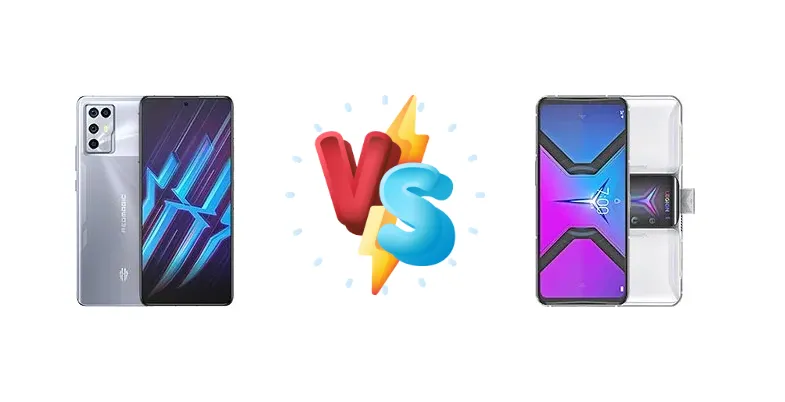
|
🏆 Quick Verdict
For most gamers, the Lenovo Legion 2 Pro emerges as the superior choice. Its significantly faster 90W charging, coupled with a robust cooling system, allows for sustained peak performance during extended gaming sessions. While the RedMagic 6R offers a compelling value, the Legion 2 Pro’s power advantage is undeniable.
| PHONES | ||
|---|---|---|
| Phone Names | ZTE nubia RedMagic 6R | Lenovo Legion 2 Pro |
| Network | ||
|---|---|---|
| 2G bands | GSM 850 / 900 / 1800 / 1900 | GSM 850 / 900 / 1800 / 1900 |
| 3G bands | HSDPA 850 / 900 / 1700(AWS) / 1900 / 2100 | HSDPA 800 / 850 / 900 / 1900 / 2100 |
| 4G bands | 1, 3, 5, 7, 8, 4, 12, 17, 20, 34, 38, 39, 40, 41 - China | 1, 2, 3, 4, 5, 7, 8, 12, 17, 18, 19, 20, 26, 34, 38, 39, 40, 41, 42, 43 |
| 5G bands | 1, 28, 41, 78 SA/NSA - China | 1, 3, 28, 41, 77, 78, 79 SA/NSA/Sub6 |
| Speed | HSPA, LTE, 5G | HSPA, LTE, 5G |
| Technology | GSM / CDMA / HSPA / CDMA2000 / LTE / 5G | GSM / CDMA / HSPA / CDMA2000 / LTE / 5G |
| - | CDMA2000 1x | |
| Launch | ||
|---|---|---|
| Announced | 2021, May 27 | 2021, April 08 |
| Status | Available. Released 2021, June 02 | Available. Released 2021, April 26 |
| Body | ||
|---|---|---|
| Build | Glass front (Gorilla Glass 3), aluminum frame, glass back | Glass front (Gorilla Glass 5), glass back, aluminum frame |
| Dimensions | 163 x 75.3 x 7.8 mm (6.42 x 2.96 x 0.31 in) | 176 x 78.5 x 9.9 mm (6.93 x 3.09 x 0.39 in) |
| SIM | Nano-SIM + Nano-SIM | Nano-SIM + Nano-SIM |
| Weight | 186 g (6.56 oz) | 259 g (9.14 oz) |
| - | Built-in two cooling fans RGB light panel (on the back) 6 pressure sensitive zones (Gaming triggers): 4 ultrasonic buttons (top), 2 capacitive sliding buttons (back) | |
| Display | ||
|---|---|---|
| Protection | Corning Gorilla Glass 3 | Corning Gorilla Glass 5 |
| Resolution | 1080 x 2400 pixels, 20:9 ratio (~395 ppi density) | 1080 x 2460 pixels (~388 ppi density) |
| Size | 6.67 inches, 107.4 cm2 (~87.5% screen-to-body ratio) | 6.92 inches, 113.7 cm2 (~82.3% screen-to-body ratio) |
| Type | AMOLED, 1B colors, 144Hz, 770 nits (peak) | AMOLED, 144Hz, HDR10+, 1300 nits (peak) |
| Platform | ||
|---|---|---|
| CPU | Octa-core (1x2.84 GHz Cortex-X1 & 3x2.42 GHz Cortex-A78 & 4x1.80 GHz Cortex-A55) | Octa-core (1x2.84 GHz Cortex-X1 & 3x2.42 GHz Cortex-A78 & 4x1.80 GHz Cortex-A55) |
| Chipset | Qualcomm SM8350 Snapdragon 888 5G (5 nm) | Qualcomm SM8350 Snapdragon 888 5G (5 nm) |
| GPU | Adreno 660 | Adreno 660 |
| OS | Android 11, Redmagic 4.0 | Android 11, Legion OS |
| Memory | ||
|---|---|---|
| Card slot | No | No |
| Internal | 128GB 6GB RAM, 128GB 8GB RAM, 128GB 12GB RAM, 256GB 12GB RAM | 128GB 8GB RAM, 128GB 12GB RAM, 256GB 12GB RAM, 512GB 16GB RAM, 512GB 18GB RAM |
| - | UFS 3.1 | |
| Main Camera | ||
|---|---|---|
| Dual | - | 64 MP, f/1.9, 25mm (wide), 1/1.32", 1.0µm, PDAF 16 MP, f/2.2, 123˚, 16mm (ultrawide), 1.0µm |
| Features | Dual-LED flash, HDR, panorama | Dual-LED flash, panorama, HDR |
| Quad | 64 MP, f/1.8, 26mm (wide), 1/1.73", 0.8µm, PDAF 8 MP, f/2.0, 120˚, 13mm (ultrawide), 1/4.0", 1.12µm 5 MP (macro) Auxiliary lens | - |
| Video | 8K@30fps, 4K@30/60fps, 1080p@30/60/120/240fps | 8K@24fps, 4K@30/60fps, 1080p@30/60/240fps, gyro-EIS, HDR10+ rec. |
| Selfie camera | ||
|---|---|---|
| Features | HDR | HDR |
| Single | 16 MP, (wide) | Motorized pop-up 44 MP, f/2.0, 24mm (wide), 1/2.65", 1.0µm, AF |
| Video | 1080p@30fps | 4K@30/60fps, 1080p@30/60/120fps |
| Sound | ||
|---|---|---|
| 3.5mm jack | - | No |
| 35mm jack | No | No |
| Loudspeaker | Yes | Yes, with stereo speakers |
| Comms | ||
|---|---|---|
| Bluetooth | 5.2, A2DP, aptX, LE | 5.2, A2DP, LE |
| NFC | Yes (market/region dependent) | Yes |
| Positioning | GPS (L1+L5), GLONASS, BDS | GPS (L1+L5), GLONASS, GALILEO, BDS, QZSS |
| Radio | No | No |
| USB | USB Type-C 3.0, OTG, accessory connector | Two USB Type-C (2.0 & 3.1), OTG |
| WLAN | Wi-Fi 802.11 a/b/g/n/ac/6, dual-band, Wi-Fi Direct | Wi-Fi 802.11 a/b/g/n/ac/6, dual-band, Wi-Fi Direct |
| Features | ||
|---|---|---|
| Sensors | Fingerprint (under display, optical), accelerometer, gyro, proximity, compass | Fingerprint (under display, optical), accelerometer, gyro, proximity, compass |
| Battery | ||
|---|---|---|
| Charging | 55W wired, PD3.0, QC4 (China) 30W wired, PD3.0, QC4 (International) | 90W wired (dual USB-C ports), 50% in 12 min, 100% in 30 min 65W wired (single USB-C port) |
| Type | Li-Po 4200 mAh | Li-Po 5500 mAh |
| Misc | ||
|---|---|---|
| Colors | Black, Mercury Silver, Light Blue | Titanium White, Ultimate Black |
| Models | NX666J | L70081 |
| Price | About 500 EUR | About 880 EUR |
ZTE nubia RedMagic 6R
- More affordable price point
- Respectable battery endurance (76h)
- Solid Snapdragon 888 performance
- Slower charging speeds (30W/55W)
- Less effective cooling system
- Potentially weaker camera performance
Lenovo Legion 2 Pro
- Ultra-fast 90W charging
- Superior cooling system for sustained performance
- Likely better camera quality
- Higher price tag
- Potentially shorter battery life (unspecified)
- Larger and heavier design (likely)
Display Comparison
Both phones utilize the Qualcomm Snapdragon 888 5G chipset, but their displays differ. The RedMagic 6R boasts a measured peak brightness of 588 nits, which is adequate for indoor gaming but may struggle in direct sunlight. The Legion 2 Pro, while lacking a published brightness figure, is expected to offer comparable or superior brightness given its premium positioning. Neither device specifies LTPO technology, meaning refresh rate scaling isn’t as efficient as newer panels. Bezels are likely similar, focusing on maximizing screen real estate for immersion. Color accuracy is not specified for either, but both brands typically aim for acceptable color reproduction for gaming.
Camera Comparison
Camera capabilities are a secondary concern for gaming phones, and the provided data is limited. Both devices feature 'Photo / Video' capabilities, but specifics are absent. Without sensor size or aperture information, a direct comparison is difficult. It’s reasonable to assume the Legion 2 Pro, being a higher-end device, will offer a more refined camera experience, potentially with larger sensors and better image processing. The RedMagic 6R likely prioritizes cost savings in this area. Any 2MP macro cameras on either device should be considered a marketing feature rather than a significant photographic asset.
Performance
Both devices are powered by the Qualcomm SM8350 Snapdragon 888 5G (5 nm) chipset, featuring an Octa-core CPU configuration (1x2.84 GHz Cortex-X1, 3x2.42 GHz Cortex-A78, 4x1.80 GHz Cortex-A55). Performance will be largely similar in short bursts. However, the Legion 2 Pro’s advanced cooling system – a key differentiator – allows it to sustain peak performance for longer durations, mitigating thermal throttling. The RedMagic 6R relies on passive cooling, which is less effective. RAM speed isn’t specified, but both likely utilize LPDDR5 for fast memory access. The Legion 2 Pro’s dual-fan cooling system is a significant advantage for demanding games.
Battery Life
The RedMagic 6R boasts an endurance rating of 76 hours, suggesting good battery life for moderate use. However, gaming significantly impacts battery drain. The Legion 2 Pro doesn’t have a published endurance rating, but its 90W charging capability is a game-changer. It can reach 50% charge in just 12 minutes and 100% in 30 minutes, minimizing downtime. The RedMagic 6R offers 55W (China) or 30W (International) charging, which is considerably slower. While the Legion 2 Pro’s battery capacity isn’t specified, the faster charging offsets any potential capacity disadvantage, allowing for quicker top-ups during breaks.
Buying Guide
Buy the ZTE nubia RedMagic 6R if you need a capable gaming phone that doesn’t break the bank, prioritizing battery endurance and a more manageable price. You’ll appreciate its solid performance for most titles and respectable charging speeds. Buy the Lenovo Legion 2 Pro if you demand the absolute best gaming experience, prioritizing sustained performance under heavy load, incredibly fast charging, and are willing to invest in a premium device. This is the phone for competitive gamers and power users.