
ZTE nubia RedMagic 3S vs Xiaomi Black Shark 2 Pro: A Deep Dive for Mobile Gamers
| Phones Images | |||||
|---|---|---|---|---|---|
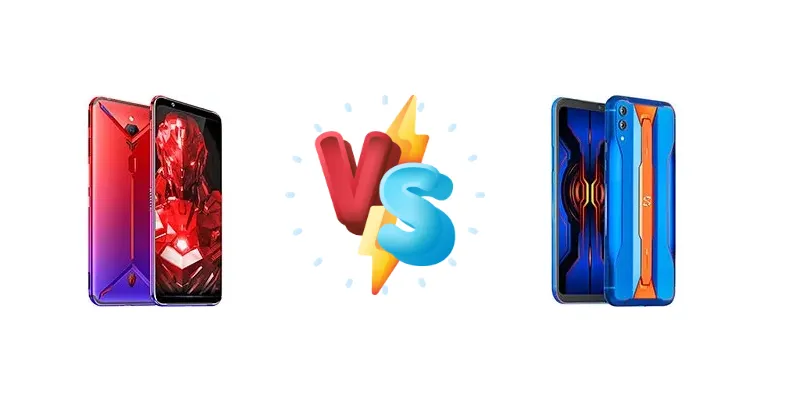
|
🏆 Quick Verdict
For the average gamer prioritizing sustained performance and battery life, the ZTE nubia RedMagic 3S emerges as the winner. Its superior endurance rating of 115 hours, coupled with a focus on cooling, allows for longer, uninterrupted gaming sessions. However, the Black Shark 2 Pro’s faster charging is a compelling advantage for those who need quick power boosts.
| PHONES | ||
|---|---|---|
| Phone Names | ZTE nubia RedMagic 3S | Xiaomi Black Shark 2 Pro |
| Network | ||
|---|---|---|
| 2G bands | GSM 850 / 900 / 1800 / 1900 | GSM 850 / 900 / 1800 / 1900 |
| 3G bands | HSDPA 850 / 900 / 1700(AWS) / 1800 / 1900 / 2100 | HSDPA 850 / 900 / 1900 / 2100 |
| 4G bands | 1, 2, 3, 4, 5, 7, 8, 12, 17, 18, 19, 20, 25, 26, 28, 30, 66 - Global | 1, 2, 3, 4, 5, 7, 8, 19, 20, 28, 34, 38, 39, 40, 41 - Global |
| Speed | HSPA 42.2/5.76 Mbps, LTE (7CA) Cat20 2000/150 Mbps | HSPA 42.2/5.76 Mbps, LTE (5CA/3CA) Cat18 1200/150 Mbps |
| Technology | GSM / CDMA / HSPA / EVDO / LTE | GSM / CDMA / HSPA / EVDO / LTE |
| - | 1, 3, 4, 5, 7, 8, 34, 38, 39, 40, 41 - China | |
| Launch | ||
|---|---|---|
| Announced | 2019, September. Released 2019, September | 2019, July. Released 2019, August |
| Status | Discontinued | Discontinued |
| Body | ||
|---|---|---|
| Build | Glass front (Gorilla Glass 4), aluminum back, aluminum frame | Glass front, aluminum back, aluminum frame |
| Dimensions | 171.7 x 78.5 x 9.7 mm (6.76 x 3.09 x 0.38 in) | 163.6 x 75 x 8.8 mm (6.44 x 2.95 x 0.35 in) |
| SIM | Nano-SIM + Nano-SIM | Nano-SIM + Nano-SIM |
| Weight | 215 g (7.58 oz) | 205 g (7.23 oz) |
| Display | ||
|---|---|---|
| Protection | Corning Gorilla Glass 4 | - |
| Resolution | 1080 x 2340 pixels, 19.5:9 ratio (~388 ppi density) | 1080 x 2340 pixels, 19.5:9 ratio (~403 ppi density) |
| Size | 6.65 inches, 108.6 cm2 (~80.5% screen-to-body ratio) | 6.39 inches, 100.2 cm2 (~81.7% screen-to-body ratio) |
| Type | AMOLED, 90Hz | AMOLED |
| - | Always-on display | |
| Platform | ||
|---|---|---|
| CPU | Octa-core (1x2.96 GHz Kryo 485 & 3x2.42 GHz Kryo 485 & 4x1.8 GHz Kryo 485) | Octa-core (1x2.96 GHz Kryo 485 & 3x2.42 GHz Kryo 485 & 4x1.78 GHz Kryo 485) |
| Chipset | Qualcomm SM8150 Snapdragon 855+ (7 nm) | Qualcomm SM8150 Snapdragon 855+ (7 nm) |
| GPU | Adreno 640 (700 MHz) | Adreno 640 (700 MHz) |
| OS | Android 9.0 (Pie), Redmagic 2.0 | Android 9.0 (Pie) |
| Memory | ||
|---|---|---|
| Card slot | No | No |
| Internal | 128GB 8GB RAM, 256GB 12GB RAM | 128GB 8GB RAM, 128GB 12GB RAM, 256GB 12GB RAM |
| - | UFS 3.0 | |
| Main Camera | ||
|---|---|---|
| Dual | - | 48 MP, f/1.8, 28mm (wide), 1/2.0", 0.8µm, PDAF 12 MP, f/2.2, 54mm (telephoto), 1.0µm, PDAF, 2x optical zoom |
| Features | LED flash, HDR, panorama | LED flash, HDR, panorama |
| Single | 48 MP, f/1.7, 26mm (wide), 1/2.0", 0.8µm, PDAF | - |
| Video | 8K@15fps, 4K@30/60fps, 1920fps | 4K@30/60fps, 1080p@30/60/120fps, 720p@1920fps |
| Selfie camera | ||
|---|---|---|
| Features | HDR | HDR |
| Single | 16 MP, f/2.0, 26mm (wide), 1/3.06", 1.0µm | 20 MP, f/2.0, (wide), 1/3", 0.9µm |
| Video | 1080p@30fps | 1080p@30fps |
| Sound | ||
|---|---|---|
| 3.5mm jack | - | No |
| 35mm jack | Yes | No |
| Loudspeaker | Yes, with stereo speakers | Yes, with stereo speakers |
| Comms | ||
|---|---|---|
| Bluetooth | 5.0, A2DP, aptX, LE | 5.0, A2DP, aptX HD, LE |
| NFC | No | No |
| Positioning | GPS (L1+L5), GLONASS, BDS, GALILEO | GPS, GLONASS, GALILEO, QZSS, BDS |
| Radio | No | No |
| USB | USB Type-C 3.1, OTG, accessory connector | USB Type-C 2.0 |
| WLAN | Wi-Fi 802.11 a/b/g/n/ac, dual-band, Wi-Fi Direct | Wi-Fi 802.11 a/b/g/n/ac, dual-band, Wi-Fi Direct |
| Features | ||
|---|---|---|
| Sensors | Fingerprint (rear-mounted), accelerometer, gyro, proximity, compass | Fingerprint (under display, optical), accelerometer, gyro, proximity, compass |
| Battery | ||
|---|---|---|
| Charging | 18W wired, QC4 | 27W wired |
| Type | Li-Po 5000 mAh, non-removable | Li-Ion 4000 mAh, non-removable |
| Misc | ||
|---|---|---|
| Colors | Mecha Silver, Cyber Shade, Eclipse Black | Shadow Black, Iceberg Grey, Gulf Blue, Streamer Purple |
| Models | NX629J_V1S | DLT-A0, DLT-H0 |
| Price | About 820 EUR | About 550 EUR |
ZTE nubia RedMagic 3S
- Exceptional battery endurance (115h)
- Aggressive cooling system for sustained performance
- Potentially better thermal throttling management
- Slower charging speed (18W)
- Limited camera information
Xiaomi Black Shark 2 Pro
- Faster charging speed (27W)
- Likely more refined camera system
- Potentially better display color accuracy
- Lower endurance rating compared to RedMagic 3S
- May be more prone to thermal throttling under sustained load
Display Comparison
Both phones utilize displays optimized for gaming, but key differences exist. The RedMagic 3S boasts a measured peak brightness of 479.7 nits, providing adequate visibility. While the Black Shark 2 Pro’s display specs aren’t provided, Xiaomi historically focuses on color accuracy and vibrancy. The RedMagic 3S’s larger focus on cooling may necessitate a slightly less aggressive display panel to manage thermal output. Gamers sensitive to flicker will need to investigate PWM dimming rates on both devices, as this data is unavailable, but is a critical factor for eye strain during long sessions.
Camera Comparison
Camera performance is a secondary consideration for gaming phones, and the provided data is limited to 'Photo / Video' for the RedMagic 3S. The Black Shark 2 Pro likely offers a more versatile camera system, typical of Xiaomi’s flagship devices. Without sensor size or aperture information, a direct comparison is impossible. However, users should temper expectations; these phones prioritize gaming over photographic excellence. The inclusion of a 2MP macro lens on either device is largely a marketing gimmick and unlikely to deliver significant value.
Performance
Both the RedMagic 3S and Black Shark 2 Pro are powered by the Qualcomm Snapdragon 855+ (7nm), featuring an identical CPU configuration: Octa-core (1x2.96 GHz Kryo 485 & 3x2.42 GHz Kryo 485 & 4x1.8 GHz Kryo 485). The performance difference will therefore hinge on thermal management. The RedMagic 3S’s aggressive cooling solution – including a fan – is designed to prevent throttling under sustained load, potentially allowing it to maintain peak performance for longer. The Black Shark 2 Pro relies on liquid cooling, which is effective but may not match the RedMagic’s active cooling in extreme scenarios. RAM speeds (LPDDR4X) are likely similar, but not specified in the provided data.
Battery Life
The RedMagic 3S boasts an endurance rating of 115 hours, indicating exceptional battery life. This is a significant advantage for gamers who want to play for extended periods without needing to recharge. The Black Shark 2 Pro compensates with 27W wired charging, significantly faster than the RedMagic 3S’s 18W QC4 charging. This means the Black Shark 2 Pro can replenish its battery much more quickly, but the RedMagic 3S will likely last longer on a single charge. The actual 0-100% charge times will vary, but the Black Shark 2 Pro will likely achieve a full charge in under an hour, while the RedMagic 3S will take considerably longer.
Buying Guide
Buy the ZTE nubia RedMagic 3S if you need maximum battery life for extended gaming marathons and value sustained performance over the fastest possible charging speeds. Buy the Xiaomi Black Shark 2 Pro if you prioritize quick top-ups and frequently find yourself needing to recharge mid-session, and appreciate a slightly more refined software experience.