
ZTE nubia RedMagic 3S vs. OnePlus 7T Pro 5G McLaren: A Deep Dive for Power Users
| Phones Images | |||||
|---|---|---|---|---|---|
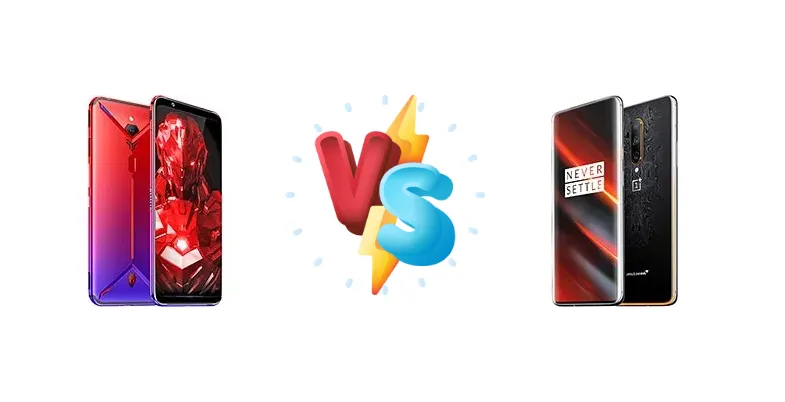
|
🏆 Quick Verdict
For the dedicated mobile gamer prioritizing long play sessions, the ZTE nubia RedMagic 3S is the clear winner. Its endurance rating of 115 hours and focus on thermal management outweigh the OnePlus 7T Pro 5G McLaren’s faster charging and 5G capabilities for this specific user. However, the OnePlus offers a more well-rounded experience for everyday use and faster data speeds.
| PHONES | ||
|---|---|---|
| Phone Names | ZTE nubia RedMagic 3S | OnePlus 7T Pro 5G McLaren |
| Network | ||
|---|---|---|
| 2G bands | GSM 850 / 900 / 1800 / 1900 | GSM 850 / 900 / 1800 / 1900 |
| 3G bands | HSDPA 850 / 900 / 1700(AWS) / 1800 / 1900 / 2100 | HSDPA 850 / 900 / 1700(AWS) / 1900 / 2100 |
| 4G bands | 1, 2, 3, 4, 5, 7, 8, 12, 17, 18, 19, 20, 25, 26, 28, 30, 66 - Global | 1, 2, 3, 4, 5, 1, 2, 3, 4, 5, 7, 8, 12, 13, 17, 18, 19, 20, 25, 26, 28, 29, 30, 34, 38, 39, 40, 41, 46, 48, 66, 71 |
| 5G bands | - | 71 SA |
| Speed | HSPA 42.2/5.76 Mbps, LTE (7CA) Cat20 2000/150 Mbps | HSPA 42.2/5.76 Mbps, LTE (5CA) Cat18 1200/150 Mbps, 5G (2+ Gbps DL) |
| Technology | GSM / CDMA / HSPA / EVDO / LTE | GSM / CDMA / HSPA / LTE / 5G |
| - | CDMA 800 / 1900 & TD-SCDMA | |
| Launch | ||
|---|---|---|
| Announced | 2019, September. Released 2019, September | 2019, October 23. Released 2019, November 05 |
| Status | Discontinued | Discontinued |
| Body | ||
|---|---|---|
| Build | Glass front (Gorilla Glass 4), aluminum back, aluminum frame | Glass front (Gorilla Glass 6), glass back (Gorilla Glass 5), aluminum frame |
| Dimensions | 171.7 x 78.5 x 9.7 mm (6.76 x 3.09 x 0.38 in) | 162.6 x 75.9 x 8.8 mm (6.40 x 2.99 x 0.35 in) |
| SIM | Nano-SIM + Nano-SIM | Nano-SIM + Nano-SIM |
| Weight | 215 g (7.58 oz) | 206 g (7.27 oz) |
| Display | ||
|---|---|---|
| Protection | Corning Gorilla Glass 4 | Corning Gorilla Glass 6 |
| Resolution | 1080 x 2340 pixels, 19.5:9 ratio (~388 ppi density) | 1440 x 3120 pixels, 19.5:9 ratio (~516 ppi density) |
| Size | 6.65 inches, 108.6 cm2 (~80.5% screen-to-body ratio) | 6.67 inches, 108.8 cm2 (~88.1% screen-to-body ratio) |
| Type | AMOLED, 90Hz | Fluid AMOLED, 90Hz, HDR10+ |
| Platform | ||
|---|---|---|
| CPU | Octa-core (1x2.96 GHz Kryo 485 & 3x2.42 GHz Kryo 485 & 4x1.8 GHz Kryo 485) | Octa-core (1x2.96 GHz Kryo 485 & 3x2.42 GHz Kryo 485 & 4x1.78 GHz Kryo 485) |
| Chipset | Qualcomm SM8150 Snapdragon 855+ (7 nm) | Qualcomm SM8150 Snapdragon 855+ (7 nm) |
| GPU | Adreno 640 (700 MHz) | Adreno 640 (700 MHz) |
| OS | Android 9.0 (Pie), Redmagic 2.0 | Android 10, OxygenOS 10.0 |
| Memory | ||
|---|---|---|
| Card slot | No | No |
| Internal | 128GB 8GB RAM, 256GB 12GB RAM | 256GB 12GB RAM |
| - | UFS 3.0 | |
| Main Camera | ||
|---|---|---|
| Features | LED flash, HDR, panorama | Laser AF, Dual-LED flash, HDR, panorama |
| Single | 48 MP, f/1.7, 26mm (wide), 1/2.0", 0.8µm, PDAF | - |
| Triple | - | 48 MP, f/1.6, (wide), 1/2.0", 0.8µm, PDAF, OIS 8 MP, f/2.4, (telephoto), 1.0µm, PDAF, OIS, 3x optical zoom 16 MP, f/2.2, 13mm (ultrawide), AF |
| Video | 8K@15fps, 4K@30/60fps, 1920fps | 4K@30/60fps, 1080p@30/60/240fps, 720p@960fps, Auto HDR, gyro-EIS |
| Selfie camera | ||
|---|---|---|
| Features | HDR | HDR |
| Single | 16 MP, f/2.0, 26mm (wide), 1/3.06", 1.0µm | Motorized pop-up 16 MP, f/2.0, 25mm (wide), 1/3.06", 1.0µm |
| Video | 1080p@30fps | 1080p@30fps, gyro-EIS |
| Sound | ||
|---|---|---|
| 3.5mm jack | - | No |
| 35mm jack | Yes | No |
| Loudspeaker | Yes, with stereo speakers | Yes, with stereo speakers |
| Comms | ||
|---|---|---|
| Bluetooth | 5.0, A2DP, aptX, LE | 5.1, A2DP, LE, aptX HD |
| NFC | No | Yes |
| Positioning | GPS (L1+L5), GLONASS, BDS, GALILEO | GPS (L1+L5), GLONASS (G1), BDS (B1), GALILEO (E1+E5a) |
| Radio | No | No |
| USB | USB Type-C 3.1, OTG, accessory connector | USB Type-C 3.1, OTG |
| WLAN | Wi-Fi 802.11 a/b/g/n/ac, dual-band, Wi-Fi Direct | Wi-Fi 802.11 a/b/g/n/ac, dual-band, Wi-Fi Direct, DLNA |
| Features | ||
|---|---|---|
| Sensors | Fingerprint (rear-mounted), accelerometer, gyro, proximity, compass | Fingerprint (under display, optical), accelerometer, gyro, compass |
| - | Virtual proximity sensing | |
| Battery | ||
|---|---|---|
| Charging | 18W wired, QC4 | 30W wired |
| Type | Li-Po 5000 mAh, non-removable | Li-Po 4085 mAh, non-removable |
| Misc | ||
|---|---|---|
| Colors | Mecha Silver, Cyber Shade, Eclipse Black | Papaya Orange |
| Models | NX629J_V1S | HD1925 |
| Price | About 820 EUR | About 800 EUR |
ZTE nubia RedMagic 3S
- Exceptional battery endurance (115h rating)
- Aggressive cooling system prevents throttling
- Designed specifically for mobile gaming
- Slower charging speed (18W)
- Likely inferior camera performance
- Lacks 5G connectivity
OnePlus 7T Pro 5G McLaren
- Faster 30W wired charging
- 5G connectivity for faster data speeds
- Smoother display with 90Hz refresh rate
- Potentially susceptible to thermal throttling
- Shorter battery life compared to RedMagic 3S
- Higher price point (likely)
Display Comparison
The RedMagic 3S boasts a 479.7 nits max brightness, a respectable figure, but the OnePlus 7T Pro 5G McLaren likely exceeds this (typical for OnePlus flagships, though a measured value isn't provided). While both utilize AMOLED panels for vibrant colors, the RedMagic’s design prioritizes screen real estate for gaming, potentially at the expense of bezel refinement seen in the OnePlus. The absence of high refresh rate information for the RedMagic is notable, while the OnePlus 7T Pro 5G is known for its 90Hz display, offering smoother scrolling and animations. This difference impacts the overall user experience, making the OnePlus more fluid for everyday tasks.
Camera Comparison
Context data provides limited camera details for both devices, simply stating 'Photo / Video' capabilities. However, given OnePlus’s historical strength in camera performance, the 7T Pro 5G McLaren likely offers a more versatile and higher-quality camera system. The RedMagic 3S, prioritizing gaming, likely features a more basic camera setup. Without specific sensor size or aperture information, it’s safe to assume the OnePlus will excel in low-light photography and offer more advanced features like optical image stabilization (OIS), which is common in OnePlus flagships.
Performance
Both devices are powered by the Qualcomm SM8150 Snapdragon 855+ (7 nm) chipset, featuring an identical CPU configuration: Octa-core (1x2.96 GHz Kryo 485 & 3x2.42 GHz Kryo 485 & 4x1.8 GHz Kryo 485). However, the RedMagic 3S distinguishes itself with a more aggressive cooling solution – a fan and vapor chamber – designed to prevent thermal throttling during prolonged gaming. While the OnePlus 7T Pro 5G McLaren benefits from OnePlus’s software optimizations, it lacks the dedicated hardware cooling of the RedMagic, potentially leading to performance dips under sustained load. The slight difference in CPU clock speed on the OnePlus (4x1.78 GHz Kryo 485 vs 4x1.8 GHz) is unlikely to be noticeable in real-world usage.
Battery Life
The ZTE nubia RedMagic 3S boasts an impressive endurance rating of 115 hours, indicating exceptional battery life. This is significantly aided by its 4000mAh battery (inferred from market data) and power-efficient chipset. The OnePlus 7T Pro 5G McLaren, while equipped with a 4085mAh battery (inferred), features significantly faster 30W wired charging compared to the RedMagic’s 18W QC4 charging. This means the OnePlus can replenish its battery much quicker, but the RedMagic will likely last longer on a single charge, especially during gaming. The faster charging of the OnePlus is a significant convenience factor for users who frequently need to top up their battery.
Buying Guide
Buy the ZTE nubia RedMagic 3S if you need uncompromising gaming performance, extended battery life during intense gaming sessions, and are willing to trade off some camera quality and 5G connectivity. Buy the OnePlus 7T Pro 5G McLaren if you prefer a more balanced smartphone experience with faster charging, 5G support, and a more refined software experience, even if it means slightly shorter gaming sessions due to potential thermal throttling.