
ZTE nubia RedMagic 3S vs Asus ROG Phone II: A Deep Dive for Mobile Gamers
| Phones Images | |||||
|---|---|---|---|---|---|
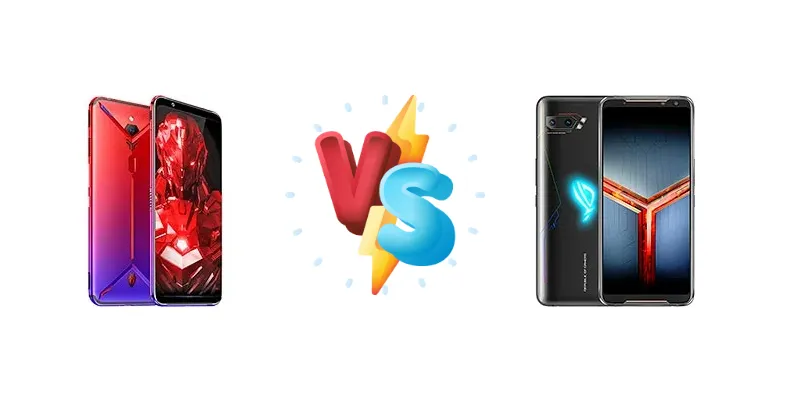
|
🏆 Quick Verdict
For the average gamer prioritizing display quality and faster charging, the Asus ROG Phone II emerges as the superior choice. Its significantly brighter display and 30W charging offer a more immersive and convenient experience, offsetting the marginal battery life difference. However, the RedMagic 3S remains a compelling option for budget-conscious gamers.
| PHONES | ||
|---|---|---|
| Phone Names | ZTE nubia RedMagic 3S | Asus ROG Phone II ZS660KL |
| Network | ||
|---|---|---|
| 2G bands | GSM 850 / 900 / 1800 / 1900 | GSM 850 / 900 / 1800 / 1900 |
| 3G bands | HSDPA 850 / 900 / 1700(AWS) / 1800 / 1900 / 2100 | HSDPA 850 / 900 / 1900 / 2100 |
| 4G bands | 1, 2, 3, 4, 5, 7, 8, 12, 17, 18, 19, 20, 25, 26, 28, 30, 66 - Global | 1, 2, 3, 4, 5, 7, 8, 12, 13, 17, 18, 19, 20, 28, 29, 32, 34, 38, 39, 40, 41, 46 |
| Speed | HSPA 42.2/5.76 Mbps, LTE (7CA) Cat20 2000/150 Mbps | HSPA 42.2/5.76 Mbps, LTE (5CA) Cat18 (Cat20 Ultimate edition) 1200/150 Mbps |
| Technology | GSM / CDMA / HSPA / EVDO / LTE | GSM / HSPA / LTE |
| Launch | ||
|---|---|---|
| Announced | 2019, September. Released 2019, September | 2019, July 22. Released 2019, September |
| Status | Discontinued | Discontinued |
| Body | ||
|---|---|---|
| Build | Glass front (Gorilla Glass 4), aluminum back, aluminum frame | Glass front (Gorilla Glass 6), glass back (Gorilla Glass 3), aluminum frame |
| Dimensions | 171.7 x 78.5 x 9.7 mm (6.76 x 3.09 x 0.38 in) | 171 x 77.6 x 9.5 mm (6.73 x 3.06 x 0.37 in) |
| SIM | Nano-SIM + Nano-SIM | Nano-SIM + Nano-SIM |
| Weight | 215 g (7.58 oz) | 240 g (8.47 oz) |
| - | RGB light panel (on the back) | |
| Display | ||
|---|---|---|
| Protection | Corning Gorilla Glass 4 | Corning Gorilla Glass 6 |
| Resolution | 1080 x 2340 pixels, 19.5:9 ratio (~388 ppi density) | 1080 x 2340 pixels, 19.5:9 ratio (~391 ppi density) |
| Size | 6.65 inches, 108.6 cm2 (~80.5% screen-to-body ratio) | 6.59 inches, 106.6 cm2 (~80.3% screen-to-body ratio) |
| Type | AMOLED, 90Hz | AMOLED, 1B colors, 120Hz, HDR10 |
| Platform | ||
|---|---|---|
| CPU | Octa-core (1x2.96 GHz Kryo 485 & 3x2.42 GHz Kryo 485 & 4x1.8 GHz Kryo 485) | Octa-core (1x2.96 GHz Kryo 485 & 3x2.42 GHz Kryo 485 & 4x1.78 GHz Kryo 485) |
| Chipset | Qualcomm SM8150 Snapdragon 855+ (7 nm) | Qualcomm SM8150 Snapdragon 855+ (7 nm) |
| GPU | Adreno 640 (700 MHz) | Adreno 640 (700 MHz) |
| OS | Android 9.0 (Pie), Redmagic 2.0 | Android 9.0 (Pie), ROG UI |
| Memory | ||
|---|---|---|
| Card slot | No | No |
| Internal | 128GB 8GB RAM, 256GB 12GB RAM | 128GB 8GB RAM, 256GB 12GB RAM, 512GB 12GB RAM, 1TB 12GB RAM |
| - | UFS 3.0 | |
| Main Camera | ||
|---|---|---|
| Dual | - | 48 MP, f/1.8, 26mm (wide), 1/2.0", 0.8µm, PDAF 13 MP, f/2.4, 11mm (ultrawide) |
| Features | LED flash, HDR, panorama | Laser AF, LED flash, HDR, panorama |
| Single | 48 MP, f/1.7, 26mm (wide), 1/2.0", 0.8µm, PDAF | 5 MP |
| Video | 8K@15fps, 4K@30/60fps, 1920fps | 4K@30/60fps, 1080p@30/60/240fps, 720p@480fps; gyro-EIS (except @240/480fps) |
| Selfie camera | ||
|---|---|---|
| Features | HDR | Panorama, HDR |
| Single | 16 MP, f/2.0, 26mm (wide), 1/3.06", 1.0µm | 24MP, f/2.2, 0.9µm |
| Video | 1080p@30fps | 1080p@30fps |
| Sound | ||
|---|---|---|
| 3.5mm jack | - | Yes |
| 35mm jack | Yes | Yes |
| Loudspeaker | Yes, with stereo speakers | Yes, with DTS:X stereo speakers (2 dedicated amplifiers) |
| - | 24-bit/192kHz audio | |
| Comms | ||
|---|---|---|
| Bluetooth | 5.0, A2DP, aptX, LE | 5.0, A2DP, LE, aptX HD |
| NFC | No | Yes |
| Positioning | GPS (L1+L5), GLONASS, BDS, GALILEO | GPS (L1+L5), GLONASS, BDS, GALILEO, QZSS |
| Radio | No | FM radio |
| USB | USB Type-C 3.1, OTG, accessory connector | USB Type-C 3.1, accessory connector, OTG |
| WLAN | Wi-Fi 802.11 a/b/g/n/ac, dual-band, Wi-Fi Direct | Wi-Fi 802.11 a/b/g/n/ac/ad, dual-band, Wi-Fi Direct |
| Features | ||
|---|---|---|
| Sensors | Fingerprint (rear-mounted), accelerometer, gyro, proximity, compass | Fingerprint (under display, optical), accelerometer, gyro, proximity, compass |
| Battery | ||
|---|---|---|
| Charging | 18W wired, QC4 | 30W wired 10W reverse wired, QC4 |
| Stand-by | - | Up to 150 h (3G) |
| Talk time | - | Up to 5 h (3G) |
| Type | Li-Po 5000 mAh, non-removable | Li-Po 6000 mAh, non-removable |
| Misc | ||
|---|---|---|
| Colors | Mecha Silver, Cyber Shade, Eclipse Black | Matte Black, Glossy Black |
| Models | NX629J_V1S | ASUS_I001D, I001DA, I001DE, I001DC, I001DB, I001D, I001DD |
| Price | About 820 EUR | About 1070 EUR |
| Tests | ||
|---|---|---|
| Battery life | - | Endurance rating 114h |
| Camera | - | Photo / Video |
| Display | - | Contrast ratio: Infinite (nominal) |
| Loudspeaker | - | -19.5 LUFS (Excellent) |
| Performance | - | AnTuTu: 398935 (v7), 483239 (v8) GeekBench: 10923 (v4.4) GFXBench: 40fps (ES 3.1 onscreen) |
ZTE nubia RedMagic 3S
- More affordable price point
- Respectable battery endurance
- Capable Snapdragon 855+ performance
- Lower display brightness
- Slower charging speed
- Likely less refined cooling system
Asus ROG Phone II ZS660KL
- Significantly brighter display
- Much faster 30W charging
- 10W reverse wired charging
- Potentially better thermal management
- Higher price
- Marginally lower battery endurance rating
Display Comparison
The Asus ROG Phone II boasts a considerable advantage in display brightness, reaching 626 nits compared to the RedMagic 3S’s 479.7 nits. This translates to better visibility in bright sunlight and a more impactful HDR experience. While both phones lack advanced panel technologies like LTPO, the ROG Phone II’s infinite contrast ratio (nominal) suggests superior black levels and overall image quality. The RedMagic 3S, while still adequate, will appear washed out in comparison under direct sunlight. Gamers who frequently play outdoors or value visual fidelity will greatly benefit from the ROG Phone II’s superior display.
Camera Comparison
Both devices feature 'Photo / Video' capabilities, but the provided data offers no specifics regarding sensor size, aperture, or image processing. Given the gaming focus of both phones, camera quality is likely a secondary consideration. It's reasonable to assume the ROG Phone II, benefiting from Asus’s broader imaging expertise, offers a slightly more refined camera experience, but without detailed specifications, a definitive comparison is impossible. Users seeking a dedicated camera phone should look elsewhere.
Performance
Both the RedMagic 3S and ROG Phone II are powered by the Qualcomm Snapdragon 855+ (7nm), featuring an identical CPU configuration: Octa-core (1x2.96 GHz Kryo 485 & 3x2.42 GHz Kryo 485 & 4x1.8 GHz Kryo 485). Performance differences will therefore be minimal in most gaming scenarios. However, the ROG Phone II’s more robust cooling system (not detailed in the provided data, but a known feature) likely allows for sustained peak performance for longer durations, mitigating thermal throttling during extended gaming sessions. The slight difference in Kryo 485 clock speeds (1.8 GHz on RedMagic vs 1.78 GHz on ROG) is negligible in real-world use.
Battery Life
The endurance ratings are nearly identical – 115 hours for the RedMagic 3S and 114 hours for the ROG Phone II. However, the ROG Phone II’s 30W wired charging (with QC4 support) significantly outperforms the RedMagic 3S’s 18W charging. This means the ROG Phone II can replenish its battery much faster, minimizing downtime between gaming sessions. The addition of 10W reverse wired charging on the ROG Phone II is a convenient feature for topping up accessories, absent on the RedMagic 3S.
Buying Guide
Buy the ZTE nubia RedMagic 3S if you need a more affordable entry point into the gaming phone world and prioritize maximizing value. Its solid performance and respectable battery life provide a capable gaming experience without breaking the bank. Buy the Asus ROG Phone II if you prefer a premium experience with a brighter, more vibrant display, significantly faster charging, and a more refined overall package, even at a higher price point.