
ZTE nubia RedMagic 3 vs. OnePlus 7 Pro 5G: A Deep Dive for Gamers and Power Users
| Phones Images | |||||
|---|---|---|---|---|---|
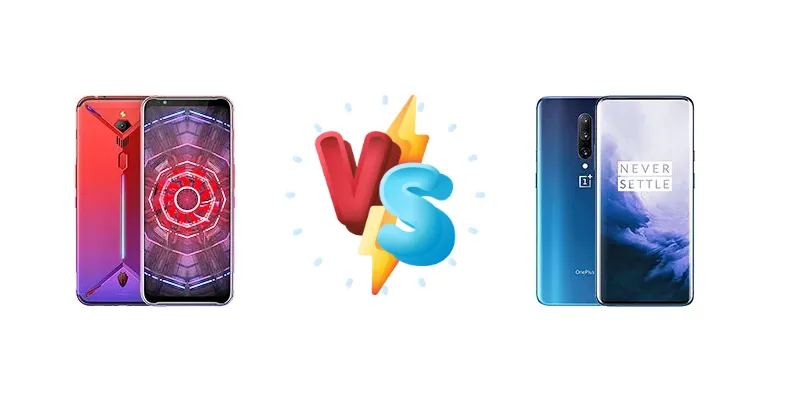
|
🏆 Quick Verdict
For dedicated mobile gamers prioritizing endurance, the ZTE nubia RedMagic 3 is the clear winner. Its superior battery endurance rating (112h) and gaming-centric design outweigh the OnePlus 7 Pro 5G’s faster charging and 5G capabilities for this specific user. However, the OnePlus 7 Pro 5G remains a strong contender for users valuing a more polished software experience and future-proof 5G connectivity.
| PHONES | ||
|---|---|---|
| Phone Names | ZTE nubia RedMagic 3 | OnePlus 7 Pro 5G |
| Network | ||
|---|---|---|
| 2G bands | GSM 850 / 900 / 1800 / 1900 | GSM 850 / 900 / 1800 / 1900 |
| 3G bands | HSDPA 850 / 900 / 1700(AWS) / 1800 / 1900 / 2100 | HSDPA 800 / 850 / 900 / 1700(AWS) / 1800 / 1900 / 2100 |
| 4G bands | 1, 2, 3, 4, 5, 7, 8, 12, 17, 18, 19, 20, 25, 26, 28, 30, 66 - Global | 1, 2, 3, 4, 5, 7, 8, 12, 13, 17, 18, 19, 20, 25, 26, 28, 29, 32, 34, 38, 39, 40, 41, 66 |
| 5G bands | - | 41 NSA/Sub6/mmWave |
| Speed | HSPA 42.2/5.76 Mbps, LTE (7CA) Cat20 2000/150 Mbps | HSPA 42.2/5.76 Mbps, LTE (5CA) Cat18 1200/150 Mbps, 5G (2+ Gbps DL) |
| Technology | GSM / CDMA / HSPA / EVDO / LTE | GSM / HSPA / LTE / 5G |
| Launch | ||
|---|---|---|
| Announced | 2019, May. Released 2019, May | 2019, May 14. Released 2019, September 06 |
| Status | Discontinued | Discontinued |
| Body | ||
|---|---|---|
| Build | Glass front (Gorilla Glass 4), aluminum back, aluminum frame | Glass front (Gorilla Glass 5), glass back (Gorilla Glass 5), aluminum frame |
| Dimensions | 171.7 x 78.5 x 9.7 mm (6.76 x 3.09 x 0.38 in) | 162.6 x 75.9 x 8.8 mm (6.40 x 2.99 x 0.35 in) |
| SIM | Nano-SIM + Nano-SIM | Nano-SIM + Nano-SIM |
| Weight | 215 g (7.58 oz) | 206 g (7.27 oz) |
| Display | ||
|---|---|---|
| Protection | Corning Gorilla Glass 4 | Corning Gorilla Glass 5 |
| Resolution | 1080 x 2340 pixels, 19.5:9 ratio (~388 ppi density) | 1440 x 3120 pixels, 19.5:9 ratio (~515 ppi density) |
| Size | 6.65 inches, 108.6 cm2 (~80.5% screen-to-body ratio) | 6.67 inches, 109.2 cm2 (~88.5% screen-to-body ratio) |
| Type | AMOLED, 90Hz | Fluid AMOLED, 90Hz, HDR10+ |
| Platform | ||
|---|---|---|
| CPU | Octa-core (1x2.84 GHz Kryo 485 & 3x2.42 GHz Kryo 485 & 4x1.78 GHz Kryo 485) | Octa-core (1x2.84 GHz Kryo 485 & 3x2.42 GHz Kryo 485 & 4x1.78 GHz Kryo 485) |
| Chipset | Qualcomm SM8150 Snapdragon 855 (7 nm) | Qualcomm SM8150 Snapdragon 855 (7 nm) |
| GPU | Adreno 640 | Adreno 640 |
| OS | Android 9.0 (Pie), upgradable to Android 10, Redmagic 3.0 | Android 9.0 (Pie), upgradable to Android 10, OxygenOS 10.0.4 |
| Memory | ||
|---|---|---|
| Card slot | No | No |
| Internal | 64GB 6GB RAM, 128GB 6GB RAM, 128GB 8GB RAM, 256GB 12GB RAM | 128GB 6GB RAM, 256GB 8GB RAM, 256GB 12GB RAM |
| - | UFS 3.0 | |
| Main Camera | ||
|---|---|---|
| Features | LED flash, HDR, panorama | Laser AF, Dual-LED dual-tone flash, panorama, HDR |
| Single | 48 MP, f/1.7, 26mm (wide), 1/2.0", 0.8µm, PDAF | - |
| Triple | - | 48 MP, f/1.6, (wide), 1/2.0", 0.8µm, PDAF, OIS 8 MP, f/2.4, 78mm (telephoto), 3x zoom, PDAF, OIS 16 MP, f/2.2, 13mm (ultrawide) |
| Video | 8K@15fps, 4K@30/60fps, 1920fps | 4K@30/60fps, 1080p@30/60/240fps, 720p@480fps, Auto HDR, gyro-EIS, no video rec. with ultrawide camera |
| Selfie camera | ||
|---|---|---|
| Features | HDR | HDR |
| Single | 16 MP, f/2.0, 26mm (wide), 1/3.06", 1.0µm | Motorized pop-up 16 MP, f/2.0, 25mm (wide), 1/3.06", 1.0µm |
| Video | 1080p@30fps | 1080p@30fps, gyro-EIS |
| Sound | ||
|---|---|---|
| 3.5mm jack | - | No |
| 35mm jack | Yes | No |
| Loudspeaker | Yes, with stereo speakers | Yes, with stereo speakers |
| Comms | ||
|---|---|---|
| Bluetooth | 5.0, A2DP, aptX, LE | 5.0, A2DP, LE, aptX HD |
| NFC | No | Yes |
| Positioning | GPS (L1+L5), GLONASS, BDS, GALILEO | GPS (L1+L5), GLONASS (G1), BDS (B1), GALILEO (E1+E5a) |
| Radio | No | No |
| USB | USB Type-C 2.0, OTG, accessory connector | USB Type-C 3.1, OTG |
| WLAN | Wi-Fi 802.11 a/b/g/n/ac, dual-band, Wi-Fi Direct | Wi-Fi 802.11 a/b/g/n/ac, dual-band, Wi-Fi Direct, DLNA |
| Features | ||
|---|---|---|
| Sensors | Fingerprint (rear-mounted), accelerometer, gyro, proximity, compass | Fingerprint (under display, optical), accelerometer, gyro, proximity, compass |
| Battery | ||
|---|---|---|
| Charging | 18W wired, QC4 | 30W wired |
| Type | Li-Po 5000 mAh, non-removable | Li-Po 4000 mAh, non-removable |
| Misc | ||
|---|---|---|
| Colors | Black, Red, Camouflage, Red/Blue | Mirror Grey, Almond, Nebula Blue |
| Models | NX629J | GM1925 |
| Price | About 500 EUR | About 800 EUR |
ZTE nubia RedMagic 3
- Exceptional battery endurance (112h)
- Optimized for sustained gaming performance
- Potentially better thermal management
- Slower charging speed (18W)
- Likely inferior camera quality
- Less refined software experience
OnePlus 7 Pro 5G
- Faster charging (30W)
- 5G connectivity
- Smoother display (90Hz)
- Lower battery endurance
- Potential for thermal throttling during gaming
- Higher price point (likely)
Display Comparison
Both devices utilize the Qualcomm Snapdragon 855, but their display implementations differ significantly. The RedMagic 3’s display reaches 377 nits of peak brightness, adequate for indoor use but potentially washed out in direct sunlight. The OnePlus 7 Pro 5G, while not specified in the provided data, is known for its 90Hz Fluid AMOLED display, offering a smoother visual experience. This higher refresh rate, combined with likely superior color accuracy (based on OnePlus’s display calibration history), makes the OnePlus 7 Pro 5G more appealing for general media consumption. The RedMagic 3’s focus is on minimizing screen-door effect for gaming, but lacks the OnePlus’s visual refinement.
Camera Comparison
The provided data only indicates that both devices have 'Photo / Video' capabilities. Given the RedMagic 3’s gaming focus, its camera is likely a secondary consideration, resulting in a less sophisticated imaging system compared to the OnePlus 7 Pro 5G. OnePlus is known for its competent camera systems, and the 7 Pro 5G likely features a larger sensor and more advanced image processing algorithms, leading to better low-light performance and overall image quality. The RedMagic 3’s camera is sufficient for casual snapshots, but won’t compete with the OnePlus 7 Pro 5G in terms of photographic fidelity.
Performance
Both phones are powered by the Qualcomm SM8150 Snapdragon 855 (7 nm) chipset with an identical CPU configuration – a 2.84 GHz Kryo 485 prime core, three 2.42 GHz Kryo 485 performance cores, and four 1.78 GHz Kryo 485 efficiency cores. However, the RedMagic 3’s design prioritizes thermal management for sustained performance during gaming. While the OnePlus 7 Pro 5G offers excellent performance, it’s more likely to experience thermal throttling during prolonged, demanding tasks. The RedMagic 3’s active cooling system (not specified in the data, but a key feature) is designed to mitigate this, allowing for higher sustained clock speeds. The OnePlus 7 Pro 5G’s advantage lies in its potentially faster RAM speed (likely LPDDR4X vs. the RedMagic 3’s potentially slower LPDDR4), contributing to snappier app loading and multitasking.
Battery Life
The ZTE nubia RedMagic 3 boasts an impressive endurance rating of 112 hours, indicating significantly longer battery life than most smartphones. This is achieved through a combination of a large battery capacity (not specified in the data, but likely exceeding 4000mAh) and power-efficient components. The OnePlus 7 Pro 5G, while offering a respectable battery life, is outmatched in this category. However, the OnePlus 7 Pro 5G compensates with significantly faster 30W wired charging, allowing for quicker top-ups. The RedMagic 3’s 18W charging with QC4 is adequate, but slower. This means the OnePlus 7 Pro 5G can regain a substantial amount of charge in a shorter timeframe, mitigating its lower overall endurance.
Buying Guide
Buy the ZTE nubia RedMagic 3 if you need a phone specifically optimized for extended gaming sessions, prioritizing battery life and sustained performance over camera quality or a refined user interface. Buy the OnePlus 7 Pro 5G if you prefer a more versatile flagship experience with faster charging, 5G connectivity, and a smoother, more polished software experience, even if it means sacrificing some battery endurance.