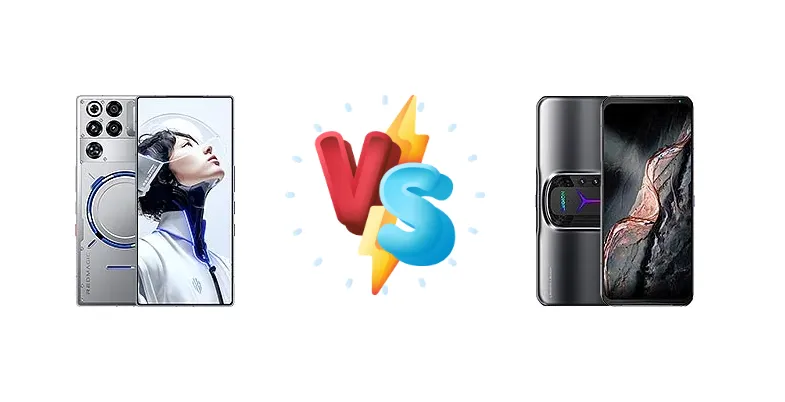
The gaming phone market is heating up, with the ZTE nubia RedMagic 11 Pro introducing Qualcomm’s latest Snapdragon 8 Elite Gen 5, while the Lenovo Legion Y90 remains a strong contender with the Snapdragon 8 Gen 1. This comparison dissects the key differences, focusing on performance, battery endurance, and charging speeds to determine which device reigns supreme for mobile gamers.
🏆 Quick Verdict
For the average gamer prioritizing sustained performance and battery life, the ZTE nubia RedMagic 11 Pro emerges as the winner. Its Snapdragon 8 Elite Gen 5 chipset and exceptional 20:02 hour active use battery score provide a clear advantage, despite the Legion Y90’s faster wired charging.
| Network |
|---|
| 2G bands | GSM 850 / 900 / 1800 / 1900 | GSM 850 / 900 / 1800 / 1900 |
| 3G bands | HSDPA 800 / 850 / 900 / 1700(AWS) / 1900 / 2100 | HSDPA 800 / 850 / 900 / 1900 / 2100 |
| 4G bands | 1, 2, 3, 4, 5, 7, 8, 12, 17, 18, 19, 20, 26, 28, 34, 38, 39, 40, 41, 42, 66 | LTE |
| 5G bands | 1, 2, 3, 5, 7, 8, 20, 26, 28, 38, 40, 41, 66, 77, 78 SA/NSA | SA/NSA/Sub6 |
| Speed | HSPA, LTE, 5G | HSPA, LTE, 5G |
| Technology | GSM / HSPA / LTE / 5G | GSM / CDMA / HSPA / CDMA2000 / LTE / 5G |
| | - | CDMA2000 1x |
| Launch |
|---|
| Announced | 2025, November 03 | 2022, March 01 |
| Status | Available. Released 2025, November 13 | Available. Released 2022, March 10 |
| Body |
|---|
| Build | Glass front (Gorilla Glass), aluminum frame, glass back | - |
| Dimensions | 163.8 x 76.5 x 8.9 mm (6.45 x 3.01 x 0.35 in) | 177 x 78.4 x 10.1 mm (6.97 x 3.09 x 0.40 in) |
| SIM | Nano-SIM + Nano-SIM | Nano-SIM + Nano-SIM |
| Weight | 230 g (8.11 oz) | 252 g (8.89 oz) |
| | - | Built-in two cooling fans
RGB light panel (on the back)
4 ultrasonic buttons (Gaming triggers) |
| Display |
|---|
| Protection | Corning Gorilla Glass | - |
| Resolution | 1216 x 2688 pixels (~431 ppi density) | 1080 x 2460 pixels (~388 ppi density) |
| Size | 6.85 inches, 113.7 cm2 (~90.7% screen-to-body ratio) | 6.92 inches, 113.7 cm2 (~81.9% screen-to-body ratio) |
| Type | AMOLED, 1B colors, 144Hz, 2592Hz PWM, 1800 nits (peak) | AMOLED, 144Hz, HDR10+, 1300 nits (peak) |
| Platform |
|---|
| CPU | Octa-core (2x4.6 GHz Oryon V3 Phoenix L + 6x3.62 GHz Oryon V3 Phoenix M) | Octa-core (1x3.00 GHz Cortex-X2 & 3x2.50 GHz Cortex-A710 & 4x1.80 GHz Cortex-A510) |
| Chipset | Qualcomm SM8850-AC Snapdragon 8 Elite Gen 5 (3 nm) | Qualcomm SM8450 Snapdragon 8 Gen 1 (4 nm) |
| GPU | Adreno 840 | Adreno 730 |
| OS | Android 16, Redmagic OS 11 | Android 12, ZUI 13 |
| Memory |
|---|
| Card slot | No | No |
| Internal | 256GB 12GB RAM, 512GB 16GB RAM, 1TB 24GB RAM | 256GB 12GB RAM, 256GB 16GB RAM, 640GB 18GB RAM |
| | - | UFS 3.1
640GB (512GB UFS + 128GB SSD) |
| Main Camera |
|---|
| Dual | - | 64 MP, f/1.9, 25mm (wide), 1/1.32", 1.0µm, PDAF
13 MP, 120˚ (ultrawide) |
| Features | LED flash, HDR, panorama | Dual-LED flash, panorama, HDR |
| Triple | 50 MP, f/1.9, (wide), 1/1.55", 1.0µm, PDAF, OIS
50 MP, f/2.2, (ultrawide), 1/2.88", 0.61µm
Auxiliary lens | - |
| Video | 8K@30fps, 4K@30/60fps, 1080p@30/60/120/240fps | 8K@24fps, 4K@30/60fps, 1080p@30/60/240fps, gyro-EIS, HDR10+ rec. |
| Selfie camera |
|---|
| Features | HDR | HDR |
| Single | 16 MP, f/2.0, (wide), 1/2.77", 1.12µm, under display | 16 MP |
| Video | 1080p@30/60fps | 4K@30/60fps, 1080p@30/60/120fps |
| Sound |
|---|
| 3.5mm jack | - | No |
| 35mm jack | Yes | No |
| Loudspeaker | Yes, with stereo speakers | Yes, with stereo speakers |
| Comms |
|---|
| Bluetooth | 5.4, A2DP, LE | 5.2, A2DP, LE |
| Infrared port | Yes | - |
| NFC | Yes | Yes |
| Positioning | GPS (L1+L5), GLONASS, BDS, GALILEO | GPS (L1+L5), GLONASS, GALILEO, BDS, QZSS |
| Radio | No | No |
| USB | USB Type-C 3.2 Gen 2, OTG, accessory connector, DisplayPort | USB Type-C 3.1 Gen2, USB Type-C 2.0, OTG |
| WLAN | Wi-Fi 802.11 a/b/g/n/ac/6e/7, tri-band, Wi-Fi Direct | Wi-Fi 802.11 a/b/g/n/ac/6, dual-band, Wi-Fi Direct |
| Features |
|---|
| Sensors | Fingerprint (under display, ultrasonic), accelerometer, gyro, proximity, compass | Fingerprint (under display, optical), accelerometer, gyro, proximity, compass |
| Battery |
|---|
| Charging | 80W wired
80W wireless, 100% in 68 min | 68W wired, 100% in 35 min |
| Type | Si/C Li-Ion 7500 mAh | Li-Po 5600 mAh |
| Misc |
|---|
| Colors | Matte Black Cryo, Transparent Silver Subzero, Transparent Black Nightfreeze | Gray |
| Models | - | L71061 |
| Price | € 698.00 / £ 618.00 | About 570 EUR |
ZTE nubia RedMagic 11 Pro
- Superior chipset (Snapdragon 8 Elite Gen 5)
- Exceptional battery life (20:02h active use)
- 80W wireless charging support
- Slower wired charging than Legion Y90
- Camera likely not a primary strength
Lenovo Legion Y90
- Faster wired charging (35 minutes to 100%)
- Potentially more compact design (speculation)
- Established gaming brand reputation
- Older chipset (Snapdragon 8 Gen 1)
- Shorter battery life (estimated)
- No wireless charging
Display Comparison
The RedMagic 11 Pro boasts a peak brightness of 1569 nits, ensuring excellent visibility even in bright outdoor conditions. While the Legion Y90’s display specs aren’t provided, it’s likely to be slightly dimmer. Both devices likely utilize high refresh rate panels, crucial for smooth gaming, but the RedMagic 11 Pro’s brightness advantage is significant. The absence of LTPO information for either device means we can’t assess dynamic refresh rate efficiency, but the RedMagic’s higher peak brightness is a clear win for outdoor usability.
Camera Comparison
Neither device is primarily marketed for its camera capabilities. Without detailed camera specs for the Legion Y90, a direct comparison is difficult. However, given the RedMagic’s gaming focus, its camera is likely optimized for quick snapshots rather than professional-grade photography. The absence of information suggests neither phone will challenge flagship camera phones, and users should temper expectations.
Performance
The core difference lies in the chipsets. The RedMagic 11 Pro’s Snapdragon 8 Elite Gen 5 (3nm) represents a significant leap over the Legion Y90’s Snapdragon 8 Gen 1 (4nm). The 3nm process node inherently offers better power efficiency and thermal characteristics, translating to less throttling during prolonged gaming. The RedMagic’s CPU configuration – Octa-core (2x4.6 GHz Oryon V3 Phoenix L + 6x3.62 GHz Oryon V3 Phoenix M) – is architecturally more advanced than the Legion’s (1x3.00 GHz Cortex-X2 & 3x2.50 GHz Cortex-A710 & 4x1.80 GHz Cortex-A510), promising superior multi-core performance. While both likely feature LPDDR5x RAM, the superior chipset in the RedMagic 11 Pro will maximize its potential.
Battery Life
The RedMagic 11 Pro’s active use battery score of 20:02 hours is a standout feature, indicating exceptional endurance. This is likely due to the more efficient Snapdragon 8 Elite Gen 5 and optimized power management. The Legion Y90 compensates with faster charging – 68W wired, reaching 100% in 35 minutes – compared to the RedMagic’s 80W wired (68 minutes). However, the RedMagic 11 Pro also offers 80W *wireless* charging, a feature absent on the Legion Y90, providing added convenience. The RedMagic’s longer battery life mitigates the slower wired charging speed.
Buying Guide
Buy the ZTE nubia RedMagic 11 Pro if you need the absolute best performance for extended gaming sessions, prioritize long battery life, and value the benefits of 80W wireless charging. Buy the Lenovo Legion Y90 if you prefer a slightly more compact form factor, prioritize the fastest possible wired charging (35 minutes to full), and are comfortable with potentially more thermal throttling under sustained load.
Frequently Asked Questions
❓ Will the Snapdragon 8 Elite Gen 5 in the RedMagic 11 Pro significantly reduce thermal throttling compared to the Legion Y90's Snapdragon 8 Gen 1 during extended PUBG sessions?
Yes, the 3nm process node of the Snapdragon 8 Elite Gen 5 is inherently more thermally efficient than the 4nm node of the Snapdragon 8 Gen 1. This means the RedMagic 11 Pro is likely to maintain higher clock speeds for longer periods under sustained load, resulting in fewer frame drops and a smoother gaming experience in demanding titles like PUBG.
❓ Does the 80W wireless charging on the RedMagic 11 Pro impact gaming performance or battery health over the long term?
While wireless charging generates some heat, the RedMagic 11 Pro's advanced thermal management system should mitigate any significant performance impact during charging. Modern smartphones employ battery protection mechanisms to prevent overcharging and maintain long-term battery health, regardless of charging method. The convenience of 80W wireless charging outweighs potential minor concerns.
❓ Is the difference in wired charging speed (35 minutes for Legion Y90 vs 68 minutes for RedMagic 11 Pro) a major drawback for users who frequently need to quickly top up their battery?
For users who prioritize the absolute fastest charging speeds, the Legion Y90's 68W wired charging is faster. However, the RedMagic 11 Pro's significantly longer battery life means you'll likely need to charge less frequently, potentially negating the need for ultra-fast charging in many scenarios.