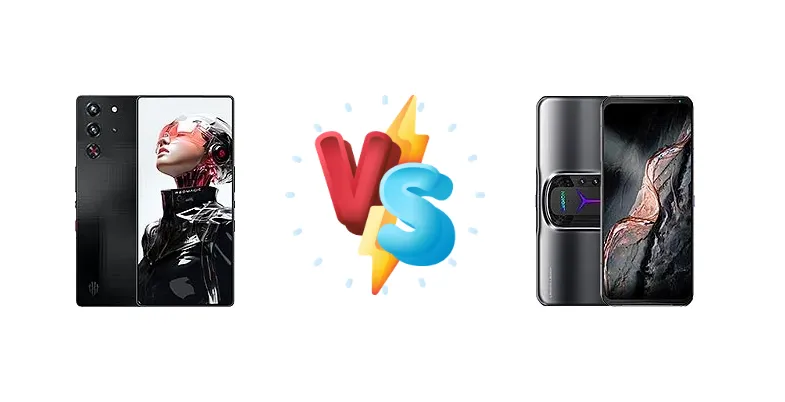
The mobile gaming landscape is fiercely competitive, with both ZTE and Lenovo vying for dominance. The RedMagic 10S Pro arrives with Qualcomm’s cutting-edge Snapdragon 8 Elite, promising a leap in performance. However, the Lenovo Legion Y90, powered by the Snapdragon 8 Gen 1, remains a formidable contender, offering a robust feature set and established reputation. This comparison dissects these two gaming powerhouses to determine which delivers the ultimate mobile gaming experience.
🏆 Quick Verdict
For the average gamer prioritizing raw performance and longevity, the ZTE nubia RedMagic 10S Pro emerges as the winner. Its Snapdragon 8 Elite chipset, built on a 3nm process, offers a significant advantage in sustained performance and efficiency, complemented by impressive 80W charging and a claimed 1200 charge cycles. While the Legion Y90 is a capable device, it’s outmatched in core processing power.
| Network |
|---|
| 2G bands | GSM 850 / 900 / 1800 / 1900 | GSM 850 / 900 / 1800 / 1900 |
| 3G bands | HSDPA 800 / 850 / 900 / 1700(AWS) / 1900 / 2100 | HSDPA 800 / 850 / 900 / 1900 / 2100 |
| 4G bands | 1, 2, 3, 4, 5, 7, 8, 12, 17, 18, 19, 20, 26, 28, 34, 38, 39, 40, 41, 42, 66 | LTE |
| 5G bands | 1, 2, 3, 5, 7, 8, 20, 26, 28, 38, 40, 41, 66, 71, 77, 78 SA/NSA | SA/NSA/Sub6 |
| Speed | HSPA, LTE, 5G | HSPA, LTE, 5G |
| Technology | GSM / CDMA / HSPA / EVDO / LTE / 5G | GSM / CDMA / HSPA / CDMA2000 / LTE / 5G |
| | - | CDMA2000 1x |
| Launch |
|---|
| Announced | 2025, May 26 | 2022, March 01 |
| Status | Available. Released 2025, May 26 | Available. Released 2022, March 10 |
| Body |
|---|
| Build | Glass front, aluminum frame, glass back | - |
| Dimensions | 163.4 x 76.1 x 8.9 mm (6.43 x 3.00 x 0.35 in) | 177 x 78.4 x 10.1 mm (6.97 x 3.09 x 0.40 in) |
| SIM | Nano-SIM + Nano-SIM | Nano-SIM + Nano-SIM |
| Weight | 229 g (8.08 oz) | 252 g (8.89 oz) |
| | - | Built-in two cooling fans
RGB light panel (on the back)
4 ultrasonic buttons (Gaming triggers) |
| Display |
|---|
| Protection | Corning Gorilla Glass (unspecified version), Mohs level 4 | - |
| Resolution | 1216 x 2688 pixels (~431 ppi density) | 1080 x 2460 pixels (~388 ppi density) |
| Size | 6.85 inches, 113.7 cm2 (~91.4% screen-to-body ratio) | 6.92 inches, 113.7 cm2 (~81.9% screen-to-body ratio) |
| Type | AMOLED, 1B colors, 144Hz, 2592Hz PWM, 2000 nits (peak) | AMOLED, 144Hz, HDR10+, 1300 nits (peak) |
| Platform |
|---|
| CPU | Octa-core (2x4.47 GHz Oryon V2 Phoenix L + 6x3.53 GHz Oryon V2 Phoenix M) | Octa-core (1x3.00 GHz Cortex-X2 & 3x2.50 GHz Cortex-A710 & 4x1.80 GHz Cortex-A510) |
| Chipset | Qualcomm SM8750-AC Snapdragon 8 Elite (3 nm) | Qualcomm SM8450 Snapdragon 8 Gen 1 (4 nm) |
| GPU | Adreno 830 (1200 MHz) | Adreno 730 |
| OS | Android 15, Redmagic OS 10.5 | Android 12, ZUI 13 |
| Memory |
|---|
| Card slot | No | No |
| Internal | 256GB 12GB RAM, 512GB 16GB RAM, 1TB 24GB RAM | 256GB 12GB RAM, 256GB 16GB RAM, 640GB 18GB RAM |
| | - | UFS 3.1
640GB (512GB UFS + 128GB SSD) |
| Main Camera |
|---|
| Dual | 50 MP, f/1.9, 23mm (wide), 1/1.55", 1.0µm, PDAF, OIS
50 MP, f/2.0, 13mm (ultrawide), 1/2.88", 0.61µm, AF
Auxiliary lens | 64 MP, f/1.9, 25mm (wide), 1/1.32", 1.0µm, PDAF
13 MP, 120˚ (ultrawide) |
| Features | LED flash, HDR, panorama | Dual-LED flash, panorama, HDR |
| Video | 8K@30fps, 4K@30/60fps, 1080p@30/60/120/240fps | 8K@24fps, 4K@30/60fps, 1080p@30/60/240fps, gyro-EIS, HDR10+ rec. |
| Selfie camera |
|---|
| Features | HDR | HDR |
| Single | 16 MP, f/2.0, (wide), 1/2.77", 1.0µm, under display | 16 MP |
| Video | 1080p@30/60fps | 4K@30/60fps, 1080p@30/60/120fps |
| Sound |
|---|
| 3.5mm jack | - | No |
| 35mm jack | Yes | No |
| Loudspeaker | Yes, with stereo speakers | Yes, with stereo speakers |
| Comms |
|---|
| Bluetooth | 5.4, A2DP, LE | 5.2, A2DP, LE |
| Infrared port | Yes | - |
| NFC | Yes | Yes |
| Positioning | GPS (L1+L2+L5), GLONASS, BDS, GALILEO | GPS (L1+L5), GLONASS, GALILEO, BDS, QZSS |
| Radio | No | No |
| USB | USB Type-C 3.2 Gen 2, OTG, accessory connector, DisplayPort | USB Type-C 3.1 Gen2, USB Type-C 2.0, OTG |
| WLAN | Wi-Fi 802.11 a/b/g/n/ac/6e/7, tri-band, Wi-Fi Direct | Wi-Fi 802.11 a/b/g/n/ac/6, dual-band, Wi-Fi Direct |
| Features |
|---|
| Sensors | Fingerprint (under display, optical), accelerometer, gyro, proximity, compass | Fingerprint (under display, optical), accelerometer, gyro, proximity, compass |
| Battery |
|---|
| Charging | 80W wired | 68W wired, 100% in 35 min |
| Type | Si/C Li-Ion 7050 mAh | Li-Po 5600 mAh |
| Misc |
|---|
| Colors | Nightfall (Matt Black), Moonlight (Silver Transparent), Dusk (Black Transparent) | Gray |
| Models | NX789J | L71061 |
| Price | About 650 EUR | About 570 EUR |
| EU LABEL |
|---|
| Battery | 80:12h endurance, 1200 cycles | - |
| Energy | Class A | - |
| Free fall | Class C (90 falls) | - |
| Repairability | Class C | - |
ZTE nubia RedMagic 10S Pro
- Superior processing power with Snapdragon 8 Elite
- Enhanced thermal efficiency for sustained gaming
- Potentially longer battery lifespan with 1200 charge cycles
- Camera likely not a primary strength
- May command a higher price point
Lenovo Legion Y90
- Faster charging time (35 minutes to 100%)
- Established gaming brand reputation
- Potentially more versatile camera system
- Older Snapdragon 8 Gen 1 chipset
- Less efficient power consumption
Display Comparison
While display specs aren't provided, both devices target gamers, suggesting high refresh rates and low latency panels. However, the chipset difference impacts sustained performance *on* the display. The RedMagic 10S Pro’s Snapdragon 8 Elite will likely maintain higher frame rates for longer periods. The Legion Y90, while capable, will experience more performance dips under sustained load. Bezels are likely minimal on both, given the gaming focus, but the RedMagic’s design often prioritizes maximizing screen real estate.
Camera Comparison
Neither phone is primarily marketed for its camera capabilities. However, the Legion Y90 likely features a more refined camera system, typical of Lenovo’s broader smartphone portfolio. Without specific sensor details, it’s reasonable to assume the Legion Y90 has a more versatile camera setup, potentially with better image stabilization. The RedMagic 10S Pro will likely prioritize speed and efficiency over camera quality, offering a functional but not exceptional imaging experience.
Performance
The core of the difference lies in the chipsets. The RedMagic 10S Pro’s Snapdragon 8 Elite (3nm) is a clear upgrade over the Legion Y90’s Snapdragon 8 Gen 1 (4nm). The 3nm process node translates to significantly improved power efficiency and thermal performance, allowing the RedMagic to sustain peak performance for longer. The Snapdragon 8 Elite’s Oryon V2 Phoenix cores (2x4.47 GHz + 6x3.53 GHz) represent a substantial architectural leap over the Legion Y90’s Cortex-X2 and Cortex-A710 configuration (3.00 GHz + 2.50 GHz). This means faster processing speeds and improved multitasking capabilities. The RedMagic 10S Pro will excel in demanding titles and resource-intensive applications.
Battery Life
The RedMagic 10S Pro boasts an 80W wired charging speed, while the Legion Y90 offers 68W. The Legion Y90 claims a 100% charge in 35 minutes, suggesting optimized charging curves. However, the RedMagic 10S Pro’s claimed 1200 charge cycles indicate superior long-term battery health. While mAh capacity isn’t specified, the Snapdragon 8 Elite’s efficiency will likely translate to better real-world battery endurance for the RedMagic 10S Pro, despite potentially having a similar or smaller battery capacity.
Buying Guide
Buy the ZTE nubia RedMagic 10S Pro if you need the absolute best processing power for demanding games, extended gaming sessions without throttling, and a longer-lasting battery with superior charging cycle endurance. Buy the Lenovo Legion Y90 if you prefer a more established gaming brand with a focus on rapid charging (35 minutes to 100%) and are willing to trade some raw processing power for quicker top-ups and a potentially lower price point.
Frequently Asked Questions
❓ Will the Snapdragon 8 Elite in the RedMagic 10S Pro significantly reduce thermal throttling during extended gaming sessions compared to the Legion Y90?
Yes, the Snapdragon 8 Elite’s 3nm process node and improved architecture are designed to generate less heat and maintain higher clock speeds for longer periods. This translates to less performance throttling and a more consistent gaming experience, especially in demanding titles. The Legion Y90, with its 4nm Snapdragon 8 Gen 1, will likely experience more noticeable throttling under sustained load.
❓ Does the 68W charging on the Lenovo Legion Y90 provide a substantial real-world advantage over the RedMagic 10S Pro’s 80W, considering the 35-minute 0-100% claim?
While the Legion Y90 boasts a quick 35-minute full charge, the difference in charging speed is likely marginal in practical use. The RedMagic 10S Pro’s 80W charging will still provide a rapid top-up, and the benefit of 1200 charge cycles suggests a longer-term advantage in battery health. The convenience of a slightly faster initial charge is offset by the potential for reduced battery capacity over time with the Legion Y90.
❓ How does the CPU architecture of the Snapdragon 8 Elite (Oryon V2 Phoenix) compare to the Snapdragon 8 Gen 1 in terms of single-core and multi-core performance for gaming?
The Oryon V2 Phoenix cores in the Snapdragon 8 Elite represent a significant architectural improvement. They offer higher clock speeds and improved instruction per clock (IPC) compared to the Cortex-X2 and Cortex-A710 cores in the Snapdragon 8 Gen 1. This results in noticeable gains in both single-core and multi-core performance, leading to smoother gameplay, faster loading times, and improved responsiveness in gaming applications.