
RedMagic 10 Pro+ vs Motorola Edge+ (2023): A Deep Dive into Android Flagship Performance
| Phones Images | |||||
|---|---|---|---|---|---|
|
🏆 Quick Verdict
For dedicated mobile gamers, the ZTE nubia RedMagic 10 Pro+ is the clear winner, leveraging the Snapdragon 8 Elite's superior CPU and GPU performance. However, the Motorola Edge+ (2023) offers a more refined software experience, better camera versatility, and wireless charging, making it the better choice for general users.
| PHONES | ||
|---|---|---|
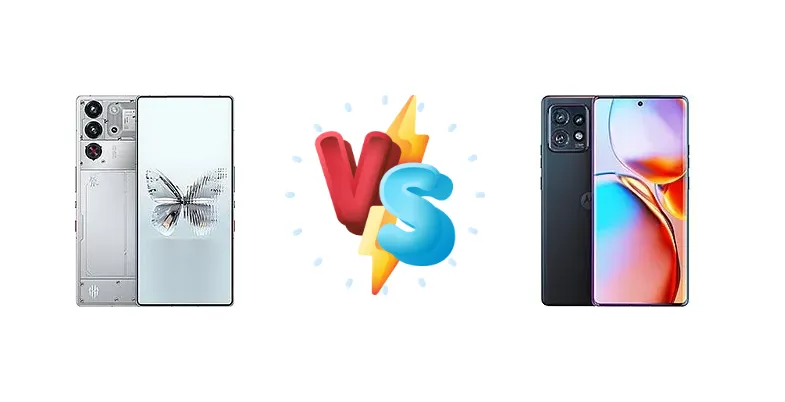
| Phone Names | ZTE nubia RedMagic 10 Pro+ | Motorola Edge+ (2023) |
| Network | ||
|---|---|---|
| 2G bands | GSM 850 / 900 / 1800 / 1900 | GSM 850 / 900 / 1800 / 1900 |
| 3G bands | HSDPA 850 / 900 / 1700(AWS) / 1900 / 2100 | HSDPA 850 / 900 / 1700(AWS) / 1900 / 2100 |
| 4G bands | LTE | 1, 2, 3, 4, 5, 7, 8, 12, 13, 14, 17, 18, 20, 25, 26, 28, 29, 30, 38, 39, 40, 41, 41, 46, 48, 66, 71 |
| 5G bands | SA/NSA | 1, 2, 3, 5, 7, 12, 14, 20, 25, 26, 28, 29, 30, 38, 41, 41, 48, 66, 70, 71, 77, 78 SA/NSA/Sub6/mmWave |
| Speed | HSPA, LTE, 5G | HSPA, LTE, 5G |
| Technology | GSM / CDMA / HSPA / EVDO / LTE / 5G | GSM / HSPA / LTE / 5G |
| Launch | ||
|---|---|---|
| Announced | 2024, November 13 | 2023, May 02 |
| Status | Available. Released 2024, November 18 | Available. Released 2023, May 19 |
| Body | ||
|---|---|---|
| Build | Glass front, aluminum frame, glass back | Glass front (Gorilla Glass Victus), glass back (Gorilla Glass Victus), aluminum frame |
| Dimensions | 163.4 x 76.1 x 8.9 mm (6.43 x 3.00 x 0.35 in) | 161.2 x 74 x 8.6 mm (6.35 x 2.91 x 0.34 in) |
| SIM | Nano-SIM + Nano-SIM | Nano-SIM + eSIM |
| Weight | 229 g (8.08 oz) | 203 g (7.16 oz) |
| - | IP68 dust/water resistant (up to 1.5m for 30 min) | |
| Display | ||
|---|---|---|
| Protection | Unspecified | Corning Gorilla Glass Victus |
| Resolution | 1216 x 2688 pixels (~431 ppi density) | 1080 x 2400 pixels, 20:9 ratio (~395 ppi density) |
| Size | 6.85 inches, 113.7 cm2 (~91.4% screen-to-body ratio) | 6.67 inches, 107.4 cm2 (~90.0% screen-to-body ratio) |
| Type | AMOLED, 1B colors, 144Hz, 2000 nits (peak) | OLED, 1B colors, 165Hz, HDR10+, Dolby Vision, 1300 nits (peak) |
| Platform | ||
|---|---|---|
| CPU | Octa-core (2x4.32 GHz Oryon V2 Phoenix L + 6x3.53 GHz Oryon V2 Phoenix M) | Octa-core (1x3.2 GHz Cortex-X3 & 2x2.8 GHz Cortex-A715 & 2x2.8 GHz Cortex-A710 & 3x2.0 GHz Cortex-A510) |
| Chipset | Qualcomm SM8750-AB Snapdragon 8 Elite (3 nm) | Qualcomm SM8550-AB Snapdragon 8 Gen 2 (4 nm) |
| GPU | Adreno 830 | Adreno 740 |
| OS | Android 15, Redmagic OS 10 | Android 13, upgradable to Android 14 |
| Memory | ||
|---|---|---|
| Card slot | No | No |
| Internal | 512GB 16GB RAM, 1TB 24GB RAM | 512GB 8GB RAM |
| - | UFS 4.0 | |
| Main Camera | ||
|---|---|---|
| Features | LED flash, HDR, panorama | Dual-LED flash, panorama, HDR |
| Triple | 50 MP, f/1.9, (wide), 1/1.5", 1.0µm, PDAF, OIS 50 MP, f/2.2, (ultrawide), 1/2.88", 0.61µm 2 MP (macro) | 50 MP, f/1.8, (wide), 1/1.55", 1.0µm, multi-directional PDAF, OIS 12 MP, f/1.6, (telephoto), 1/2.93", 1.22µm, PDAF, 2x optical zoom 50 MP, f/2.2, 114˚ (ultrawide), 1/2.76", 0.64µm, AF |
| Video | 8K@30fps, 4K@30/60fps, 1080p@30/60/120/240fps | 8K@30fps, 4K@30/60fps, 1080p@30/60/120/240/960fps, 10-bit HDR10+, gyro-EIS |
| Selfie camera | ||
|---|---|---|
| Features | HDR | HDR |
| Single | 16 MP, f/2.0, (wide), under display | 60 MP, f/2.2, (wide), 1/2.8", 0.61µm |
| Video | 1080p@30/60fps | 4K@30/60fps, 1080p@30/60/120/240fps |
| Sound | ||
|---|---|---|
| 3.5mm jack | - | No |
| 35mm jack | Yes | No |
| Loudspeaker | Yes, with stereo speakers | Yes, with stereo speakers |
| Comms | ||
|---|---|---|
| Bluetooth | 5.4, A2DP, LE | 5.3, A2DP, LE, aptX HD, aptX Adaptive |
| Infrared port | Yes | - |
| NFC | Yes (market/region dependent) | Yes |
| Positioning | GPS (L1+L5), GLONASS, BDS, GALILEO | GPS, GLONASS, GALILEO, BDS |
| Radio | No | No |
| USB | USB Type-C 3.2 Gen 2, OTG, accessory connector, DisplayPort | USB Type-C 3.2, OTG, DisplayPort 1.4 |
| WLAN | Wi-Fi 802.11 a/b/g/n/ac/6e/7, tri-band, Wi-Fi Direct | Wi-Fi 802.11 a/b/g/n/ac/6e/7, tri-band, Wi-Fi Direct |
| Features | ||
|---|---|---|
| Sensors | Fingerprint (under display, optical), accelerometer, gyro, proximity, compass | Fingerprint (under display, optical), accelerometer, gyro, proximity, compass, barometer |
| - | Ready For 3.5 support | |
| Battery | ||
|---|---|---|
| Charging | 120W wired, 50% in 11 min, 100% in 30 min | 68W wired 15W wireless 5W reverse wired 5W reverse wireless |
| Type | Si/C Li-Ion 7050 mAh | Li-Po 5100 mAh |
| Misc | ||
|---|---|---|
| Colors | Dark Knight, White Knight, Transparent Silver Deuterium, Transparent Dark Knight | Interstellar Black |
| Price | About 780 EUR | $ 298.99 |
ZTE nubia RedMagic 10 Pro+
- Significantly faster charging (120W)
- More powerful Snapdragon 8 Elite chipset
- Dedicated gaming features (triggers, cooling)
- Lacks wireless charging
- Potentially less refined software experience
Motorola Edge+ (2023)
- Wireless and reverse wireless charging
- More balanced software experience
- Potentially better camera versatility
- Slower charging (68W)
- Less powerful Snapdragon 8 Gen 2 chipset
Display Comparison
While both devices likely feature high-refresh-rate AMOLED panels, the specifics are missing. However, the RedMagic series historically focuses on maximizing screen real estate and refresh rates for gaming. The Motorola Edge+ (2023) likely prioritizes color accuracy and outdoor visibility. The absence of LTPO information prevents a direct comparison of power efficiency, but the RedMagic’s gaming focus suggests a higher peak refresh rate is probable. Bezels are likely minimal on both, reflecting current flagship trends.
Camera Comparison
Without detailed camera specs, a direct comparison is limited. However, Motorola has historically focused on computational photography and image processing. The Edge+ (2023) likely features a more versatile camera system with a focus on balanced image quality across various scenarios. The RedMagic, while likely including a capable main sensor, typically prioritizes features relevant to content creation for streaming and social media. The absence of information regarding sensor sizes and OIS makes a definitive judgment impossible, but the Motorola’s brand reputation suggests a more refined camera experience.
Performance
The core difference lies in the chipsets. The RedMagic 10 Pro+ boasts the Qualcomm SM8750-AB Snapdragon 8 Elite (3nm), featuring an octa-core CPU with Oryon V2 Phoenix cores clocked up to 4.32 GHz. This represents a significant leap over the Motorola Edge+'s Snapdragon 8 Gen 2 (4nm) and its Cortex-X3 prime core at 3.2 GHz. The 3nm process of the Snapdragon 8 Elite promises improved power efficiency and thermal performance, allowing for sustained peak performance during demanding gaming sessions. The RedMagic’s LPDDR5x RAM configuration, while standard, complements the chipset’s capabilities. The Snapdragon 8 Gen 2 is still a powerhouse, but the 8 Elite’s architectural advantages and clock speeds give the RedMagic a clear edge in raw processing power.
Battery Life
The RedMagic 10 Pro+’s 120W wired charging is a standout feature, promising a 50% charge in just 11 minutes and a full charge in 30 minutes. This is significantly faster than the Motorola Edge+'s 68W wired charging. While the Motorola Edge+ offers the convenience of 15W wireless and 5W reverse wireless charging, the RedMagic lacks wireless charging altogether. The actual battery capacity of both devices is unknown, but the RedMagic’s faster charging mitigates the impact of a potentially smaller battery, allowing for quick top-ups during short breaks.
Buying Guide
Buy the ZTE nubia RedMagic 10 Pro+ if you prioritize maximum gaming performance, require the fastest possible charging speeds, and appreciate dedicated gaming features like shoulder triggers. Buy the Motorola Edge+ (2023) if you value a more polished software experience, a versatile camera system, wireless charging convenience, and a balanced overall smartphone experience.