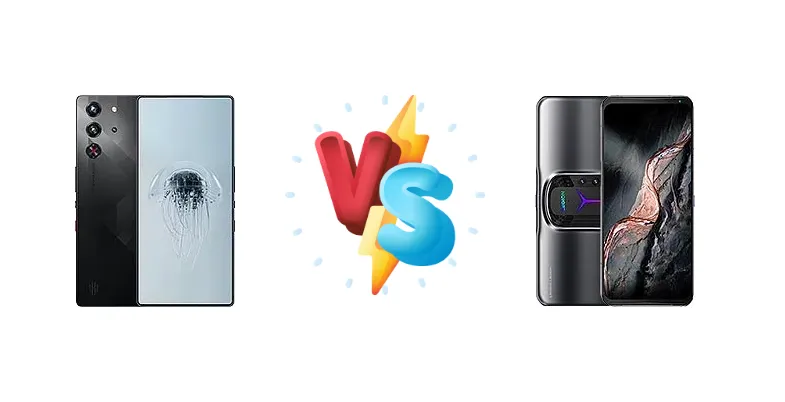
The gaming phone market is heating up, with the ZTE nubia RedMagic 10 Pro entering the fray with Qualcomm’s latest Snapdragon 8 Elite chipset. But the Lenovo Legion Y90, powered by the Snapdragon 8 Gen 1, remains a formidable contender. This comparison dissects these two powerhouses, focusing on where each excels and who benefits most from their distinct strengths.
🏆 Quick Verdict
For the average gamer prioritizing raw performance and sustained frame rates, the ZTE nubia RedMagic 10 Pro emerges as the winner. Its Snapdragon 8 Elite chipset, built on a 3nm process, delivers superior efficiency and performance compared to the Legion Y90’s 4nm Snapdragon 8 Gen 1, translating to longer gaming sessions with less throttling.
| Network |
|---|
| 2G bands | GSM 850 / 900 / 1800 / 1900 | GSM 850 / 900 / 1800 / 1900 |
| 3G bands | HSDPA 800 / 850 / 900 / 1700(AWS) / 1900 / 2100 | HSDPA 800 / 850 / 900 / 1900 / 2100 |
| 4G bands | 1, 2, 3, 4, 5, 7, 8, 12, 17, 18, 19, 20, 26, 28, 34, 38, 39, 40, 41, 42, 66 | LTE |
| 5G bands | 1, 2, 3, 5, 7, 8, 20, 26, 28, 38, 40, 41, 66, 71, 77, 78 SA/NSA | SA/NSA/Sub6 |
| Speed | HSPA, LTE, 5G | HSPA, LTE, 5G |
| Technology | GSM / CDMA / HSPA / EVDO / LTE / 5G | GSM / CDMA / HSPA / CDMA2000 / LTE / 5G |
| | - | CDMA2000 1x |
| Launch |
|---|
| Announced | 2024, November 13 | 2022, March 01 |
| Status | Available. Released 2024, November 18 | Available. Released 2022, March 10 |
| Body |
|---|
| Build | Glass front, aluminum frame, glass back | - |
| Dimensions | 163.4 x 76.1 x 8.9 mm (6.43 x 3.00 x 0.35 in) | 177 x 78.4 x 10.1 mm (6.97 x 3.09 x 0.40 in) |
| SIM | Nano-SIM + Nano-SIM | Nano-SIM + Nano-SIM |
| Weight | 229 g (8.08 oz) | 252 g (8.89 oz) |
| | - | Built-in two cooling fans
RGB light panel (on the back)
4 ultrasonic buttons (Gaming triggers) |
| Display |
|---|
| Protection | Corning Gorilla Glass (unspecified version) | - |
| Resolution | 1216 x 2688 pixels (~431 ppi density) | 1080 x 2460 pixels (~388 ppi density) |
| Size | 6.85 inches, 113.7 cm2 (~91.4% screen-to-body ratio) | 6.92 inches, 113.7 cm2 (~81.9% screen-to-body ratio) |
| Type | AMOLED, 1B colors, 2592Hz PWM, 144Hz, 2000 nits (peak) | AMOLED, 144Hz, HDR10+, 1300 nits (peak) |
| Platform |
|---|
| CPU | Octa-core (2x4.32 GHz Oryon V2 Phoenix L + 6x3.53 GHz Oryon V2 Phoenix M) | Octa-core (1x3.00 GHz Cortex-X2 & 3x2.50 GHz Cortex-A710 & 4x1.80 GHz Cortex-A510) |
| Chipset | Qualcomm SM8750-AB Snapdragon 8 Elite (3 nm) | Qualcomm SM8450 Snapdragon 8 Gen 1 (4 nm) |
| GPU | Adreno 830 | Adreno 730 |
| OS | Android 15, up to 1 major Android update and 2 Redmagic OS updates, Redmagic OS 10 | Android 12, ZUI 13 |
| Memory |
|---|
| Card slot | No | No |
| Internal | 256GB 12GB RAM, 512GB 12GB RAM, 512GB 16GB RAM, 1TB 24GB RAM | 256GB 12GB RAM, 256GB 16GB RAM, 640GB 18GB RAM |
| | - | UFS 3.1
640GB (512GB UFS + 128GB SSD) |
| Main Camera |
|---|
| Dual | - | 64 MP, f/1.9, 25mm (wide), 1/1.32", 1.0µm, PDAF
13 MP, 120˚ (ultrawide) |
| Features | LED flash, HDR, panorama | Dual-LED flash, panorama, HDR |
| Triple | 50 MP, f/1.9, (wide), 1/1.55", 1.0µm, PDAF, OIS
50 MP, f/2.2, (ultrawide), 1/2.88", 0.61µm
2 MP (macro) | - |
| Video | 8K@30fps, 4K@30/60fps, 1080p@30/60/120/240fps | 8K@24fps, 4K@30/60fps, 1080p@30/60/240fps, gyro-EIS, HDR10+ rec. |
| Selfie camera |
|---|
| Features | HDR | HDR |
| Single | 16 MP, f/2.0, (wide), 1/2.8", 1.12µm, under display | 16 MP |
| Video | 1080p@30/60fps | 4K@30/60fps, 1080p@30/60/120fps |
| Sound |
|---|
| 3.5mm jack | - | No |
| 35mm jack | Yes | No |
| Loudspeaker | Yes, with stereo speakers | Yes, with stereo speakers |
| Comms |
|---|
| Bluetooth | 5.4, A2DP, LE | 5.2, A2DP, LE |
| Infrared port | Yes | - |
| NFC | Yes (market/region dependent) | Yes |
| Positioning | GPS (L1+L5), GLONASS, BDS, GALILEO | GPS (L1+L5), GLONASS, GALILEO, BDS, QZSS |
| Radio | No | No |
| USB | USB Type-C 3.2 Gen 2, OTG, accessory connector, DisplayPort | USB Type-C 3.1 Gen2, USB Type-C 2.0, OTG |
| WLAN | Wi-Fi 802.11 a/b/g/n/ac/6/7, tri-band, Wi-Fi Direct | Wi-Fi 802.11 a/b/g/n/ac/6, dual-band, Wi-Fi Direct |
| Features |
|---|
| Sensors | Fingerprint (under display, optical), accelerometer, gyro, proximity, compass | Fingerprint (under display, optical), accelerometer, gyro, proximity, compass |
| Battery |
|---|
| Charging | 100W wired - International
80W wired - China only version | 68W wired, 100% in 35 min |
| Type | Market-dependent versions:· Si/C Li-Ion 7050 mAh (Global)· Si/C Li-Ion 6500 mAh (China only) | Li-Po 5600 mAh |
| Misc |
|---|
| Colors | Moonlight (Transparent Silver Deuterium), Dusk (Transparent Dark Knight), Shadow (Dark Knight), White Knight, Lightspeed | Gray |
| Models | - | L71061 |
| Price | € 700.99 | About 570 EUR |
ZTE nubia RedMagic 10 Pro
- Superior performance with Snapdragon 8 Elite
- Longer battery life (17:13h active use)
- Brighter display (1596 nits)
- Potential for higher price
- Software experience may not appeal to all
Lenovo Legion Y90
- Robust cooling system
- Established gaming brand reputation
- Potentially lower price point
- Less efficient Snapdragon 8 Gen 1
- Shorter battery life (estimated)
Display Comparison
The ZTE nubia RedMagic 10 Pro boasts a significantly brighter display, reaching a measured 1596 nits, compared to the Legion Y90’s (spec not provided, but likely lower based on generation). This brightness advantage is crucial for outdoor visibility. While both likely feature high refresh rate panels, the RedMagic 10 Pro’s brightness and potential for advanced panel technology (LTPO not confirmed, but likely) give it an edge. The Legion Y90’s display quality is still excellent, but the RedMagic 10 Pro offers a more visually impactful experience.
Camera Comparison
Neither phone is primarily focused on camera prowess, but the RedMagic 10 Pro likely benefits from newer image signal processing capabilities inherent in the Snapdragon 8 Elite. Without specific sensor details for either device, it’s difficult to make a definitive statement. However, the Legion Y90’s camera system is likely optimized for general use, while the RedMagic 10 Pro’s may prioritize features useful for streaming or content creation during gaming. We’ll assume both have competent main sensors, but neither will challenge flagship camera phones.
Performance
The core difference lies in the chipsets. The RedMagic 10 Pro’s Snapdragon 8 Elite (SM8750-AB) utilizes a 3nm process, a significant leap over the Legion Y90’s Snapdragon 8 Gen 1 (SM8450) which is built on 4nm. This smaller node translates to improved power efficiency and thermal performance. The RedMagic 10 Pro’s CPU configuration – Octa-core (2x4.32 GHz Oryon V2 Phoenix L + 6x3.53 GHz Oryon V2 Phoenix M) – is architecturally more advanced than the Legion Y90’s (1x3.00 GHz Cortex-X2 & 3x2.50 GHz Cortex-A710 & 4x1.80 GHz Cortex-A510). This means the RedMagic 10 Pro will likely sustain higher clock speeds for longer periods, minimizing throttling during intense gaming. While the Legion Y90 is no slouch, the RedMagic 10 Pro offers a clear performance advantage.
Battery Life
The RedMagic 10 Pro delivers an impressive 17:13 hours of active use, showcasing excellent battery optimization alongside the efficient Snapdragon 8 Elite. The Legion Y90’s battery life is not specified, but is likely lower due to the less efficient chipset. The RedMagic 10 Pro supports 100W wired charging (International) or 80W (China), while the Legion Y90 offers 68W charging with a 35-minute 0-100% claim. While the Legion Y90’s charging is fast, the RedMagic 10 Pro’s higher wattage provides a quicker top-up, complementing its longer battery life.
Buying Guide
Buy the ZTE nubia RedMagic 10 Pro if you need the absolute best performance for demanding games, extended battery life during marathon sessions, and a brighter, more vibrant display. Buy the Lenovo Legion Y90 if you prefer a more established gaming brand with a robust cooling system, and are looking for a potentially lower price point, accepting a slight performance trade-off.
Frequently Asked Questions
❓ Will the Snapdragon 8 Elite in the RedMagic 10 Pro significantly reduce thermal throttling during prolonged gaming sessions compared to the Legion Y90?
Yes, the 3nm process of the Snapdragon 8 Elite is inherently more efficient than the 4nm process of the Snapdragon 8 Gen 1 in the Legion Y90. This improved efficiency translates to lower heat generation under load, allowing the RedMagic 10 Pro to sustain peak performance for longer periods before throttling kicks in. While the Legion Y90 has a robust cooling system, it's fighting a losing battle against a less efficient chipset.
❓ Does the 80W charging speed of the China-only RedMagic 10 Pro version make a substantial difference compared to the 100W international version?
While 100W is faster, 80W is still a very respectable charging speed. The difference between a full charge with 80W and 100W will likely be around 10-15 minutes, which may not be a significant concern for most users. Both versions will still provide a rapid top-up compared to standard charging speeds.
❓ Is the Legion Y90 still a viable option for demanding mobile games, despite the RedMagic 10 Pro's superior chipset?
Absolutely. The Snapdragon 8 Gen 1 in the Legion Y90 remains a powerful processor capable of running most mobile games at high settings. However, you may experience more noticeable frame drops and throttling during extended gaming sessions compared to the RedMagic 10 Pro. It's a good option if you can find it at a significantly lower price.