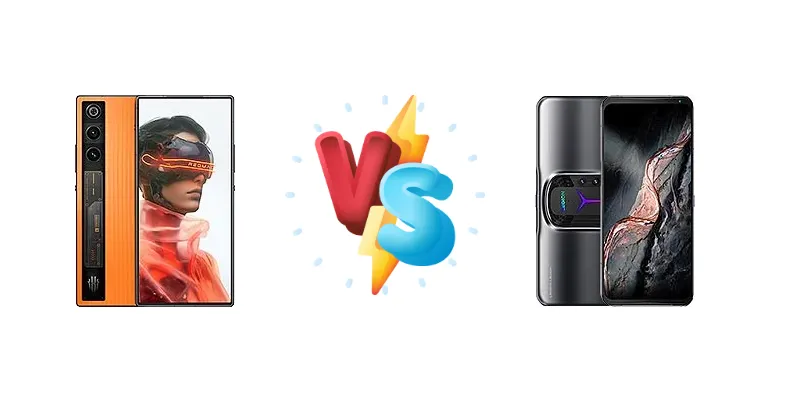
The gaming phone market is heating up, with the ZTE nubia RedMagic 10 Air arriving with the cutting-edge Snapdragon 8 Gen 3. But the Lenovo Legion Y90, while utilizing the older Snapdragon 8 Gen 1, remains a formidable contender thanks to its robust cooling and optimized software. This comparison dissects these two powerhouses to determine which reigns supreme for mobile gamers and power users.
🏆 Quick Verdict
For most users, the ZTE nubia RedMagic 10 Air is the superior choice. Its Snapdragon 8 Gen 3 chipset delivers a significant performance leap over the Legion Y90’s Snapdragon 8 Gen 1, and its impressive 57:57 battery endurance ensures all-day gaming. While the Legion Y90 charges slightly faster, the RedMagic 10 Air’s overall package is more compelling.
| Network |
|---|
| 2G bands | GSM 850 / 900 / 1800 / 1900 | GSM 850 / 900 / 1800 / 1900 |
| 3G bands | HSDPA 800 / 850 / 900 / 1700(AWS) / 1900 / 2100 | HSDPA 800 / 850 / 900 / 1900 / 2100 |
| 4G bands | 1, 2, 3, 4, 5, 7, 8, 12, 17, 18, 19, 20, 26, 28, 34, 38, 39, 40, 41, 42, 66 | LTE |
| 5G bands | 1, 2, 3, 5, 7, 8, 20, 26, 28, 38, 40, 41, 66, 77, 78 SA/NSA | SA/NSA/Sub6 |
| Speed | HSPA, LTE, 5G | HSPA, LTE, 5G |
| Technology | GSM / HSPA / LTE / 5G | GSM / CDMA / HSPA / CDMA2000 / LTE / 5G |
| | - | CDMA2000 1x |
| Launch |
|---|
| Announced | 2025, April 16 | 2022, March 01 |
| Status | Available. Released 2025, April 16 | Available. Released 2022, March 10 |
| Body |
|---|
| Build | Glass front (Gorilla Glass 5), aluminum frame, glass back (Panda Glass 2) | - |
| Dimensions | 164.3 x 76.6 x 7.9 mm (6.47 x 3.02 x 0.31 in) | 177 x 78.4 x 10.1 mm (6.97 x 3.09 x 0.40 in) |
| SIM | Nano-SIM + Nano-SIM | Nano-SIM + Nano-SIM |
| Weight | 205 g (7.23 oz) | 252 g (8.89 oz) |
| | - | Built-in two cooling fans
RGB light panel (on the back)
4 ultrasonic buttons (Gaming triggers) |
| Display |
|---|
| Protection | Corning Gorilla Glass 5, Mohs level 4 | - |
| Resolution | 1116 x 2480 pixels, 20:9 ratio (~400 ppi density) | 1080 x 2460 pixels (~388 ppi density) |
| Size | 6.8 inches, 111.6 cm2 (~88.7% screen-to-body ratio) | 6.92 inches, 113.7 cm2 (~81.9% screen-to-body ratio) |
| Type | AMOLED, 1B colors, 120Hz, 1600 nits (peak) | AMOLED, 144Hz, HDR10+, 1300 nits (peak) |
| Platform |
|---|
| CPU | Octa-core (1x3.3 GHz Cortex-X4 & 3x3.2 GHz Cortex-A720 & 2x3.0 GHz Cortex-A720 & 2x2.3 GHz Cortex-A520) | Octa-core (1x3.00 GHz Cortex-X2 & 3x2.50 GHz Cortex-A710 & 4x1.80 GHz Cortex-A510) |
| Chipset | Qualcomm SM8650-AB Snapdragon 8 Gen 3 (4 nm) | Qualcomm SM8450 Snapdragon 8 Gen 1 (4 nm) |
| GPU | Adreno 750 | Adreno 730 |
| OS | Android 15, up to 3 major Android upgrades, Redmagic OS 10 | Android 12, ZUI 13 |
| Memory |
|---|
| Card slot | No | No |
| Internal | 256GB 12GB RAM, 512GB 16GB RAM | 256GB 12GB RAM, 256GB 16GB RAM, 640GB 18GB RAM |
| | - | UFS 3.1
640GB (512GB UFS + 128GB SSD) |
| Main Camera |
|---|
| Dual | 50 MP, f/1.9, (wide), 1/1.55", 1.0µm, PDAF, OIS
50 MP, f/2.2, (ultrawide), 1/2.88", 0.61µm, AF | 64 MP, f/1.9, 25mm (wide), 1/1.32", 1.0µm, PDAF
13 MP, 120˚ (ultrawide) |
| Features | LED flash, HDR, panorama | Dual-LED flash, panorama, HDR |
| Video | 8K@30fps, 4K@30/60fps, 1080p@30/60/120/240fps | 8K@24fps, 4K@30/60fps, 1080p@30/60/240fps, gyro-EIS, HDR10+ rec. |
| Selfie camera |
|---|
| Features | HDR | HDR |
| Single | 16 MP, f/2.0, (wide), 1/2.77", 1.12µm, under display | 16 MP |
| Video | 1080p@30/60fps | 4K@30/60fps, 1080p@30/60/120fps |
| Sound |
|---|
| 3.5mm jack | - | No |
| 35mm jack | No | No |
| Loudspeaker | Yes, with stereo speakers (DTS X certified) | Yes, with stereo speakers |
| Comms |
|---|
| Bluetooth | 5.4, A2DP, LE | 5.2, A2DP, LE |
| Infrared port | Yes | - |
| NFC | Yes | Yes |
| Positioning | GPS (L1+L2+L5), GLONASS, BDS, GALILEO | GPS (L1+L5), GLONASS, GALILEO, BDS, QZSS |
| Radio | No | No |
| USB | USB Type-C 2.0, OTG | USB Type-C 3.1 Gen2, USB Type-C 2.0, OTG |
| WLAN | Wi-Fi 802.11 a/b/g/n/ac/6/7, dual-band or tri-band, Wi-Fi Direct | Wi-Fi 802.11 a/b/g/n/ac/6, dual-band, Wi-Fi Direct |
| Features |
|---|
| Sensors | Fingerprint (under display, optical), accelerometer, gyro, proximity, compass | Fingerprint (under display, optical), accelerometer, gyro, proximity, compass |
| Battery |
|---|
| Charging | 80W wired, 100% in 52 min | 68W wired, 100% in 35 min |
| Type | 6000 mAh | Li-Po 5600 mAh |
| Misc |
|---|
| Colors | Black Twilight, White Hailstone, Orange Flare | Gray |
| Models | NX779J | L71061 |
| Price | € 449.00 / $ 772.30 / £ 389.00 | About 570 EUR |
| EU LABEL |
|---|
| Battery | 57:57h endurance, 1000 cycles | - |
| Energy | Class B | - |
| Free fall | Class D (45 falls) | - |
| Repairability | Class B | - |
ZTE nubia RedMagic 10 Air
- Significantly faster Snapdragon 8 Gen 3 processor
- Exceptional battery life (57:57 hours endurance)
- High peak display brightness (1023 nits)
- Charging speed is slower than the Legion Y90
- Camera performance likely not a priority
Lenovo Legion Y90
- Faster wired charging (35 minutes to 100%)
- Potentially lower price point
- Robust cooling system for sustained performance
- Older Snapdragon 8 Gen 1 chipset
- Likely shorter battery life compared to RedMagic 10 Air
- Performance gap compared to the latest Snapdragon
Display Comparison
The RedMagic 10 Air boasts a peak brightness of 1023 nits, ensuring excellent visibility even in bright outdoor conditions. While the Legion Y90’s display specs aren’t provided, Lenovo typically prioritizes high refresh rates and color accuracy in its Legion series. The RedMagic 10 Air’s brightness advantage is crucial for HDR gaming and content consumption. The absence of LTPO information for either device means we can’t assess dynamic refresh rate efficiency, but both likely employ adaptive refresh rate technologies to conserve power.
Camera Comparison
Neither device is primarily marketed for its camera capabilities. Without detailed camera specs for the Legion Y90, a direct comparison is limited. However, the focus for both will be on providing acceptable image quality for social media and casual use. Given the gaming focus, image processing will likely prioritize speed over nuanced detail. The absence of information on sensor sizes and OIS makes a definitive judgment impossible, but we can assume both utilize competent, if not exceptional, camera systems.
Performance
The core difference lies in the chipsets: the RedMagic 10 Air’s Snapdragon 8 Gen 3 (4nm) represents a substantial architectural upgrade over the Legion Y90’s Snapdragon 8 Gen 1 (4nm). The Gen 3 features a new Cortex-X4 prime core clocked at 3.3 GHz, compared to the Gen 1’s 3.0 GHz Cortex-X2. This, combined with improved Cortex-A720 cores in the RedMagic, translates to significantly faster CPU and GPU performance. While both are built on a 4nm process, the Gen 3’s architectural enhancements offer better thermal efficiency, potentially leading to less throttling during prolonged gaming. The Legion Y90’s cooling system is a key factor, but it can’t overcome the inherent performance gap.
Battery Life
The RedMagic 10 Air’s battery endurance of 57:57 hours is a standout feature, demonstrating exceptional power efficiency. Its active use score of 13:10 hours further reinforces this. The Legion Y90’s battery data is unavailable, but its Snapdragon 8 Gen 1 is known to be less efficient than the Gen 3. The RedMagic 10 Air’s 80W wired charging (100% in 52 minutes) is competitive, but the Legion Y90’s 68W charging (100% in 35 minutes) is faster. However, the RedMagic 10 Air’s significantly longer battery life mitigates the slower charging speed for most users.
Buying Guide
Buy the ZTE nubia RedMagic 10 Air if you prioritize raw performance, future-proofing, and exceptional battery life for extended gaming sessions. Buy the Lenovo Legion Y90 if you prefer a slightly more mature design, a potentially lower price point (depending on current deals), and a focus on sustained performance through its cooling system, even if it means sacrificing the latest chipset.
Frequently Asked Questions
❓ Will the Snapdragon 8 Gen 1 in the Legion Y90 struggle with demanding games like Genshin Impact at max settings?
While the Snapdragon 8 Gen 1 is capable, it may exhibit more noticeable thermal throttling and frame drops in graphically intensive games like Genshin Impact at maximum settings compared to the RedMagic 10 Air’s Snapdragon 8 Gen 3. The Legion Y90’s cooling system will help, but it can’t fully compensate for the chipset’s limitations.
❓ How does the RedMagic 10 Air’s battery life hold up during extended gaming sessions (3+ hours)?
The RedMagic 10 Air’s 57:57 hour endurance score suggests excellent battery management. During extended gaming, expect a significant drain, but the large capacity and efficient Snapdragon 8 Gen 3 should allow for at least 3-4 hours of continuous gameplay on moderate settings before needing a recharge.
❓ Is the 35-minute charging time of the Legion Y90 a significant advantage over the RedMagic 10 Air’s 52 minutes?
While 17 minutes faster, the difference in charging time is less critical given the RedMagic 10 Air’s substantially longer battery life. Most users will likely charge overnight or during downtime, minimizing the impact of the slower charging speed.