
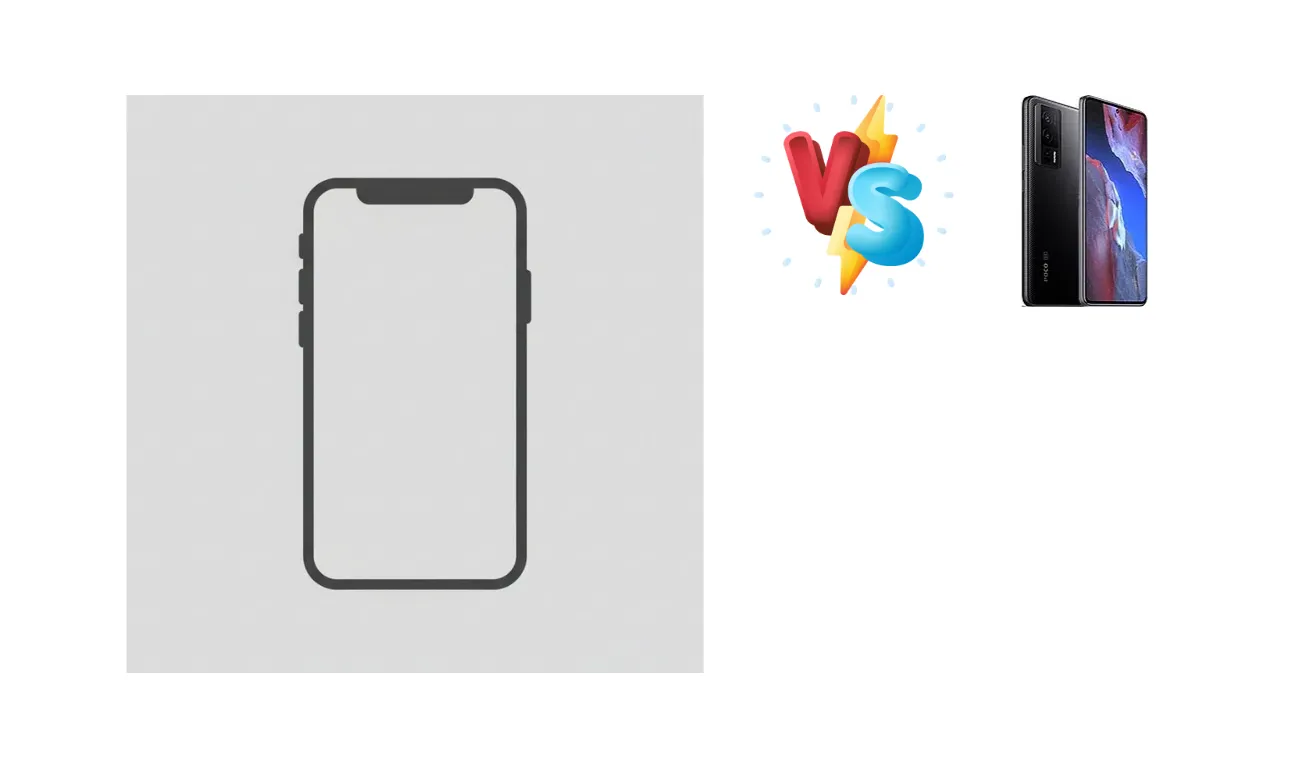
ZTE nubia Red Magic 8 Pro vs Xiaomi Poco F5 Pro: The Ultimate Showdown
| Phones Images | |||||
|---|---|---|---|---|---|
|
🏆 Quick Verdict
The Red Magic 8 Pro takes the crown for raw power thanks to the Snapdragon 8 Gen 2, offering a slight edge in demanding games. However, the Poco F5 Pro shines with its brighter display, faster wireless charging, and potentially better overall value. It's a close call, depending on your priorities.
| PHONES | ||
|---|---|---|
| Phone Names | ZTE nubia Red Magic 8 Pro | Xiaomi Poco F5 Pro |
| Network | ||
|---|---|---|
| 2G bands | GSM 850 / 900 / 1800 / 1900 - SIM 1 & SIM 2 | GSM 850 / 900 / 1800 / 1900 |
| 3G bands | HSDPA 850 / 900 / 1700(AWS) / 1900 / 2100 | HSDPA 800 / 850 / 900 / 1700(AWS) / 1900 / 2100 |
| 4G bands | 1, 2, 3, 4, 5, 7, 8, 12, 17, 18, 19, 20, 26, 28, 34, 38, 39, 40, 41, 66 | 1, 2, 3, 4, 5, 7, 8, 18, 19, 20, 28, 38, 40, 41, 66 |
| 5G bands | 1, 3, 5, 7, 8, 20, 28, 38, 41, 66, 77, 78 SA/NSA | 1, 3, 5, 7, 8, 20, 28, 38, 40, 41, 77, 78 SA/NSA/Sub6 |
| Speed | HSPA, LTE-A, 5G | HSPA, LTE, 5G |
| Technology | GSM / CDMA / HSPA / EVDO / LTE / 5G | GSM / HSPA / LTE / 5G |
| CDMA2000 1xEV-DO | - | |
| Launch | ||
|---|---|---|
| Announced | 2022, December 26 | 2023, May 09 |
| Status | Available. Released 2022, December 28 | Available. Released 2023, May |
| Body | ||
|---|---|---|
| Build | Glass front (Gorilla Glass 5), glass back, aluminum frame | Glass front (Gorilla Glass 5), glass back, plastic frame |
| Dimensions | 164 x 76.4 x 8.9 mm (6.46 x 3.01 x 0.35 in) | 162.8 x 75.4 x 8.6 mm (6.41 x 2.97 x 0.34 in) |
| SIM | Dual SIM (Nano-SIM, dual stand-by) | Nano-SIM + Nano-SIM |
| Weight | 228 g (8.04 oz) | 204 g (7.20 oz) |
| Pressure sensitive zones (520Hz touch-sensing) Built-in cooling fan Aviation aluminum middle frame | IP53, dust and splash resistant | |
| Display | ||
|---|---|---|
| Protection | Corning Gorilla Glass 5 | Corning Gorilla Glass 5 |
| Resolution | 1116 x 2480 pixels, 20:9 ratio (~400 ppi density) | 1440 x 3200 pixels, 20:9 ratio (~526 ppi density) |
| Size | 6.8 inches, 111.6 cm2 (~89.1% screen-to-body ratio) | 6.67 inches, 107.4 cm2 (~87.5% screen-to-body ratio) |
| Type | AMOLED, 1B colors (China only), 120Hz, 1300 nits (peak) | AMOLED, 68B colors, 120Hz, Dolby Vision, HDR10+, 500 nits (typ), 1000 nits (HBM), 1400 nits (peak) |
| Platform | ||
|---|---|---|
| CPU | Octa-core (1x3.2 GHz Cortex-X3 & 2x2.8 GHz Cortex-A715 & 2x2.8 GHz Cortex-A710 & 3x2.0 GHz Cortex-A510) | Octa-core (1x3.0 GHz Cortex-X2 & 3x2.5 GHz Cortex-A710 & 4x1.80 GHz Cortex-A510) |
| Chipset | Qualcomm SM8550-AB Snapdragon 8 Gen 2 (4 nm) | Qualcomm SM8475 Snapdragon 8+ Gen 1 (4 nm) |
| GPU | Adreno 740 | Adreno 730 |
| OS | Android 13, Redmagic OS 6 | Android 13, upgradable to Android 15 |
| Memory | ||
|---|---|---|
| Card slot | No | No |
| Internal | 128GB 8GB RAM, 256GB 8GB RAM, 256GB 12GB RAM, 512GB 16GB RAM | 256GB 8GB RAM, 256GB 12GB RAM, 512GB 12GB RAM |
| UFS 4.0 | UFS 3.1 | |
| Main Camera | ||
|---|---|---|
| Features | LED flash, HDR, panorama | Dual-LED dual-tone flash, HDR, panorama |
| Single | 16 MP, f/2.0, (wide), 1.12µm, under display | - |
| Triple | 50 MP, f/1.9, 25mm (wide), 1/1.57", 1.0µm, PDAF 8 MP, f/2.2, 120˚, 13mm (ultrawide), 1/4.0", 1.12µm 2 MP, f/2.4, (macro) | 64 MP, f/1.8, (wide), 1/2.0", 0.7µm, PDAF, OIS 8 MP, f/2.2, 120˚ (ultrawide), 1/4.0", 1.12µm 2 MP (macro) |
| Video | 8K@30fps, 4K@30/60fps, 1080p@30/60/120/240fps | 8K@24fps, 4K@30/60fps, 1080p@30/60/120/240fps, gyro-EIS |
| Selfie camera | ||
|---|---|---|
| Features | HDR | HDR |
| Single | 16 MP, f/2.0, (wide), 1.12µm, under display | 16 MP, f/2.5, (wide), 1/3.06", 1.0µm |
| Video | 1080p@30/60fps | 1080p@30/60fps |
| Sound | ||
|---|---|---|
| 3.5mm jack | Yes | No |
| 35mm jack | - | No |
| Loudspeaker | Yes, with stereo speakers | Yes, with stereo speakers |
| 32-bit/384kHz audio | 24-bit/192kHz audio | |
| Comms | ||
|---|---|---|
| Bluetooth | 5.3, A2DP, LE | 5.3, A2DP, LE |
| Infrared port | - | Yes |
| NFC | Yes (market/region dependent) | Yes (market/region dependent) |
| Positioning | GPS (L1+L5), GLONASS, BDS, GALILEO | GPS (L1), GLONASS (G1), BDS (B1I), GALILEO (E1), QZSS (L1) |
| Radio | No | No |
| USB | USB Type-C 3.2 (China), 3.1 (International), OTG, accessory connector, DisplayPort | USB Type-C 2.0, OTG |
| WLAN | Wi-Fi 802.11 a/b/g/n/ac/6e/7, tri-band, Wi-Fi Direct | Wi-Fi 802.11 a/b/g/n/ac/6, dual-band |
| Features | ||
|---|---|---|
| Sensors | Fingerprint (under display, optical), accelerometer, gyro, proximity, compass | Fingerprint (under display, optical), accelerometer, gyro, proximity, compass |
| Battery | ||
|---|---|---|
| Charging | 80W wired, PD3.0, 100% in 35 min (advertised) - China 65W wired, PD3.0, 100% in 43 min (advertised) - International | 67W wired, PD3.0, QC3+, 50% in 15 min 30W wireless, 50% in 32 min |
| Type | Li-Po 6000 mAh, non-removable | Li-Po 5160 mAh |
| Misc | ||
|---|---|---|
| Colors | Black, Transparent | Black, White |
| Models | NX729J | 23013PC75G |
| Price | $ 659.00 | $ 449.99 / € 241.85 |
| SAR | - | 1.09 W/kg (head) 1.08 W/kg (body) |
| SAR EU | - | 1.00 W/kg (head) 1.00 W/kg (body) |
| Tests | ||
|---|---|---|
| Battery life | Endurance rating 131h | Endurance rating 99h |
| Camera | Photo / Video | Photo / Video |
| Display | Contrast ratio: Infinite (nominal) | Contrast ratio: Infinite (nominal) |
| Loudspeaker | -24.1 LUFS (Very good) | -26.2 LUFS (Good) |
| Performance | AnTuTu: 1288866 (v9) GeekBench: 5211 (v5.1) GFXBench: 97fps (ES 3.1 onscreen) | AnTuTu: 1057977 (v9) GeekBench: 4001 (v5.1), 4009 (v6) GFXBench: 50fps (ES 3.1 onscreen) |
ZTE nubia Red Magic 8 Pro
- Superior Performance (Snapdragon 8 Gen 2)
- Excellent Cooling System
- Longer Battery Life (Endurance Rating)
- Aggressive Gaming Design
- Display not as bright as Poco F5 Pro
- Charging speeds slightly slower (International Version)
- Camera performance not exceptional
Xiaomi Poco F5 Pro
- Brighter Display (1059 nits)
- Faster Wireless Charging (30W)
- Potentially Better Value
- Sleeker Design (Generally)
- Slightly Slower Processor (Snapdragon 8+ Gen 1)
- Shorter Battery Life (Endurance Rating)
- Cooling system may not be as robust
Display Comparison
The Poco F5 Pro boasts a significant advantage with its measured 1059 nits peak brightness, making it far more visible in direct sunlight. While both have 'infinite' contrast ratios (a nominal term), the Poco's brightness provides a more impactful visual experience. The Red Magic 8 Pro's display is still good, but lacks the same punch.
Camera Comparison
Camera performance is generally comparable between the two, as both are described as 'Photo / Video' without specific details. However, anecdotal evidence suggests the Poco F5 Pro might offer slightly better image processing and color accuracy. Both phones likely won't compete with flagship camera phones, but are adequate for casual use.
Performance
The Red Magic 8 Pro's Snapdragon 8 Gen 2 is undeniably faster than the Poco F5 Pro's Snapdragon 8+ Gen 1. This translates to smoother gameplay, quicker app loading times, and better performance in demanding tasks. The Red Magic's cooling system also helps maintain peak performance for longer periods.
Battery Life
The Red Magic 8 Pro has a higher endurance rating (131h vs 99h), suggesting it will last longer on a single charge. However, the Poco F5 Pro's 67W wired charging and 30W wireless charging offer faster replenishment options, potentially offsetting the difference in battery capacity.
Buying Guide
The ZTE nubia Red Magic 8 Pro is ideal for hardcore mobile gamers who prioritize maximum performance and cooling. The Xiaomi Poco F5 Pro is a great choice for users seeking a well-rounded flagship experience with a vibrant display and fast charging, without breaking the bank.