
ZTE nubia Red Magic 8 Pro vs Xiaomi Black Shark 5 Pro: The Ultimate Gaming Phone Battle
| Phones Images | |||||
|---|---|---|---|---|---|
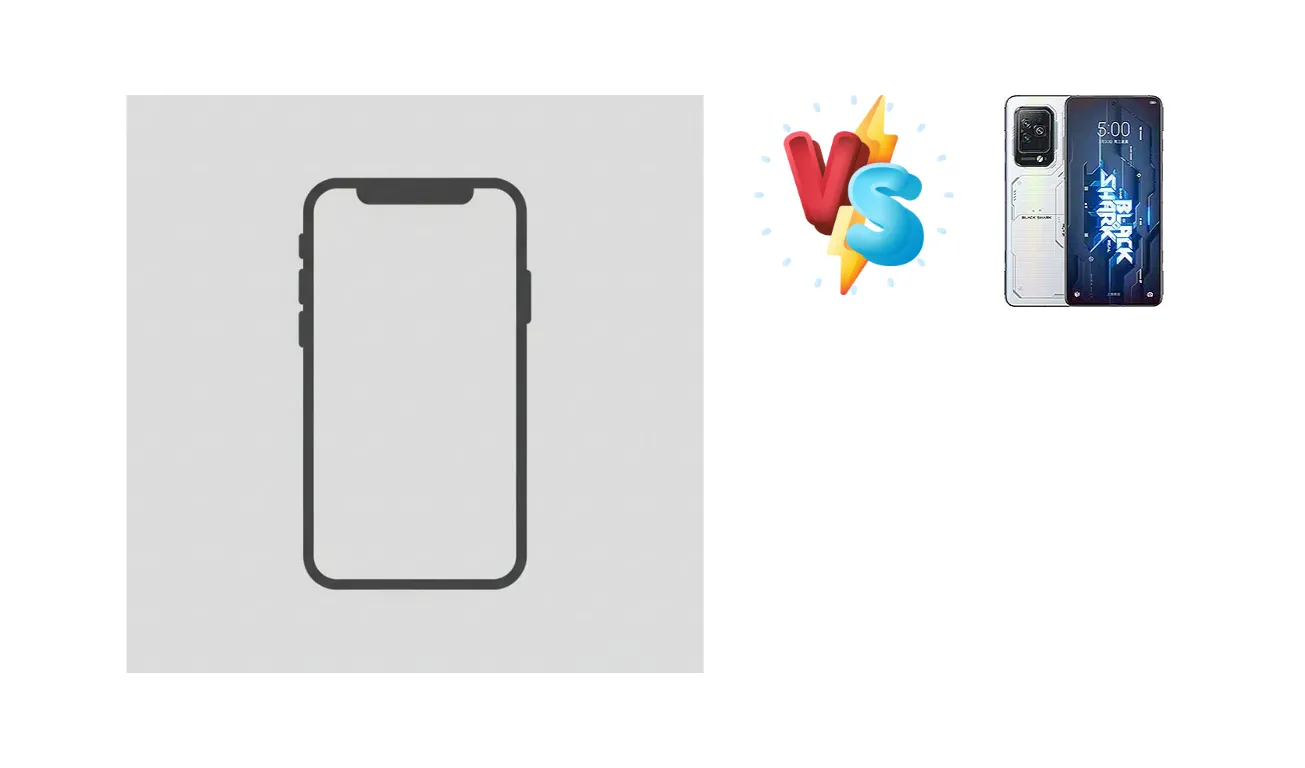
|
🏆 Quick Verdict
The Red Magic 8 Pro takes the crown thanks to its superior Snapdragon 8 Gen 2 chipset, faster charging (in China), and significantly better battery life. While the Black Shark 5 Pro boasts incredibly fast 120W charging, the Red Magic 8 Pro's overall package is more compelling for serious gamers.
| PHONES | ||
|---|---|---|
| Phone Names | ZTE nubia Red Magic 8 Pro | Xiaomi Black Shark 5 Pro |
| Network | ||
|---|---|---|
| 2G bands | GSM 850 / 900 / 1800 / 1900 - SIM 1 & SIM 2 | GSM 850 / 900 / 1800 / 1900 |
| 3G bands | HSDPA 850 / 900 / 1700(AWS) / 1900 / 2100 | HSDPA 800 / 850 / 900 / 1700(AWS) / 1900 / 2100 |
| 4G bands | 1, 2, 3, 4, 5, 7, 8, 12, 17, 18, 19, 20, 26, 28, 34, 38, 39, 40, 41, 66 | 1, 2, 3, 4, 5, 7, 8, 12, 17, 18, 19, 26, 28, 34, 38, 39, 40, 41 |
| 5G bands | 1, 3, 5, 7, 8, 20, 28, 38, 41, 66, 77, 78 SA/NSA | 1, 3, 8, 28, 41, 77, 78, 79 SA/NSA |
| Speed | HSPA, LTE-A, 5G | HSPA, LTE, 5G |
| Technology | GSM / CDMA / HSPA / EVDO / LTE / 5G | GSM / CDMA / HSPA / EVDO / LTE / 5G |
| CDMA2000 1xEV-DO | - | |
| Launch | ||
|---|---|---|
| Announced | 2022, December 26 | 2022, March 30 |
| Status | Available. Released 2022, December 28 | Available. Released 2022, April 04 |
| Body | ||
|---|---|---|
| Build | Glass front (Gorilla Glass 5), glass back, aluminum frame | - |
| Dimensions | 164 x 76.4 x 8.9 mm (6.46 x 3.01 x 0.35 in) | 163.9 x 76.5 x 9.5 mm (6.45 x 3.01 x 0.37 in) |
| SIM | Dual SIM (Nano-SIM, dual stand-by) | Nano-SIM + Nano-SIM |
| Weight | 228 g (8.04 oz) | 220 g (7.76 oz) |
| Pressure sensitive zones (520Hz touch-sensing) Built-in cooling fan Aviation aluminum middle frame | - | |
| Display | ||
|---|---|---|
| Protection | Corning Gorilla Glass 5 | - |
| Resolution | 1116 x 2480 pixels, 20:9 ratio (~400 ppi density) | 1080 x 2400 pixels, 20:9 ratio (~395 ppi density) |
| Size | 6.8 inches, 111.6 cm2 (~89.1% screen-to-body ratio) | 6.67 inches, 107.4 cm2 (~85.7% screen-to-body ratio) |
| Type | AMOLED, 1B colors (China only), 120Hz, 1300 nits (peak) | OLED, 1B colors, 144Hz, HDR10+ |
| Platform | ||
|---|---|---|
| CPU | Octa-core (1x3.2 GHz Cortex-X3 & 2x2.8 GHz Cortex-A715 & 2x2.8 GHz Cortex-A710 & 3x2.0 GHz Cortex-A510) | Octa-core (1x3.00 GHz Cortex-X2 & 3x2.50 GHz Cortex-A710 & 4x1.80 GHz Cortex-A510) |
| Chipset | Qualcomm SM8550-AB Snapdragon 8 Gen 2 (4 nm) | Qualcomm SM8450 Snapdragon 8 Gen 1 (4 nm) |
| GPU | Adreno 740 | Adreno 730 |
| OS | Android 13, Redmagic OS 6 | Android 12, Joy UI 13 |
| Memory | ||
|---|---|---|
| Card slot | No | No |
| Internal | 128GB 8GB RAM, 256GB 8GB RAM, 256GB 12GB RAM, 512GB 16GB RAM | 128GB 8GB RAM, 256GB 8GB RAM, 256GB 12GB RAM, 512GB 16GB RAM |
| UFS 4.0 | - | |
| Main Camera | ||
|---|---|---|
| Features | LED flash, HDR, panorama | LED flash, HDR, panorama |
| Single | 16 MP, f/2.0, (wide), 1.12µm, under display | 16 MP, (wide), 1/3.06", 1.0µm |
| Triple | 50 MP, f/1.9, 25mm (wide), 1/1.57", 1.0µm, PDAF 8 MP, f/2.2, 120˚, 13mm (ultrawide), 1/4.0", 1.12µm 2 MP, f/2.4, (macro) | 108 MP, f/1.8, (wide), 1/1.52", 0.7µm, PDAF 13 MP, f/2.4, 120˚ (ultrawide), 1/3.06", 1.12µm 5 MP, f/2.4, (telephoto macro), AF |
| Video | 8K@30fps, 4K@30/60fps, 1080p@30/60/120/240fps | 4K@30/60fps, 1080p@30/60/240fps, 1080p@960fps; HDR10+ |
| Selfie camera | ||
|---|---|---|
| Features | HDR | HDR |
| Single | 16 MP, f/2.0, (wide), 1.12µm, under display | 16 MP, (wide), 1/3.06", 1.0µm |
| Video | 1080p@30/60fps | 1080p@30fps |
| Sound | ||
|---|---|---|
| 3.5mm jack | Yes | No |
| 35mm jack | - | No |
| Loudspeaker | Yes, with stereo speakers | Yes, with stereo speakers |
| 32-bit/384kHz audio | - | |
| Comms | ||
|---|---|---|
| Bluetooth | 5.3, A2DP, LE | 5.2, A2DP, LE, aptX HD, aptX Adaptive |
| NFC | Yes (market/region dependent) | Yes |
| Positioning | GPS (L1+L5), GLONASS, BDS, GALILEO | GPS, GLONASS, GALILEO, QZSS, BDS |
| Radio | No | No |
| USB | USB Type-C 3.2 (China), 3.1 (International), OTG, accessory connector, DisplayPort | USB Type-C 2.0, video output |
| WLAN | Wi-Fi 802.11 a/b/g/n/ac/6e/7, tri-band, Wi-Fi Direct | Wi-Fi 802.11 a/b/g/n/ac/6, dual-band, Wi-Fi Direct |
| Features | ||
|---|---|---|
| Sensors | Fingerprint (under display, optical), accelerometer, gyro, proximity, compass | Fingerprint (side-mounted), accelerometer, gyro, proximity, compass, barometer (China only) |
| Battery | ||
|---|---|---|
| Charging | 80W wired, PD3.0, 100% in 35 min (advertised) - China 65W wired, PD3.0, 100% in 43 min (advertised) - International | 120W wired, 100% in 15 min |
| Type | Li-Po 6000 mAh, non-removable | Li-Po 4650 mAh |
| Misc | ||
|---|---|---|
| Colors | Black, Transparent | Black, White |
| Models | NX729J | SHARK KTUS-H0 |
| Price | $ 659.00 | About 720 EUR |
| Tests | ||
|---|---|---|
| Battery life | Endurance rating 131h | Endurance rating 83h |
| Camera | Photo / Video | Photo / Video |
| Display | Contrast ratio: Infinite (nominal) | Contrast ratio: Infinite (nominal) |
| Loudspeaker | -24.1 LUFS (Very good) | - |
| Performance | AnTuTu: 1288866 (v9) GeekBench: 5211 (v5.1) GFXBench: 97fps (ES 3.1 onscreen) | AnTuTu: 876704 (v8), 1007133 (v9) GeekBench: 3665 (v5.1) GFXBench: 82fps (ES 3.1 onscreen) |
ZTE nubia Red Magic 8 Pro
- Superior Snapdragon 8 Gen 2 Chipset
- Exceptional Battery Life (131h Endurance)
- Faster Charging (80W/65W)
- Advanced Cooling System (likely)
- Potentially better thermal management
- Camera performance likely average
- International charging speed slower (65W)
- Design may be polarizing
Xiaomi Black Shark 5 Pro
- Incredibly Fast 120W Charging
- More Compact Design (potentially)
- Good Performance (Snapdragon 8 Gen 1)
- Lower Battery Life (83h Endurance)
- Snapdragon 8 Gen 1 known for thermal throttling
- Camera performance likely average
Display Comparison
Both phones feature displays with a nominal infinite contrast ratio, suggesting excellent blacks. However, the Black Shark 5 Pro has a measured peak brightness of 682 nits, which is a significant advantage for outdoor visibility. The Red Magic 8 Pro's display, while likely vibrant, lacks a brightness specification for direct comparison. Both likely offer high refresh rates for smooth gameplay.
Camera Comparison
Camera details are sparse for both devices, simply listed as 'Photo / Video'. Based on general knowledge, neither phone is expected to excel in photography compared to flagship devices focused on camera quality. Both likely offer adequate camera performance for casual use, but shouldn't be considered primary camera phones.
Performance
The Red Magic 8 Pro's Snapdragon 8 Gen 2 is a clear winner here. The Gen 2 offers a substantial performance boost over the Black Shark 5 Pro's Snapdragon 8 Gen 1, resulting in smoother gameplay, faster app loading times, and improved multitasking. The Gen 1 was known to have thermal throttling issues, which the Gen 2 addresses.
Battery Life
The Red Magic 8 Pro boasts a significantly better endurance rating (131h) compared to the Black Shark 5 Pro (83h). This translates to considerably longer gaming sessions and overall usage time. While the Black Shark 5 Pro's 120W charging is incredibly fast, the Red Magic 8 Pro's larger battery and improved efficiency provide a more sustainable gaming experience.
Buying Guide
The ZTE nubia Red Magic 8 Pro is ideal for hardcore mobile gamers who prioritize raw performance, long battery life, and advanced cooling solutions. The Xiaomi Black Shark 5 Pro is a good choice for those who value extremely fast charging and a more compact design, but are willing to compromise on battery endurance.