
ZTE nubia Red Magic 7 vs Xiaomi Black Shark 5 Pro: The Ultimate Gaming Phone Battle
| Phones Images | |||||
|---|---|---|---|---|---|
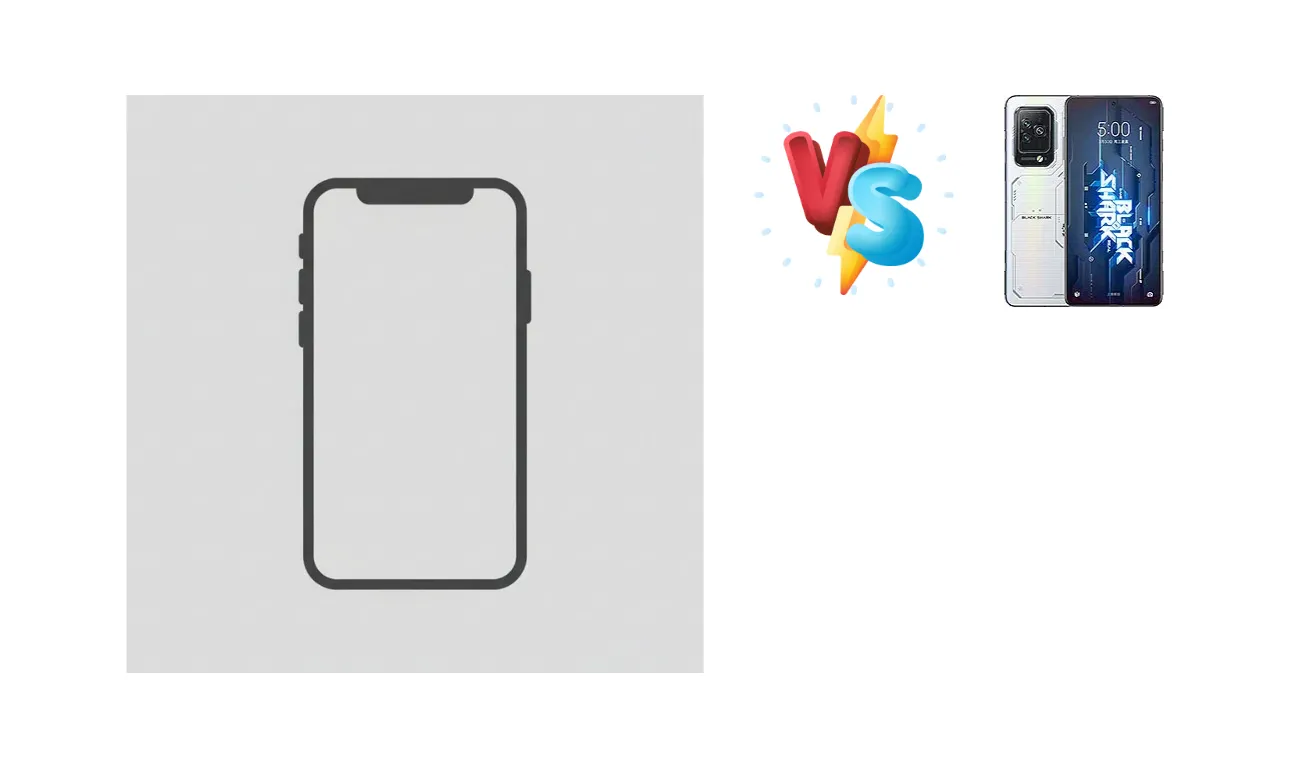
|
🏆 Quick Verdict
The Red Magic 7 edges out the Black Shark 5 Pro thanks to its significantly faster charging (especially in the Chinese variant) and slightly better endurance rating. Both offer top-tier performance, but the Red Magic 7's cooling system and charging speed give it a slight advantage for serious gamers.
| PHONES | ||
|---|---|---|
| Phone Names | ZTE nubia Red Magic 7 | Xiaomi Black Shark 5 Pro |
| Network | ||
|---|---|---|
| 2G bands | GSM 850 / 900 / 1800 / 1900 - SIM 1 & SIM 2 | GSM 850 / 900 / 1800 / 1900 |
| 3G bands | HSDPA 800 / 850 / 900 / 1700(AWS) / 1900 / 2100 | HSDPA 800 / 850 / 900 / 1700(AWS) / 1900 / 2100 |
| 4G bands | 1, 2, 3, 4, 5, 7, 8, 12, 17, 18, 19, 20, 26, 28, 34, 38, 39, 40, 41, 66 | 1, 2, 3, 4, 5, 7, 8, 12, 17, 18, 19, 26, 28, 34, 38, 39, 40, 41 |
| 5G bands | 1, 3, 5, 7, 8, 20, 28, 38, 41, 77, 78 SA/NSA | 1, 3, 8, 28, 41, 77, 78, 79 SA/NSA |
| Speed | HSPA, LTE-A, 5G | HSPA, LTE, 5G |
| Technology | GSM / CDMA / HSPA / EVDO / LTE / 5G | GSM / CDMA / HSPA / EVDO / LTE / 5G |
| CDMA2000 1xEV-DO | - | |
| Launch | ||
|---|---|---|
| Announced | 2022, February 17 | 2022, March 30 |
| Status | Available. Released 2022, February 21 | Available. Released 2022, April 04 |
| Body | ||
|---|---|---|
| Build | Glass front, glass back, aluminum frame | - |
| Dimensions | 170.6 x 78.3 x 9.5 mm (6.72 x 3.08 x 0.37 in) | 163.9 x 76.5 x 9.5 mm (6.45 x 3.01 x 0.37 in) |
| SIM | Dual SIM (Nano-SIM, dual stand-by) | Nano-SIM + Nano-SIM |
| Weight | 215 g (7.58 oz) | 220 g (7.76 oz) |
| Pressure sensitive zones (500Hz touch-sensing) Built-in cooling fan Aviation aluminum middle frame | - | |
| Display | ||
|---|---|---|
| Protection | Corning Gorilla Glass 5 | - |
| Resolution | 1080 x 2400 pixels, 20:9 ratio (~387 ppi density) | 1080 x 2400 pixels, 20:9 ratio (~395 ppi density) |
| Size | 6.8 inches, 111.6 cm2 (~83.6% screen-to-body ratio) | 6.67 inches, 107.4 cm2 (~85.7% screen-to-body ratio) |
| Type | AMOLED, 1B colors (China only), 165Hz, 700 nits (typ) | OLED, 1B colors, 144Hz, HDR10+ |
| Platform | ||
|---|---|---|
| CPU | Octa-core (1x3.00 GHz Cortex-X2 & 3x2.50 GHz Cortex-A710 & 4x1.80 GHz Cortex-A510) | Octa-core (1x3.00 GHz Cortex-X2 & 3x2.50 GHz Cortex-A710 & 4x1.80 GHz Cortex-A510) |
| Chipset | Qualcomm SM8450 Snapdragon 8 Gen 1 (4 nm) | Qualcomm SM8450 Snapdragon 8 Gen 1 (4 nm) |
| GPU | Adreno 730 | Adreno 730 |
| OS | Android 12, Redmagic 5.0 | Android 12, Joy UI 13 |
| Memory | ||
|---|---|---|
| Card slot | No | No |
| Internal | 128GB 8GB RAM, 128GB 12GB RAM, 256GB 12GB RAM, 256GB 16GB RAM, 256GB 18GB RAM, 512GB 16GB RAM | 128GB 8GB RAM, 256GB 8GB RAM, 256GB 12GB RAM, 512GB 16GB RAM |
| UFS 3.1 | - | |
| Main Camera | ||
|---|---|---|
| Features | LED flash, HDR, panorama | LED flash, HDR, panorama |
| Single | 8 MP, f/2.0, (wide), 1/4.0", 1.12µm | 16 MP, (wide), 1/3.06", 1.0µm |
| Triple | 64 MP, f/1.8, 26mm (wide), 1/1.97", 0.7µm, PDAF 8 MP, f/2.0, 120˚, 13mm (ultrawide), 1/4.0", 1.12µm 2 MP, f/2.4, (macro) | 108 MP, f/1.8, (wide), 1/1.52", 0.7µm, PDAF 13 MP, f/2.4, 120˚ (ultrawide), 1/3.06", 1.12µm 5 MP, f/2.4, (telephoto macro), AF |
| Video | 8K@30fps, 4K@30/60fps, 1080p@30/60/120/240fps | 4K@30/60fps, 1080p@30/60/240fps, 1080p@960fps; HDR10+ |
| Selfie camera | ||
|---|---|---|
| Features | HDR | HDR |
| Single | 8 MP, f/2.0, (wide), 1/4.0", 1.12µm | 16 MP, (wide), 1/3.06", 1.0µm |
| Video | 1080p@30fps | 1080p@30fps |
| Sound | ||
|---|---|---|
| 3.5mm jack | Yes | No |
| 35mm jack | - | No |
| Loudspeaker | Yes, with stereo speakers | Yes, with stereo speakers |
| 32-bit/384kHz audio | - | |
| Comms | ||
|---|---|---|
| Bluetooth | 5.2, A2DP, aptX, LE | 5.2, A2DP, LE, aptX HD, aptX Adaptive |
| NFC | Yes | Yes |
| Positioning | GPS (L1+L5), GLONASS, BDS, GALILEO | GPS, GLONASS, GALILEO, QZSS, BDS |
| Radio | No | No |
| USB | USB Type-C 3.0, OTG, accessory connector | USB Type-C 2.0, video output |
| WLAN | Wi-Fi 802.11 a/b/g/n/ac/6e, dual-band, Wi-Fi Direct | Wi-Fi 802.11 a/b/g/n/ac/6, dual-band, Wi-Fi Direct |
| Features | ||
|---|---|---|
| Sensors | Fingerprint (under display, optical), accelerometer, gyro, proximity, compass | Fingerprint (side-mounted), accelerometer, gyro, proximity, compass, barometer (China only) |
| Battery | ||
|---|---|---|
| Charging | 120W wired, PD3.0, 100% in 17 min (China) 65W wired, PD3.0 (International) | 120W wired, 100% in 15 min |
| Type | Li-Po 4500 mAh, non-removable | Li-Po 4650 mAh |
| Misc | ||
|---|---|---|
| Colors | Obsidian, Pulsar, Supernova | Black, White |
| Models | NX679J | SHARK KTUS-H0 |
| Price | About 630 EUR | About 720 EUR |
| Tests | ||
|---|---|---|
| Battery life | Endurance rating 89h | Endurance rating 83h |
| Camera | Photo / Video | Photo / Video |
| Display | Contrast ratio: Infinite (nominal) | Contrast ratio: Infinite (nominal) |
| Loudspeaker | -22.7 LUFS (Excellent) | - |
| Performance | AnTuTu: 1056488 (v9) GeekBench: 3855(v5.1) GFXBench: 77fps (ES 3.1 onscreen) | AnTuTu: 876704 (v8), 1007133 (v9) GeekBench: 3665 (v5.1) GFXBench: 82fps (ES 3.1 onscreen) |
ZTE nubia Red Magic 7
- Blazing-fast 120W charging (China version)
- Excellent cooling system
- High endurance rating
- Dedicated gaming features (shoulder triggers)
- Camera performance is average
- Design can be polarizing
- International version has slower charging (65W)
Xiaomi Black Shark 5 Pro
- Bright display (682 nits)
- Sleek design
- Fast charging (120W)
- Potentially better software support
- Slightly lower endurance rating
- Cooling system may not be as effective as Red Magic 7
- Gaming-focused design might not appeal to everyone
Display Comparison
Both phones feature AMOLED displays with a nominal infinite contrast ratio, offering vibrant colors and deep blacks. However, the Black Shark 5 Pro boasts a measured peak brightness of 682 nits, which is noticeably brighter than the Red Magic 7, making it easier to see in direct sunlight. The Red Magic 7's display is excellent, but the Black Shark 5 Pro has a slight edge in outdoor visibility.
Camera Comparison
Camera performance is a secondary consideration for most gaming phone buyers. Both phones feature standard camera setups, but neither is a standout in the photography department. Image quality is generally good, but don't expect flagship-level camera capabilities. The Black Shark 5 Pro might have slightly better image processing due to Xiaomi's software expertise.
Performance
Both devices are powered by the Qualcomm Snapdragon 8 Gen 1, ensuring blazing-fast performance for demanding games and applications. While both offer similar CPU configurations, the Red Magic 7's advanced cooling system likely allows it to maintain peak performance for longer periods without throttling. Real-world gaming performance should be very close, but the Red Magic 7's cooling could be a deciding factor in extended gaming sessions.
Battery Life
The Red Magic 7 boasts an endurance rating of 89 hours, slightly surpassing the Black Shark 5 Pro's 83 hours. However, the Red Magic 7's 120W wired charging (in China) is a game-changer, allowing for incredibly fast charging times (17 minutes to 100%). The international version of the Red Magic 7 has a 65W charger, still faster than the Black Shark 5 Pro's 120W, which charges in 15 minutes.
Buying Guide
The ZTE nubia Red Magic 7 is ideal for hardcore gamers who prioritize charging speed, sustained performance under load, and a dedicated gaming ecosystem. The Xiaomi Black Shark 5 Pro is a great choice for gamers who want a more balanced device with a slightly more refined design and potentially better software support, though it sacrifices some charging speed.