
ZTE nubia Red Magic 6s vs. Xiaomi Mi 11 Ultra: A Deep Dive into Gaming and Photography
| Phones Images | |||||
|---|---|---|---|---|---|
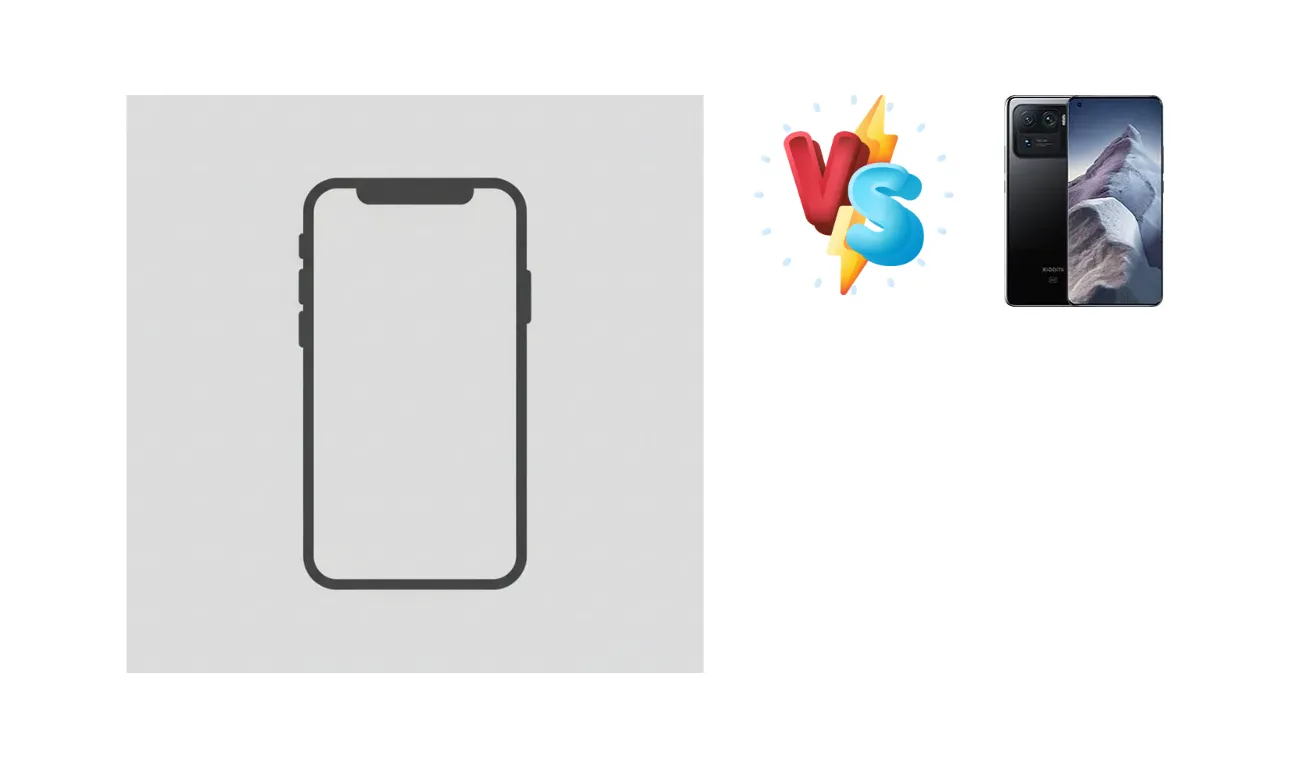
|
🏆 Quick Verdict
For the average user, the Xiaomi Mi 11 Ultra emerges as the more versatile choice. Its exceptional camera, fast charging (67W wired and wireless), and solid battery life offer a well-rounded experience. However, dedicated mobile gamers will find the Red Magic 6s’s Snapdragon 888+ and gaming-focused features a compelling alternative.
| PHONES | ||
|---|---|---|
| Phone Names | ZTE nubia Red Magic 6s | Xiaomi Mi 11 Ultra |
| Network | ||
|---|---|---|
| 2G bands | GSM 850 / 900 / 1800 / 1900 - SIM 1 & SIM 2 | GSM 850 / 900 / 1800 / 1900 |
| 3G bands | HSDPA 850 / 900 / 1700(AWS) / 1900 / 2100 | HSDPA 850 / 900 / 1700(AWS) / 1900 / 2100 |
| 4G bands | LTE | 1, 2, 3, 4, 5, 7, 8, 12, 17, 20, 28, 32, 38, 40, 41, 42, 66 - International |
| 5G bands | SA/NSA | 1, 3, 5, 7, 8, 20, 28, 38, 40, 41, 77, 78, 79 SA/NSA - International |
| Speed | HSPA, LTE-A, 5G | HSPA, LTE, 5G |
| Technology | GSM / CDMA / HSPA / EVDO / LTE / 5G | GSM / CDMA / HSPA / EVDO / LTE / 5G |
| CDMA2000 1xEV-DO | 1, 3, 28, 41, 77, 78, 79 SA/NSA - China | |
| Launch | ||
|---|---|---|
| Announced | 2021, September 06 | 2021, March 29 |
| Status | Available. Released 2021, September 27 | Available. Released 2021, April 02 |
| Body | ||
|---|---|---|
| Build | Glass front, glass back, aluminum frame | Glass front (Gorilla Glass Victus), ceramic back, aluminum frame |
| Dimensions | 169.9 x 77.2 x 9.5 mm (6.69 x 3.04 x 0.37 in) | 164.3 x 74.6 x 8.4 mm (6.47 x 2.94 x 0.33 in) |
| SIM | Dual SIM (Nano-SIM, dual stand-by) | Nano-SIM + Nano-SIM |
| Weight | 215 g (7.58 oz) | 234 g (8.25 oz) |
| Pressure sensitive zones (450Hz touch-sensing) Sliding trigger on the back Built-in cooling fan RGB Light | IP68 dust/water resistant (up to 1.5m for 30 min) | |
| Display | ||
|---|---|---|
| Protection | Corning Gorilla Glass | Corning Gorilla Glass Victus |
| Resolution | 1080 x 2400 pixels, 20:9 ratio (~387 ppi density) | 1440 x 3200 pixels, 20:9 ratio (~515 ppi density) |
| Size | 6.8 inches, 111.6 cm2 (~85.1% screen-to-body ratio) | 6.81 inches, 112.0 cm2 (~91.4% screen-to-body ratio) |
| Type | AMOLED, 165Hz, 700 nits (typ) | AMOLED, 1B colors, 120Hz, HDR10+, Dolby Vision, 900 nits (HBM), 1700 nits (peak) |
| Platform | ||
|---|---|---|
| CPU | Octa-core (1x3.0 GHz Cortex-X1 & 3x2.42 GHz Cortex-A78 & 4x1.80 GHz Cortex-A55) | Octa-core (1x2.84 GHz Cortex-X1 & 3x2.42 GHz Cortex-A78 & 4x1.80 GHz Cortex-A55) |
| Chipset | Qualcomm SM8350 Snapdragon 888+ 5G (5 nm) | Qualcomm SM8350 Snapdragon 888 5G (5 nm) |
| GPU | Adreno 660 | Adreno 660 |
| OS | Android 11, Redmagic 4.5 | Android 11, upgradable to Android 13, MIUI 14 |
| Memory | ||
|---|---|---|
| Card slot | No | No |
| Internal | 128GB 12GB RAM, 256GB 12GB RAM, 256GB 16GB RAM | 256GB 8GB RAM, 256GB 12GB RAM, 512GB 12GB RAM |
| UFS 3.1 | UFS 3.1 | |
| Main Camera | ||
|---|---|---|
| Features | LED flash, HDR, panorama | Laser AF, color spectrum sensor, Dual-LED flash, HDR, panorama, 1.1” AMOLED selfie display |
| Single | 8 MP, f/2.0, (wide), 1/4.0", 1.12µm | 20 MP, f/2.2, 27mm (wide), 1/3.4", 0.8µm |
| Triple | 64 MP, f/1.8, 26mm (wide), 1/1.97", 0.7µm, PDAF 8 MP, f/2.0, 120˚, 13mm (ultrawide), 1/4.0", 1.12µm 2 MP, (macro) | 50 MP, f/2.0, 24mm (wide), 1/1.12", 1.4µm, dual pixel PDAF, OIS 48 MP, f/4.1, 120mm (periscope telephoto), 1/2.0", 0.8µm, PDAF, OIS, 5x optical zoom 48 MP, f/2.2, 12mm, 128˚ (ultrawide), 1/2.0", 0.8µm, PDAF |
| Video | 8K@30fps, 4K@30/60fps, 1080p@30/60/120/240fps | 8K@24fps, 4K@30/60fps, 1080p@30/60/120/240/960/1920fps, gyro-EIS, HDR10+ rec. |
| Selfie camera | ||
|---|---|---|
| Features | HDR | HDR, panorama |
| Single | 8 MP, f/2.0, (wide), 1/4.0", 1.12µm | 20 MP, f/2.2, 27mm (wide), 1/3.4", 0.8µm |
| Video | 1080p@30fps | 1080p@30/60fps, 720p@120fps, gyro-EIS |
| Sound | ||
|---|---|---|
| 3.5mm jack | Yes | No |
| 35mm jack | - | No |
| Loudspeaker | Yes, with stereo speakers | Yes, with stereo speakers |
| 32-bit/384kHz audio | 24-bit/192kHz audio Tuned by Harman Kardon | |
| Comms | ||
|---|---|---|
| Bluetooth | 5.1, A2DP, aptX, LE | 5.2, A2DP, LE, aptX HD, aptX Adaptive |
| Infrared port | - | Yes |
| NFC | Yes | Yes |
| Positioning | GPS (L1+L5), GLONASS, BDS, GALILEO | GPS (L1+L5), GLONASS (L1), BDS (B1I+B1c+B2a), GALILEO (E1+E5a), QZSS (L1+L5), NavIC (L5) |
| Radio | No | No |
| USB | USB Type-C 3.0, OTG, accessory connector | USB Type-C 2.0, OTG |
| WLAN | Wi-Fi 802.11 a/b/g/n/ac/6, dual-band, Wi-Fi Direct | Wi-Fi 802.11 a/b/g/n/ac/6e, dual-band, Wi-Fi Direct, DLNA |
| Features | ||
|---|---|---|
| Sensors | Fingerprint (under display, optical), accelerometer, gyro, proximity, compass, heart rate | Fingerprint (under display, optical), accelerometer, gyro, compass |
| - | Virtual proximity sensing | |
| Battery | ||
|---|---|---|
| Charging | 30W wired, PD3.0, QC5 | 67W wired, PD3.0, QC4, 100% in 36 min 67W wireless, 100% in 39 min 10W reverse wireless |
| Type | Li-Po 5050 mAh, non-removable | Li-Po 5000 mAh |
| Misc | ||
|---|---|---|
| Colors | Eclipse Black, Transparent | Ceramic White (Cosmic White), Ceramic Black (Cosmic Black) |
| Models | - | M2102K1G, M2102K1C |
| Price | About 500 EUR | About 1500 EUR |
| SAR | - | 1.08 W/kg (head) 0.81 W/kg (body) |
| SAR EU | - | 0.55 W/kg (head) 0.99 W/kg (body) |
| Tests | ||
|---|---|---|
| Battery life | - | Endurance rating 95h |
| Camera | - | Photo / Video |
| Display | - | Contrast ratio: Infinite (nominal) |
| Loudspeaker | - | -24.3 LUFS (Very good) |
| Performance | - | AnTuTu: 688720 (v8) GeekBench: 3191 (v5.1) GFXBench: 33fps (ES 3.1 onscreen) |
ZTE nubia Red Magic 6s
- Slightly faster CPU with Snapdragon 888+
- Dedicated gaming features and cooling system
- Potentially higher refresh rate display
- Slower charging speed (30W)
- Inferior camera system
- Less versatile overall experience
Xiaomi Mi 11 Ultra
- Exceptional camera performance
- Fast wired and wireless charging (67W)
- Bright and vibrant display (943 nits)
- Slightly slower CPU (Snapdragon 888)
- Potentially more throttling under sustained load
- Higher price point
Display Comparison
The Xiaomi Mi 11 Ultra’s display boasts a measured peak brightness of 943 nits, offering excellent visibility in direct sunlight. While the Red Magic 6s’s display specs aren’t provided, its focus on gaming suggests a high refresh rate, but likely sacrifices peak brightness for power efficiency. The Mi 11 Ultra’s infinite (nominal) contrast ratio contributes to vibrant visuals. The Red Magic 6s likely prioritizes refresh rate over color accuracy, catering to the fast-paced demands of gaming.
Camera Comparison
The Xiaomi Mi 11 Ultra is the clear winner in the camera department. While both phones are listed as having 'Photo / Video' capabilities, the Mi 11 Ultra’s reputation and sensor size (not specified, but known to be a large 1/1.12” sensor) suggest significantly superior image quality, particularly in low-light conditions. The Mi 11 Ultra’s OIS (Optical Image Stabilization) further enhances image clarity. The Red Magic 6s likely features a more basic camera setup, prioritizing functionality over photographic excellence. We can assume the Red Magic 6s camera is adequate, but not a primary selling point.
Performance
Both devices utilize the Qualcomm Snapdragon 888 series, but the Red Magic 6s features the Snapdragon 888+ 5G (5nm), offering a slight clock speed advantage (3.0 GHz Cortex-X1 vs 2.84 GHz on the Mi 11 Ultra). This translates to marginally faster CPU performance in benchmarks. However, the Mi 11 Ultra’s superior thermal design, implied by its larger chassis, may allow it to sustain peak performance for longer periods. The Red Magic 6s’s active cooling system is its key differentiator, aiming to mitigate throttling during extended gaming sessions. RAM speed (LPDDR5x) is not specified for either device, but is crucial for sustained performance.
Battery Life
Both phones achieve an endurance rating of 95 hours, indicating comparable overall battery life. However, their charging capabilities differ drastically. The Mi 11 Ultra supports 67W wired charging (100% in 36 minutes), 67W wireless charging (100% in 39 minutes), and 10W reverse wireless charging. The Red Magic 6s is limited to 30W wired charging, PD3.0, and QC5, resulting in a significantly slower charging experience. While the Mi 11 Ultra doesn’t have a larger battery capacity, its faster charging speeds provide a more convenient user experience.
Buying Guide
Buy the ZTE nubia Red Magic 6s if you prioritize sustained gaming performance, require a high refresh rate display for competitive play, and value a more aggressive cooling solution. Buy the Xiaomi Mi 11 Ultra if you are a photography enthusiast, demand fast charging capabilities (including wireless), and prefer a more polished, all-around flagship experience with a superior display brightness of 943 nits.