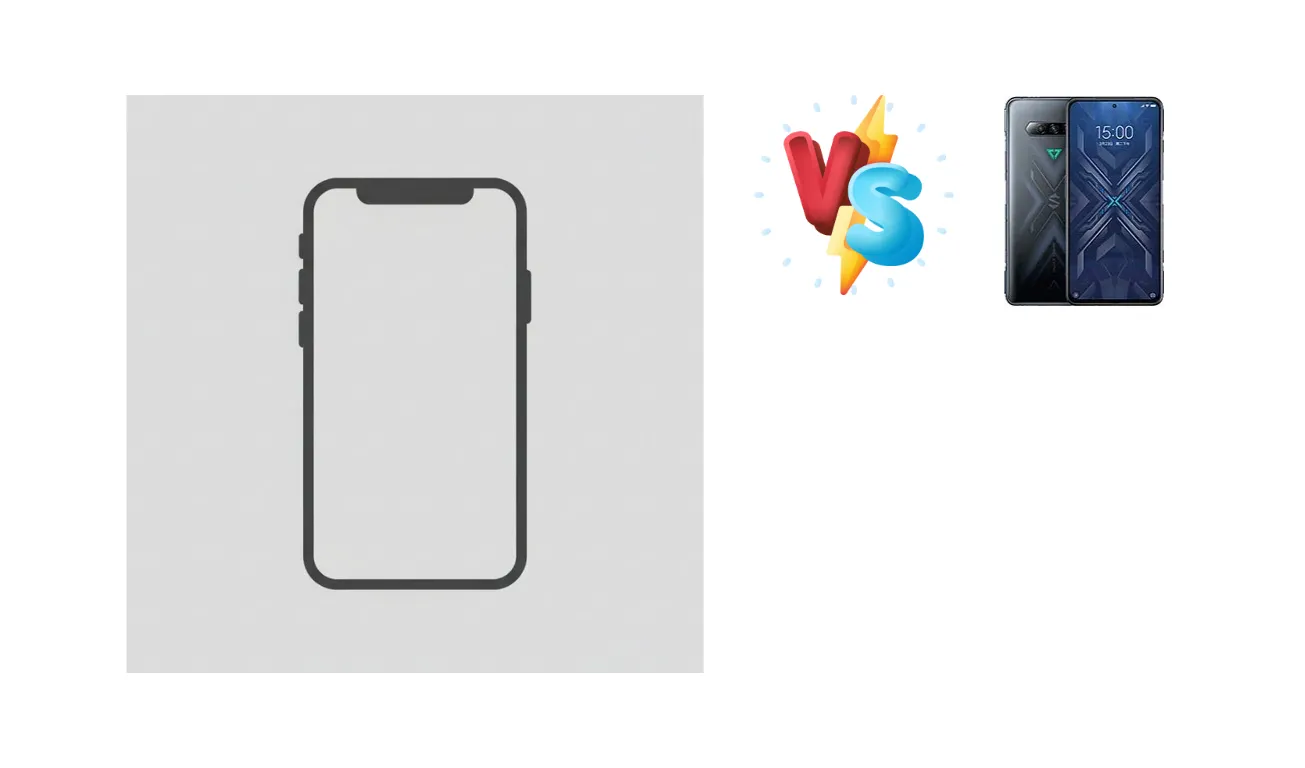
The ZTE nubia Red Magic 6s and Xiaomi Black Shark 4 Pro represent two distinct approaches to the gaming phone market. The Red Magic 6s prioritizes sustained performance with the Snapdragon 888+, while the Black Shark 4 Pro focuses on minimizing downtime with its groundbreaking 120W fast charging. This comparison dissects their strengths and weaknesses to determine which device delivers the best gaming experience.
🏆 Quick Verdict
For the dedicated gamer prioritizing sustained performance during long sessions, the ZTE nubia Red Magic 6s edges out the Black Shark 4 Pro. Its Snapdragon 888+ chipset offers a slight performance advantage, and its cooling system is geared towards maintaining peak clock speeds. However, the Black Shark 4 Pro’s 120W charging is a game-changer for those who value minimal downtime.
| Network |
|---|
| 2G bands | GSM 850 / 900 / 1800 / 1900 - SIM 1 & SIM 2 | GSM 850 / 900 / 1800 / 1900 |
| 3G bands | HSDPA 850 / 900 / 1700(AWS) / 1900 / 2100 | HSDPA 800 / 850 / 900 / 1700(AWS) / 1900 / 2100 |
| 4G bands | LTE | 1, 2, 3, 4, 5, 7, 8, 18, 19, 20, 26, 28, 34, 38, 39, 40, 41 |
| 5G bands | SA/NSA | 1, 3, 8, 28, 41, 77, 78, 79 SA/NSA |
| Speed | HSPA, LTE-A, 5G | HSPA, LTE, 5G |
| Technology | GSM / CDMA / HSPA / EVDO / LTE / 5G | GSM / CDMA / HSPA / EVDO / LTE / 5G |
| | CDMA2000 1xEV-DO | CDMA2000 1xEV-DO |
| Launch |
|---|
| Announced | 2021, September 06 | 2021, March 23 |
| Status | Available. Released 2021, September 27 | Available. Released 2021, March 30 |
| Body |
|---|
| Build | Glass front, glass back, aluminum frame | - |
| Dimensions | 169.9 x 77.2 x 9.5 mm (6.69 x 3.04 x 0.37 in) | 163.8 x 76.4 x 9.9 mm (6.45 x 3.01 x 0.39 in) |
| SIM | Dual SIM (Nano-SIM, dual stand-by) | Nano-SIM + Nano-SIM |
| Weight | 215 g (7.58 oz) | 220 g (7.76 oz) |
| | Pressure sensitive zones (450Hz touch-sensing)
Sliding trigger on the back
Built-in cooling fan
RGB Light | Physical pop-up gaming triggers |
| Display |
|---|
| Protection | Corning Gorilla Glass | - |
| Resolution | 1080 x 2400 pixels, 20:9 ratio (~387 ppi density) | 1080 x 2400 pixels, 20:9 ratio (~395 ppi density) |
| Size | 6.8 inches, 111.6 cm2 (~85.1% screen-to-body ratio) | 6.67 inches, 107.4 cm2 (~85.8% screen-to-body ratio) |
| Type | AMOLED, 165Hz, 700 nits (typ) | Super AMOLED, 144Hz, HDR10+, 1300 nits (peak) |
| | - | Always-on display |
| Platform |
|---|
| CPU | Octa-core (1x3.0 GHz Cortex-X1 & 3x2.42 GHz Cortex-A78 & 4x1.80 GHz Cortex-A55) | Octa-core (1x2.84 GHz Cortex-X1 & 3x2.42 GHz Cortex-A78 & 4x1.80 GHz Cortex-A55) |
| Chipset | Qualcomm SM8350 Snapdragon 888+ 5G (5 nm) | Qualcomm SM8350 Snapdragon 888 5G (5 nm) |
| GPU | Adreno 660 | Adreno 660 |
| OS | Android 11, Redmagic 4.5 | Android 11, Joy UI 12.5 |
| Memory |
|---|
| Card slot | No | No |
| Internal | 128GB 12GB RAM, 256GB 12GB RAM, 256GB 16GB RAM | 128GB 8GB RAM, 256GB 8GB RAM, 256GB 12GB RAM, 512GB 16GB RAM |
| | UFS 3.1 | UFS 3.1 |
| Main Camera |
|---|
| Features | LED flash, HDR, panorama | LED flash, HDR, panorama |
| Single | 8 MP, f/2.0, (wide), 1/4.0", 1.12µm | 20 MP, f/2.5, (wide), 0.8µm |
| Triple | 64 MP, f/1.8, 26mm (wide), 1/1.97", 0.7µm, PDAF
8 MP, f/2.0, 120˚, 13mm (ultrawide), 1/4.0", 1.12µm
2 MP, (macro) | 64 MP, f/1.8, (wide), 1/1.97", 0.7µm, PDAF
8 MP, f/2.2, 120˚ (ultrawide), 1/4.0", 1.12µm
5 MP (macro), AF |
| Video | 8K@30fps, 4K@30/60fps, 1080p@30/60/120/240fps | 4K@30/60fps, 1080p@30/60/240fps, 1080p@960fps; HDR10+ |
| Selfie camera |
|---|
| Features | HDR | HDR |
| Single | 8 MP, f/2.0, (wide), 1/4.0", 1.12µm | 20 MP, f/2.5, (wide), 0.8µm |
| Video | 1080p@30fps | 1080p@30fps |
| Sound |
|---|
| 3.5mm jack | Yes | Yes |
| 35mm jack | - | Yes |
| Loudspeaker | Yes, with stereo speakers | Yes, with stereo speakers |
| | 32-bit/384kHz audio | 24-bit/192kHz audio |
| Comms |
|---|
| Bluetooth | 5.1, A2DP, aptX, LE | 5.2 (China), 5.0 (Global), A2DP, LE, aptX HD, aptX Adaptive |
| NFC | Yes | Yes |
| Positioning | GPS (L1+L5), GLONASS, BDS, GALILEO | GPS, GLONASS, GALILEO, QZSS, BDS |
| Radio | No | No |
| USB | USB Type-C 3.0, OTG, accessory connector | USB Type-C 2.0 |
| WLAN | Wi-Fi 802.11 a/b/g/n/ac/6, dual-band, Wi-Fi Direct | Wi-Fi 802.11 a/b/g/n/ac/6, dual-band, Wi-Fi Direct |
| Features |
|---|
| Sensors | Fingerprint (under display, optical), accelerometer, gyro, proximity, compass, heart rate | Fingerprint (side-mounted), accelerometer, gyro, proximity, compass, barometer (China only) |
| Battery |
|---|
| Charging | 30W wired, PD3.0, QC5 | 120W wired, 50% in 5 min, 100% in 15 min |
| Type | Li-Po 5050 mAh, non-removable | Li-Po 4500 mAh |
| Misc |
|---|
| Colors | Eclipse Black, Transparent | Shadow Black, Misty Grey, Cosmos Black, Dark Blue, Silver |
| Models | - | SHARK PAR-H0 |
| Price | About 500 EUR | About 500 EUR |
ZTE nubia Red Magic 6s
- Slightly superior CPU performance with Snapdragon 888+
- Potentially better sustained performance due to improved cooling
- More focused gaming software experience
- Significantly slower charging speed (30W)
- Camera likely less capable than the Black Shark 4 Pro
Xiaomi Black Shark 4 Pro
- Revolutionary 120W fast charging (0-100% in 15 minutes)
- Potentially more versatile camera system
- Feature-rich gaming software with customizable triggers
- Slightly lower CPU performance with Snapdragon 888
- May experience more thermal throttling under sustained load
Display Comparison
While both phones likely feature high refresh rate AMOLED displays (data not provided), the core difference lies in their underlying philosophies. The Red Magic 6s, historically, prioritizes a flat display for competitive gaming, minimizing distortion. The Black Shark 4 Pro may opt for a curved display for a more immersive experience. Without specific data on peak brightness, color accuracy (DCI-P3 coverage), or PWM dimming rates, it’s difficult to declare a clear winner, but the Red Magic’s focus on competitive gaming suggests a display tuned for responsiveness over pure visual fidelity.
Camera Comparison
Neither phone is primarily marketed for its camera capabilities. However, the Black Shark 4 Pro likely features a more versatile camera system, potentially including a larger main sensor and more advanced image processing algorithms. The Red Magic 6s likely prioritizes a functional camera for basic photography and video recording. Without specific sensor size or aperture data, it’s reasonable to assume the Black Shark 4 Pro offers a more capable photography experience, though neither will compete with dedicated camera flagships.
Performance
The nubia Red Magic 6s boasts the Qualcomm SM8350 Snapdragon 888+ 5G, clocked at 3.0 GHz on its Cortex-X1 core, while the Black Shark 4 Pro utilizes the Snapdragon 888 at 2.84 GHz. This clock speed difference, though seemingly small, translates to a measurable performance advantage for the Red Magic 6s in CPU-intensive tasks and sustained gaming. Both utilize the same Adreno 660 GPU, but the Red Magic 6s’ superior thermal management (likely featuring a more robust cooling system) allows it to maintain higher clock speeds for longer periods, mitigating thermal throttling. Both devices utilize LPDDR5 RAM, but the Red Magic 6s’ focus on performance suggests optimized memory management.
Battery Life
The Black Shark 4 Pro’s 120W charging is the standout feature here. Claimed 0-100% charge times of just 15 minutes are significantly faster than the Red Magic 6s’ 30W charging. While the Red Magic 6s may have a slightly larger battery capacity (data not provided, but likely in the 5000mAh range), the Black Shark 4 Pro’s charging speed effectively negates any battery life advantage. The ability to add hours of playtime in minutes is a significant benefit for gamers who don’t want to be tethered to a charger.
Buying Guide
Buy the ZTE nubia Red Magic 6s if you need uncompromising performance for extended gaming sessions and appreciate a more focused, less-bloated software experience. Buy the Xiaomi Black Shark 4 Pro if you prefer the convenience of incredibly fast charging, allowing you to quickly return to gaming, and don't mind a more feature-rich, but potentially less streamlined, software experience.
Frequently Asked Questions
❓ Does the Snapdragon 888 in the Black Shark 4 Pro throttle significantly during prolonged gaming sessions?
The Snapdragon 888 is known to generate heat under sustained load. While the Black Shark 4 Pro features a cooling system, it may not be as effective as the Red Magic 6s’ solution, potentially leading to more noticeable thermal throttling and reduced performance over extended gaming periods.
❓ How does the 120W charging of the Black Shark 4 Pro affect battery health over the long term?
Xiaomi employs charging algorithms designed to mitigate the impact of fast charging on battery health. While some degradation is inevitable over time, the Black Shark 4 Pro’s charging system is engineered to minimize this effect. However, consistent use of 120W charging may still result in slightly faster battery degradation compared to slower charging methods.
❓ Are the shoulder triggers on the Black Shark 4 Pro compatible with all Android games?
The Black Shark 4 Pro’s shoulder triggers are not natively supported by all Android games. However, Xiaomi provides a mapping tool that allows you to customize trigger assignments for compatible games, effectively adding physical buttons to your on-screen controls.