
ZTE nubia Red Magic 6s vs. Asus ROG Phone 5s: A Deep Dive for Gamers
| Phones Images | |||||
|---|---|---|---|---|---|
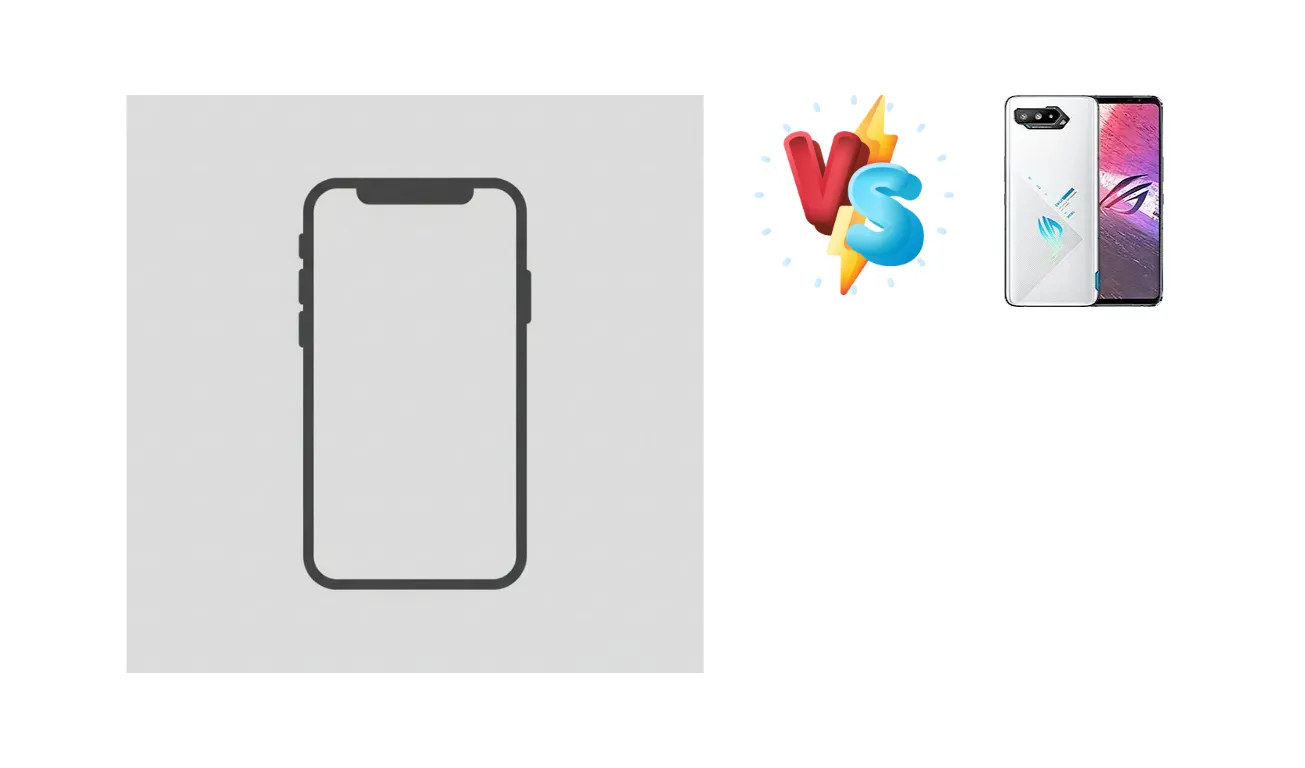
|
🏆 Quick Verdict
For the average gamer prioritizing rapid charging and a more refined software experience, the Asus ROG Phone 5s is the superior choice. Its 65W charging significantly reduces downtime, and its feature-rich software offers greater customization. However, the Red Magic 6s remains a compelling option for those seeking a more raw, performance-focused experience at a potentially lower price.
| PHONES | ||
|---|---|---|
| Phone Names | ZTE nubia Red Magic 6s | Asus ROG Phone 5s |
| Network | ||
|---|---|---|
| 2G bands | GSM 850 / 900 / 1800 / 1900 - SIM 1 & SIM 2 | GSM 850 / 900 / 1800 / 1900 |
| 3G bands | HSDPA 850 / 900 / 1700(AWS) / 1900 / 2100 | HSDPA 800 / 850 / 900 / 1700(AWS) / 1800 / 1900 / 2100 - Version 1 |
| 4G bands | LTE | 1, 2, 3, 4, 5, 7, 8, 12, 13, 17, 18, 19, 20, 25, 26, 28, 29, 30, 32, 34, 38, 39, 40, 41, 42, 48, 66, 71 - Version 1 |
| 5G bands | SA/NSA | 1, 2, 3, 5, 7, 8, 12, 20, 25, 28, 38, 40, 41, 66, 71, 77, 78, 79 SA/NSA - Version 1 |
| Speed | HSPA, LTE-A, 5G | HSPA 42.2/5.76 Mbps, LTE (7CA) Cat20 1400/150 Mbps, 5G 4 Gbps DL |
| Technology | GSM / CDMA / HSPA / EVDO / LTE / 5G | GSM / HSPA / LTE / 5G |
| CDMA2000 1xEV-DO | 2, 3, 5, 7, 12, 20, 25, 28, 38, 40, 66, 71, 77, 78, 79 SA/NSA - Version 4 | |
| Launch | ||
|---|---|---|
| Announced | 2021, September 06 | 2021, August 16 |
| Status | Available. Released 2021, September 27 | Available. Released 2021, August 26 |
| Body | ||
|---|---|---|
| Build | Glass front, glass back, aluminum frame | Glass front (Gorilla Glass Victus), glass back (Gorilla Glass 3), aluminum frame |
| Dimensions | 169.9 x 77.2 x 9.5 mm (6.69 x 3.04 x 0.37 in) | 172.8 x 77.3 x 9.9 mm (6.80 x 3.04 x 0.39 in) |
| SIM | Dual SIM (Nano-SIM, dual stand-by) | Nano-SIM + Nano-SIM |
| Weight | 215 g (7.58 oz) | 238 g (8.40 oz) |
| Pressure sensitive zones (450Hz touch-sensing) Sliding trigger on the back Built-in cooling fan RGB Light | RGB light panel (on the back) Pressure sensitive zones (Gaming triggers) | |
| Display | ||
|---|---|---|
| Protection | Corning Gorilla Glass | Corning Gorilla Glass Victus |
| Resolution | 1080 x 2400 pixels, 20:9 ratio (~387 ppi density) | 1080 x 2448 pixels (~395 ppi density) |
| Size | 6.8 inches, 111.6 cm2 (~85.1% screen-to-body ratio) | 6.78 inches, 109.5 cm2 (~82.0% screen-to-body ratio) |
| Type | AMOLED, 165Hz, 700 nits (typ) | AMOLED, 1B colors, 144Hz, HDR10+, 800 nits (typ), 1200 nits (peak) |
| Platform | ||
|---|---|---|
| CPU | Octa-core (1x3.0 GHz Cortex-X1 & 3x2.42 GHz Cortex-A78 & 4x1.80 GHz Cortex-A55) | Octa-core (1x2.99 GHz Cortex-X1 & 3x2.42 GHz Cortex-A78 & 4x1.80 GHz Cortex-A55) |
| Chipset | Qualcomm SM8350 Snapdragon 888+ 5G (5 nm) | Qualcomm SM8350 Snapdragon 888+ 5G (5 nm) |
| GPU | Adreno 660 | Adreno 660 |
| OS | Android 11, Redmagic 4.5 | Android 11, upgradable to Android 13, ROG UI |
| Memory | ||
|---|---|---|
| Card slot | No | No |
| Internal | 128GB 12GB RAM, 256GB 12GB RAM, 256GB 16GB RAM | 128GB 8GB RAM, 128GB 12GB RAM, 256GB 12GB RAM, 256GB 16GB RAM, 512GB 16GB RAM, 512GB 18GB RAM |
| UFS 3.1 | UFS 3.1 | |
| Main Camera | ||
|---|---|---|
| Features | LED flash, HDR, panorama | LED flash, HDR, panorama |
| Single | 8 MP, f/2.0, (wide), 1/4.0", 1.12µm | - |
| Triple | 64 MP, f/1.8, 26mm (wide), 1/1.97", 0.7µm, PDAF 8 MP, f/2.0, 120˚, 13mm (ultrawide), 1/4.0", 1.12µm 2 MP, (macro) | 64 MP, f/1.8, 26mm (wide), 1/1.73", 0.8µm, PDAF 13 MP, f/2.4, 11mm, 125˚ (ultrawide) 5 MP (macro) |
| Video | 8K@30fps, 4K@30/60fps, 1080p@30/60/120/240fps | 8K@30fps, 4K@30/60/120fps, 1080p@30/60/120/240fps, 720p@480fps; gyro-EIS |
| Selfie camera | ||
|---|---|---|
| Features | HDR | Panorama, HDR |
| Single | 8 MP, f/2.0, (wide), 1/4.0", 1.12µm | 24 MP, f/2.5, 27mm (wide), 0.9µm |
| Video | 1080p@30fps | 1080p@30fps |
| Sound | ||
|---|---|---|
| 3.5mm jack | Yes | Yes |
| 35mm jack | - | Yes |
| Loudspeaker | Yes, with stereo speakers | Yes, with stereo speakers (2 amplifiers) |
| 32-bit/384kHz audio | 24-bit/192kHz audio | |
| Comms | ||
|---|---|---|
| Bluetooth | 5.1, A2DP, aptX, LE | 5.2, A2DP, LE, aptX HD, aptX Adaptive |
| NFC | Yes | Yes |
| Positioning | GPS (L1+L5), GLONASS, BDS, GALILEO | GPS (L1+L5), GLONASS (L1), BDS (B1I+B1c+B2a), GALILEO (E1+E5a), QZSS (L1+L5), NavIC (L5) |
| Radio | No | No |
| USB | USB Type-C 3.0, OTG, accessory connector | USB Type-C 3.1 (side), USB Type-C 2.0 (bottom), OTG, accessory connector |
| WLAN | Wi-Fi 802.11 a/b/g/n/ac/6, dual-band, Wi-Fi Direct | Wi-Fi 802.11 a/b/g/n/ac/6e, dual-band, Wi-Fi Direct |
| Features | ||
|---|---|---|
| Sensors | Fingerprint (under display, optical), accelerometer, gyro, proximity, compass, heart rate | Fingerprint (under display, optical), accelerometer, gyro, proximity, compass |
| Battery | ||
|---|---|---|
| Charging | 30W wired, PD3.0, QC5 | 65W wired, PD3.0, QC5, 70% in 30 min, 100% in 52 min 10W reverse wired |
| Type | Li-Po 5050 mAh, non-removable | Li-Po 6000 mAh |
| Misc | ||
|---|---|---|
| Colors | Eclipse Black, Transparent | Phantom Black, Storm White |
| Models | - | ZS676KS |
| Price | About 500 EUR | About 1030 EUR |
ZTE nubia Red Magic 6s
- Potentially lower price point
- Strong focus on sustained gaming performance
- High refresh rate display for smooth visuals
- Slower 30W charging
- Less refined software experience
- Potentially more thermal throttling under sustained load
Asus ROG Phone 5s
- 65W fast charging for minimal downtime
- More versatile feature set and software
- Superior thermal management for sustained performance
- Higher price point
- Potentially bulkier design
- Gaming-centric features may be overwhelming for casual users
Display Comparison
Both phones utilize similar display technology, but key differences exist. While specific panel details (like peak brightness in nits) are unavailable, the ROG Phone 5s benefits from Asus’s display calibration expertise, likely resulting in more accurate color reproduction. The Red Magic 6s prioritizes a high refresh rate for smoother gameplay, but without specific data, it's difficult to assess if it surpasses the ROG Phone 5s in visual fidelity. Bezels appear comparable, focusing on maximizing screen real estate for immersive gaming.
Camera Comparison
Neither phone is primarily focused on camera prowess, but the ROG Phone 5s likely offers a more versatile experience. While specific sensor details are missing, Asus typically employs larger sensors and more sophisticated image processing algorithms. The Red Magic 6s likely prioritizes speed and efficiency over image quality. The inclusion of a 2MP macro lens on either device is largely inconsequential, offering minimal benefit over the main sensor.
Performance
Both devices are equipped with the Qualcomm SM8350 Snapdragon 888+ 5G (5 nm) chipset, featuring an Octa-core CPU configuration with a Cortex-X1 prime core. The ROG Phone 5s edges out the Red Magic 6s with a slightly higher clocked Cortex-X1 at 2.99 GHz versus 3.0 GHz on the Red Magic 6s, though this difference is unlikely to be perceptible in real-world gaming. Crucially, the ROG Phone 5s’s superior cooling system (based on brand reputation and design) likely allows it to sustain peak performance for longer periods, mitigating thermal throttling. Both utilize LPDDR5 RAM, but the ROG Phone 5s’s more robust thermal design is the key performance differentiator.
Battery Life
The Asus ROG Phone 5s boasts a significant advantage in charging speed with its 65W wired charging, capable of reaching 70% in 30 minutes and 100% in 52 minutes. The Red Magic 6s is limited to 30W charging, resulting in considerably longer recharge times. While the exact battery capacity of both phones is not provided, the ROG Phone 5s’s faster charging effectively mitigates any potential capacity disadvantage, providing more uptime for gamers.
Buying Guide
Buy the ZTE nubia Red Magic 6s if you need a highly focused gaming phone with a strong emphasis on sustained performance and are comfortable with a more minimalist software approach. Buy the Asus ROG Phone 5s if you prefer a more versatile device with faster charging, a broader feature set, and a more polished user interface, even if it comes at a slight premium.