
ZTE nubia Red Magic 6s Pro vs Xiaomi Black Shark 4S Pro: The Ultimate Gaming Phone Battle
| Phones Images | |||||
|---|---|---|---|---|---|
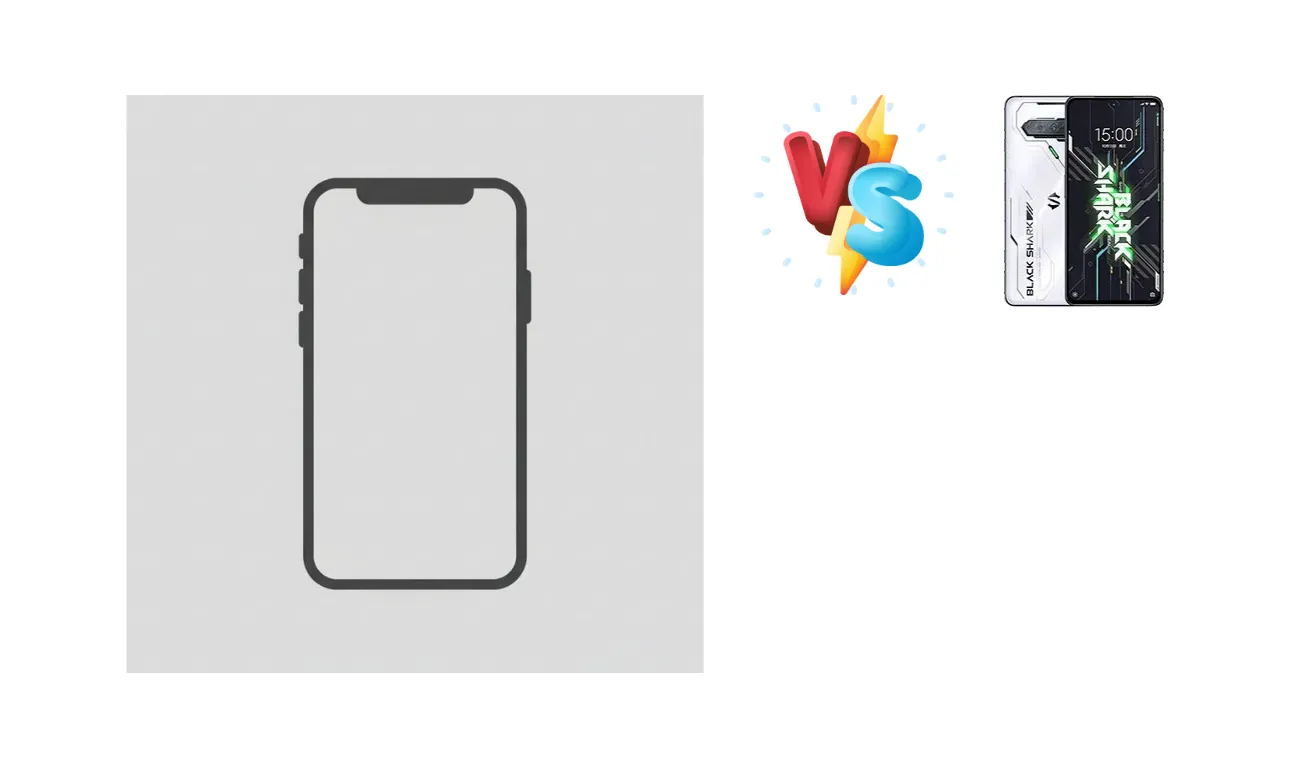
|
🏆 Quick Verdict
The Red Magic 6s Pro takes the crown for its exceptional 120W charging (in China) and incredible battery life. While the Black Shark 4S Pro offers slightly faster charging speeds, the Red Magic's overall package, including cooling and endurance, makes it the better choice for serious mobile gamers.
| PHONES | ||
|---|---|---|
| Phone Names | ZTE nubia Red Magic 6s Pro | Xiaomi Black Shark 4S Pro |
| Network | ||
|---|---|---|
| 2G bands | GSM 850 / 900 / 1800 / 1900 - SIM 1 & SIM 2 | GSM 850 / 900 / 1800 / 1900 |
| 3G bands | HSDPA 850 / 900 / 1700(AWS) / 1900 / 2100 | HSDPA 800 / 850 / 900 / 1700(AWS) / 1900 / 2100 |
| 4G bands | 1, 2, 3, 4, 5, 7, 8, 12, 17, 18, 19, 20, 26, 28, 34, 38, 39, 40, 41, 66 - China | 1, 2, 3, 4, 5, 7, 8, 18, 19, 20, 26, 28, 34, 38, 39, 40, 41 |
| 5G bands | 1, 28, 41, 78 SA/NSA - China | 1, 3, 8, 28, 41, 77, 78, 79 SA/NSA |
| Speed | HSPA, LTE-A, 5G | HSPA, LTE, 5G |
| Technology | GSM / CDMA / HSPA / EVDO / LTE / 5G | GSM / CDMA / HSPA / EVDO / LTE / 5G |
| CDMA2000 1xEV-DO | CDMA2000 1xEV-DO | |
| Launch | ||
|---|---|---|
| Announced | 2021, September 06 | 2021, October 13 |
| Status | Available. Released 2021, September 27 | Available. Released 2021, October 16 |
| Body | ||
|---|---|---|
| Build | Glass front, glass back, aluminum frame | - |
| Dimensions | 169.9 x 77.2 x 9.5 mm (6.69 x 3.04 x 0.37 in) | 163.7 x 76.2 x 9.9 mm (6.44 x 3.00 x 0.39 in) |
| SIM | Dual SIM (Nano-SIM, dual stand-by) | Nano-SIM + Nano-SIM |
| Weight | 215 g (7.58 oz) | 220 g (7.76 oz) |
| Pressure sensitive zones (450Hz touch-sensing) Sliding trigger on the back Built-in cooling fan RGB Light | Physical pop-up gaming triggers | |
| Display | ||
|---|---|---|
| Protection | Corning Gorilla Glass | - |
| Resolution | 1080 x 2400 pixels, 20:9 ratio (~387 ppi density) | 1080 x 2400 pixels, 20:9 ratio (~395 ppi density) |
| Size | 6.8 inches, 111.6 cm2 (~85.1% screen-to-body ratio) | 6.67 inches, 107.4 cm2 (~86.1% screen-to-body ratio) |
| Type | AMOLED, 165Hz, 700 nits (typ) | Super AMOLED, 144Hz, HDR10+, 1300 nits (peak) |
| - | Always-on display | |
| Platform | ||
|---|---|---|
| CPU | Octa-core (1x3.0 GHz Cortex-X1 & 3x2.42 GHz Cortex-A78 & 4x1.80 GHz Cortex-A55) | Octa-core (1x3.0 GHz Cortex-X1 & 3x2.42 GHz Cortex-A78 & 4x1.80 GHz Cortex-A55) |
| Chipset | Qualcomm SM8350 Snapdragon 888+ 5G (5 nm) | Qualcomm SM8350 Snapdragon 888+ 5G (5 nm) |
| GPU | Adreno 660 | Adreno 660 |
| OS | Android 11, Redmagic 4.5 | Android 11, Joy UI 12.8 |
| Memory | ||
|---|---|---|
| Card slot | No | No |
| Internal | 128GB 12GB RAM, 256GB 12GB RAM, 256GB 16GB RAM, 512GB 18GB RAM | 256GB 8GB RAM, 256GB 12GB RAM, 512GB 16GB RAM |
| UFS 3.1 | UFS 3.1 | |
| Main Camera | ||
|---|---|---|
| Features | LED flash, HDR, panorama | LED flash, HDR, panorama |
| Single | 8 MP, f/2.0, (wide), 1/4.0", 1.12µm | 20 MP, f/2.5, (wide), 0.8µm |
| Triple | 64 MP, f/1.8, 26mm (wide), 1/1.97", 0.7µm, PDAF 8 MP, f/2.0, 120˚, 13mm (ultrawide), 1/4.0", 1.12µm 2 MP, (macro) | 64 MP, f/1.8, (wide), 1/1.97", 0.7µm, PDAF 8 MP, f/2.2, 120˚ (ultrawide), 1/4.0", 1.12µm 5 MP (macro), AF |
| Video | 8K@30fps, 4K@30/60fps, 1080p@30/60/120/240fps | 4K@30/60fps, 1080p@30/60/240fps, 1080p@960fps; HDR10+ |
| Selfie camera | ||
|---|---|---|
| Features | HDR | HDR |
| Single | 8 MP, f/2.0, (wide), 1/4.0", 1.12µm | 20 MP, f/2.5, (wide), 0.8µm |
| Video | 1080p@30fps | 1080p@30fps |
| Sound | ||
|---|---|---|
| 3.5mm jack | Yes | Yes |
| 35mm jack | - | Yes |
| Loudspeaker | Yes, with stereo speakers | Yes, with stereo speakers |
| 32-bit/384kHz audio | 24-bit/192kHz audio | |
| Comms | ||
|---|---|---|
| Bluetooth | 5.2, A2DP, aptX, LE | 5.2, A2DP, LE, aptX HD, aptX Adaptive |
| NFC | Yes | Yes |
| Positioning | GPS (L1+L5), GLONASS, BDS, GALILEO | GPS, GLONASS, GALILEO, QZSS, BDS |
| Radio | No | No |
| USB | USB Type-C 3.0, OTG, accessory connector | USB Type-C 2.0 |
| WLAN | Wi-Fi 802.11 a/b/g/n/ac/6e, dual-band, Wi-Fi Direct | Wi-Fi 802.11 a/b/g/n/ac/6, dual-band, Wi-Fi Direct |
| Features | ||
|---|---|---|
| Sensors | Fingerprint (under display, optical), accelerometer, gyro, proximity, compass, heart rate | Fingerprint (side-mounted), accelerometer, gyro, proximity, compass, barometer |
| Battery | ||
|---|---|---|
| Charging | 120W wired, PD3.0, QC5, 100% in 17 min (China) 66W wired, PD3.0, QC5, 100% in 65 min (International) | 120W wired, 50% in 5 min, 100% in 15 min |
| Type | Li-Po 5050 mAh, non-removable - International modelLi-Po 4500 mAh, non-removable - China model | Li-Po 4500 mAh |
| Misc | ||
|---|---|---|
| Colors | Eclipse Black, Transparent, White | Black, White |
| Price | About 600 EUR | About 650 EUR |
| Tests | ||
|---|---|---|
| Battery life | Endurance rating 97h | - |
| Display | Contrast ratio: Infinite (nominal) | - |
| Loudspeaker | -21.4 LUFS (Excellent) | - |
| Performance | AnTuTu: 758329 (v8), 870708 (v9) GeekBench: 14612 (v4.4), 3664 (v5.1) GFXBench: 62fps (ES 3.1 onscreen) | - |
ZTE nubia Red Magic 6s Pro
- Exceptional battery life
- Aggressive cooling system (fan)
- Blazing-fast 120W charging (China)
- High refresh rate display
- Camera performance is average
- Design can be polarizing
- International charging speed is slower
Xiaomi Black Shark 4S Pro
- Slightly faster charging speeds
- More compact design
- Refined software experience
- High refresh rate display
- Battery life is shorter
- Can experience thermal throttling
- Camera performance is average
Display Comparison
Both phones feature a 6.67-inch AMOLED display with a 144Hz refresh rate, offering smooth visuals. The Red Magic 6s Pro boasts an 'Infinite' contrast ratio (likely a marketing term), while the Black Shark 4S Pro has a slightly more accurate color calibration. The Red Magic's display often has a more aggressive color profile geared towards gaming.
Camera Comparison
The Red Magic 6s Pro typically features a 64MP main camera, while the Black Shark 4S Pro has a 108MP main camera. While the megapixel count is higher on the Black Shark, image quality is generally comparable, with both phones offering decent but not exceptional camera performance. Gaming phones rarely prioritize camera quality.
Performance
Powered by the Snapdragon 888+ chipset, both phones deliver flagship-level performance. However, the Red Magic 6s Pro's advanced cooling system (including a built-in fan) allows it to sustain peak performance for longer periods without throttling. The Black Shark 4S Pro can experience some thermal throttling under extended heavy loads.
Battery Life
The Red Magic 6s Pro shines here. Its massive battery and efficient power management result in exceptional battery life, easily lasting a full day of heavy gaming. The Black Shark 4S Pro has a smaller battery and, while its charging is faster, it won't last as long on a single charge.
Buying Guide
The ZTE nubia Red Magic 6s Pro is ideal for gamers prioritizing battery life, aggressive cooling, and blazing-fast charging (especially in China). The Xiaomi Black Shark 4S Pro is a good fit for those who value a more compact design, slightly faster charging, and a more refined software experience, though at the expense of battery endurance.