
ZTE nubia Red Magic 6s Pro vs. Google Pixel 6 Pro: A Deep Dive into Gaming and AI
| Phones Images | |||||
|---|---|---|---|---|---|
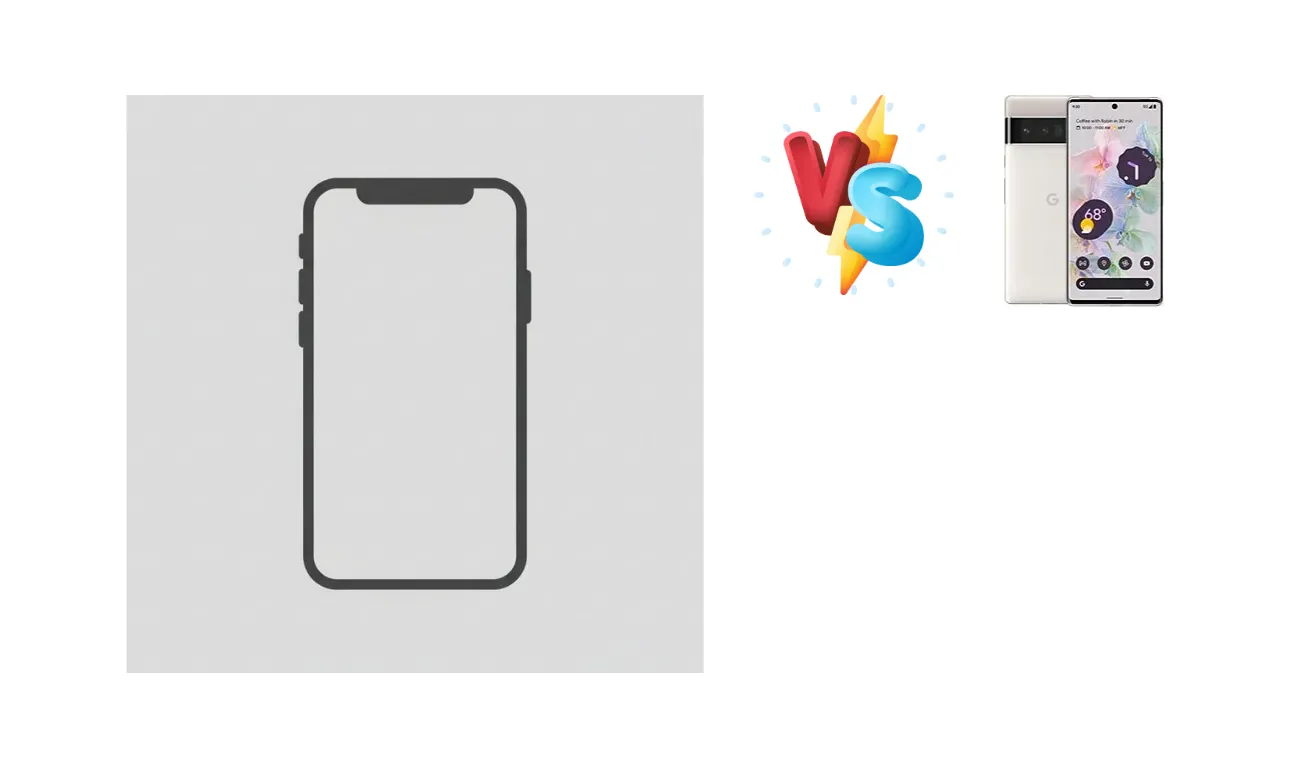
|
🏆 Quick Verdict
For the dedicated mobile gamer, the ZTE nubia Red Magic 6s Pro is the clear winner. Its Snapdragon 888+ and 120W charging provide a performance and convenience edge. However, the Google Pixel 6 Pro excels for users prioritizing camera quality, software features, and long-term support.
| PHONES | ||
|---|---|---|
| Phone Names | ZTE nubia Red Magic 6s Pro | Google Pixel 6 Pro |
| Network | ||
|---|---|---|
| 2G bands | GSM 850 / 900 / 1800 / 1900 - SIM 1 & SIM 2 | GSM 850 / 900 / 1800 / 1900 |
| 3G bands | HSDPA 850 / 900 / 1700(AWS) / 1900 / 2100 | HSDPA 800 / 850 / 900 / 1700(AWS) / 1900 / 2100 |
| 4G bands | 1, 2, 3, 4, 5, 7, 8, 12, 17, 18, 19, 20, 26, 28, 34, 38, 39, 40, 41, 66 - China | 1, 2, 3, 4, 5, 7, 8, 12, 13, 14, 17, 18, 19, 20, 25, 26, 28, 29, 30, 32, 38, 39, 40, 41, 42, 46, 48, 66, 71 - GLUOG, G8VOU |
| 5G bands | 1, 28, 41, 78 SA/NSA - China | 1, 2, 3, 5, 7, 8, 12, 14, 20, 25, 28, 30, 38, 40, 41, 48, 66, 71, 77, 78, 257, 258, 260, 261 SA/NSA/Sub6/mmWave - G8VOU |
| Speed | HSPA, LTE-A, 5G | HSPA, LTE, 5G |
| Technology | GSM / CDMA / HSPA / EVDO / LTE / 5G | GSM / CDMA / HSPA / EVDO / LTE / 5G |
| CDMA2000 1xEV-DO | 1, 2, 3, 5, 7, 8, 12, 14, 20, 25, 28, 30, 38, 40, 41, 48, 66, 71, 77, 78 SA/NSA/Sub6 - GLUOG | |
| Launch | ||
|---|---|---|
| Announced | 2021, September 06 | 2021, October 19 |
| Status | Available. Released 2021, September 27 | Available. Released 2021, October 28 |
| Body | ||
|---|---|---|
| Build | Glass front, glass back, aluminum frame | Glass front (Gorilla Glass Victus), glass back (Gorilla Glass Victus), aluminum frame |
| Dimensions | 169.9 x 77.2 x 9.5 mm (6.69 x 3.04 x 0.37 in) | 163.9 x 75.9 x 8.9 mm (6.45 x 2.99 x 0.35 in) |
| SIM | Dual SIM (Nano-SIM, dual stand-by) | Nano-SIM + eSIM |
| Weight | 215 g (7.58 oz) | 210 g (7.41 oz) |
| Pressure sensitive zones (450Hz touch-sensing) Sliding trigger on the back Built-in cooling fan RGB Light | IP68 dust/water resistant (up to 1.5m for 30 min) | |
| Display | ||
|---|---|---|
| Protection | Corning Gorilla Glass | Corning Gorilla Glass Victus |
| Resolution | 1080 x 2400 pixels, 20:9 ratio (~387 ppi density) | 1440 x 3120 pixels, 19.5:9 ratio (~512 ppi density) |
| Size | 6.8 inches, 111.6 cm2 (~85.1% screen-to-body ratio) | 6.7 inches, 110.6 cm2 (~88.9% screen-to-body ratio) |
| Type | AMOLED, 165Hz, 700 nits (typ) | LTPO AMOLED, 120Hz, HDR10+ |
| - | Always-on display | |
| Platform | ||
|---|---|---|
| CPU | Octa-core (1x3.0 GHz Cortex-X1 & 3x2.42 GHz Cortex-A78 & 4x1.80 GHz Cortex-A55) | Octa-core (2x2.80 GHz Cortex-X1 & 2x2.25 GHz Cortex-A76 & 4x1.80 GHz Cortex-A55) |
| Chipset | Qualcomm SM8350 Snapdragon 888+ 5G (5 nm) | Google Tensor (5 nm) |
| GPU | Adreno 660 | Mali-G78 MP20 |
| OS | Android 11, Redmagic 4.5 | Android 12, upgradable to Android 15, up to 5 major Android upgrades |
| Memory | ||
|---|---|---|
| Card slot | No | No |
| Internal | 128GB 12GB RAM, 256GB 12GB RAM, 256GB 16GB RAM, 512GB 18GB RAM | 128GB 12GB RAM, 256GB 12GB RAM, 512GB 12GB RAM |
| UFS 3.1 | UFS 3.1 | |
| Main Camera | ||
|---|---|---|
| Features | LED flash, HDR, panorama | Laser AF, Dual-LED flash, Pixel Shift, Auto-HDR, panorama |
| Single | 8 MP, f/2.0, (wide), 1/4.0", 1.12µm | 11.1 MP, f/2.2, 20mm (ultrawide), 1.22µm |
| Triple | 64 MP, f/1.8, 26mm (wide), 1/1.97", 0.7µm, PDAF 8 MP, f/2.0, 120˚, 13mm (ultrawide), 1/4.0", 1.12µm 2 MP, (macro) | 50 MP, f/1.9, 25mm (wide), 1/1.31", 1.2µm, dual pixel PDAF, OIS 48 MP, f/3.5, 104mm (periscope telephoto), 1/2.0", 0.8µm, PDAF, OIS, 4x optical zoom 12 MP, f/2.2, 17mm, 114˚ (ultrawide), 1.25µm |
| Video | 8K@30fps, 4K@30/60fps, 1080p@30/60/120/240fps | 4K@30/60fps, 1080p@30/60/120/240fps; gyro-EIS, OIS |
| Selfie camera | ||
|---|---|---|
| Features | HDR | HDR, panorama |
| Single | 8 MP, f/2.0, (wide), 1/4.0", 1.12µm | 11.1 MP, f/2.2, 20mm (ultrawide), 1.22µm |
| Video | 1080p@30fps | 4K@30fps, 1080p@30/60fps |
| Sound | ||
|---|---|---|
| 3.5mm jack | Yes | No |
| 35mm jack | - | No |
| Loudspeaker | Yes, with stereo speakers | Yes, with stereo speakers |
| 32-bit/384kHz audio | - | |
| Comms | ||
|---|---|---|
| Bluetooth | 5.2, A2DP, aptX, LE | 5.2, A2DP, LE, aptX HD |
| NFC | Yes | Yes |
| Positioning | GPS (L1+L5), GLONASS, BDS, GALILEO | GPS (L1+L5), GLONASS (G1), BDS (B1I+B1c+B2a), GALILEO (E1+E5a), QZSS (L1+L5) |
| Radio | No | No |
| USB | USB Type-C 3.0, OTG, accessory connector | USB Type-C 3.1 |
| WLAN | Wi-Fi 802.11 a/b/g/n/ac/6e, dual-band, Wi-Fi Direct | Wi-Fi 802.11 a/b/g/n/ac/6e, dual-band, Wi-Fi Direct |
| Features | ||
|---|---|---|
| Sensors | Fingerprint (under display, optical), accelerometer, gyro, proximity, compass, heart rate | Fingerprint (under display, optical), accelerometer, gyro, proximity, compass, barometer |
| - | Ultra Wideband (UWB) support | |
| Battery | ||
|---|---|---|
| Charging | 120W wired, PD3.0, QC5, 100% in 17 min (China) 66W wired, PD3.0, QC5, 100% in 65 min (International) | 23W wired, PD3.0, 50% in 30 min 23W wireless Reverse wireless |
| Type | Li-Po 5050 mAh, non-removable - International modelLi-Po 4500 mAh, non-removable - China model | Li-Ion 5003 mAh |
| Misc | ||
|---|---|---|
| Colors | Eclipse Black, Transparent, White | Cloudy White, Sorta Sunny, Stormy Black |
| Models | - | GLUOG, G8VOU, GF5KQ |
| Price | About 600 EUR | € 199.99 / $ 204.99 / £ 275.00 / ₹ 29,699 |
| Tests | ||
|---|---|---|
| Battery life | Endurance rating 97h | Endurance rating 84h |
| Display | Contrast ratio: Infinite (nominal) | Contrast ratio: Infinite (nominal) |
| Loudspeaker | -21.4 LUFS (Excellent) | - |
| Performance | AnTuTu: 758329 (v8), 870708 (v9) GeekBench: 14612 (v4.4), 3664 (v5.1) GFXBench: 62fps (ES 3.1 onscreen) | AnTuTu: 585485 (v8), 719815 (v9) GeekBench: 2831 (v5.1) GFXBench: 39 fps (ES 3.1 onscreen) |
ZTE nubia Red Magic 6s Pro
- Incredibly fast 120W charging
- Superior gaming performance with Snapdragon 888+
- Advanced cooling system for sustained performance
- Camera quality likely inferior to Pixel 6 Pro
- Software experience less refined than Pixel 6 Pro
Google Pixel 6 Pro
- Exceptional camera system with Google's AI processing
- Clean and intuitive software experience
- Long-term software support from Google
- Slower 23W charging
- Less powerful GPU for demanding games
Display Comparison
Both devices feature displays with an 'Infinite' contrast ratio, suggesting deep blacks. However, the Pixel 6 Pro boasts a measured peak brightness of 846 nits, significantly exceeding what's expected from the Red Magic 6s Pro (spec not provided, but typically lower on gaming phones). While both likely utilize AMOLED technology, the Pixel 6 Pro's higher brightness translates to better outdoor visibility. The Red Magic 6s Pro's display is optimized for high refresh rates during gaming, but lacks the Pixel 6 Pro's color accuracy and potentially its adaptive refresh rate capabilities (LTPO not confirmed).
Camera Comparison
The Google Pixel 6 Pro is the clear winner in the camera department. While specific sensor details for the Red Magic 6s Pro are unavailable, it's unlikely to match the Pixel 6 Pro’s sophisticated camera system. The Pixel 6 Pro’s image processing, powered by the Tensor chip, delivers exceptional dynamic range, detail, and low-light performance. The Pixel 6 Pro’s computational photography features, like Magic Eraser and Motion Mode, are unmatched. The Red Magic 6s Pro likely focuses on basic photography functionality, prioritizing other features over camera innovation.
Performance
The nubia Red Magic 6s Pro leverages the Qualcomm Snapdragon 888+ 5G (5nm), featuring a Cortex-X1 prime core clocked at 3.0 GHz. The Pixel 6 Pro, conversely, utilizes Google’s in-house Tensor chip (5nm) with a slightly lower peak Cortex-X1 clock speed of 2.80 GHz. While clock speed isn't everything, the Snapdragon 888+ is known for its raw GPU power, making it ideal for demanding games. The Pixel 6 Pro’s Tensor chip prioritizes AI and machine learning tasks, excelling in areas like image processing and voice recognition. Both phones feature 8GB or 12GB of RAM, but the Red Magic 6s Pro likely utilizes faster LPDDR5 RAM, further enhancing gaming performance. The Red Magic 6s Pro also benefits from an advanced cooling system, crucial for sustaining peak performance during extended gaming sessions, a feature less emphasized on the Pixel 6 Pro.
Battery Life
The nubia Red Magic 6s Pro boasts an endurance rating of 97 hours, significantly outperforming the Pixel 6 Pro’s 84 hours. However, this doesn't tell the whole story. The Red Magic 6s Pro achieves this through a combination of battery size and aggressive power management. Crucially, it supports 120W wired charging (in China) or 66W internationally, allowing a full charge in just 17 or 65 minutes respectively. The Pixel 6 Pro is limited to 23W wired charging, taking approximately 30 minutes to reach 50% and considerably longer for a full charge. The Pixel 6 Pro also offers 23W wireless charging and reverse wireless charging, features absent on the Red Magic 6s Pro. The Red Magic’s faster charging mitigates the impact of potentially lower real-world battery life for power users.
Buying Guide
Buy the ZTE nubia Red Magic 6s Pro if you need maximum gaming performance, incredibly fast charging, and a dedicated gaming experience. You'll benefit from sustained frame rates and minimal throttling. Buy the Google Pixel 6 Pro if you prefer a superior camera system, a clean and intelligent software experience, and access to Google's exclusive AI features. It's the better choice for everyday use and photography enthusiasts.