
ZTE nubia Red Magic 6R vs Xiaomi Poco F4 GT: The Ultimate Gaming Phone Battle
| Phones Images | |||||
|---|---|---|---|---|---|
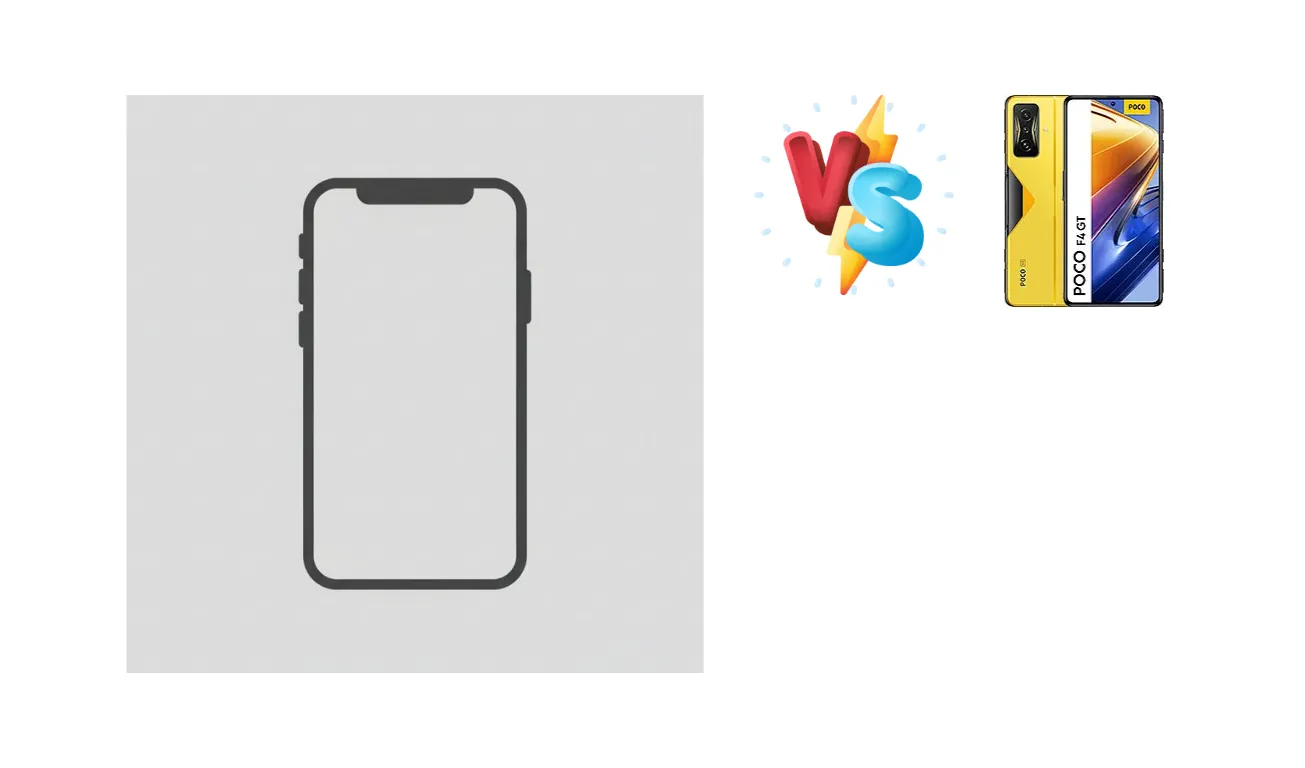
|
🏆 Quick Verdict
The Poco F4 GT takes the crown thanks to its significantly faster charging (120W!), newer Snapdragon 8 Gen 1 chipset, and slightly better overall performance. While the Red Magic 6R offers impressive battery life, the Poco's speed and power make it the superior choice for serious mobile gamers.
| PHONES | ||
|---|---|---|
| Phone Names | ZTE nubia Red Magic 6R | Xiaomi Poco F4 GT |
| Network | ||
|---|---|---|
| 2G bands | GSM 850 / 900 / 1800 / 1900 - SIM 1 & SIM 2 | GSM 850 / 900 / 1800 / 1900 |
| 3G bands | HSDPA 850 / 900 / 1700(AWS) / 1900 / 2100 | HSDPA 800 / 850 / 900 / 1700(AWS) / 1900 / 2100 |
| 4G bands | 1, 3, 5, 7, 8, 4, 12, 17, 20, 34, 38, 39, 40, 41 - China | 1, 2, 3, 4, 5, 7, 8, 12, 17, 18, 19, 20, 26, 28, 38, 40, 41 |
| 5G bands | 1, 28, 41, 78 SA/NSA - China | 1, 3, 5, 7, 8, 20, 28, 38, 40, 41, 77, 78 SA/NSA/Sub6 |
| Speed | HSPA, LTE-A, 5G | HSPA, LTE, 5G |
| Technology | GSM / CDMA / HSPA / CDMA2000 / LTE / 5G | GSM / HSPA / LTE / 5G |
| CDMA2000 1x | - | |
| Launch | ||
|---|---|---|
| Announced | 2021, May 27 | 2022, April 26 |
| Status | Available. Released 2021, June 02 | Available. Released 2022, April 28 |
| Body | ||
|---|---|---|
| Build | Glass front (Gorilla Glass 3), aluminum frame, glass back | Glass front (Gorilla Glass Victus), glass back, aluminum frame |
| Dimensions | 163 x 75.3 x 7.8 mm (6.42 x 2.96 x 0.31 in) | 162.5 x 76.7 x 8.5 mm (6.40 x 3.02 x 0.33 in) |
| SIM | Dual SIM (Nano-SIM, dual stand-by) | Nano-SIM + Nano-SIM |
| Weight | 186 g (6.56 oz) | 210 g (7.41 oz) |
| Pressure sensitive zones (400Hz touch-sensing) | Physical magnetic pop-up gaming triggers | |
| Display | ||
|---|---|---|
| Protection | Corning Gorilla Glass 3 | Corning Gorilla Glass Victus |
| Resolution | 1080 x 2400 pixels, 20:9 ratio (~395 ppi density) | 1080 x 2400 pixels, 20:9 ratio (~395 ppi density) |
| Size | 6.67 inches, 107.4 cm2 (~87.5% screen-to-body ratio) | 6.67 inches, 107.4 cm2 (~86.2% screen-to-body ratio) |
| Type | AMOLED, 1B colors, 144Hz, 770 nits (peak) | AMOLED, 1B colors, 120Hz, HDR10+, 800 nits (HBM) |
| Platform | ||
|---|---|---|
| CPU | Octa-core (1x2.84 GHz Cortex-X1 & 3x2.42 GHz Cortex-A78 & 4x1.80 GHz Cortex-A55) | Octa-core (1x3.00 GHz Cortex-X2 & 3x2.50 GHz Cortex-A710 & 4x1.80 GHz Cortex-A510) |
| Chipset | Qualcomm SM8350 Snapdragon 888 5G (5 nm) | Qualcomm SM8450 Snapdragon 8 Gen 1 (4 nm) |
| GPU | Adreno 660 | Adreno 730 |
| OS | Android 11, Redmagic 4.0 | Android 12, upgradable to Android 14, HyperOS 2 |
| Memory | ||
|---|---|---|
| Card slot | No | No |
| Internal | 128GB 6GB RAM, 128GB 8GB RAM, 128GB 12GB RAM, 256GB 12GB RAM | 128GB 8GB RAM, 256GB 12GB RAM |
| UFS 3.1 | UFS 3.1 | |
| Main Camera | ||
|---|---|---|
| Features | Dual-LED flash, HDR, panorama | Color spectrum sensor, Dual-LED flash, HDR, panorama |
| Quad | 64 MP, f/1.8, 26mm (wide), 1/1.73", 0.8µm, PDAF 8 MP, f/2.0, 120˚, 13mm (ultrawide), 1/4.0", 1.12µm 5 MP, f/2.4, (macro) 2 MP, f/2.4, (depth) | - |
| Single | 16 MP, (wide) | 20 MP, f/2.4, (wide), 1/2.0", 0.8µm |
| Triple | - | 64 MP, f/1.9, 26mm (wide), 1/1.73", 0.8µm, PDAF 8 MP, f/2.2, 120˚ (ultrawide) 2 MP (macro) |
| Video | 8K@30fps, 4K@30/60fps, 1080p@30/60/120/240fps | 4K@30/60fps, 1080p@30/60/120fps, 720p@960fps, HDR |
| Selfie camera | ||
|---|---|---|
| Features | HDR | HDR |
| Single | 16 MP, (wide) | 20 MP, f/2.4, (wide), 1/2.0", 0.8µm |
| Video | 1080p@30fps | 1080p@30/60fps, 720p@120fps, HDR |
| Sound | ||
|---|---|---|
| 3.5mm jack | No | No |
| 35mm jack | - | No |
| Loudspeaker | Yes | Yes, with stereo speakers (4 speakers) |
| 32-bit/384kHz audio | 24-bit/192kHz audio Tuned by JBL | |
| Comms | ||
|---|---|---|
| Bluetooth | 5.2, A2DP, aptX, LE | 5.2, A2DP, LE |
| Infrared port | - | Yes |
| NFC | Yes (market/region dependent) | Yes |
| Positioning | GPS (L1+L5), GLONASS, BDS | GPS (L1+L5), GLONASS (L1), BDS (B1I+B1c+B2a), GALILEO (E1+E5a), QZSS (L1+L5), NavIC (L5) |
| Radio | No | No |
| USB | USB Type-C 3.0, OTG, accessory connector | USB Type-C 2.0, OTG |
| WLAN | Wi-Fi 802.11 a/b/g/n/ac/6, dual-band, Wi-Fi Direct | Wi-Fi 802.11 a/b/g/n/ac/6, dual-band, Wi-Fi Direct |
| Features | ||
|---|---|---|
| Sensors | Fingerprint (under display, optical), accelerometer, gyro, proximity, compass | Fingerprint (side-mounted), accelerometer, gyro, compass |
| - | Virtual proximity sensing | |
| Battery | ||
|---|---|---|
| Charging | 55W wired, PD3.0, QC4 (China) 30W wired, PD3.0, QC4 (International) | 120W wired, PD3.0, QC3, 100% in 17 min |
| Type | Li-Po 4200 mAh, non-removable | Li-Po 4700 mAh |
| Misc | ||
|---|---|---|
| Colors | Black, Mercury Silver, Light Blue | Stealth Black, Knight Silver, Cyber Yellow |
| Models | NX666J | 21121210G |
| Price | About 500 EUR | € 227.11 / £ 339.99 |
| SAR | - | 1.09 W/kg (head) 0.99 W/kg (body) |
| SAR EU | - | 0.59 W/kg (head) 0.96 W/kg (body) |
| Tests | ||
|---|---|---|
| Battery life | Endurance rating 76h | Endurance rating 81h |
| Camera | Photo / Video | Photo / Video |
| Display | Contrast ratio: Infinite (nominal) | Contrast ratio: Infinite (nominal) |
| Loudspeaker | -27.9 LUFS (Good) | -27.4 LUFS (Good) |
| Performance | AnTuTu: 708156 (v8) | 823354 (v9) GeekBench: 3486 (v5.1) GFXBench: 59fps (ES 3.1 onscreen) | AnTuTu: 952124 (v9) GeekBench: 3637 (v5.1) |
ZTE nubia Red Magic 6R
- Excellent battery life
- Responsive display
- Gaming-focused features (shoulder triggers)
- Generally more affordable
- Older chipset (Snapdragon 888)
- Slower charging
- Camera performance is average
Xiaomi Poco F4 GT
- Powerful Snapdragon 8 Gen 1 chipset
- Blazing-fast 120W charging
- Potentially better camera system
- Premium build quality
- Higher price
- Battery life slightly less than Red Magic 6R
- Can run hotter under sustained load
Display Comparison
Both phones boast 'infinite' contrast ratio displays (likely AMOLED), but the Poco F4 GT likely has a higher refresh rate and potentially better color accuracy, though specific details are missing. The Red Magic 6R's display is known for its responsiveness, crucial for gaming. Expect vibrant colors and smooth visuals on both, but the Poco might edge out in overall quality.
Camera Comparison
Camera details are vague for both, simply listed as 'Photo / Video'. However, based on general knowledge, the Poco F4 GT likely has a more versatile and higher-resolution camera system. The Red Magic 6R's camera is adequate, but not a primary selling point.
Performance
The Poco F4 GT's Snapdragon 8 Gen 1 is a clear winner here. It's built on a newer 4nm process and offers a significant performance boost over the Red Magic 6R's Snapdragon 888. Expect faster load times, smoother gameplay, and better multitasking on the Poco. The Red Magic 6R is still capable, but the Poco has the edge.
Battery Life
The Red Magic 6R boasts an impressive endurance rating of 76h, slightly surpassing the Poco F4 GT's 81h. However, the Poco F4 GT's 120W charging blows the Red Magic 6R's 55W (International) charging out of the water. While the Red Magic 6R lasts longer on a single charge, the Poco can be fully charged in just 17 minutes.
Buying Guide
The ZTE nubia Red Magic 6R is ideal for gamers prioritizing long battery life and a more budget-friendly price. The Xiaomi Poco F4 GT is perfect for those who demand the absolute fastest performance, lightning-fast charging, and are willing to spend a bit more.