
ZTE nubia Red Magic 6R vs. Xiaomi Black Shark 4 Pro: A Gamer's Deep Dive
| Phones Images | |||||
|---|---|---|---|---|---|
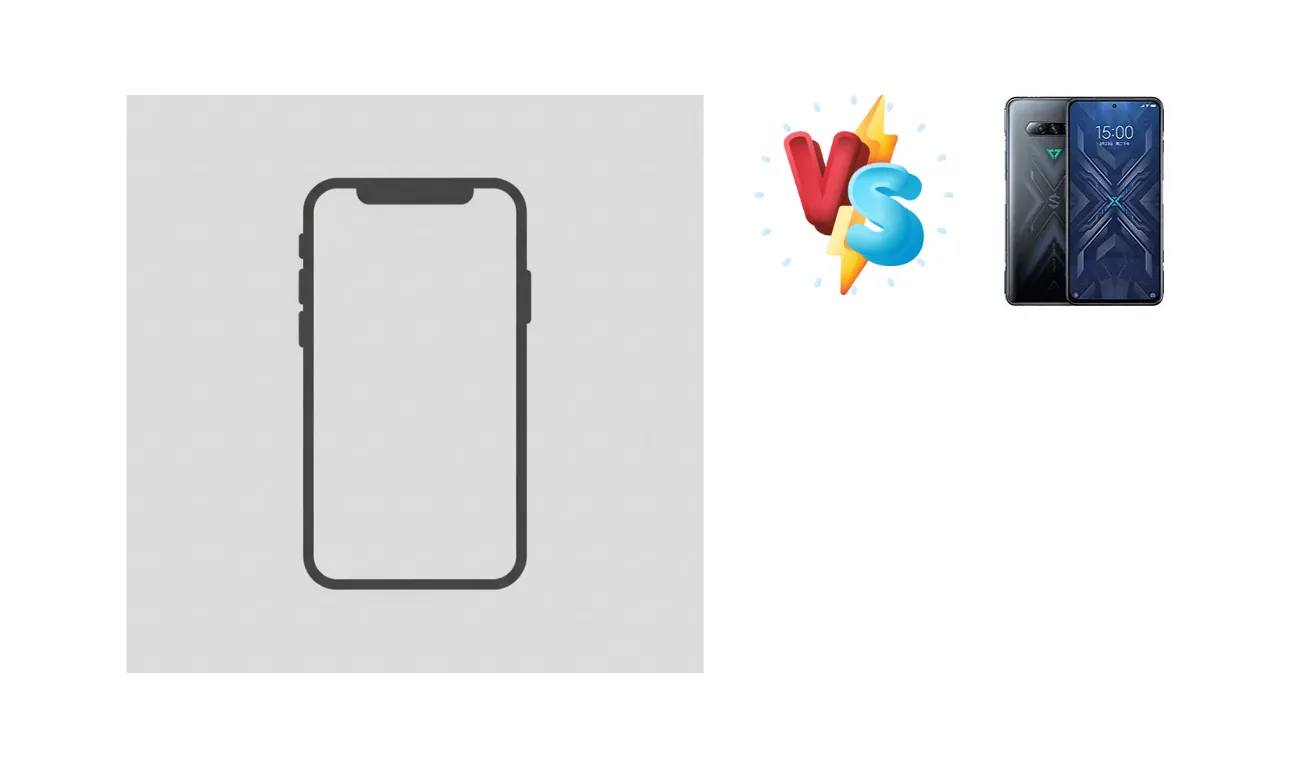
|
🏆 Quick Verdict
For the average gamer prioritizing sustained performance and a more reasonable price, the ZTE nubia Red Magic 6R is the better choice. While the Black Shark 4 Pro’s 120W charging is undeniably impressive, the Red Magic 6R’s endurance rating and potentially more refined thermal management offer a more consistent gaming experience.
| PHONES | ||
|---|---|---|
| Phone Names | ZTE nubia Red Magic 6R | Xiaomi Black Shark 4 Pro |
| Network | ||
|---|---|---|
| 2G bands | GSM 850 / 900 / 1800 / 1900 - SIM 1 & SIM 2 | GSM 850 / 900 / 1800 / 1900 |
| 3G bands | HSDPA 850 / 900 / 1700(AWS) / 1900 / 2100 | HSDPA 800 / 850 / 900 / 1700(AWS) / 1900 / 2100 |
| 4G bands | 1, 3, 5, 7, 8, 4, 12, 17, 20, 34, 38, 39, 40, 41 - China | 1, 2, 3, 4, 5, 7, 8, 18, 19, 20, 26, 28, 34, 38, 39, 40, 41 |
| 5G bands | 1, 28, 41, 78 SA/NSA - China | 1, 3, 8, 28, 41, 77, 78, 79 SA/NSA |
| Speed | HSPA, LTE-A, 5G | HSPA, LTE, 5G |
| Technology | GSM / CDMA / HSPA / CDMA2000 / LTE / 5G | GSM / CDMA / HSPA / EVDO / LTE / 5G |
| CDMA2000 1x | CDMA2000 1xEV-DO | |
| Launch | ||
|---|---|---|
| Announced | 2021, May 27 | 2021, March 23 |
| Status | Available. Released 2021, June 02 | Available. Released 2021, March 30 |
| Body | ||
|---|---|---|
| Build | Glass front (Gorilla Glass 3), aluminum frame, glass back | - |
| Dimensions | 163 x 75.3 x 7.8 mm (6.42 x 2.96 x 0.31 in) | 163.8 x 76.4 x 9.9 mm (6.45 x 3.01 x 0.39 in) |
| SIM | Dual SIM (Nano-SIM, dual stand-by) | Nano-SIM + Nano-SIM |
| Weight | 186 g (6.56 oz) | 220 g (7.76 oz) |
| Pressure sensitive zones (400Hz touch-sensing) | Physical pop-up gaming triggers | |
| Display | ||
|---|---|---|
| Protection | Corning Gorilla Glass 3 | - |
| Resolution | 1080 x 2400 pixels, 20:9 ratio (~395 ppi density) | 1080 x 2400 pixels, 20:9 ratio (~395 ppi density) |
| Size | 6.67 inches, 107.4 cm2 (~87.5% screen-to-body ratio) | 6.67 inches, 107.4 cm2 (~85.8% screen-to-body ratio) |
| Type | AMOLED, 1B colors, 144Hz, 770 nits (peak) | Super AMOLED, 144Hz, HDR10+, 1300 nits (peak) |
| - | Always-on display | |
| Platform | ||
|---|---|---|
| CPU | Octa-core (1x2.84 GHz Cortex-X1 & 3x2.42 GHz Cortex-A78 & 4x1.80 GHz Cortex-A55) | Octa-core (1x2.84 GHz Cortex-X1 & 3x2.42 GHz Cortex-A78 & 4x1.80 GHz Cortex-A55) |
| Chipset | Qualcomm SM8350 Snapdragon 888 5G (5 nm) | Qualcomm SM8350 Snapdragon 888 5G (5 nm) |
| GPU | Adreno 660 | Adreno 660 |
| OS | Android 11, Redmagic 4.0 | Android 11, Joy UI 12.5 |
| Memory | ||
|---|---|---|
| Card slot | No | No |
| Internal | 128GB 6GB RAM, 128GB 8GB RAM, 128GB 12GB RAM, 256GB 12GB RAM | 128GB 8GB RAM, 256GB 8GB RAM, 256GB 12GB RAM, 512GB 16GB RAM |
| UFS 3.1 | UFS 3.1 | |
| Main Camera | ||
|---|---|---|
| Features | Dual-LED flash, HDR, panorama | LED flash, HDR, panorama |
| Quad | 64 MP, f/1.8, 26mm (wide), 1/1.73", 0.8µm, PDAF 8 MP, f/2.0, 120˚, 13mm (ultrawide), 1/4.0", 1.12µm 5 MP, f/2.4, (macro) 2 MP, f/2.4, (depth) | - |
| Single | 16 MP, (wide) | 20 MP, f/2.5, (wide), 0.8µm |
| Triple | - | 64 MP, f/1.8, (wide), 1/1.97", 0.7µm, PDAF 8 MP, f/2.2, 120˚ (ultrawide), 1/4.0", 1.12µm 5 MP (macro), AF |
| Video | 8K@30fps, 4K@30/60fps, 1080p@30/60/120/240fps | 4K@30/60fps, 1080p@30/60/240fps, 1080p@960fps; HDR10+ |
| Selfie camera | ||
|---|---|---|
| Features | HDR | HDR |
| Single | 16 MP, (wide) | 20 MP, f/2.5, (wide), 0.8µm |
| Video | 1080p@30fps | 1080p@30fps |
| Sound | ||
|---|---|---|
| 3.5mm jack | No | Yes |
| 35mm jack | - | Yes |
| Loudspeaker | Yes | Yes, with stereo speakers |
| 32-bit/384kHz audio | 24-bit/192kHz audio | |
| Comms | ||
|---|---|---|
| Bluetooth | 5.2, A2DP, aptX, LE | 5.2 (China), 5.0 (Global), A2DP, LE, aptX HD, aptX Adaptive |
| NFC | Yes (market/region dependent) | Yes |
| Positioning | GPS (L1+L5), GLONASS, BDS | GPS, GLONASS, GALILEO, QZSS, BDS |
| Radio | No | No |
| USB | USB Type-C 3.0, OTG, accessory connector | USB Type-C 2.0 |
| WLAN | Wi-Fi 802.11 a/b/g/n/ac/6, dual-band, Wi-Fi Direct | Wi-Fi 802.11 a/b/g/n/ac/6, dual-band, Wi-Fi Direct |
| Features | ||
|---|---|---|
| Sensors | Fingerprint (under display, optical), accelerometer, gyro, proximity, compass | Fingerprint (side-mounted), accelerometer, gyro, proximity, compass, barometer (China only) |
| Battery | ||
|---|---|---|
| Charging | 55W wired, PD3.0, QC4 (China) 30W wired, PD3.0, QC4 (International) | 120W wired, 50% in 5 min, 100% in 15 min |
| Type | Li-Po 4200 mAh, non-removable | Li-Po 4500 mAh |
| Misc | ||
|---|---|---|
| Colors | Black, Mercury Silver, Light Blue | Shadow Black, Misty Grey, Cosmos Black, Dark Blue, Silver |
| Models | NX666J | SHARK PAR-H0 |
| Price | About 500 EUR | About 500 EUR |
| Tests | ||
|---|---|---|
| Battery life | Endurance rating 76h | - |
| Camera | Photo / Video | - |
| Display | Contrast ratio: Infinite (nominal) | - |
| Loudspeaker | -27.9 LUFS (Good) | - |
| Performance | AnTuTu: 708156 (v8) | 823354 (v9) GeekBench: 3486 (v5.1) GFXBench: 59fps (ES 3.1 onscreen) | - |
ZTE nubia Red Magic 6R
- Excellent endurance rating (76h)
- Potentially better thermal management due to Red Magic’s cooling focus
- 55W fast charging (China) / 30W (International)
- Limited display specifications
- Camera details are sparse
Xiaomi Black Shark 4 Pro
- Blazing-fast 120W charging (0-100% in 15 minutes)
- Strong brand reputation for gaming features
- Likely optimized display for gaming
- Potentially more prone to thermal throttling
- May sacrifice endurance for charging speed
Display Comparison
Both devices utilize the Qualcomm SM8350 Snapdragon 888 5G (5 nm) chipset, meaning raw processing power is comparable. However, display details are limited for the Red Magic 6R beyond an 'infinite' contrast ratio. The Black Shark 4 Pro, while also lacking detailed specs, benefits from the gaming-centric brand reputation of Xiaomi, suggesting a high refresh rate panel optimized for low-latency visuals. The Red Magic 6R’s focus on endurance suggests a potentially more power-efficient display implementation, but without specific brightness or color accuracy data, it’s difficult to definitively assess.
Camera Comparison
Camera details are minimal for both devices, listed simply as 'Photo / Video'. This suggests neither phone prioritizes photography as a key selling point. Given the gaming focus, image quality is likely adequate but not exceptional. The absence of specific sensor information makes a direct comparison impossible, but users shouldn’t expect flagship-level camera performance from either device. Ignoring the likely inclusion of low-resolution auxiliary lenses, the main sensor quality will be the determining factor, and that remains unknown.
Performance
The core performance is identical, both powered by the Octa-core Snapdragon 888 5G with the same CPU configuration (1x2.84 GHz Cortex-X1, 3x2.42 GHz Cortex-A78, 4x1.80 GHz Cortex-A55). The key differentiator will be thermal management. The Red Magic series historically focuses on active cooling solutions, which aren’t detailed here but are likely present. The Black Shark 4 Pro, while powerful, may be more prone to throttling under sustained load due to a potentially less robust cooling system. RAM speed (LPDDR5x) is not specified for either, but is a critical factor in sustained performance.
Battery Life
The Black Shark 4 Pro’s 120W charging is its standout feature, promising a full charge in just 15 minutes. This is a significant advantage for users who need to quickly top up their battery. However, the Red Magic 6R boasts an endurance rating of 76 hours, suggesting a more efficient power draw and potentially a larger battery capacity (though the exact mAh is not specified). The Red Magic 6R’s charging speed (55W/30W depending on region) is slower, but the longer endurance could be more valuable for gamers who spend hours away from a power outlet.
Buying Guide
Buy the ZTE nubia Red Magic 6R if you need a phone that can comfortably handle extended gaming sessions without significant throttling, and if you value a more balanced feature set beyond just raw speed. Buy the Xiaomi Black Shark 4 Pro if you absolutely prioritize the fastest possible charging speeds and are willing to trade some potential endurance for the convenience of a full charge in under 20 minutes.