
ZTE nubia Red Magic 6R vs. Apple iPhone 12 Pro Max: A Clash of Philosophies
| Phones Images | |||||
|---|---|---|---|---|---|
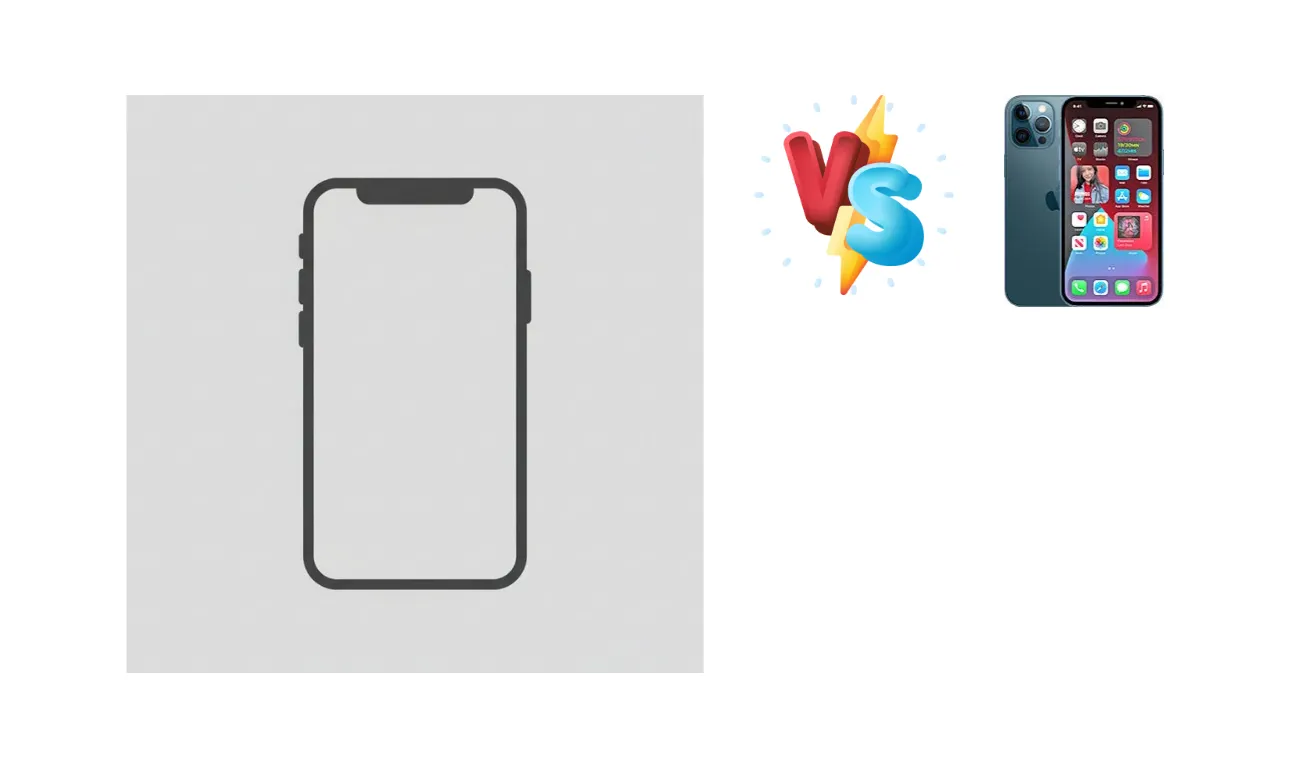
|
🏆 Quick Verdict
For the average user prioritizing a seamless experience, strong resale value, and a refined camera system, the iPhone 12 Pro Max remains the superior choice. However, gamers and power users seeking maximum performance and rapid charging will find the Red Magic 6R a compelling alternative, despite its compromises in other areas.
| PHONES | ||
|---|---|---|
| Phone Names | ZTE nubia Red Magic 6R | Apple iPhone 12 Pro Max |
| Network | ||
|---|---|---|
| 2G bands | GSM 850 / 900 / 1800 / 1900 - SIM 1 & SIM 2 | GSM 850 / 900 / 1800 / 1900 |
| 3G bands | HSDPA 850 / 900 / 1700(AWS) / 1900 / 2100 | HSDPA 850 / 900 / 1700(AWS) / 1900 / 2100 |
| 4G bands | 1, 3, 5, 7, 8, 4, 12, 17, 20, 34, 38, 39, 40, 41 - China | 1, 2, 3, 4, 5, 7, 8, 12, 13, 14, 17, 18, 19, 20, 25, 26, 28, 29, 30, 32, 34, 38, 39, 40, 41, 42, 46, 48, 66, 71 - A2342 |
| 5G bands | 1, 28, 41, 78 SA/NSA - China | 1, 2, 3, 5, 7, 8, 12, 20, 25, 28, 38, 40, 41, 66, 71, 77, 78, 79, 260, 261 Sub6/mmWave - A2342 |
| Speed | HSPA, LTE-A, 5G | HSPA, LTE, 5G, EV-DO Rev.A 3.1 Mbps |
| Technology | GSM / CDMA / HSPA / CDMA2000 / LTE / 5G | GSM / CDMA / HSPA / EVDO / LTE / 5G |
| CDMA2000 1x | 1, 2, 3, 5, 7, 8, 12, 20, 25, 28, 38, 40, 41, 66, 77, 78, 79 Sub6 - A2410, A2411, A2412 | |
| Launch | ||
|---|---|---|
| Announced | 2021, May 27 | 2020, October 13 |
| Status | Available. Released 2021, June 02 | Available. Released 2020, November 13 |
| Body | ||
|---|---|---|
| Build | Glass front (Gorilla Glass 3), aluminum frame, glass back | Glass front, glass back, stainless steel frame |
| Dimensions | 163 x 75.3 x 7.8 mm (6.42 x 2.96 x 0.31 in) | 160.8 x 78.1 x 7.4 mm (6.33 x 3.07 x 0.29 in) |
| SIM | Dual SIM (Nano-SIM, dual stand-by) | · Nano-SIM + eSIM· Nano-SIM + Nano-SIM (China) |
| Weight | 186 g (6.56 oz) | 228 g (8.04 oz) |
| Pressure sensitive zones (400Hz touch-sensing) | IP68 dust/water resistant (up to 6m for 30 min) Apple Pay (Visa, MasterCard, AMEX certified) | |
| Display | ||
|---|---|---|
| Protection | Corning Gorilla Glass 3 | Ceramic Shield glass |
| Resolution | 1080 x 2400 pixels, 20:9 ratio (~395 ppi density) | 1284 x 2778 pixels, 19.5:9 ratio (~458 ppi density) |
| Size | 6.67 inches, 107.4 cm2 (~87.5% screen-to-body ratio) | 6.7 inches, 109.8 cm2 (~87.4% screen-to-body ratio) |
| Type | AMOLED, 1B colors, 144Hz, 770 nits (peak) | Super Retina XDR OLED, HDR10, Dolby Vision, 800 nits (HBM), 1200 nits (peak) |
| Platform | ||
|---|---|---|
| CPU | Octa-core (1x2.84 GHz Cortex-X1 & 3x2.42 GHz Cortex-A78 & 4x1.80 GHz Cortex-A55) | Hexa-core (2x3.1 GHz Firestorm + 4x1.8 GHz Icestorm) |
| Chipset | Qualcomm SM8350 Snapdragon 888 5G (5 nm) | Apple A14 Bionic (5 nm) |
| GPU | Adreno 660 | Apple GPU (4-core graphics) |
| OS | Android 11, Redmagic 4.0 | iOS 14.1, upgradable to iOS 26.1 |
| Memory | ||
|---|---|---|
| Card slot | No | No |
| Internal | 128GB 6GB RAM, 128GB 8GB RAM, 128GB 12GB RAM, 256GB 12GB RAM | 128GB 6GB RAM, 256GB 6GB RAM, 512GB 6GB RAM |
| UFS 3.1 | NVMe | |
| Main Camera | ||
|---|---|---|
| Features | Dual-LED flash, HDR, panorama | Dual-LED dual-tone flash, HDR (photo/panorama) |
| Quad | 64 MP, f/1.8, 26mm (wide), 1/1.73", 0.8µm, PDAF 8 MP, f/2.0, 120˚, 13mm (ultrawide), 1/4.0", 1.12µm 5 MP, f/2.4, (macro) 2 MP, f/2.4, (depth) | - |
| Single | 16 MP, (wide) | - |
| Triple | - | 12 MP, f/1.6, 26mm (wide), 1/1.9", 1.7µm, dual pixel PDAF, sensor-shift OIS 12 MP, f/2.2, 65mm (telephoto), 1/3.4", 1.0µm, PDAF, OIS, 2.5x optical zoom 12 MP, f/2.4, 13mm, 120˚ (ultrawide), 1/3.4", 1.0µm TOF 3D LiDAR scanner (depth) |
| Video | 8K@30fps, 4K@30/60fps, 1080p@30/60/120/240fps | 4K@24/25/30/60fps, 1080p@25/30/60/120/240fps, 10‑bit HDR, Dolby Vision HDR (up to 60fps), stereo sound rec. |
| Selfie camera | ||
|---|---|---|
| Features | HDR | HDR |
| Single | 16 MP, (wide) | 12 MP, f/2.2, 23mm (wide), 1/3.6", 1.0µm SL 3D, (depth/biometrics sensor) |
| Video | 1080p@30fps | 4K@24/25/30/60fps, 1080p@25/30/60/120fps, gyro-EIS |
| Sound | ||
|---|---|---|
| 3.5mm jack | No | No |
| 35mm jack | - | No |
| Loudspeaker | Yes | Yes, with stereo speakers |
| 32-bit/384kHz audio | - | |
| Comms | ||
|---|---|---|
| Bluetooth | 5.2, A2DP, aptX, LE | 5.0, A2DP, LE |
| NFC | Yes (market/region dependent) | Yes |
| Positioning | GPS (L1+L5), GLONASS, BDS | GPS, GLONASS, GALILEO, QZSS |
| Radio | No | No |
| USB | USB Type-C 3.0, OTG, accessory connector | Lightning, USB 2.0 |
| WLAN | Wi-Fi 802.11 a/b/g/n/ac/6, dual-band, Wi-Fi Direct | Wi-Fi 802.11 a/b/g/n/ac/6, dual-band, hotspot |
| Features | ||
|---|---|---|
| Sensors | Fingerprint (under display, optical), accelerometer, gyro, proximity, compass | Face ID, accelerometer, gyro, proximity, compass, barometer |
| - | Ultra Wideband (UWB) support | |
| Battery | ||
|---|---|---|
| Charging | 55W wired, PD3.0, QC4 (China) 30W wired, PD3.0, QC4 (International) | Wired, PD2.0, 50% in 30 min 15W wireless (MagSafe) 15W wireless (Qi2) - requires iOS 17.4 update |
| Type | Li-Po 4200 mAh, non-removable | Li-Ion 3687 mAh (14.13 Wh) |
| Misc | ||
|---|---|---|
| Colors | Black, Mercury Silver, Light Blue | Silver, Graphite, Gold, Pacific Blue |
| Models | NX666J | A2411, A2342, A2410, A2412, iPhone13,4 |
| Price | About 500 EUR | $ 328.00 / C$ 549.75 / £ 270.67 / € 339.00 |
| SAR EU | - | 0.99 W/kg (head) 0.99 W/kg (body) |
| Pricing | ||
|---|---|---|
| 128GB 6GB RAM | - | $ 599.99 |
| 256GB 6GB RAM | - | $ 728.45 |
| 512GB 6GB RAM | - | $ 886.67 |
| RENEWED | - | $ 627.00 |
| Tests | ||
|---|---|---|
| Battery life | Endurance rating 76h | Endurance rating 95h |
| Camera | Photo / Video | Photo / Video |
| Display | Contrast ratio: Infinite (nominal) | Contrast ratio: Infinite (nominal) |
| Loudspeaker | -27.9 LUFS (Good) | -23.8 LUFS (Very good) |
| Performance | AnTuTu: 708156 (v8) | 823354 (v9) GeekBench: 3486 (v5.1) GFXBench: 59fps (ES 3.1 onscreen) | AnTuTu: 638584 (v8) GeekBench: 4240 (v5.1) GFXBench: 55fps (ES 3.1 onscreen) |
ZTE nubia Red Magic 6R
- Significantly faster charging (55W)
- Optimized for gaming performance
- Potentially lower price point
- Lower battery endurance
- Less refined camera system (likely)
- Less established software support
Apple iPhone 12 Pro Max
- Superior battery life
- Excellent camera system and video recording
- Seamless ecosystem integration
- Slower charging speed
- Higher price point
- Less focused on gaming
Display Comparison
Both devices feature displays with an 'Infinite' (nominal) contrast ratio, suggesting excellent black levels. However, the iPhone 12 Pro Max boasts a measured peak brightness of 822 nits, likely providing superior visibility in direct sunlight. While the Red Magic 6R’s display specs are less detailed, gaming phones often prioritize high refresh rates (not specified here) over absolute brightness. The iPhone’s color accuracy is generally considered best-in-class, a detail likely absent from the Red Magic 6R’s calibration.
Camera Comparison
Both phones offer 'Photo / Video' capabilities, but the specifics are missing. The iPhone 12 Pro Max is known for its computational photography prowess and excellent video recording quality, leveraging Apple’s image signal processor. The Red Magic 6R, being a gaming phone, likely prioritizes camera functionality less, potentially resulting in a less refined image processing pipeline. Without sensor size or aperture details for the Red Magic 6R, it’s difficult to assess its low-light performance relative to the iPhone.
Performance
The core difference lies in the chipsets. The Red Magic 6R utilizes the Qualcomm Snapdragon 888 5G (5nm), an octa-core processor designed for high performance. The iPhone 12 Pro Max is powered by Apple’s A14 Bionic (5nm), a hexa-core chip renowned for its efficiency and single-core performance. While the Snapdragon 888 has more cores, Apple’s chip architecture often delivers superior real-world performance per watt. The Red Magic 6R’s focus on gaming suggests aggressive thermal management is crucial to prevent throttling under sustained load, a potential weakness of the Snapdragon 888. The iPhone’s A14 Bionic, while less raw power, is less prone to thermal throttling.
Battery Life
The iPhone 12 Pro Max boasts an endurance rating of 95 hours, while the Red Magic 6R achieves 76 hours. This suggests the iPhone offers significantly longer battery life under typical usage. However, the Red Magic 6R compensates with significantly faster charging: 55W wired (China) or 30W (International) versus the iPhone’s 20W wired and 15W wireless (MagSafe/Qi2). The Red Magic 6R can likely achieve a substantial charge in a much shorter timeframe, mitigating its lower overall endurance. The iPhone’s 50% charge in 30 minutes is respectable, but doesn’t match the Red Magic’s potential for a full charge in a similar timeframe.
Buying Guide
Buy the ZTE nubia Red Magic 6R if you need uncompromising gaming performance, fast 55W charging, and aren't heavily invested in the Apple ecosystem. Buy the Apple iPhone 12 Pro Max if you prefer a polished user experience, a superior camera system, long-term software support, and seamless integration with other Apple devices.